Quick wins for a faster PC:
Scan for outdated or missing drivers - takes under a minuteDriver Scan →Clear out junk files and repair common Windows errorsFree Scan →The best lowrider is not necessarily the most expensive classic or the car with the most elaborate hydraulics. It is a platform with the right proportions, a strong chassis, usable parts support, and enough room for the style of build you want.
That is why the 1964 Chevrolet Impala remains the benchmark, while G-body cars, Cadillac sedans, Lincolns, classic trucks, and even compact Novas have all earned places in lowrider history. The list below covers proven platforms for traditional cruisers, show cars, hoppers, and more practical modern builds.
As an Amazon Associate I earn from qualifying purchases.
What makes a car a good lowrider?
Before choosing a model, decide whether the finished car will be a comfortable cruiser, a showpiece, a three-wheel car, or a competition hopper. Those uses place very different demands on the frame, suspension, brakes, wiring, and body.
Recommended Free Tools
- Rear-wheel drive: Conventional rear-wheel-drive layouts generally offer more suspension-modification options and better parts availability.
- Long, straight bodywork: Broad panels provide an excellent canvas for murals, candy paint, striping, and engraving.
- Parts interchange: Shared GM G-body components, for example, make some cars substantially easier to build than unusual platforms.
- Structural capacity: Hydraulic or air-suspension hardware must be matched to the frame, suspension, electrical system, and intended use.
- Cultural history: Lowriding is an automotive art form and community tradition, not simply a method of lowering a car. A platform with a documented place in the scene brings useful knowledge, styling references, and club history.
20 cars that make excellent lowriders
1. 1964 Chevrolet Impala
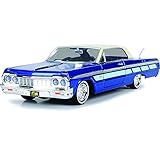
The 1964 Impala is the archetypal lowrider for good reason. Its full-size proportions, sculpted sides, abundant chrome, and enormous aftermarket support suit wire wheels, murals, engraved trim, custom upholstery, and hydraulic suspension. It also has a central place in documented lowrider history.
#1 Best Overall

- Brand new box. real rubber tires. true-to-scale detail. officially licensed product. has opening ho
- Doors and trunk. made of diecast metal with some plastic parts. detailed interior
- Exterior
- Engine compartment. dimensions approximately
- H-2 inches.
Best years: 1962–1964, especially 1964. Inspect for: rust, missing trim, costly original parts, and badly installed hydraulic equipment.
2. 1959 Chevrolet Impala
The 1959 Impala trades the restrained lines of later cars for sweeping rear fins and a very wide body. It is an especially strong choice for a dramatic show build or a period-inspired custom, with large surfaces that showcase paint and bodywork.
Best for: elaborate traditional builds. Inspect for: rust and missing or damaged trim; replacement panels and original brightwork can be expensive.
Do these 3 things before closing this tab:
1Repair Windows errors before they cause bigger problems2Scan for outdated or missing drivers - takes under a minute3Clear out junk files and repair common Windows errors3. 1980–1990 Chevrolet Caprice
A boxy Caprice delivers much of the visual impact of a full-size lowrider without the price of a clean 1960s Impala. Its rear-wheel-drive chassis, long body, broad engine bay, and extensive parts interchange work well for cruising cars and hoppers.
Best for: a large, comparatively affordable build. Inspect for: worn body mounts, sagging springs, frame damage, and former police or taxi cars that have had a hard life.
4. 1973–1977 Chevrolet Monte Carlo
The first-generation Monte Carlo has the classic lowrider ingredients: a long hood, formal roofline, rear-wheel drive, and a substantial but manageable body. It is less predictable than an Impala and usually offers a more personal starting point.
Best for: a classic personal-size cruiser. Inspect for: rust around the vinyl roof, quarter panels, floor, and body mounts.
The Tool Desk
Outbyte Driver Updater FREEScan for outdated or missing drivers - takes under a minuteDriver Scan →Outbyte PC Repair FREERepair Windows errors before they cause bigger problemsFix Now →5. 1978–1987 Buick Regal
The Buick Regal is one of the established G-body lowrider platforms. Body-on-frame construction, rear-wheel drive, high production numbers, and shared GM suspension architecture give builders a deep supply of parts and technical knowledge.
Best for: a builder who wants a strong aftermarket and many proven suspension recipes. Inspect for: rust, cracked mounts, and cars carrying poorly installed lift or lowering equipment.
6. 1978–1988 Oldsmobile Cutlass Supreme
The Cutlass Supreme is arguably the most recognizable G-body lowrider after the Regal. It works equally well as a restrained lay-and-play cruiser or a more ambitious hopping car, and its formal coupe styling looks right with wire wheels and traditional paint.
Best for: a first G-body project or street-and-show car. Inspect for: cut springs, damaged suspension mounts, rust under vinyl tops, and hidden frame repairs.
What’s actually slowing this PC down?
Pick the symptom - the matching free tool is one click away.
7. 1978–1987 Chevrolet Monte Carlo
The later Monte Carlo shares much of its chassis and suspension architecture with the Regal and Cutlass. Its long hood and formal coupe profile provide a Chevrolet-specific identity while retaining access to the G-body parts ecosystem.
Best for: a traditional G-body with Chevrolet styling. Inspect for: drag-racing conversions, bent suspension components, rust, and inflated prices for clean examples.
8. 1978–1987 Pontiac Grand Prix
The G-body Grand Prix offers the same broad mechanical advantages as its Buick, Oldsmobile, and Chevrolet relatives but is less common at many shows. That makes it an appealing choice for someone who wants a familiar platform with a less predictable appearance.
Best for: a distinctive G-body build. Inspect for: missing Pontiac-specific trim and body pieces, which can take more effort to locate than shared mechanical parts.
9. 1977–1996 Cadillac Fleetwood Brougham
The Fleetwood Brougham is the classic big-body lowrider: long, formal, luxurious, and covered in broad surfaces for murals and candy paint. Rear-wheel-drive examples have been used for both elegant boulevard cruisers and highly detailed show cars.
Rank #2

- Revell Model Kit #14562, Skill Level 4, Contains 171-Parts, Recommended for ages 12 and up
- Highly detailed 1:25-scale plastic model of the classic 1991 Chevy S-10 can be built one of three ways—lowrider, turbocharged all-wheel-drive street pickup, or a Nineties-style custom mini truck.
- Classic small-diameter lowrider wheels with tampo-printed whitewall tires. Includes a 1:64-scale diecast 1991 S-10 lowrider from the original Revell tooling.
- The diecast includes Revell’s easy-to-adjust lowrider suspension and a wild rotatable bed assembly. All-new waterslide decal sheet includes matching options for the 1:64- and 1:25-scale S-10s.
- Molded in white and clear with chrome plated parts and soft black tires. Paint and glue required(not included).
Best for: a large luxury lowrider. Inspect for: worn body mounts, expensive trim, excessive weight, and the car’s physical size before committing to a garage or trailer.
10. 1965–1970 Cadillac DeVille
An older DeVille brings Cadillac presence and a broad traditional canvas without looking like every other full-size Chevrolet. Its formal styling pairs naturally with chrome, custom interiors, detailed paint, and a low stance.
Best for: an imposing traditional build. Inspect for: air-conditioning faults, electrical problems, rust, and expensive or difficult-to-source replacement trim.
11. 1963–1967 Buick Riviera
The first-generation Riviera has a long, low body, hidden headlamps, and large uninterrupted side panels. Its sculptural shape makes it particularly effective as a two-door show car, especially when the bodywork and paint are kept exceptionally clean.
Best for: a distinctive, high-detail coupe. Inspect for: limited parts availability compared with Chevrolet and G-body models.
12. 1964–1972 Buick Skylark
The Skylark is a smaller alternative to full-size Chevrolet and Cadillac platforms. It retains classic American styling and rear-wheel-drive layouts while producing a more compact, less frequently seen lowrider.
Best for: builders who want a lighter and less conventional classic. Inspect for: scarce reproduction parts and the need to research model-year-specific suspension and trim differences.
PC Slower Than It Used to Be?
A free scan shows the junk files, broken settings and background clutter dragging Windows down - then fixes them in one click.Free scan · Windows 10 & 11Outdated Drivers Are Slowing You Down
One free scan finds every outdated or missing driver and matches the right update for your exact hardware.Free scan · exact hardware match13. 1968–1977 Ford LTD
The Ford LTD is a legitimate traditional lowrider platform, not merely a substitute for a Chevrolet. Its large body and period styling work well for club-inspired builds, custom paint, and formal boulevard cruising.
Best for: a Ford alternative to the Chevrolet-heavy mainstream. Inspect for: Ford-specific trim and suspension parts, which may require more searching.
14. 1972–1979 Lincoln Mark IV and Mark V
The Mark IV and Mark V provide enormous bodies, formal luxury styling, and broad panels for paint and bodywork. They make spectacular show cars, although their size and curb weight demand careful planning for suspension, brakes, transport, and storage.
Best for: a dramatic boulevard cruiser. Inspect for: rust, worn luxury equipment, frame condition, and the cost of restoring large Lincoln-specific parts.
15. 1990–2002 Lincoln Town Car
The rear-wheel-drive Panther-platform Town Car offers a newer and more usable route into the full-size lowrider scene. Its long wheelbase, formal styling, spacious cabin, and plentiful donor vehicles make it practical for a cruiser with air suspension or a carefully engineered hydraulic setup.
Best for: a late-model full-size car that can still be driven regularly. Inspect for: frame rust in northern states, electrical faults, worn suspension, and poorly executed air-ride conversions.
16. 1950–1952 Chevrolet Fleetline
The Fleetline’s fastback roof and rounded postwar bodywork are ideal for a period-style custom. It can carry shaved details, elaborate paint, and traditional lowrider influences while standing apart from the more common Impala and G-body choices.
Best for: a vintage custom with period character. Inspect for: rust, incomplete restoration work, limited suspension travel, and the smaller selection of bolt-on hydraulic solutions.
17. 1973–1987 Chevrolet C10
The square-body C10 is one of the strongest truck-based lowrider platforms. Its bed creates space for audio equipment, display detailing, or carefully packaged suspension components, while the truck’s wide aftermarket supports both traditional and mini-truck-inspired builds.
Rank #3
Best for: a practical custom truck or air-ride project. Inspect for: frame cracks, overloaded rear suspension, bed-floor rust, and improperly routed air lines or hydraulic hoses.
18. 1967–1972 Chevrolet C10
The earlier C10 has smoother and more traditional lines than the square body. Its proportions work well with chrome, murals, classic wheels, and a low stance, but clean sheet metal and original trim are becoming increasingly difficult to find.
Best for: a classic truck with a less boxy profile. Inspect for: cab and bed rust, frame repairs, scarce trim, and collision damage hidden beneath fresh paint.
Free tools Windows power users keep installed
One-click scans. No signup required.
19. 1964–1972 Chevrolet El Camino
The El Camino combines a car-like front end and cabin with a useful pickup bed. That unusual silhouette makes it a strong lowrider candidate, while the bed can accommodate audio equipment, hydraulic hardware, or show-quality detailing.
Best for: a lowrider with utility and a distinctive profile. Inspect for: bed-floor rust, body flex, and reinforced suspension mounts that were modified without proper structural work.
20. 1962–1967 Chevrolet Chevy II/Nova
The Chevy II/Nova is smaller, lighter, and less expected than the full-size Chevrolet platforms. It has a substantial modified-car aftermarket and can make a sharp compact lowrider, although builders may need custom suspension solutions rather than relying on the large G-body parts catalog.
Best for: a compact and unconventional build. Inspect for: rust, incomplete trim, and whether the planned suspension system has been properly engineered for the car.
Which lowrider platform should you choose?
| What you want | Strong candidates | Why |
|---|---|---|
| Classic benchmark | 1964 Impala | Iconic shape, extensive parts support, and deep lowrider history |
| Affordable full-size cruiser | 1980–1990 Caprice | Large body and practical GM mechanical support |
| Easiest parts ecosystem | Regal, Cutlass, Monte Carlo, Grand Prix | Shared G-body architecture and extensive suspension knowledge |
| Big luxury build | Fleetwood Brougham, DeVille, Mark IV/Mark V | Long bodies, formal styling, and strong show presence |
| Usable newer cruiser | 1990–2002 Town Car | Rear-wheel-drive Panther platform and more modern running gear |
| Truck-based project | 1967–1972 or 1973–1987 C10 | Custom bed space and strong truck aftermarket |
| Compact alternative | Chevy II/Nova or Buick Skylark | Smaller dimensions and a less common finished car |
Safety and buying checks
A car that can be made to sit on the ground is not automatically safe to drive. Before buying a finished project or starting your own, inspect the frame, body mounts, suspension arms, ball joints, brake lines, steering linkage, wheel clearance, and electrical system. Look for hydraulic cylinders or air bags that contact the frame, hoses routed near exhaust heat, loose battery cables, undersized wiring, and suspension components modified without reinforcement.
Prior work matters as much as the donor model. A structurally sound, complete car is usually a better buy than a cheaper example missing trim or carrying unsafe shortcuts. Confirm that the suspension retains usable travel, the tires clear at full lock and full compression, and the brakes function correctly at every ride height.
Local rules also matter. California repealed Vehicle Code section 24008’s old restriction involving a vehicle sitting below the wheel rims through Assembly Bill 436, but other frame-height, lighting, equipment, safety, and local requirements still apply. In every state, modifications should be checked against current law and inspected by a qualified suspension professional.
FAQ
What is the best car for a lowrider?
The 1964 Chevrolet Impala is the benchmark because it combines iconic proportions, extensive parts support, abundant chrome, and a long documented history in lowriding. It is not the only good choice, though; a clean G-body, Caprice, Fleetwood, or Town Car may be more practical for a particular budget or build style.
What’s actually slowing this PC down?
Pick the symptom - the matching free tool is one click away.
Do lowriders have to use hydraulics?
No. Lowriders may use hydraulic suspension, air suspension, or a fixed lowered setup. The style also includes custom paint, murals, wire wheels, upholstery, chrome, engraving, and community traditions. Hydraulic systems are essential for some hopping builds but not for every lowrider.
Are G-body cars good beginner lowriders?
Usually, yes. The Buick Regal, Oldsmobile Cutlass Supreme, Chevrolet Monte Carlo, and Pontiac Grand Prix share a broad mechanical architecture and have extensive aftermarket support. Clean, unmodified examples are becoming more expensive, so inspect carefully for rust, cut springs, cracked mounts, and drag-racing damage.
What should I inspect before buying a lowrider project?
Check the frame, body mounts, suspension pickup points, floors, quarter panels, brake lines, steering components, wheel clearance, wiring, and completeness of the trim. On an already modified car, pay particular attention to hydraulic or air-system installation, hose routing, battery and pump wiring, cylinder or air-bag mounts, and evidence of unsafe shortcuts.
The Bottom Line
The 1964 Chevrolet Impala remains the definitive lowrider, but the right choice depends on the build. G-bodies offer the easiest parts support, Caprices and Town Cars make practical full-size cruisers, Cadillacs and Lincolns deliver maximum presence, and C10s or Novas provide a different silhouette. Start with the cleanest structurally sound car you can afford, then match the suspension system to how the vehicle will actually be driven.
Windows Errors? Fix Them Before They Spread
Repair common Windows errors and clear accumulated junk for a smoother, more stable PC - no reinstall needed.Free scan · no reinstallCrashes, No Sound, or Screen Glitches?
Random freezes, missing sound and display glitches usually trace back to one bad driver. Find and replace yours safely.Free scan · under a minuteQuick Recap
Product prices and availability are accurate as of the date/time indicated and are subject to change. Any price and availability information displayed on Amazon at the time of purchase will apply.




