Recommended Free Tools
The 1963 Chevrolet Impala Z-11 was a limited-run factory drag package built around a stroked 427-cubic-inch W-series engine, dual four-barrel carburetors and aluminum front sheet metal. Chevrolet planned 50 cars; a later production compilation lists 57, though it says its figures were not factory-verified. “Meanest” is a fitting description of its purpose-built character, not a measurable ranking established by the historical record.
What was the 1963 Impala Z-11?
RPO Z-11 was Chevrolet’s lightweight drag-racing package for the 1963 Impala SS Sport Coupe. NHRA identifies the matching model as style 1847, the Sport Coupe body style also documented in Chevrolet’s 1963 vehicle information kit. The Z-11 combined a familiar full-size Impala body with weight-saving aluminum front sheet metal and a special 427 engine. NHRA’s account of Chevrolet’s internal memos describes management’s planned run of 50 cars, while the original Chevrolet vehicle information kit provides general passenger-car specifications—not a complete specification sheet for the Z-11 package.
![GreenLight 1:64 1967 Chevro&let Impala Sport Sedan - Tuxedo Black 30333 [Shipping from Canada]](https://m.media-amazon.com/images/I/31GBnJJBdNL._SL160_.jpg)
This was more than a showroom performance trim. Chevrolet’s memo placed Z-11 under its drag-racing activity, with production targeted to begin at Flint on December 1, 1962. The package also appeared in the 1963 NHRA Winternationals context, connecting the car to competition as well as a planned factory build.
Was the Z-11 a 409 or a 427?
It was a 427-cubic-inch engine built from Chevrolet’s 409-derived W-series architecture. The distinction matters: the Z-11 was not simply a standard 409 with a larger label, nor was it the separate NASCAR Mystery Motor.
Free tools Windows power users keep installed
One-click scans. No signup required.
#1 Best Overall

- AMT
- Accurate Scale Model Kit
- Detailed Pictorial Instructions Included
- Will Require Paints, Glue and Modelling Tools to Complete
According to NHRA’s account of the Chevrolet memos, the Z-11 Mark I used the basic 1963 409 Mark I block, Duntov raised-port heads, a dual-quad intake manifold and a 3.650-inch stroked crank developed for the separate Mark II program. Two four-barrel carburetors supplied the engine. Chevrolet Performance likewise characterizes the 1963 427 as a special package for drag racers and NASCAR drivers, but those uses involved distinct engine efforts. Chevrolet Performance’s big-block timeline and NHRA’s memo-based history describe the broader context.
How was the Z-11 different from the NASCAR Mystery Motor?
| Engine effort | Architecture and equipment | Primary assignment described in the sources |
|---|---|---|
| Z-11 Mark I | W-series-based 427 derived from the 409 architecture, with a stroked crank, Duntov raised-port heads and dual four-barrel carburetors | Drag racing in the lightweight 1963 Impala SS Sport Coupe |
| Mark II “Mystery Motor” | A separate 427 design, not the Z-11 Mark I configuration | NASCAR-oriented effort |
NHRA’s history distinguishes the two programs explicitly. Their shared 427 displacement does not make them the same engine: the Z-11 was the W-series-based drag-racing Mark I, while the Mystery Motor was the separate Mark II NASCAR effort.
Rank #2
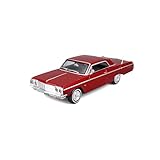
- Officially Licensed Replica – Authentic styling and branding from the original manufacturer
- Die-Cast Metal Construction – Durable metal body with detailed plastic components
- Highly Detailed Design – Realistic exterior styling and interior
- Free-Rolling Wheels – Smooth movement for display or play
- Perfect for Collectors & Kids – Great gift for automotive fans
How much horsepower did the 1963 Z-11 have?
NHRA reports that a later Chevrolet memo identified the Z-11 Mark I as the “430hp Turbo-Fire 427”; NHRA’s 2021 history of the 409 also describes Z-11 cars as rated at 430 hp. That is a period rating, not a modern dynamometer result or an independently verified output test. NHRA’s 2025 account connects the designation to the Chevrolet memo.
How many 1963 Z-11 Impalas were built?
The most careful answer distinguishes the planned run from a later reported total:
Rank #3

- 1/24 Scale Diecast Model Car
- Opening doors, hood & trunk
- Size 8x3x3 inches
- Window box measures: 9.75"L x 4.5"W x 4"H
- 50 planned: Chevrolet management approved 50 special cars in an August 21, 1962 internal memo, as reported by NHRA author David Kennedy in 2025.
- 57 listed as produced: a 2012 production compilation from Classic Industries gives this figure but says its numbers are believed correct and have not been factory-verified.
Those figures describe different claims, not a confirmed discrepancy resolved by a factory production record. The memo establishes the plan; the compilation supplies a qualified later count. Classic Industries’ production compilation carries its own verification caveat.
Independent reader supportYour contribution helps us test, update, and keep practical guides available for everyone.Why does the Z-11 still stand out?
The Z-11’s significance lies in how deliberately its parts and production plan served drag racing: a stroked W-series-based 427, dual quads, aluminum front sheet metal and a small planned run of Impala SS Sport Coupes. NHRA’s account places the program in the 1963 Winternationals setting, while Chevrolet Performance identifies the 1963 427 as a special racing package. Those facts make the Z-11 one of Chevrolet’s most serious factory drag efforts of the period; they do not establish an objective “meanest” ranking over every contemporary factory-built racer.
Quick Recap
Best Value

- Accurate Scale Model Kit
- Retro Packaging
- Full Colour Decals
Rank #4
Product prices and availability are accurate as of the date/time indicated and are subject to change. Any price and availability information displayed on Amazon at the time of purchase will apply.




