Do these 3 things before closing this tab:
1Clear out junk files and repair common Windows errors2Fix the driver behind crashes, sound loss and screen glitches3Repair Windows errors before they cause bigger problemsAmerican trucks built the country by moving the things that made settlement, farming, war production, cities, and construction possible. Their story begins with delivery wagons and passenger-car conversions, expands through farm trucks and wartime convoys, and ends with specialized highway tractors and pickups that made road freight part of everyday American life.
American trucks built the country by doing the work that made everything else possible. They carried food from farms to markets, packages from stores to homes, fuel to isolated communities, mail beyond rail sidings, military supplies across broken roads, refuse away from cities, and construction materials toward the next bridge, power line, and paved highway.

As an Amazon Associate I earn from qualifying purchases.
That story is less glamorous than the history of muscle cars or famous pickup nameplates. It is also more revealing. Early trucks were slow, expensive, mechanically demanding, and often defeated by poor roads. But they could go where a railroad could not, and World War I proved that trucks could move freight over long distances even when the road network was inadequate. The Federal Highway Administration’s transportation histories describe that wartime experience as a turning point in American shipping habits and in the political case for better roads.
This list includes 18 truck stories rather than a ranking of the 18 most produced or profitable models. Two entries describe a vehicle class or fleet because the historical breakthrough came from standardization or a new kind of municipal service, not from one celebrity truck.
#1 Best Overall

- SCALE DETAILS: Precisely crafted 1:46 O scale die-cast metal model of the 2019 Dodge Ram 1500 pickup truck, measuring approximately 5 inches in length
- AUTHENTIC DESIGN: Features detailed black exterior finish, realistic wheels, and accurate body styling matching the full-size 2019 Ram 1500 truck
- CONSTRUCTION: Built with durable die-cast metal construction and high-quality plastic components for long-lasting play value
- DISPLAY QUALITY: Perfect for collectors and enthusiasts, with authentic detailing including grille, headlights, and body contours
- RECOMMENDED AGE: Suitable for ages 3 years and up, makes an ideal gift for truck enthusiasts and young collectors
If you want a longer reference than this article, an American truck history book is a sensible next step. Look for one that covers commercial bodies, military logistics, roads, and municipal vehicles—not only restored pickups.
Why early trucks mattered before the interstate highway
Before the modern highway system, American freight normally followed a sequence: a wagon or truck collected goods from a farm or business, a railroad moved them between towns, and another wagon handled the final delivery. Trucks began by taking over the short portions of that journey. Their first advantages were flexibility and door-to-door service, not speed.
That limited role expanded for three reasons:
- Businesses needed local delivery. A motor vehicle could work a fixed urban route without the feeding, watering, and rest requirements of a horse team.
- Farmers needed a dependable link to markets and rail depots. A truck could haul heavier loads than a passenger car and operate on a schedule that did not depend on a nearby freight spur.
- War exposed the weakness of the existing system. In World War I, the Army had to move trucks, supplies, spare parts, and fuel across the country to ports. The experience showed both what motor freight could accomplish and how badly the roads needed improvement.
The result was a feedback loop: more capable trucks encouraged more road investment, while stronger roads made longer truck routes economically practical. The famous interstate network came later, but its logic was already visible in these earlier work vehicles.
18 American trucks and truck stories that did the unglamorous work
1. Autocar 1899 Delivery Wagon: the truck as a purpose-built tool
Autocar’s official history identifies its 1899 Delivery Wagon as the first motor truck commercially available in the United States. That manufacturer-attributed superlative should be read carefully, but the vehicle’s importance does not depend on winning an argument over the word first.
The Delivery Wagon was designed to carry packages. Its engine-under-the-seat layout put the power unit beneath the driver rather than in a long hood, leaving room for a compact delivery body. This was not a passenger car with a box added later; it was an early attempt to replace part of the horse-delivery job with a gasoline-powered commercial machine.
Its nation-building contribution was mundane and immediate: more reliable urban delivery, less dependence on horse teams for short routes, and a template for treating the truck as equipment purchased for a job.
2. Smith Form-a-Truck Ford Model T, 1911: the aftermarket truck
The 1911 Smith Form-a-Truck conversion shows that commercial demand existed before manufacturers offered a complete range of factory-built trucks. The system adapted a Ford Model T by reinforcing the frame, adding a chain-driven rear unit, and fitting heavier wheels and solid tires.
Quick wins for a faster PC:
Clear out junk files and repair common Windows errorsFree Scan →Fix the driver behind crashes, sound loss and screen glitchesFind Drivers →Repair Windows errors before they cause bigger problemsFix Now →That arrangement was not simply a more powerful Model T. It changed the vehicle’s working geometry and load-bearing parts so that owners could use a mass-market car as a commercial hauler. The conversion also reveals how the early truck industry developed: independent suppliers, body builders, dealers, and customers experimented with ways to turn inexpensive automobiles into business equipment.
For small merchants and tradespeople, the significance was access. A purpose-built heavy truck could be beyond reach, but a conversion created a path into motorized delivery and local hauling.
3. Sauer Pioneer Freighter, 1911: a truck that exposed the road problem
The Sauer Pioneer Freighter was used in an early transcontinental motor-truck trip. Federal Highway Administration history identifies it as a four-cylinder, 37-horsepower truck that carried its own bridging lumber, camp equipment, and supplies.
Those extra materials are the point. The truck was not traveling on a dependable paved corridor. It had to be prepared to help its crew cross obstacles and survive conditions that a modern freight operator would consider a road emergency. The trip demonstrated that a motor truck could carry freight across a continent, but it also functioned as a rolling survey of the country’s transportation shortcomings.
The Pioneer Freighter therefore represents two developments at once: the ambition to move freight beyond the railroad and the realization that trucks would need roads engineered for trucks.
4. Ford Model TT, 1917–1927: the one-ton truck for ordinary commerce
The Ford Model TT turned the Model T idea into a more serious commercial chassis. It used a Model T-derived engine, but the truck received a reinforced frame, lower gearing, a worm-drive rear axle, and heavier truck equipment. The Henry Ford describes one-ton Model TT trucks as popular with farmers and businesses.
A Model TT could carry agricultural products to a market or railroad depot, handle local business deliveries, and serve as the foundation for bodies built for particular trades. Its lower gearing sacrificed speed for pulling ability—an appropriate compromise when roads were rough, grades were steep, and loads mattered more than comfortable cruising.
The TT helped normalize the idea that a farm or small business should own a truck as a productive asset. It did not need to travel across the country to change the country. Making the trip from a farm to a market more dependable was already a major economic improvement.
Free tools Windows power users keep installed
One-click scans. No signup required.
Rank #2
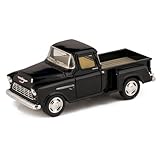
- CLASSIC DESIGN: Authentic 1:32 scale replica of the iconic 1955 Chevrolet Step Side pickup truck in vibrant paint finish with detailed exterior features
- FUNCTIONAL FEATURES: Working doors that open and close, plus pull-back action mechanism for interactive play value
- QUALITY CONSTRUCTION: Die-cast metal body construction with plastic components and rubber tires for enhanced durability and detail
- PERFECT SIZE: Compact 5-inch length makes it ideal for display or play while maintaining impressive detail and authenticity
- REALISTIC DETAILS: Features authentic styling elements including chrome-look trim, detailed grille, and period-correct wheel designs
5. Fordson truck prototypes, 1924–1926: the road vehicle that almost connected farm and factory
Ford built approximately 12 Fordson truck prototypes using the heavier Fordson tractor engine before canceling the project in favor of the Model AA. Few production vehicles are remembered less than projects that never reached the showroom, but these prototypes are valuable evidence of what manufacturers were trying to solve.
The Fordson tractor was associated with agricultural power. Putting its heavier engine into a road truck suggested a bridge between field work and freight work: a machine with the strength expected on a farm and the mobility required to reach a market or industrial site.
The canceled project also illustrates an important truth about industrial history. Progress was not a straight line from the Model T to the modern truck. Manufacturers tested several combinations of engines, frames, gearing, and body styles before the market settled on more practical solutions.
6. 1926 Chevrolet Superior Series X pickup: the light truck becomes normal
The 1926 Chevrolet Superior Series X pickup represents the expanding light-truck market. Documentation from The Henry Ford’s truck exhibits places it within the period when pickups were becoming useful, recognizable tools for farms, small businesses, and local commerce.
PC Slower Than It Used to Be?
A free scan shows the junk files, broken settings and background clutter dragging Windows down - then fixes them in one click.Free scan · Windows 10 & 11Crashes, No Sound, or Screen Glitches?
Random freezes, missing sound and display glitches usually trace back to one bad driver. Find and replace yours safely.Free scan · under a minuteA light pickup occupied the space between a passenger car and a heavy commercial truck. It could carry tools, produce, supplies, or a modest load without requiring the owner to operate a large fleet vehicle. That flexibility helped make motorized work transportation ordinary in places where a three-ton truck would have been excessive.
The Superior Series X matters less as a one-off icon than as evidence of a broad market shift: American commerce was beginning to expect a truck body to be available as part of a regular product line.
7. The Liberty Truck and the 1917–1918 Army convoy: standardization becomes strategy
The Liberty Truck was the standardized Class B military truck developed during World War I. Federal Highway Administration history describes it as carrying a nominal three-ton load and being capable of five tons. President Woodrow Wilson inspected early examples, underscoring the vehicle’s national importance.
The Liberty Truck’s major contribution was not just payload. Before standardization, a fragmented supplier base meant that different trucks could require different parts, tools, procedures, and maintenance knowledge. A standardized military design made procurement and repair more manageable at national scale.
Recommended Free Tools
The first Army truck convoy left Toledo in December 1917 and reached Baltimore in January 1918 despite severe winter conditions. During the war, approximately 30,000 trucks were driven to ports. These movements showed that trucks could transport themselves, their supplies, and their spare parts across a country where roads were often little more than dirt routes interrupted by mud, grades, bridges, and weather.
The convoy did not prove that trucks had already replaced railroads. It proved something more consequential: trucks could extend the freight network beyond the railhead, and a nation that wanted that capability needed better roads.
8. Mack AC, 1919–1930s: the severe-service heavy hauler
The Mack AC became associated with the postwar heavy-haul truck: a machine built around severe service, chain drive, and the growing possibility of over-the-road freight. It belongs in this story because the war had changed expectations. Trucking was no longer only an urban delivery business or a short farm haul; operators increasingly considered routes that connected towns and regions.
The AC’s importance is best understood through its working environment. Heavy trucks had to tolerate rough surfaces, limited repair facilities, steep grades, and loads that would have been unreasonable for a passenger-car conversion. Their operators also had to make economic calculations about fuel, tires, maintenance, and whether a road was actually passable.
What’s actually slowing this PC down?
Pick the symptom - the matching free tool is one click away.
This article does not assign the Mack AC a precise production total or rank it against every contemporary heavy truck. The safer historical conclusion is that it represents the postwar movement toward purpose-built, durable heavy freight equipment.
9. Autocar Model U and E-series electrics: garbage, cities, and the first commercial EV chapter
Autocar’s 1933 Model U returned to an engine-under-the-seat configuration and was selected by Washington, D.C.’s refuse department. That application deserves more attention than it usually receives. A city’s garbage system is a transportation network: collection vehicles must start and stop repeatedly, maneuver through narrow streets, carry bulky loads, and deliver refuse to a disposal site.
The Model U shows how truck design followed municipal needs rather than showroom fashion. A compact layout could improve maneuverability and put the body close to the useful length of the chassis.
Rank #3

- 1/24 scale collectible vehicle model
- This 1979 Ford F-150 Pickup Truck 2 Tone is a 8"Lx 3.5"Wx 3.25"H model with some plastic parts
- real rubber tires, opening doors, detailed interior and exterior
- Manufactured by Motormax
- Blue
Autocar also offered the E1, E3, and E5 electric vocational trucks during the 1920s and 1930s. These vehicles were used in American cities and provide a necessary correction to the idea that electric commercial vehicles began in the twenty-first century. Early electric trucks had limits in range, speed, battery weight, and charging infrastructure, but predictable urban routes were a logical place for them to work.
Together, the Model U and the E-series show that nation-building included sanitation and municipal reliability—not only hauling between distant warehouses.
10. GMC CCKW: mass logistics on rough ground
The GMC CCKW represents the military truck as a standardized logistical instrument. It was a 2.5-ton-class truck used to move supplies over rough terrain, where the success of an operation depended on a continuous flow of fuel, ammunition, food, tools, and replacement parts.
Its historical significance is therefore larger than any single technical specification. A military force can have tanks, aircraft, and artillery, but those systems are ineffective if trucks cannot keep them supplied. The CCKW belongs to the less visible layer of wartime power—the repeated, uncelebrated trips between supply points.
Model variations and military configurations are numerous, so exact specifications should be checked against military archives before being attached to a particular CCKW. The broad point is secure: standardized trucks made large-scale movement possible across terrain that ordinary commercial routes avoided.
11. Dodge Power Wagon, 1946 onward: military mobility becomes civilian utility
The Dodge Power Wagon carried wartime four-wheel-drive experience into civilian work. The WDX was developed as a civilian four-wheel-drive work truck derived from wartime Dodge trucks, creating a direct bridge from military logistics to farms, utility companies, forestry, construction, snow removal, and rural service work.
That bridge mattered because many American jobs took place beyond the pavement. A utility crew might need to reach a remote line. A farmer might need traction on a muddy access road. A construction team might be working where the road existed only because the project was creating it.
The Power Wagon did not make every rural route easy, and four-wheel drive could not replace bridges or maintenance. It did, however, expand the practical territory in which a small crew could bring tools and equipment under its own power.
12. Diamond T 201: the specialist behind commercial and military hauling
The Diamond T 201 stands for the specialist heavy truck companies that served both commercial hauling and military production. Diamond T was not merely building conspicuous consumer products; it was part of the industrial network that supplied dependable chassis for demanding freight and service work.
The Tool Desk
Outbyte PC Repair FREERepair Windows errors before they cause bigger problemsFix Now →Outbyte Driver Updater FREEFix the driver behind crashes, sound loss and screen glitchesFind Drivers →Trucks in this category mattered because payload was only one part of the job. Operators needed frames, axles, cooling systems, brakes, and drivetrains that could withstand repeated use with heavy bodies and difficult loads. A truck that spent its life moving equipment, machinery, or supplies rarely received the public attention given to a sports car, but it could be more consequential to an operating business.
Exact years, payloads, and production roles vary by configuration and should be verified in a Diamond T archive or period catalog. Its place in this list is as a representative of the heavy-duty manufacturers that connected American industry to both civilian freight and wartime demand.
13. International Harvester K and KB series: the regional work economy
The International Harvester K and KB series represent the trucks that served farms, dealers, contractors, and regional haulers. Their importance was local and cumulative. They carried crops, feed, tools, machinery, and building supplies through the network of roads linking rural properties with towns and rail depots.
International Harvester’s position in agricultural equipment made this kind of truck especially relevant to the farm economy. A truck did not have to be a cross-country tractor to change farm productivity. It needed to move a load at the right time, survive seasonal work, and fit the finances and maintenance abilities of its owner.
The K and KB families also illustrate why regional hauling should not be treated as a lesser form of transportation. Much of the national economy was assembled from thousands of short trips, each connecting a producer, dealer, processor, railroad, or local customer.
14. White 3000: heavy trucks for the construction age
The White 3000, or a comparable White heavy truck of the period, represents the equipment that moved construction materials and industrial supplies as paved highways expanded. It was the kind of truck needed when the work itself was changing the landscape: road projects, bridges, utilities, factories, housing, and commercial buildings all required a steady supply of material.
Rank #4
Construction freight is unusually dependent on trucks because the destination often moves. A railroad can bring steel or aggregate to a fixed siding, but a truck can take a load from that siding to a job site, then return for another load. As roads improved, the same flexibility supported larger construction markets and longer supply chains.
The White 3000 is used here as a representative heavy-work model rather than as a claim about one universally dominant truck. Model-specific dates, payload figures, and production totals depend on the exact version and should be checked in period White documentation.
Do these 3 things before closing this tab:
1Repair Windows errors before they cause bigger problems2Scan for outdated or missing drivers - takes under a minute3Clear out junk files and repair common Windows errors15. Kenworth 500-Series Needle Nose: the highway tractor takes shape
Kenworth’s official centennial history identifies the 500-Series as a major commercial truck line entering the 1940s; the line later became known as the Needle Nose. It represents the development of purpose-built highway tractors as better roads made long-distance trucking more practical.
A highway tractor had a different job from a farm truck or municipal hauler. It needed to pull a trailer for long periods, provide service access, manage heavier sustained loads, and give operators a workable platform for freight routes. The design reflected a freight economy that was becoming less dependent on a single railroad corridor.
The significance of the 500-Series was not that it instantly created modern trucking. Rather, it belonged to the gradual professionalization of long-haul work, when truck design, road engineering, freight scheduling, and trailer systems began developing together.
16. Peterbilt Model 351: the long-running professional hauler
Peterbilt’s official history identifies the Model 351 as the beginning of the company’s longest production run. That makes it useful for understanding how a truck could become part of an enduring commercial system rather than a short-lived experiment.
Quick wins for a faster PC:
Clear out junk files and repair common Windows errorsFree Scan →Fix the driver behind crashes, sound loss and screen glitchesFind Drivers →Repair Windows errors before they cause bigger problemsFix Now →The 351 belongs to the era when operators increasingly expected a heavy truck to be designed around sustained highway use. Long-haul equipment had to balance carrying capacity, driver visibility, maintenance access, fuel consumption, and the demands of increasingly standardized freight routes.
Its story also points to the professionalization of trucking. The industry was becoming a specialized occupation with dedicated equipment, operating practices, repair networks, and businesses built around moving goods by road.
17. Peterbilt Model 359, 1967: the conventional tractor as an American symbol
Peterbilt identifies the 1967 Model 359 as a major milestone in its history. The truck became a recognizable conventional highway tractor, with the long-hood layout that many people now associate with American over-the-road trucking.
Its historical value is not a claim that it was the single most important or best truck of its time. It is that the Model 359 made visible a mature form of road freight: a dedicated tractor pulling specialized trailers through a national highway network.
Recommended Free Tools
By this point, the nation-building truck was becoming familiar. That familiarity can obscure the achievement. A truck that looks ordinary in a highway photograph represents the integration of roads, fuel stations, repair shops, freight terminals, regulations, trailers, and drivers into one system.
18. Ford F-Series F-1, 1948: the work truck becomes an institution
Ford introduced the F-Series in 1948, with the F-1 as its light-duty pickup. Historical material preserved by The Henry Ford identifies the introduction as a significant milestone in the move from automobile-derived utility vehicles to a distinct pickup-truck product line.
The F-1 is the natural closing example because it made the work truck feel permanent and ordinary. Farmers, tradespeople, delivery operators, and small-business owners could buy a vehicle designed around a separate truck identity rather than adapting a passenger car or purchasing a much larger commercial chassis.
That ordinariness was the final measure of success. Once the pickup became a normal part of American work, the truck no longer looked like a technological revolution. It became the dependable link between a person, a job site, a farm, a supplier, and a customer.
Free tools Windows power users keep installed
One-click scans. No signup required.
What these trucks changed beyond transportation
They weakened the railroad’s monopoly over the final mile
Trucks did not replace railroads. Rail remained highly efficient for many bulk and long-distance movements. Trucks changed the connection around the railroad. They could collect freight from places without sidings, deliver it directly to businesses, and carry loads from a rail terminal to a destination that rail could not conveniently serve.
Best Value

- SCALE DETAILS: Precisely crafted 1:46 O scale die-cast metal model of the 2019 Dodge Ram 1500 pickup truck, measuring approximately 5 inches in length
- AUTHENTIC DESIGN: Features detailed black exterior finish, realistic wheels, and accurate body styling matching the full-size 2019 Ram 1500 truck
- CONSTRUCTION: Built with durable die-cast metal construction and high-quality plastic components for long-lasting play value
- DISPLAY QUALITY: Perfect for collectors and enthusiasts, with authentic detailing including grille, headlights, and body contours
- RECOMMENDED AGE: Suitable for ages 3 years and up, makes an ideal gift for truck enthusiasts and young collectors
They turned road quality into an economic issue
A poor road was not merely uncomfortable. It damaged tires, consumed fuel, slowed deliveries, broke components, and limited the weight a truck could carry. The early transcontinental trips and wartime convoys made these costs visible. Better roads became a matter of national commerce and military readiness, not just local convenience.
They created demand for specialized bodies and services
A chassis became the foundation for a delivery van, dump body, refuse body, utility service truck, stake body, tanker, wrecker, or tractor. That encouraged body builders, parts suppliers, mechanics, tire dealers, fuel stations, and financing businesses. The truck industry was therefore larger than the manufacturers whose badges appeared on the grille.
They made remote work more practical
Four-wheel-drive trucks, heavier frames, and purpose-built vocational designs extended work into places that were difficult to reach by passenger car. Rural electrification, forestry, construction, utility maintenance, snow removal, and municipal service all depended on vehicles that could carry tools and equipment beyond the end of a paved road.
Windows Errors? Fix Them Before They Spread
Repair common Windows errors and clear accumulated junk for a smoother, more stable PC - no reinstall needed.Free scan · no reinstallOutdated Drivers Are Slowing You Down
One free scan finds every outdated or missing driver and matches the right update for your exact hardware.Free scan · exact hardware matchWhy these trucks are less remembered
Passenger cars are easier to turn into cultural icons. They are associated with styling, movies, racing, personal freedom, and nostalgia. Work trucks are judged by whether they started in the morning, carried the load, and returned in time for the next job. Reliability is historically important but visually quiet.
There is also a documentation problem. A famous car may have a clear production figure and a well-preserved showroom story. A commercial truck may have been rebuilt, fitted with a different body, sold through several owners, or recorded only in a municipal fleet document or period catalog. That makes simple rankings misleading.
These 18 examples should therefore not be read as a league table. The evidence is strongest for the larger transformation: trucks expanded freight beyond rail sidings, exposed the need for better roads, and supplied the farms, cities, armed forces, and construction sites that made national growth possible.
Sources and historical context
The backbone for the transportation and wartime sections is the Federal Highway Administration’s history of American roads, freight, and Army convoying. The Henry Ford provides collection and exhibit documentation for the Ford Model TT, Fordson prototypes, Chevrolet Superior Series X, Ford F-1, and the Smith Form-a-Truck conversion. Autocar, Kenworth, and Peterbilt provide manufacturer histories for their respective vehicles; those claims are identified as manufacturer claims where they involve a first or a company milestone.
What’s actually slowing this PC down?
Pick the symptom - the matching free tool is one click away.
The Library of Congress and Smithsonian transportation collections are useful for broader research context, period photographs, published trucking histories, and preserved records. For vehicles such as the GMC CCKW, Mack AC, Diamond T 201, International Harvester K or KB, and White 3000, model-specific production figures and specifications should be checked against military archives, corporate records, museum collections, or period catalogs rather than inferred from general truck history.
Frequently Asked Questions
What was the first American motor truck?
The Autocar 1899 Delivery Wagon is identified by Autocar’s official history as the first motor truck commercially available in the United States. Because that is a manufacturer-attributed superlative, it is best presented with the attribution rather than as an uncontested industry-wide fact.
Why was the Ford Model TT important if the Model T already existed?
The Model T was primarily a passenger-car platform, while the Model TT added a reinforced chassis, lower gearing, a worm-drive rear axle, and heavier truck equipment. Those changes made it better suited to hauling agricultural products and business loads.
Did trucks replace American railroads?
No. Railroads remained essential for many long-distance and bulk movements. Trucks changed the parts of the freight journey that rail could not serve efficiently, especially farm-to-market trips, local delivery, and the connection between rail depots and final destinations.
The Tool Desk
Outbyte Driver Updater FREEScan for outdated or missing drivers - takes under a minuteDriver Scan →Outbyte PC Repair FREERepair Windows errors before they cause bigger problemsFix Now →How did World War I change American trucking?
World War I did not create every truck design on this list, but it demonstrated the strategic value of motor freight. Army convoys showed that trucks could move supplies across the country, while difficult road conditions helped build the case for better roads and more coordinated highway planning.
Why do some entries describe a truck family or fleet instead of one exact model?
The list groups the Liberty Truck with the early Army convoy because the important historical development was the combination of standardized military trucks and nationwide movement. It also groups the Autocar Model U with Autocar’s E-series electric vocational trucks because both illustrate overlooked municipal and urban service work.
The Bottom Line
The trucks that built America were not always the fastest, biggest, or most famous. They were the vehicles that made the next delivery, reached the farm, supplied the convoy, collected the refuse, carried the tools, and connected the railhead to the place where work actually happened. Their success made them ordinary—and that is precisely why they are easy to overlook.
Quick Recap
Product prices and availability are accurate as of the date/time indicated and are subject to change. Any price and availability information displayed on Amazon at the time of purchase will apply.




