Quick wins for a faster PC:
Repair Windows errors before they cause bigger problemsFix Now →Scan for outdated or missing drivers - takes under a minuteDriver Scan →Clear out junk files and repair common Windows errorsFree Scan →These 15 scary Indy 500 crashes include fatal race-day tragedies, Month of May practice accidents, opening-lap pileups and modern airborne impacts. They are presented chronologically, with the focus on what happened, why fans remember each incident and what it revealed about safety at Indianapolis.
The Indianapolis 500 has produced terrifying opening-lap pileups, fiery impacts, airborne cars and practice crashes that ended promising careers. These 15 incidents stand out not only for what fans saw, but also for what they revealed about the changing risks—and safety standards—of racing at Indianapolis.


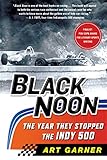
As an Amazon Associate I earn from qualifying purchases.
There is no official ranking of the scariest crashes in Indy 500 history. This is a chronological selection based on visual impact, human consequence, historical importance and the changes each era helped bring to the Speedway. The list separates race crashes from practice incidents during the Month of May. That distinction matters: several of the most important Indianapolis tragedies happened before the green flag on race day.
A note on language: The word scary here describes the visual and emotional shock of an incident. The accounts below avoid graphic details and use precise terms such as killed, died from injuries and suffered fatal injuries.
15 scary Indianapolis 500 crashes
| No. | Year | Driver or drivers | Session | Why it remains memorable |
|---|---|---|---|---|
| 1 | 1933 | Multiple drivers | Race | A 42-car field and multiple fatal accidents made it one of the darkest races in Speedway history. |
| 2 | 1955 | Bill Vukovich | Race | The defending two-time winner was killed while leading. |
| 3 | 1958 | Pat O’Connor and others | Race | A massive first-lap accident claimed O’Connor and shook the sport. |
| 4 | 1964 | Eddie Sachs and Dave MacDonald | Race | The fiery Turn 4 crash stopped the 500 for the first time and helped end gasoline use. |
| 5 | 1973 | Salt Walther | Race | A chaotic, weather-affected opening lap produced one of the era’s most memorable survivals. |
| 6 | 1973 | Art Pollard | Practice | Pollard’s death showed that the dangers of the Month of May extended beyond race day. |
| 7 | 1973 | Swede Savage | Race | Savage suffered devastating injuries in the rain-delayed event and died 33 days later. |
| 8 | 1981 | Danny Ongais | Race | A head-on impact left the famously fearless driver seriously injured and out for the rest of the season. |
| 9 | 1982 | Kevin Cogan, Mario Andretti and others | Race start | A sudden pace-lap incident wrecked several front-running cars before the race had properly begun. |
| 10 | 1992 | Jovy Marcelo | Practice | The rookie suffered fatal injuries as speeds rose during the Month of May. |
| 11 | 1995 | Stan Fox, Eddie Cheever Jr. and others | Race | A violent first-lap, first-turn crash left Fox unconscious and stunned spectators. |
| 12 | 1996 | Scott Brayton | Practice | The two-time consecutive pole winner was killed while preparing for the 500. |
| 13 | 2010 | Mike Conway | Race | An airborne impact demonstrated how quickly a modern Indy car could still become a survival test. |
| 14 | 2017 | Scott Dixon and Jay Howard | Race | Dixon’s car traveled roughly 200 yards through the air before modern safety systems helped protect him. |
| 15 | 2011 | J.R. Hildebrand | Race | A final-corner wall strike turned an almost certain victory into one of the race’s most dramatic finishes. |
1. The 1933 Indianapolis 500 multi-car tragedy
The 1933 500 is remembered as one of the darkest races ever held at Indianapolis. The official results archive records a field of 42 cars, an unusually large field by modern standards, while historical accounts describe multiple fatal accidents during the event.
The important context is what the drivers did not have. Early Indy cars lacked the strong survival cells, effective restraints, energy-absorbing barriers and organized emergency systems familiar to modern competitors. A crash that might now be contained by the car or barrier could then expose the driver to the full force of the impact.
The 1933 race should not be reduced to an uncertain number of fatalities repeated without careful archival support. Its significance is clear even without that figure: it represents the extreme vulnerability of drivers in the pre-safety era and the human cost of treating Indianapolis primarily as a test of speed and endurance.
The Tool Desk
Outbyte PC Repair FREERepair Windows errors before they cause bigger problemsFix Now →Outbyte Driver Updater FREEScan for outdated or missing drivers - takes under a minuteDriver Scan →2. Bill Vukovich’s fatal 1955 crash
Bill Vukovich entered the 1955 Indianapolis 500 as the defending two-time winner and was leading when he became involved in a multi-car accident. He was killed in the crash, and Bob Sweikert’s victory was overshadowed by the loss of the race’s dominant driver.
Vukovich’s story remains especially unsettling because he was not an inexperienced driver struggling at the back of the field. He was a champion, in control of the race and competing at the front when the chain reaction unfolded. Indianapolis had already established itself as the greatest stage in American open-wheel racing; Vukovich’s death showed that status and skill did not make the track forgiving.
Unlike the 1964 crash, this incident did not produce one clearly documented immediate technical change in the 500’s rules. Its lasting importance is instead part of the cumulative safety history of the event—and a reminder that the sport’s most capable drivers were exposed to risks their equipment could not adequately manage.
3. Pat O’Connor’s first-lap crash in 1958
Pat O’Connor died in the massive first-lap accident at the 1958 Indianapolis 500. A large group of cars was involved, turning the opening moments of the race into a scene of sudden confusion and destruction.
The crash is also woven into A.J. Foyt’s personal Indy 500 history. O’Connor had been a mentor to Foyt, who was making his rookie appearance at Indianapolis. For Foyt and many other drivers, this was not an anonymous accident involving distant competitors; it was the loss of a respected colleague and teacher.
The incident belongs to a period when a full-field opening-lap crash could overwhelm the limited barriers, medical response and driver-protection technology available. It helped keep safety concerns in view as Indianapolis moved toward the more structured systems that would arrive over subsequent decades.
4. Eddie Sachs and Dave MacDonald, 1964
On the second lap of the 1964 race, Eddie Sachs and rookie Dave MacDonald were killed in a fiery crash in Turn 4. Their cars became entangled, and the resulting fire forced officials to stop the race—a first for an Indianapolis 500 accident.
This was a watershed moment for both safety and race procedure. The Speedway’s historical record associates the crash with the end of gasoline use in the 500; the race moved to methanol afterward. Methanol burns differently from gasoline and offered important advantages in fire response, although fuel was only one part of the broader safety problem.
Free tools Windows power users keep installed
One-click scans. No signup required.
The crash did not single-handedly create modern Indy-car safety. Stronger cars, better restraints, improved barriers, emergency response and later crash testing all developed over time. But Sachs and MacDonald’s deaths made the danger impossible to treat as an unavoidable background feature of the race.
5. Salt Walther’s opening-lap crash, 1973
The opening of the 1973 Indianapolis 500 produced a spectacular crash involving Salt Walther. The event was held amid difficult weather and chaotic conditions, and Walther suffered major injuries in the accident.
For fans, the visual shock came from seeing a car disintegrate and a race interrupted almost immediately after the start. For the sport, the incident was another reminder that Indianapolis risked becoming most dangerous precisely when a large group of cars was compressed together at speed.
Outdated Drivers Are Slowing You Down
One free scan finds every outdated or missing driver and matches the right update for your exact hardware.Free scan · exact hardware matchPC Slower Than It Used to Be?
A free scan shows the junk files, broken settings and background clutter dragging Windows down - then fixes them in one click.Free scan · Windows 10 & 11Walther’s name remained closely associated with the accident for decades. That legacy says as much about the era’s limited driver protection as it does about the crash itself. The historical record supports the seriousness of his injuries; more specific claims about their exact nature should not be repeated without a dedicated medical or contemporary race report.
6. Art Pollard’s fatal practice crash, 1973
Art Pollard was killed during practice for the 1973 Indianapolis 500. His crash occurred before the race, but it was part of a Month of May marked by a series of serious accidents and dreadful weather.
Separating Pollard’s crash from the race-day incidents is important. When people refer broadly to the tragedies of the 1973 500, it can sound as though every incident happened during the shortened race itself. Pollard’s death demonstrates that practice was not a low-risk warm-up period. Drivers were still searching for speed, testing setups and learning how cars behaved around Indianapolis.
Pollard’s crash also illustrates why Indianapolis safety history cannot be written only from race results. The danger existed throughout the month, whenever a car entered the track.
7. Swede Savage’s 1973 race crash
Swede Savage suffered devastating injuries during the rain-delayed, three-day 1973 Indianapolis 500 and died 33 days later. His accident was one of the events that made Gordon Johncock’s victory deeply bittersweet: Johncock won, but his teammate’s condition cast a shadow over the celebration.
The 1973 event was already difficult because weather repeatedly disrupted the schedule and race conditions. Savage’s crash added another layer of uncertainty to a race that had become a test of patience, judgment and survival as much as speed.
It is important to describe the timing precisely. Savage did not die immediately in the crash; he died 33 days later. That distinction matters in historical writing, especially when a race-day incident and a later death from injuries are compressed into one sentence.
8. Danny Ongais’ serious 1981 crash
Danny Ongais suffered serious injuries in a head-on crash during the 1981 Indianapolis 500. He missed the remainder of the season while recovering, making the incident both one of the most violent crashes of his career and a clear survival story.
Ongais had a reputation for attacking Indianapolis with unusual commitment, but bravery could not compensate for the limited protection available in the early 1980s. The crash sits at the dividing line between the old image of the Indy driver as almost completely exposed and the later emphasis on survival cells, restraints and impact management.
Ongais eventually returned to Indianapolis. His career therefore offers a useful counterpoint to the fatal crashes in this list: survival did not mean that the consequences were small, and returning to the 500 after a major injury required a long recovery as well as exceptional determination.
9. Kevin Cogan’s pace-lap crash, 1982
At the beginning of the 1982 race, Kevin Cogan’s car suddenly veered into the field during the pace-lap sequence. The resulting opening-lap crash involved several front-running cars, including Mario Andretti, and disrupted the start before the race had properly settled into its first lap.
That timing is why the incident became notorious. Fans had spent weeks watching qualifying and anticipating a contest among the fastest cars. Instead, several prominent entries were eliminated almost instantly in a sudden incident that produced no easy explanation for spectators.
The cause should not be presented as definitively established without a technical report. The responsible historical description is that Cogan’s car made a sudden move into the field, triggering a major opening-lap accident. It was a powerful reminder that the most dangerous moment could arrive before a driver had completed a racing lap.
10. Jovy Marcelo’s fatal practice crash, 1992
Rookie Jovy Marcelo suffered fatal injuries in a practice crash on May 15, 1992. Because the accident happened during practice rather than the 500 itself, it is sometimes overlooked in lists focused only on race-day incidents.
That would miss an important part of the Indianapolis experience. The Month of May involved repeated high-speed running, and drivers had to find the limit while qualifying speeds were rising rapidly. Marcelo’s death showed that a driver could face the full danger of Indianapolis without being in a crowded race or fighting for position.
Marcelo’s crash also affected the atmosphere around the 1992 event. The 500 is built around spectacle and tradition, but practice-week tragedies make clear that every session carries consequences when cars run at Indianapolis speeds.
Recommended Free Tools
11. Stan Fox’s first-lap, first-turn crash, 1995
Stan Fox was involved in a frightening first-lap, first-turn crash in the 1995 Indianapolis 500. Eddie Cheever Jr. was among the other drivers involved. Fox was left unconscious, and the incident shook the drivers and spectators who saw it.
The crash was memorable because it unfolded in the most crowded part of the circuit: the first turn, with the field still tightly grouped and drivers trying to establish position. A car moving unpredictably in that moment could collect several competitors before anyone had room to react.
Fox survived, but the crash was not a harmless spectacle. Its visual violence reflected how much energy the cars carried and how exposed drivers could still be when an opening-lap incident became airborne or involved multiple machines. Survival was possible, but it was not yet something the sport could take for granted.
12. Scott Brayton’s fatal practice crash, 1996
Scott Brayton was killed while practicing for the 1996 Indianapolis 500, shortly after earning his second consecutive pole position. His death ended a career revival for one of Indianapolis’s leading specialists and stunned a community that had just watched him achieve another remarkable qualifying performance.
What’s actually slowing this PC down?
Pick the symptom - the matching free tool is one click away.
Brayton’s story is especially haunting because of that contrast. He had demonstrated extraordinary speed and mastery of the Speedway, yet the same pursuit of performance placed him in an environment where a small failure or loss of control could have fatal consequences.
The incident also led to a poignant continuation of the 1996 race story. After Brayton’s death, John Menard hired Danny Ongais as a replacement. Ongais had previously suffered the serious 1981 Indianapolis crash and a concussion during 1987 practice, yet he returned to the 500 in 1996 and finished seventh after starting at the rear. That comeback is not a separate crash, but it shows how one tragedy affected the people and decisions surrounding the race.
13. Mike Conway’s airborne 2010 race crash
Mike Conway’s crash in the 2010 Indianapolis 500 was one of the most frightening modern examples of an Indy car becoming airborne. The impact sent Conway’s car into the catch-fence area and left him with serious injuries, although he survived the crash.
The incident was a reminder that better equipment had not eliminated risk. Modern cars and barriers could improve a driver’s odds, but an impact involving a car leaving the racing surface still exposed difficult questions about energy, fencing and the paths a wreck could take.
Do these 3 things before closing this tab:
1Repair Windows errors before they cause bigger problems2Scan for outdated or missing drivers - takes under a minute3Clear out junk files and repair common Windows errorsConway’s survival belongs in the cumulative safety story rather than being assigned to one single invention. Indianapolis safety is the result of many developments working together: stronger driver cells, improved restraints, energy-absorbing barriers, better medical response and more systematic analysis of crashes.
14. Scott Dixon’s airborne crash, 2017
On lap 53 of the 2017 Indianapolis 500, Jay Howard hit the Turn 1 wall. Scott Dixon’s car then struck Howard’s car, launched into the air and traveled roughly 200 yards before landing on the inside SAFER Barrier and spinning down the wall.
To the eye, it looked like a crash from the most dangerous chapters of Indianapolis history. The car was airborne, the impact was violent and the wreckage spread across the corner. Yet Dixon escaped with comparatively minor injuries, a result that highlighted how far car construction and barrier technology had advanced.
The SAFER Barrier was especially important because it was designed to absorb and dissipate impact energy rather than return all of it to the car and driver. The 2017 crash did not prove that Indianapolis was safe; it showed that modern safety systems could turn a visually terrifying impact into a survivable one.
Recommended Free Tools
15. J.R. Hildebrand’s final-corner crash, 2011
J.R. Hildebrand’s crash on the final corner of the 2011 Indianapolis 500 remains one of the most emotionally shocking finishes in the race’s modern history. Leading on the final lap, Hildebrand approached Turn 4 with victory seemingly within reach, struck the outside wall and tried to keep the damaged car moving toward the finish.
Best Value
Dan Wheldon passed as Hildebrand limped toward the line and won the race. Hildebrand still crossed the finish line, but the image of the damaged car sliding along the wall became the defining moment of the event.
This crash was different from the fatal and practice incidents earlier in the list: the driver survived, and the immediate consequence was sporting rather than lethal. It nevertheless shook race fans because it compressed the entire emotional risk of Indianapolis into a few seconds. At the Speedway, even the last corner of the last lap can punish a driver who is one turn from victory.
Independent reader supportYour contribution helps us test, update, and keep practical guides available for everyone.What these crashes changed at Indianapolis
No single crash created modern Indy 500 safety. The history is cumulative, and it includes lessons learned from fatal accidents, near misses, engineering work and changes in race procedure.
- Fuel and fire response: The 1964 Sachs–MacDonald crash is associated with the end of gasoline use in the 500 and the subsequent adoption of methanol.
- Car construction: Stronger survival cells and improved cockpit protection reduced the chance that the driver would absorb the full energy of a crash.
- Restraints: Better belts and driver-restraint systems helped keep competitors inside a survivable space during impacts and rollovers.
- Barriers: SAFER Barriers were developed to absorb energy and reduce the severity of wall impacts. Scott Dixon’s 2017 crash is a vivid example of their importance.
- Emergency response: Medical teams, extraction procedures and track-response systems became more sophisticated, improving the odds after a serious incident.
- Crash analysis: Modern racing responds not only to the headline crash but also to the forces, trajectories and failure points revealed by data.
The right lesson is not that one driver’s death or one spectacular wreck automatically produced a rule change. Some incidents had a direct documented consequence, such as the fuel change after 1964. Others contributed to a long process in which Indianapolis gradually became better at preventing, absorbing and responding to crashes.
One famous crash that does not belong on this list
Kenny Bräck’s terrifying 2003 crash is sometimes included in lists of Indy 500 crashes, but it happened at Texas Motor Speedway later that season—not at Indianapolis. It was a major IndyCar crash and an important survival story, but calling it an Indy 500 incident would be geographically wrong.
That distinction is more than a technicality. Indianapolis has its own practice, qualifying and race history, and the Month of May’s danger should not be padded with incidents from other tracks simply because they were dramatic. The 2010 Conway and 2011 Hildebrand entries above are Indianapolis-specific examples from the same broad modern era.
Further Indianapolis 500 history
The Indianapolis Motor Speedway Museum is another strong editorial destination for readers who want official historical material, museum exhibits, publications and memorabilia. Availability, visit arrangements and any partnership or referral program can change, so check the museum or official Speedway channels directly before planning a visit or purchase.
Do these 3 things before closing this tab:
1Repair Windows errors before they cause bigger problems2Fix the driver behind crashes, sound loss and screen glitches3Clear out junk files and repair common Windows errorsCollectors may also encounter Indianapolis 500 yearbooks and race programs, including historical editions covering races from the late 1960s through 1997. These are useful for researching a particular year, but listings, condition and prices vary substantially; a specific in-stock edition should be verified before it is recommended.
Sources and historical basis
The chronology and race classifications are based on Indianapolis Motor Speedway historical coverage and official results archives, supplemented by INDYCAR historical and technical material. The official records are particularly important for separating race-day incidents from practice crashes, confirming lap and session details where available, and avoiding the common mistake of treating Bräck’s Texas accident as an Indy 500 crash.
Frequently Asked Questions
Did all 15 crashes happen during the Indianapolis 500 race?
No. The list includes race crashes, opening-lap incidents, practice crashes and the pace-lap accident involving Kevin Cogan. Practice and qualifying accidents are labeled separately because the Month of May’s risks extend beyond the 500 itself.
Why is Kenny Bräck’s 2003 crash not included?
Kenny Bräck’s famous 2003 crash happened at Texas Motor Speedway later that season, not at Indianapolis. It is an important IndyCar crash, but it is not an Indy 500 crash and is excluded here.
Crashes, No Sound, or Screen Glitches?
Random freezes, missing sound and display glitches usually trace back to one bad driver. Find and replace yours safely.Free scan · under a minutePC Slower Than It Used to Be?
A free scan shows the junk files, broken settings and background clutter dragging Windows down - then fixes them in one click.Free scan · Windows 10 & 11Which Indy 500 crash led to the biggest safety change?
The 1964 Sachs–MacDonald crash is the clearest example of a direct historical consequence: the race was stopped for the first time because of an accident, and gasoline use ended afterward in favor of methanol. Most other safety improvements developed cumulatively over many years.
Which modern Indy 500 crash best shows how safety has improved?
Scott Dixon’s 2017 crash is a strong modern example. His car traveled roughly 200 yards through the air before landing on the inside SAFER Barrier, yet he escaped with comparatively minor injuries.
The Bottom Line
The most frightening Indy 500 crashes are not remembered only because they looked spectacular. They mark the human cost of speed and the long safety evolution that followed—from the 1964 fuel change to the barriers, car structures and emergency systems that helped Scott Dixon survive a seemingly catastrophic impact in 2017.
Quick Recap
Product prices and availability are accurate as of the date/time indicated and are subject to change. Any price and availability information displayed on Amazon at the time of purchase will apply.




