The strangest cars were usually answers to real problems: affordable postwar transport, maximum cabin space, amphibious travel, or lower emissions. Their unusual shapes and layouts exposed assumptions that ordinary cars treated as fixed. The Stout Scarab, Peel P50, BMW Isetta, GM EV1 and nine other outliers show how experiments can influence vehicle design and mobility debates even when sales are modest.
The 12 cars at a glance
| Car | Years | Convention it challenged |
|---|---|---|
| Stout Scarab | 1930s–40s | Front-engine, hood-and-trunk family-car packaging |
| Dymaxion | 1933 | Four wheels and conventional aerodynamic proportions |
| Citroën 2CV | 1948–1990 | Complexity and cost as measures of a useful car |
| Citroën DS | 1955 | Conservative family-sedan styling and suspension design |
| BMW Isetta | 1955–1962 | Side-door access and normal-car dimensions |
| Messerschmitt KR200 | 1956–1964 | Side-by-side seating and a conventional body |
| Amphicar Model 770 | 1961–1968 | Separate road and water vehicles |
| Peel P50 | 1962–1965 | The minimum size needed for a one-person car |
| Reliant Robin | 1973–2002, with later revivals | Four-wheel stability and ordinary licensing assumptions |
| General Motors EV1 | 1996–1999 | Internal combustion as the default powertrain |
| Fiat Multipla | 1998–2010 | Low, conventional proportions for a family car |
| Pontiac Aztek | 2001–2005 | The idea that a crossover had to look like a traditional SUV |
Cars that rethought the family cabin
Stout Scarab: the car as a room
The Stout Scarab of the 1930s and 1940s moved the engine to the rear and pushed the passenger compartment forward in a cab-forward layout. Its beetle-like streamlining was only part of the experiment: the interior could be rearranged, making space and seating flexibility central to the family car.
As an Amazon Associate I earn from qualifying purchases.
It is often described as a forerunner of the minivan because it treated interior volume as the primary design problem rather than an afterthought behind a long hood and separate trunk. Later people carriers did not copy every detail, but they adopted the same principle: packaging can matter more than traditional proportions.
Outdated Drivers Are Slowing You Down
One free scan finds every outdated or missing driver and matches the right update for your exact hardware.Free scan · exact hardware matchWindows Errors? Fix Them Before They Spread
Repair common Windows errors and clear accumulated junk for a smoother, more stable PC - no reinstall needed.Free scan · no reinstallCitroën 2CV: minimalism as mass mobility
Introduced in 1948, the Citroën 2CV was deliberately utilitarian. Its long-travel suspension, simple body and low running costs were the product features, not compromises hidden behind luxury trim.
#1 Best Overall
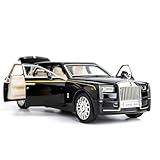
- Product size: 6.69*2.36*1.97 inches Weight: 0.7 pounds Outer packaging: exquisite color translucent packaging box
- Material: Die-cast car model, made of zinc alloy, with plastic parts, rubber tires, detailed interior and exterior decoration.
- Function: Press the two wheels of the front car to trigger the sound of the engine and the lights, with upright car logos,the angel logo is stored in the hood. The details of the body interior are realistic. Place the car on a flat ground, press the body and pull it back, the car will drive forward. (With pull back function)
- This Rolls-Royce Phantom 1/32 car model pull back car is very suitable for children to play with. The paint is exquisite and feels good, and it is heavy to hold. It is also very suitable for car model enthusiasts as a decoration.
- Accessories and collections: This product is very suitable for static accessories and can be used as an accessory next to a computer. For those who are passionate about collecting model car models, this is a great art collection.
Louwman’s account of postwar motoring places the 2CV among the cars that displaced the brief European microcar boom, alongside models such as the DAF, Mini and Volkswagen Beetle. That transition explains why the 2CV matters: it showed that a full-size, genuinely useful car could deliver cheap mobility without the extreme compromises of a tiny three-wheeler.
Citroën DS: science fiction for the school run
The 1955 Citroën DS looked unlike the upright sedans around it. Its smooth aerodynamic body was paired with hydropneumatic suspension, giving a family car technology and visual drama usually associated with prototypes.
The DS demonstrated that innovation did not have to be confined to a racing car or a luxury limousine. A practical sedan could make advanced engineering visible to ordinary owners, influencing how designers thought about ride quality, aerodynamics and the emotional appeal of a family vehicle.
Do these 3 things before closing this tab:
1Fix the driver behind crashes, sound loss and screen glitches2Clear out junk files and repair common Windows errors3Scan for outdated or missing drivers - takes under a minuteFiat Multipla: six seats in a compact footprint
The 1998–2010 Fiat Multipla used a tall body and an unusual six-seat cabin, including a front-center seat, to put people and usable volume ahead of conventional proportions. Its styling was polarizing, but the packaging was purposeful: a compact exterior could serve a larger family when the interior was designed from the seats outward.
The Multipla remains a reference point because it separated practicality from the visual cues buyers expected. It made clear that a family car can be judged by access, visibility and seating flexibility even when its silhouette is difficult to love.
Pontiac Aztek: the crossover as lifestyle equipment
The 2001–2005 Pontiac Aztek mixed crossover dimensions with camping-oriented utility. Its exterior became one of the era’s most disputed designs, yet the underlying brief anticipated the modern crossover’s promise: one vehicle that could carry people, equipment and recreational gear without the bulk of a traditional truck-based SUV.
The Aztek is therefore useful as a design case study. Public reaction to its appearance became so strong that it overshadowed the practical idea it was trying to establish. A car can be early to a category and still lose the argument if its form prevents buyers from seeing the function.
The Tool Desk
Outbyte Driver Updater FREEFix the driver behind crashes, sound loss and screen glitchesFind Drivers →Outbyte PC Repair FREERepair Windows errors before they cause bigger problemsFix Now →Microcars and the economics of tiny transport
BMW Isetta: a bubble car for a rebuilding Europe
The BMW Isetta, sold from 1955 to 1962, used a bubble-shaped body and a front-opening door. At 2.30 metres long and 1.40 metres wide, it occupied far less road and parking space than a conventional family car.
Rank #2

- 【4 Pcs Diecast Cars Set】Four different diecast car models have different types of bodies and colors, including sports cars/trucks/sedans/racing cars, all measuring 4.9 × 2 × 1.4 inches. The standard 1:36 ratio, open doors, and bright color combinations faithfully capture the eternal aesthetics while reflecting vibrant the vitality of racing sports!
- 【Race Real Experience】Our 1:36 alloy model car adopts a double door mode, allowing kids to better observe the internal structural details of the race car toys, and incorporates high-quality elastic tires,these diecast cars high-performance wheels provide enhanced traction, allowing smooth operation across multiple surfaces including hard floors and textured fabrics.
- 【Double Packaging Box Design】There are 4 independent mini boxes in the box for easy storage and sharing. All boxes are neatly placed in a decorative gift collection box, which is perfect for giving a complete set of gifts or dividing into smaller packages for multiple children.
- 【Pull Back Cars Toy】Push car without batteries!Our car models can withstand wear and tear during daily play, and the surface paint can last for a long time without fading or peeling off Featuring a classic sports car exterior design and die cast cars that have been tested for shock absorption and pressure resistance.It is very durable. Accompany kids for long time activities.
- 【Ideal Gift For Kids 3 4 5 6 7 Year】Our 4pack car toys perfectly combines the joyful interaction of multiplayer games with the immersive experience of single player games. Not only does it have a precise and beautiful gift box, but it is also a birthday gift and Christmas gifts for son and grandson.
Its primary job was economical individual mobility in a period when fuel, materials and household budgets were constrained. BMW’s heritage account also records an Isetta used in a Berlin Wall escape, giving the little car a significance beyond commuting: its compactness became a tool in a political act. The same design that reduced manufacturing and running demands could, in extraordinary circumstances, make a vehicle easier to conceal and adapt.
Messerschmitt KR200: aircraft logic on three wheels
The 1956–1964 Messerschmitt KR200 placed its occupants in tandem, one behind the other, beneath a clear canopy. Aircraft-inspired controls and the narrow three-wheel stance reinforced the impression that it was a road-going cockpit rather than a shrunken sedan.
Tandem seating solved the width problem more effectively than simply narrowing a side-by-side cabin. It also introduced a social and practical compromise: occupants sat in line, and the vehicle’s stability and weather protection depended on a specialized structure. The Messerschmitt Foundation’s documentation of KR175 and KR200 examples preserves Fritz Fend’s engineering legacy and shows how far packaging could be pushed when width was the limiting resource.
Peel P50: why was it so small?
The Peel P50 was built for the Isle of Man from 1962 to 1965 as a single-seat urban microcar. Peel Engineering lists it at 54 inches long, 39 inches wide and 59 kilograms, with only 50 produced and 27 known survivors. The National Motor Museum’s example has a 49cc engine, 4.2 horsepower, a stated 40 mph top speed and no reverse gear.
It was so small because its brief was correspondingly narrow: move one adult and a small load through short urban trips while using as little material, space and power as possible. Peel’s period advertising described the capacity as “one adult and a shopping bag,” and the company says the P50 holds the record as the smallest car ever to go into production.
The missing reverse gear captures the trade-off. Eliminating equipment saved weight and complexity, but maneuvering became less convenient. The P50 still matters because it asks a question larger vehicles avoid: how much car is actually required for one person’s everyday journey?
Reliant Robin: the licensing niche with a cultural afterlife
The Reliant Robin, produced from 1973 to 2002 with later revivals, used a fiberglass body and three wheels. Its narrow front arrangement made it look and behave unlike a normal four-wheel car, while its light construction kept the concept economical.
Quick wins for a faster PC:
Clear out junk files and repair common Windows errorsFree Scan →Scan for outdated or missing drivers - takes under a minuteDriver Scan →The Robin existed partly within tax and licensing niches that favored three-wheel vehicles. That regulatory context is essential to understanding it; judged only as a conventional car, its layout appears irrational. Popular culture later turned the Robin into a punchline, but its engineering story is more useful: a different legal category can sustain a vehicle format that mainstream buyers would otherwise reject.
Rank #3
- Doors Open
- Pullback Action
- Die Cast Metal Body
- PULL BACK ACTION WITH FREE ROLLING WHEELS
Cars that changed the rules of movement
Dymaxion: aerodynamic systems thinking
Buckminster Fuller’s 1933 Dymaxion used three wheels, aircraft-like streamlining and rear steering. It was less a conventional automobile than a rolling demonstration of how aerodynamic theory and whole-system thinking might reshape transportation.
The unresolved issue was production practicality. Rear steering and the three-wheel configuration challenged familiar handling expectations, while the aerodynamic form demanded manufacturing solutions that did not yet exist at scale. The Dymaxion’s lasting value is therefore conceptual: it proves that vehicle architecture can begin with efficiency and systems rather than inherited body shapes, even when the result is not ready for mass production.
Amphicar Model 770: one body, two environments
The Amphicar Model 770, produced from 1961 to 1968, was a road car that could also operate as a boat. Its wheels propelled it on land; dedicated propellers moved it through water.
Free tools Windows power users keep installed
One-click scans. No signup required.
That dual-mode capability is the clearest possible definition of a strange car, but it also explains the limited market. The vehicle had to carry the mechanical compromises of two kinds of transport, adding complexity while never matching a purpose-built car or boat at its own job. Amphicar matters because it demonstrates a recurring engineering lesson: combining functions is exciting, but every additional mode has to earn the weight, cost and maintenance it brings.
General Motors EV1: why does it still matter?
The General Motors EV1 was produced from 1996 to 1999 as the production descendant of the Impact experiment. GM Heritage dates the Impact’s public debut to the 1990 Los Angeles Auto Show and describes it as the beginning of an industry-wide effort to reduce emissions and dependence on fossil fuel.
The EV1 matters because it made the modern electric-car question visible decades before battery-electric vehicles became mainstream. Its importance is historical rather than a claim that it solved every problem: a major automaker had put an electric car into a recognizable production program, forcing consumers, regulators and competitors to confront whether propulsion had to remain internal-combustion based.
What these strange cars changed
- A clear purpose creates useful strangeness. Cheap mobility, cabin flexibility, amphibious travel and emissions reduction all produced unusual forms because ordinary layouts were not optimized for those goals.
- Every alternative layout carries a price. Tandem seating saves width, three wheels save weight or fit a legal niche, front doors simplify access in a tiny body, and dual-mode propulsion expands capability while adding complexity.
- Microcars reflect scarcity and urban economics. The Isetta, KR200 and P50 were responses to limited resources and tight streets, not novelty products invented without a practical reason.
- Commercial success is only one kind of influence. The Scarab’s space-first thinking, the 2CV’s durable minimalism, the Multipla’s cabin packaging and the EV1’s electric-car debate all outlasted their original market positions.
- Reputation can hide engineering intent. The Robin and Aztek became cultural shorthand for awkward design, while the practical constraints and category experiments behind them received less attention.
These cars remain worth studying because each challenged a different assumption about what a car should be. Some became templates, some became museum pieces, and some became cautionary tales. Together they show that automotive progress often starts with an idea that looks strange before its purpose is understood.
Quick Recap
Product prices and availability are accurate as of the date/time indicated and are subject to change. Any price and availability information displayed on Amazon at the time of purchase will apply.




