Electric cars have real environmental costs, but that does not mean they are generally worse for the climate than gasoline cars. The International Energy Agency (IEA) estimates that a medium-sized battery-electric car sold in 2023 produces about half the lifecycle emissions of an equivalent oil-fueled car over 15 years, or roughly 200,000 km, in its Stated Policies Scenario. Even without projected grid improvements, its modeled lifecycle emissions remain about 30% lower globally. Those are scenario-based estimates—not guarantees for every model, driver, or electricity system—and they measure greenhouse gases rather than every environmental impact.
Here are ten important limits and trade-offs behind the claim that electric cars are “eco friendly,” along with what the available evidence does—and does not—show.
1. Battery production adds emissions before the car is driven
An electric car’s manufacturing footprint includes its battery, as well as the rest of the vehicle. Battery supply chains and production use energy and materials, so an EV can start its life with more manufacturing emissions than a comparable gasoline car. Its eventual climate advantage depends in part on the emissions avoided during use being large enough to outweigh that initial difference.
The IEA’s lifecycle comparison includes vehicle and battery production, energy supply, vehicle use, and end of life. It does not support a universal “carbon payback” mileage: that point changes with the vehicles being compared, their production assumptions, how far they are driven, and the electricity used to charge them.
#1 Best Overall

- Flex Level 1 EV Charger - The EVDANCE Level 1 electric car charger is compatible with J1772 electric vehicles and plug-in hybrid vehicles (North American Standard). *Tesla requires a SAE J1772 adapter.
- Convenient to Use - This charger has both NEMA 6-20 plug for 16A 240V charging (3.68kW, 10-12 mi/h) and a NEMA 6-20 to 5-15 plug adapter for 12A 120V charging (1.44kW, 2-5 mi/h). The included bag makes it easier to carry on the go. It also has a 25ft cable length, you can use it flexibly from anywhere in the garage or driveway.
- Check Your Outlet Type -This charger works with standard 120V NEMA 5-15/5-20 outlets (2-5 mph charging speed) and 240V NEMA 6-20 outlets (10-12 mph) . It's not compatible with NEMA 6-15/10-30/14-30/14-50/6-50 outlets – you'll need a NEMA 14-50/14-30/10-30/6-50 to 6-20 adapter (sold separately) to connect.
- Compatible EV Models -This EV charger works with most major electric vehicles, including Ford, Chevrolet, Hyundai, Audi, Nissan Ariya, Rivian R1S, Kia, and others. However, it's not compatible with Mini Cooper Electric Hardtop,Toyota Prus Prime/Z4X/RAV4Prime, Porsche Taycan Base/4S/Turbo/Turbo S or Tesla models (Tesla requires a J1772 to Tesla Adapter, sold separately). For a full list of compatible models, check out the Full Compatibility List on our product page.
- Indication Displays - LED display that can tell you the status as well as indicate errors while charging your electric vehicle.
2. Battery minerals come from resource-intensive supply chains
Making batteries requires mined and processed materials. The United Nations Environment Programme describes EV battery supply chains as material-intensive and linked to extractive industries. That is a genuine environmental burden, even though it does not establish that every battery has the same impacts or that an EV has higher total lifecycle emissions than a gasoline car.
Battery chemistry and sourcing vary, and impacts depend on where and how materials are extracted and processed. Without comparable, site-specific evidence, broad claims about the water use, pollution, or biodiversity impact of a particular mine should not be treated as representative of all EV batteries.
3. Battery-cell production is concentrated in a small number of places
According to the IEA’s 2026 analysis, China accounted for over 80% of global battery-cell production in 2025. That concentration is a supply-chain fact; by itself, it does not show that every cell made there has the same environmental footprint or that geographic concentration makes EVs worse for the climate.
It does mean that the environmental profile of battery production can depend heavily on the energy and manufacturing practices in the places where cells and their inputs are produced. A global average cannot tell a buyer exactly how a particular car’s battery was made.
Do these 3 things before closing this tab:
1Clear out junk files and repair common Windows errors2Fix the driver behind crashes, sound loss and screen glitches3Repair Windows errors before they cause bigger problemsRank #2

- 【Efficient Charging】VDLPOWERVP level 2/level 1 EV charger is equipped with NEMA 6-20 Plug(220V/240V), it offers 16A current and up 3.5kW output. Two charging options, low current charging can effectively reduce battery wear and prolong service life. Choosing to connect the conversion line for charging can realize a full day's commute mileage in one night.
- 【Level 1 & Level 2 EV Charger Adapter】This portable ev charger is equipped with NEMA 6-20 plug (Level 2, 240V, 16A) and NEMA 5-15 adapter (Level 1, 110V, 12A), you can connect our electric vehicle chargers to a standard household socket or a dedicated industrial socket, use it flexibly from anywhere in the garage or driveway.
- 【Intelligent Charging-Durable and Safe】The intelligent chip design of its control box can keep monitoring the charging status at any time, provides multiple safety protections such as lightning protection and leakage protection. This electric vehicle charger is made of premuim and sturdy materials and is FCC certified. EV Control box is IP65 waterproof and dustproof.
- 【Easy Charging and Indication Displays】Just connect to the outlet and the car, the ev charger can work properly. LED indicators that can tell you the status as well as indicate errors while charging your electric vehicle. It can help you get the charging station status information quickly.
- 【Portable Design】The ev charger has a 20ft charge cable, which is long enough for you to charge without getting tangled.The appropriate cord length and weight allow you to easily put it in the trunk of an electric car whether you are visiting friends or renting a vacation house.
4. The electricity mix changes how much climate benefit an EV delivers
EVs have no tailpipe emissions, but charging electricity can cause emissions where it is generated. A coal-heavy grid generally makes the use phase more emissions-intensive than a cleaner grid, reducing an EV’s relative climate advantage. The size of that effect varies by region; the IEA’s global modeling does not support the claim that coal-powered charging erases the benefit everywhere.
The IEA puts the point plainly in its 2024 Global EV Outlook: “Power grid decarbonisation around the world is crucial for maximising the environmental benefit of BEVs.”
5. A larger car and battery usually mean more material and energy demand
Vehicle size matters across the lifecycle. A large EV typically needs more material to build and more energy to move than a smaller EV, while a larger battery can require more resources to manufacture. The IEA says smaller vehicles are preferable for production and operation emissions across powertrains.
This is a comparison about size, not a claim that all electric cars are large or that a large EV necessarily performs worse over its lifetime than every smaller gasoline car. For a fair assessment, compare vehicles in a similar size class and account for their batteries and energy use.
Outdated Drivers Are Slowing You Down
One free scan finds every outdated or missing driver and matches the right update for your exact hardware.Free scan · exact hardware matchWindows Errors? Fix Them Before They Spread
Repair common Windows errors and clear accumulated junk for a smoother, more stable PC - no reinstall needed.Free scan · no reinstallRank #3

- 【Reliable Safety with PBE & LRC Tech】Powered by ELEGRP's exclusive PBE technology, this level 2 EV charger provides reliable protection against surges, leakage, and overloads—trusted by over 300 million households since 2000. The J1772 charger features advanced LRC tech for better conductivity, cooler operation, and stable charging speed
- 【Dual Charging Model】Charging speed depends on your outlet type. Use the NEMA 6-20 plug for Level 2 240V fast charging at up to 3.84kWh (11-14 miles/hr). For slower Level 1 charging 120V, use the included 5-15 adapter, offering 1.44kWh (4-5 miles/hr)
- 【Max 25FT Reach &and IP67 Weatherproof Reliability】 Our 25FT portable cable offers the maximum length allowed by NEC safety standards for garage, wall, or outdoor use. This electric car charger is IP67 waterproof and built for cold weather, from -21°F to 121°F, including heavy rain, or snow
- 【U.S.-Based Expert Support & and 2-Year Warranty】Get real help from our U.S.-based support team, available Mon–Sat (5 AM–3 PM PT) for fast, professional assistance. Every ELEGRP charger is backed by a 2-year replacement warranty, so you can charge your vehicle with confidence
- 【Universal J1772 Compatibility】Compatible with all SAE J1772 certified EVs, BEVs, and PHEVs. For Tesla owners: a J1772-to-NACS adapter (sold separately) may be required. Please verify your car compatibility before purchase and contact our support team with any questions
6. How long and how far the car is driven affects its lifecycle result
Manufacturing emissions are incurred before the car is used. In a lifecycle calculation, those emissions are spread across the vehicle’s service life, while emissions from producing electricity or fuel accrue during use. Annual mileage and total lifetime distance therefore affect the result: a low-mileage car has fewer kilometres over which to offset its production footprint than an otherwise comparable car driven farther.
The IEA’s EV Life Cycle Assessment Calculator allows users to adjust assumptions such as vehicle size, annual distance, lifetime, and electricity mix. Its output is a model estimate based on those inputs, not a measured result or a guarantee for an individual car.
7. Battery recycling is not yet a complete circular solution
EV batteries do not all go straight to disposal when they are no longer suitable for a car; reuse and recycling are possible. But recycling is not currently supplying all the minerals the battery industry needs. The IEA says recycling contributes only a limited amount toward meeting critical-mineral demand today.
End-of-life options also depend on local capacity. A 2023 UNEP report on lithium-ion batteries in lower- and middle-income countries identifies gaps in repair and recycling infrastructure in some markets that receive used EVs. This is a reason to consider where batteries can be safely repaired, reused, and processed—not evidence that every battery is discarded or unrecyclable.
The Tool Desk
Outbyte Driver Updater FREEFix the driver behind crashes, sound loss and screen glitchesFind Drivers →Outbyte PC Repair FREEClear out junk files and repair common Windows errorsFree Scan →Rank #4
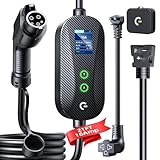
- Universal J1772 EV Charger: Compatible with all J1772-equipped EVs and PHEVs, this portable EV charger seamlessly powers brands like Ford, GM, Nissan, Audi, BMW, Kia, Hyundai, Honda, and Chevy. No more compatibility worries—just plug in and charge confidently. Whether you’re at home or on the road, this versatile electric car charger ensures your vehicle is always ready to go
- Smart Charging, Your Way: Customize your charging experience with adjustable current settings (8A, 10A, 12A, 16A) and a flexible 0–12H delay timer. Simply press and hold the “A” or “T” button for 3 seconds to start the adjustment, then press briefly to select, and finally hold again for 3s to confirm. The bright LCD screen displays real-time data like voltage, current, and power, putting you in command. Note: Once charging has started, the settings cannot be adjusted. You will need to stop charging before making any changes
- Plug Anywhere, Charge Anytime: No matter where you are, power up confidently. Supports NEMA 5-15 / 5-20 (120V丨8-12A) and NEMA 6-20 (240V丨8-16A) outlets—ideal for home, garage, or road trips. Compact and portable, it’s the perfect balance of power and freedom
- Safety You Can Trust: Built with triple overcurrent protection, a fireproof PC shell, and an IP67 waterproof rating, this portable EV charger ensures safety in any condition. It operates reliably in temperatures from -22°F to 122°F, so you can charge worry-free, rain or shine. Trust in advanced engineering that puts your safety first—because every charge should be secure
- 2-Year Professional Care & Support: If any compatibility or operational issues arise, contact the Grasside Team via Amazon Message Center for a prompt response within 12 hours. Backed by a 2-Year Grasside Care, this J1772 charger offers long-term support and peace of mind
8. Charging adds demand to electricity systems
More EVs require more electricity, and the timing and location of charging can matter as much as total consumption for power-system planning. The IEA’s 2026 outlook projects that EVs will use over 1,500 TWh of electricity in 2035 under its Current Policies Scenario, around 4% of projected global electricity demand.
A global share does not describe every local grid. Concentrated charging can add pressure at particular times or in areas where distribution capacity is constrained, even when total electricity demand remains manageable. The projection is scenario-based, not a measurement of future demand or a forecast independent of policy assumptions.
Independent reader supportYour contribution helps us test, update, and keep practical guides available for everyone.9. Driving still creates brake and tire wear
“Zero tailpipe emissions” describes what comes out of a vehicle’s exhaust while it is being driven; it does not mean driving has no emissions or environmental effects. Vehicles also produce non-exhaust emissions from brake and tire wear. The US Environmental Protection Agency’s MOVES5 technical-report materials include brake- and tire-wear emissions.
That evidence establishes non-exhaust emissions as a vehicle-wide issue, not a general EV penalty. It does not provide a matched figure showing that EVs produce more tire wear than comparable gasoline cars, so a blanket claim that they do would go beyond the evidence.
What’s actually slowing this PC down?
Pick the symptom - the matching free tool is one click away.
Best Value
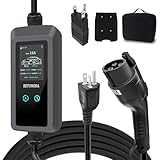
- 2026 CHARGING UPGRADE: The upgraded J1772 charger features four adjustable current levels (8A/10A/13A/16A) and an intelligent delay timer from 1 to 12 hours. Whether you're charging at night or during off-peak hours, you can enjoy smarter energy usage, lower costs, and complete convenience — all on your own schedule.
- ONE CHARGER FOR EVERY J1772 EV/PHEV: Works seamlessly with all SAE J1772 electric vehicles and plug-in hybrids—from Tesla (with adapter) to Ford, GM, Nissan, Audi, BMW, Kia, Hyundai, Honda, Chevy, and more. Ideal for both home and travel, this 16A Level 1 & 2 charger keeps your EV fully charged and ready whenever you hit the road.
- LEVEL 1 & 2 PORTABLE CHARGER ANYTIME: Designed for maximum flexibility, the BETUMODA Level 1 & 2 EV charger features both 5-15 and 6-20 plug compatibility. Whether you're charging at home, at a friend’s house, or on the road, you can stay powered up anywhere. NEMA 6-20 plug for Level 2 EV charging (240V, 16A, 3.68kW, 9–12 miles/hr) and a NEMA 5-15 adapter for Level 1 EV charging . NOTE: The 5-15 adapter is compatible only with 5-15 outlets and should not be used above 16A—protecting both your vehicle and your home’s electrical system.
- COMPLETE CONTROL INSTANTLY: Many EV chargers only show minimal information, leaving you guessing. Our upgraded charger, equipped with a 2.8-inch Touch LED display, provides comprehensive, real-time updates on voltage, current, and power load. The built-in delayed start timer lets you set charging exactly when it’s convenient for you. With just one glance, you can monitor and manage every aspect of your charging session—making each charge smarter, safer, and more efficient.
- BUILT FOR SAFETY AND DURABILITY: Charge with confidence every time. This portable EV charger is equipped with advanced protection features—including overheat, overvoltage, and overcurrent protection—and is FCC and CE certified. Its intelligent control box features a smart monitoring chip to track charging status in real time. With an IP65-rated housing, every charge is safe, reliable, and worry-free.
10. “Eco friendly” covers more than greenhouse-gas emissions
A lifecycle carbon comparison answers a climate question; it does not by itself rank cars on mineral demand, local pollution, waste, land use, or water use. Those impacts matter, but they are not interchangeable with tonnes of greenhouse gases, and a conclusion on one measure does not settle all the others.
For a meaningful comparison, match vehicle class and size, lifetime distance, annual mileage, battery assumptions, electricity mix, gasoline-car fuel economy, and end-of-life treatment. The evidence cited here does not provide a comparable global ranking of EV and oil supply chains for site-specific water use or biodiversity impacts, so those dimensions should not be reduced to an unsupported one-line verdict.
What the overall climate evidence says
Electric cars have upstream material and manufacturing impacts, depend on electricity systems, and create challenges for infrastructure and end-of-life management. Those limits are real, but they do not overturn the IEA’s modeled finding that a comparable medium-sized BEV sold in 2023 has about half the lifecycle emissions of an oil-fueled car over 15 years or roughly 200,000 km in its Stated Policies Scenario. Separately, the IEA estimated that the global EV stock avoided 190 Mt of net CO2-equivalent emissions in 2025, after accounting for additional electricity emissions and displaced fossil-fuel vehicle emissions.
Neither figure says that every EV is better on every environmental measure. The IEA’s lifecycle estimates are model outputs shaped by their assumptions, while the 2025 avoided-emissions figure is a global estimate. They support a qualified conclusion: EVs generally offer a climate benefit over comparable gasoline cars, while their wider environmental performance depends on how and where vehicles and batteries are made, used, and managed.
Quick Recap
Product prices and availability are accurate as of the date/time indicated and are subject to change. Any price and availability information displayed on Amazon at the time of purchase will apply.




