PC Slower Than It Used to Be?
A free scan shows the junk files, broken settings and background clutter dragging Windows down - then fixes them in one click.Free scan · Windows 10 & 11Outdated Drivers Are Slowing You Down
One free scan finds every outdated or missing driver and matches the right update for your exact hardware.Free scan · exact hardware matchTurbocharged tuning legends do not share one formula. The Toyota Supra A80 and Nissan Skyline GT-R became icons of tuner culture; the Mitsubishi Lancer Evolution brought rally development to the road; and the Porsche 911 Turbo represents a longer-running European performance lineage. This is a curated selection, not an objective ranking: the evidence is strongest for those four, so the remaining entries are identified as candidates rather than presented with unsupported histories or specifications.
Why these cars became tuning-scene legends
“Legend” is an editorial judgment, not a measured category. A car’s standing can come from its factory engineering, motorsport record, the enthusiasm of owners and tuners, or a mix of all three. Turbocharged cars also differ widely in engine layout, drivetrain, generation and intended use; a reputation earned by one version should not be applied to every car carrying the same name.
The four best-supported examples below have distinct stories. Toyota and Nissan explicitly connect their cars to tuner culture, Mitsubishi documents rally development, and Porsche’s history establishes the 911 Turbo’s place in performance-car engineering without establishing an equivalent tuner-community reputation.
Four legends with documented histories
Toyota Supra A80: a tuner favorite with a 2JZ heart
Toyota offered the fourth-generation Supra, known as the A80 or Mk IV, in the United States from 1993 through 1998 and in Japan until 2002. Toyota describes it as a performance and racing touchstone and says the 2JZ engine made the Turbo a favorite among tuners. Those are Toyota’s characterizations of the car’s reputation, rather than an independent measure of popularity. Toyota USA Newsroom
Free tools Windows power users keep installed
One-click scans. No signup required.
#1 Best Overall
The Turbo’s status rests partly on its factory performance and partly on how strongly owners and enthusiasts embraced the platform. Toyota reports that nearly 7,000 of the just over 11,200 fourth-generation Supras sold in the U.S. before its 1998 withdrawal were Turbos. That figure describes U.S. sales, not global production. Toyota also gives the Turbo’s output as 320 hp and 315 lb-ft; treat those as the specifications in Toyota’s account, not a universal figure for every market version.
There are important date and availability distinctions. Toyota’s chronology says the first Supra Turbo debuted in 1987, the fourth generation arrived in 1993, and production ceased for the 1999 model year. The A80 was offered in the U.S. through 1998, but Toyota records no turbocharged models in California-emissions states for the 1998 model year. Toyota also calls the A80 a sought-after collectible.
Rank #2

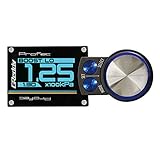
- Pulse width modulation (PWM) driven.
- Stable, reliable and fast boost targeting.
- 5.4W, 25.4ohm coil, Full vacuum to 120 PSI.
- Suitable for most turbo and supercharged applications.
- 3 port solenoid - this is the most common method for controlling boost.
Nissan Skyline GT-R: a tuner icon across several generations
The Skyline GT-R is a lineage, not a single specification. Nissan’s Heritage Collection documents the BNR32 from 1989, the BCNR33 from 1993 and the BNR34 from 1999. Nissan USA describes the Japanese-market Skyline GT-R as “a legend in the American tuner community.” That supports its cultural significance, but it does not make the specifications of one generation applicable to the others. Nissan USA Nissan Heritage Collection
Keep the name precise, too: later GT-R models continued the performance lineage but no longer carried the Skyline name. The Skyline GT-R’s reputation is best understood through its successive generations and its influence on enthusiasts, rather than as one unchanging car.
Recommended Free Tools
Rank #3

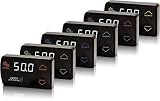
- Complete system includes harness, boost hose, on-board 29 psig pressure sensor (external 75 psia optional), boost solenoid, gauge display and all necessary fittings
- Two user selectable boost settings with peak boost memory
- User selectable Overboost alarm includes two timed shutdown levels at 10% and 20% Overboost
- No external interface required for programming!
- User configurable gauge includes 24 scalable LEDs, and interchangeable bezel, pin guide and faceplate to customize look of display
Mitsubishi Lancer Evolution: rally priorities in a road car
The Evolution’s tuning appeal is tied to a direct motorsport context. Mitsubishi’s history describes the 1995 Lancer Evolution III with an intercooled 2.0-liter 4G63 turbo engine, developed with World Rally Championship competitiveness in mind. After the changes Mitsubishi records, the engine produced 270 PS. Mitsubishi also notes that Tommi Mäkinen won five of nine events in the 1996 WRC season and secured the drivers’ championship. Mitsubishi Motors history
Later generations had their own engineering details. Mitsubishi describes the Evolution VIII with an intercooled 2.0-liter turbo, a six-speed close-ratio gearbox and Super-AYC in its four-wheel-control system. These are not specifications to combine with the Evolution III’s engine output or treat as features of every Lancer Evolution. The name covers a sequence of distinct cars shaped by changing competition and road-car requirements.
Porsche 911 Turbo: a long-running performance lineage
Porsche dates the introduction of the 911 Turbo to 1974 and describes the model’s continuing technical evolution. That long history makes it a strong European performance-car entry in a turbocharged-car feature. The available evidence establishes the model’s engineering lineage, but not a tuner-culture reputation comparable to the Supra or Skyline; its inclusion here is not a claim that all four cars became famous in the same way. Porsche Newsroom
Independent reader supportYour contribution helps us test, update, and keep practical guides available for everyone.Six further candidates—not fully documented entries
A ten-car headline should not imply that every choice has equally strong evidence. The available secondary enthusiast index names the Mazda RX-7 FD and Subaru Impreza WRX STI as notable Japanese performance cars, but it does not establish the technical and historical case needed to present them—and four other cars—as fully sourced tuning legends here.
Quick wins for a faster PC:
Fix the driver behind crashes, sound loss and screen glitchesFind Drivers →Repair Windows errors before they cause bigger problemsFix Now →Best Value
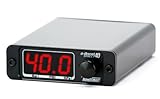
- Aimed at the street performance market
- Features many boost control capabilities found on the e-Boost2
- Provides class-leading boost control
- Two boost settings easily selected via the turn-and-push button; External switch can be used to change between boost groups if required
- Supplied with e-Boost STREET control unit, wiring loom and installation kit, solenoid with mounting bracket and vacuum fittings, vacuum hose and hose clamps
- Mazda RX-7 FD: a candidate for a fuller account, but the evidence available here does not verify the specific turbo configuration or its tuning significance.
- Subaru Impreza WRX STI: likewise a candidate, not a fully documented entry in this feature. Do not assume every Impreza or WRX version shared the same turbo setup.
- Four additional cars: no models can be responsibly named from the evidence available for this article. Naming them as established legends would require generation-specific confirmation of their factory turbo engines and documented tuning or competition influence.
That qualification matters because a turbocharged trim, a model’s motorsport reputation and its standing among tuners are separate claims. A defensible ten-car roster needs evidence for each one, not simply a familiar badge or an enthusiast reputation repeated without support.
Quick Recap
How to read a tuning-legend list
- Check the generation: engine, turbo setup, output and equipment can change substantially between generations and markets.
- Separate factory history from tuner culture: manufacturer histories can establish dates and engineering; a claim about community standing needs evidence that actually supports it.
- Read power figures in context: market, model year and source matter. Do not compare numbers as though they describe identical versions or conditions.
- Treat “best” and “legendary” as judgments: without a stated scoring method and consistent evidence, a list is a curated selection rather than a statistical ranking.
Product prices and availability are accurate as of the date/time indicated and are subject to change. Any price and availability information displayed on Amazon at the time of purchase will apply.




