There is no authoritative, evidence-backed list of the ten “worst” muscle cars, and “deserve to be scrapped” is a provocative opinion, not a sound verdict on every surviving example. The evidence here supports a narrower look at cars remembered as disappointments: some fell short of their image, some had documented quality or safety concerns, and some are only borderline members of the muscle-car category.
What counts as a muscle-car disappointment?
“Muscle car” is used inconsistently. In its narrower sense, it usually means a comparatively affordable, midsize American car sold with a powerful engine and a performance image. The Vega, Gremlin and Pinto were small cars or subcompacts, not unambiguous muscle cars. They belong in this discussion only as cautionary comparisons: cars marketed, modified or later remembered in a performance context, and examples of the era’s broader disappointment with promised performance.

This is a subjective selection, not a ten-car ranking established by comparable tests or a consensus among historians. The available evidence is strongest for the three small cars discussed together by MotorTrend and the historical context described by TIME. It does not establish ten specific models or justify labeling a whole nameplate unsafe or unreliable. The useful distinctions are performance versus promise, reliability and build quality, model-specific safety evidence, and whether a car belongs in the category at all.
Three cautionary cars often discussed alongside muscle-car letdowns
1971 AMC Gremlin X: an awkward performance image, not a proven reliability failure
TIME’s 2017 retrospective criticizes the Gremlin’s compromised proportions and driving character. That is an editorial judgment about design and experience, not a measured reliability finding. In MotorTrend’s comparison of the 1971 Gremlin X, 1973 Chevrolet Vega GT and 1972 Ford Pinto, the Gremlin is treated more generously on durability: the publication says it could be the one most likely in that group to reach 200,000 miles reliably. That is MotorTrend’s characterization, not the result of a controlled fleet study. TIME’s retrospective; MotorTrend’s comparison.
The Tool Desk
Outbyte Driver Updater FREEScan for outdated or missing drivers - takes under a minuteDriver Scan →Outbyte PC Repair FREEClear out junk files and repair common Windows errorsFree Scan →#1 Best Overall
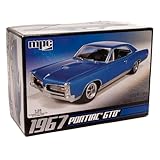
- V8 POWER: The model features a 400 cubic inch V8 engine, reflecting the muscle and power that defined the GTO's reputation.
- DETAILED SUSPENSION & EXHAUST: The kit incorporates separate rear suspension and exhaust detailing, adding to the realism of the model.
- BUCKET SEATS & CONSOLE: The model's interior features bucket seats and a floor shifter with a console, capturing the iconic look and feel of the GTO.
- OPTIONAL SUPERCHARGER: For those seeking more power, the kit offers an optional supercharger, allowing you to customize your model.
- CLEAR & COMPREHENSIVE INSTRUCTIONS: The included instructions are clear and user-friendly, making the kit accessible to modelers of different skill levels, from beginners to experienced hobbyists.
The Gremlin is a borderline fit for a strict muscle-car list: it was a compact economy car, though the X package gave it a sportier identity. Its styling and driving character can make it a disappointment to some enthusiasts, but the cited comparison does not support calling it categorically unreliable.
1973 Chevrolet Vega GT: handling could not erase quality concerns
The Smithsonian’s National Museum of American History identifies the Vega as a 1971 model introduction. Its object record says the car handled well but that its “mechanical quality and reliability were disappointing.” That concise institutional assessment supports criticism of the Vega’s quality reputation while also showing why a one-note verdict is misleading: handling was a strength. The 1973 Vega GT appears in MotorTrend’s comparison, but neither source establishes that every year or variant had identical problems. Smithsonian National Museum of American History, “1977 Vega Hatchback Coupe”; MotorTrend.
Rank #2
The Vega was a small car, not a conventional muscle car. Its inclusion makes sense as an example of a sporty-looking model whose quality reputation fell short—not as proof that it was a failed muscle car in the strict category sense.
1972 Ford Pinto: a safety controversy is not a blanket verdict on every car
The Pinto is best known in this context for its rear-impact fire controversy, not for meeting a conventional muscle-car definition. MotorTrend reported 27 deaths related to Pinto incidents among roughly three million registered Pintos, attributing the figure to NHTSA. This is a historical reported figure, not a current risk rate, and it does not mean every Pinto was unsafe. TIME also discusses the Pinto’s fire reputation, but an editorial retrospective is not a substitute for model- and year-specific safety records. MotorTrend; TIME.
Quick wins for a faster PC:
Scan for outdated or missing drivers - takes under a minuteDriver Scan →Clear out junk files and repair common Windows errorsFree Scan →Fix the driver behind crashes, sound loss and screen glitchesFind Drivers →Rank #3

- Accurate Scale Model Kit
- Paints and Glue Required
- Easy to Build
- Detailed Instructions Included
- This is the 1: 25 Scale 68 Camaro Z/28 Plastic Model Building Kit by AMT, Item No 868, This is not a toy
Safety concerns should be stated precisely. NHTSA explains that a suspected defect trend can lead to an investigation and possibly a recall; a concern or investigation alone does not establish that every vehicle of a nameplate was defective. Anyone assessing a particular car should search NHTSA’s current safety-issue records by make, model and year rather than infer its status from a broad historical reputation. NHTSA: Search Safety Issues.
Why the 1970s produced so many performance letdowns
TIME’s retrospective links the era’s weaker performance expectations to emissions requirements. That is useful context, but it should not be mistaken for a model-by-model performance test: the source offers a historical editorial account, not comparable acceleration figures for the cars in this article. A car could lose some of its performance promise while still having virtues in handling, design or everyday use.
Rank #4

- 1:25 scale, skill level 2, paint & glue required
- 82 parts
- Molded in white, clear, transparent red, and some chrome-plated parts
- Black vinyl tires
- Metal axle
For any candidate, a fair assessment needs the exact year and variant. A nameplate can include different engines and equipment, so a complaint about one configuration should not silently become a claim about every version. The available material does not establish a comparable ten-car dataset, a current reliability rate, or present-day ownership costs; it cannot support a definitive “worst” ranking.
Independent reader supportYour contribution helps us test, update, and keep practical guides available for everyone.How to judge a supposedly “worst” muscle car
- Performance versus promise: Ask what the specific version was marketed to deliver and whether reliable, comparable evidence shows it fell short. Do not treat a period reputation as a standardized test result.
- Quality and reliability: Separate institutional or publication assessments from controlled long-term data. The Smithsonian’s Vega record supports a historical quality concern; MotorTrend’s favorable Gremlin durability characterization is a publication’s comparison, not a fleet-wide measurement.
- Safety: Look for model- and year-specific defect or recall information. A reported incident count, a public controversy and a confirmed defect finding are different kinds of evidence.
- Category fit: Decide whether the car is a muscle car, a sporty compact, or a cautionary comparison. Including a borderline model should be made explicit rather than used to inflate a ranking.
- Individual condition: A historical reputation cannot determine the condition or safety of one surviving vehicle. Evaluate the specific car and its records rather than assuming a nameplate-level verdict applies to it.
Should any of them actually be scrapped?
“Scrapped” works as headline provocation, not as a conclusion established by this evidence. A poor reputation or disappointing original design does not settle the value of a particular survivor; condition, originality, safety and the owner’s intended use all matter. The defensible conclusion is that the Gremlin, Vega and Pinto can be discussed as period letdowns or cautionary comparisons, but the evidence does not establish a ten-car worst list or justify condemning every example of any one model.
Quick Recap
Best Value

- Revell Model Kit #14545, Skill Level 4, Contains 122-Parts, Recommended for ages 12 and up
- Pontiac 400 c.i. Ram Air engine plus optional race engine parts and interior.
- Stock or Torque Thrust wheels and optional racing seat and roll bar.
- Authentic stock and drag racing decals.
- Molded in white and clear with chrome plated parts and soft black tires. Requires paint and glue.(not included)
Product prices and availability are accurate as of the date/time indicated and are subject to change. Any price and availability information displayed on Amazon at the time of purchase will apply.




