Recommended Free Tools
Yes. Subaru is affected by the Trump administration’s tariffs, but the impact depends on where a particular vehicle is assembled and where its parts come from. Subaru models imported from Japan face the clearest direct exposure. Vehicles assembled at Subaru of Indiana Automotive avoid the same tariff treatment on the finished vehicle, but they can still contain tariff-affected components.
That does not mean every Subaru will cost 15% more. The tariff applies to qualifying imported goods, while the final retail effect depends on production location, parts content, customs classifications, exchange rates, supplier costs, incentives, dealer pricing, and how much of the expense Subaru absorbs.
The short answer: Subaru is exposed, but not uniformly
Subaru has two principal automotive production bases relevant to U.S. buyers: its Gunma plants in Japan and Subaru of Indiana Automotive in the United States. The company’s North American business is heavily concentrated in the U.S., which makes U.S. trade policy particularly important to its results.
#1 Best Overall

- Subaru Logo Keychain Key Chain
- Great Gift for any Subaru Fan
- Impreza STI WRX Legacy Outback Forester Crosstrek Brz Ascent
In practical terms, there are three different layers of exposure:
| Subaru situation | Likely tariff exposure | What it means for shoppers |
|---|---|---|
| Vehicle assembled in Japan and imported into the U.S. | Highest direct exposure to tariffs on imported Japanese automobiles | More potential pressure on Subaru’s costs, pricing, incentives, or availability |
| Vehicle assembled in Indiana with imported parts | Lower direct exposure on the finished vehicle, but continued exposure through imported components | U.S. assembly does not guarantee that the vehicle is tariff-free |
| Vehicle assembled in Indiana with a different mix of parts | Potentially lower exposure, depending on the parts’ origins and classifications | The exact model year, trim, production period, and supply chain matter |
The most reliable way to determine a vehicle’s exposure is to examine the specific vehicle—not just the Subaru nameplate. A window sticker, VIN, dealer documentation, or current Subaru model information is more useful than assuming that a model has always been built in one country.
What tariff treatment applies to Japanese Subarus?
Under the U.S.-Japan tariff framework described in the current implementation materials, Japanese products with a Column 1 duty rate below 15% generally receive an additional tariff treatment that brings the combined rate to 15%. The automobile and covered automobile-parts provisions are designed to produce comparable 15% combined treatment when the applicable Column 1 rate is below 15%.
The automobile and automobile-parts modifications apply to qualifying goods entered for consumption, or withdrawn from a warehouse for consumption, on or after September 16, 2025, according to the Federal Register implementation notice.
Important distinction: a 15% combined duty is not automatically the same thing as an additional 15% tariff. For example, if a particular classification had a 2.5% Column 1 rate, an additional amount sufficient to reach a 15% combined rate would be 12.5%—but that is only a mathematical illustration, not a determination for any particular Subaru. The actual duty requires the vehicle’s HTSUS classification, country-of-origin analysis, entry facts, and any applicable tariff actions or exceptions.
That is why a brand-level statement such as “all Subarus have a 15% tariff” would be inaccurate. The rate can differ according to what is imported, how it is classified, and which tariff measure applies.
Rank #2
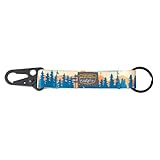
- Subaru & outdoor enthusiasts will love getting this Wilderness Lanyard Keychain.
- 100% polyester lanyard has iron clip attachment at one end and iron D-ring at other end
- Individually polybagged
- 3-15/16"W x 9/16"H
- Sublimated and Woven Label Multicolor
Which Subaru models are most exposed?
Japan-built vehicles face the clearest direct risk
A Subaru assembled in Japan and imported into the United States is the most directly exposed to tariffs on Japanese automobiles. The tariff is assessed on the qualifying imported vehicle or component; it is not automatically converted into an identical increase on the vehicle’s U.S. window sticker.
Subaru’s production allocation has also been changing. The company described a plan to transfer U.S.-bound Forester production to Subaru of Indiana Automotive, with production expected to begin around fall 2025. Subaru also said U.S.-bound Outback production would be carried out in Japan. Those plans mean that two Subaru nameplates can have different exposure, and a model’s origin can change over time.
Quick wins for a faster PC:
Scan for outdated or missing drivers - takes under a minuteDriver Scan →Repair Windows errors before they cause bigger problemsFix Now →Production can also vary by model year, trim, powertrain, factory capacity, and the date a vehicle was built. The same nameplate should not be assumed to have one permanent country of origin.
Indiana assembly reduces—but does not eliminate—exposure
Subaru’s Indiana plant gives the company an important way to reduce direct exposure to tariffs on completed vehicles imported from Japan. However, a U.S.-assembled Subaru may still use parts imported from Japan or other countries. Those parts can carry their own tariff exposure and can also become more expensive when suppliers pass along higher costs.
There are additional indirect effects. Tariffs can raise the cost of materials, alter supplier negotiations, complicate logistics, and encourage manufacturers to change sourcing. Those effects can reach a U.S.-built vehicle even when the finished vehicle does not cross the border as an imported automobile.
Subaru has already acknowledged a substantial financial impact
This is not merely a theoretical risk. In an analyst briefing concerning fiscal 2026, Subaru said that the impact of additional U.S. tariffs would exceed ¥? Wait no: Subaru said the impact would exceed $2.5 billion without countermeasures. The company said that estimate included tariffs on completed vehicles imported from Japan and some imported components used in vehicles produced in the United States.
Rank #3

- OUTBACK CROSSTREK FORESTER ACCESSORIES - Premium metal keychain compatible with Outback, Crosstrek, Forester or ascent accessories for owners who want a stylish everyday accessory. Pairs perfectly with your key fob, car keys, backpack, travel bag, or daily carry setup.
- METAL + ENAMEL CONSTRUCTION - Crafted from durable metal and enamel for a premium look and feel. Built to withstand daily use while remaining lightweight, detailed, and comfortable to carry wherever you go.
- PERFECT SIZE & LIGHTWEIGHT - Designed for everyday convenience at approximately 2” x 1.3”. Compact enough for pockets and purses while still showcasing a distinctive automotive-inspired design that stands out.
- GREAT GIFT FOR OUTBACK CROSSTREK & FORESTER OWNERS - A thoughtful gift for SUV owners, outdoor enthusiasts, and car lovers. Perfect for birthdays, holidays, Father's Day, Mother's Day, new vehicle celebrations, and everyday gifting.
- DETAILED AUTOMOTIVE DESIGN - Features raised enamel detailing and a clean vehicle-inspired silhouette designed for enthusiasts. A stylish addition to your accessory collection and a unique key ring for everyday use.
Subaru’s reported operating results also show that tariffs became a material financial factor:
- For the first nine months of fiscal 2026, operating profit fell to ¥66.3 billion, compared with ¥369.2 billion in the same period a year earlier. Subaru explicitly attributed part of the decline to the growing impact of additional U.S. tariffs.
- For the fiscal year ended March 31, 2026, automotive operating profit was ¥32.1 billion, down from ¥420.4 billion in the prior fiscal year.
These figures should not be interpreted as proof that tariffs caused the entire decline. Subaru also identified production constraints associated with battery-electric-vehicle preparation, expenses, research and development, foreign-exchange movements, and other factors. The accurate conclusion is that tariffs were a major adverse factor in Subaru’s results, not that they explain every change in profitability.
Why Subaru is especially sensitive to U.S. trade policy
Subaru identifies changes in North American trade policy as a specific business risk. The United States is its largest regional market, with approximately 662,000 U.S. vehicle sales reported in the company’s fiscal-year presentation in its 2025 integrated report.
That combination creates a difficult balancing problem. Subaru needs to serve a large U.S. customer base while managing production between Japan and Indiana. Moving more production to the United States can reduce finished-vehicle tariff exposure, but production transfers are not immediate. They require available plant capacity, tooling, supplier readiness, logistics, regulatory certification, and model-specific implementation.
What’s actually slowing this PC down?
Pick the symptom - the matching free tool is one click away.
Subaru has also described plans involving gasoline and hybrid Forester production in both Japan and Indiana, along with preparations for next-generation hybrid production and battery-electric-vehicle manufacturing changes. These changes may give Subaru more flexibility, but they do not erase the cost of components already in the supply chain or instantly change the origin of every vehicle on a dealer’s lot.
Could Subaru raise prices because of the tariffs?
It could, but a tariff does not require a one-for-one retail-price increase. Subaru has several possible responses:
Rank #4

- Subaru Logo Oval Keychain Key Chain
- Great Gift for any Subaru Fan
- Impreza STI WRX Legacy Outback Forester Crosstrek Brz
- raise the manufacturer’s suggested retail price;
- reduce discounts, financing support, or dealer incentives;
- change the allocation of Japan-built and Indiana-built vehicles;
- negotiate lower prices or different terms with suppliers;
- absorb some of the cost through lower operating margins;
- adjust sourcing or parts content over time;
- use currency movements to offset part of the expense; or
- alter trims, options, production schedules, or inventory levels.
In other words, the consumer may feel the tariff through a higher MSRP, a smaller discount, fewer vehicles available, or a different mix of trims—not necessarily through a separate “tariff” line on the buyer’s paperwork.
Subaru’s official U.S. shopping tools can show local pricing and inventory for a selected model and trim. That information can help a shopper identify current transaction conditions, but it cannot by itself prove that a particular price change was caused solely by tariffs. Dealer margins, demand, financing, regional inventory, model-year transitions, and incentives can all affect the quote.
Does buying a U.S.-built Subaru avoid the tariff?
No—not completely. Indiana assembly generally reduces direct exposure to a tariff on the completed automobile imported from Japan. But imported components may still be subject to tariffs or higher supplier costs.
The 2025 amendment to the automobile tariff program also created a temporary import-adjustment offset mechanism for qualifying manufacturers that assemble automobiles in the United States. The mechanism was tied to the value of vehicles assembled domestically and could offset certain automobile-parts tariff liabilities under the applicable program.
This should not be treated as a permanent Subaru exemption or as a guarantee of lower prices. It is a manufacturer-level customs mechanism with eligibility requirements, timing rules, documentation obligations, and program limitations. Even when an automaker receives an offset, that does not dictate how the company will price a vehicle or how much of the benefit will reach a customer.
How to check the tariff exposure of a specific Subaru
- Identify the exact vehicle. Record the model, model year, trim, engine or hybrid powertrain, and stock number. “Forester” or “Outback” alone is not enough.
- Check the final assembly information. Review the vehicle’s window sticker and ask the dealer for the VIN and build documentation. The VIN can provide useful assembly information, but it does not by itself determine the complete customs treatment or parts content.
- Ask whether the vehicle is Japan-built or Indiana-built. Ask specifically about the vehicle on the lot or in the incoming allocation, rather than relying on a general statement about the model line.
- Compare the current MSRP with the actual quote. Separate MSRP, dealer discount, manufacturer incentive, freight or destination charge, accessories, market adjustment, taxes, registration, and finance charges.
- Compare out-the-door prices. A Japan-built vehicle with a larger discount may be less expensive than a U.S.-built vehicle with little dealer support. The tariff exposure of the vehicle and the final deal price are related but not identical.
- Check the production period. Production transfers and tariff rules can change. A vehicle built before or after a sourcing change may not have the same exposure as an otherwise similar vehicle.
- Get more than one quote. Compare dealers in the same region, because inventory and dealer pricing can outweigh a relatively small difference in tariff-related cost.
What buyers should expect in the near term
The most likely consumer outcome is uneven pricing rather than a uniform increase across the Subaru range. Japan-built vehicles may face stronger upward pressure, while Indiana-built vehicles may have a different cost profile. But a U.S.-assembled vehicle can still be affected by imported parts, and a Japan-built vehicle may receive incentives that soften the effect.
The Tool Desk
Outbyte PC Repair FREERepair Windows errors before they cause bigger problemsFix Now →Outbyte Driver Updater FREEScan for outdated or missing drivers - takes under a minuteDriver Scan →Best Value

- 【Perfect Fit Compatibility】for Outback, Ascent, Forester, Crosstrek, Legacy and More. Key shape may vary by year - refer to the 2nd main image to ensure it matches your key.
- 【Premium Matte Finish】Say goodbye to cheap glossy plastic feel. Our matte TPU coating feels more refined, resists fingerprints and dust, and won't become sticky over time.
- 【360° Protection Design】This 1:1 fit key cover is made of durable TPU to protect your keys from scratches, drops and wear. Reinforced cushions are used on all four corners to prevent the original car key from being exposed and damaged, avoiding high replacement costs.
- 【Leather Keychain】: The keychain part is made of soft leather and sturdy metal parts. The two-tone leather cord matches the two-tone key shell perfectly, high-end beauty and durability.
- 【Full Set & Technical Support】: Package includes: 1 key shell, 1 leather keychain, 2 screwdrivers, 1 installation guide. If you have any questions, please contact Seikuleca for fast and friendly support.
Production flexibility may help Subaru over time. Shifting some U.S.-bound production to Indiana can reduce exposure to tariffs on finished vehicles, while dual sourcing can give the company more options when trade rules or supplier costs change. However, the benefits take time and may vary by model, powertrain, factory, and supplier network.
Consumers should also avoid assuming that the tariff framework will remain unchanged. Presidential proclamations, implementing orders, Federal Register notices, HTSUS amendments, exemptions, bilateral negotiations, and court decisions can change the applicable treatment.
Frequently Asked Questions
Will every Subaru price increase by 15% because of the tariffs?
No. The 15% framework refers to combined tariff treatment for qualifying Japanese goods or covered automobiles and parts when the applicable Column 1 rate is below 15%; it does not mandate a 15% increase in the retail price. Subaru may absorb some costs, reduce incentives, change sourcing, or pass through only part of the expense.
PC Slower Than It Used to Be?
A free scan shows the junk files, broken settings and background clutter dragging Windows down - then fixes them in one click.Free scan · Windows 10 & 11Crashes, No Sound, or Screen Glitches?
Random freezes, missing sound and display glitches usually trace back to one bad driver. Find and replace yours safely.Free scan · under a minuteAre Subaru vehicles built in Indiana exempt from tariffs?
Not entirely. Indiana assembly reduces direct exposure to a tariff on a completed vehicle imported from Japan, but imported parts can still be affected. A temporary manufacturer-level import-adjustment offset may also apply in some circumstances, but it is not a blanket consumer or Subaru exemption.
How can I tell whether a Subaru was built in Japan or the United States?
Check the vehicle’s window sticker, VIN, dealer documentation, and current model information. Ask the dealer about the exact VIN and vehicle on the lot. Do not rely only on a model’s historical reputation, because Subaru has been changing production allocations.
Will buying a Japan-built Subaru be a bad deal?
Not necessarily. A Japan-built vehicle may have greater direct tariff exposure, but its final price depends on MSRP, incentives, dealer discounts, inventory, and financing. Compare the complete out-the-door price with comparable Indiana-built vehicles before deciding.
The Bottom Line
Bottom line: Trump’s tariffs do affect Subaru, especially vehicles and parts imported from Japan. Subaru’s Indiana production reduces direct exposure on domestically assembled vehicles, but imported components and broader supply-chain costs still matter. The tariff rate is not the same as a retail-price increase, so shoppers should check the exact vehicle’s assembly location, model year, sticker, incentives, and out-the-door quote before assuming what the policy will cost them.
Free tools Windows power users keep installed
One-click scans. No signup required.
Quick Recap
Product prices and availability are accurate as of the date/time indicated and are subject to change. Any price and availability information displayed on Amazon at the time of purchase will apply.