Free tools Windows power users keep installed
One-click scans. No signup required.
If the “most annoying feature” on a modern car means lane-assist alerts, the irritation is understandable: a warning can sound during an ordinary lane change, and steering assistance can feel like the car is correcting you. But lane-departure warnings, lane-keeping assistance and lane centering do different things. Their usefulness—and how intrusive they feel—depends on the system’s behavior and design. The title’s feature is not identified, so this article focuses on lane assistance, the interpretation best supported by available evidence.
What “lane assist” actually does
Automakers use different names for lane-related features, and the label alone does not tell you what the car will do. The key distinction is whether it warns, intervenes, or continuously assists with steering.
- Lane-departure warning: Alerts you when the car drifts across a lane marking. The alert may be audible or tactile, such as a vibration in the steering wheel or seat.
- Lane-departure prevention or lane-keeping assistance: Can apply a steering or braking correction to help prevent the vehicle from leaving its lane.
- Lane centering: Provides more continuous steering support to help keep the vehicle near the middle of a lane.
These behaviors are related but not interchangeable. An alert that beeps is not the same as a system that turns the steering wheel, and neither means the car is driving itself. See the IIHS overview of advanced driver assistance for additional context.
Why lane alerts can feel intrusive
They can react to ordinary driving
A lane-departure alert is meant to flag a crossing, not to determine whether the driver intended it. As Ian Reagan, an IIHS senior research scientist, put it in 2017, “Depending on the way you drive, lane departure alerts can go off fairly frequently in the course of regular driving even when there is no imminent danger.” That helps explain why a warning can feel unnecessary during a deliberate maneuver.
#1 Best Overall
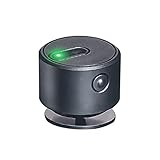
- Made of ABS,lightweight,mini size,portable.
- Keep the led light project on the middle of the road,which helps you drive straightly,avoid collision and ensure safety driving.
- The led light will be bright at daytime and soft at night,works well for any environment.
- The lane departure assist device is USB charging,it can work for 8-12 hours after fully charging.
- Paste on the dashboard directly with 3M adhesive.
Beeping and vibration do not feel the same
Reagan also said, “Systems that beep seem to annoy people more than systems that warn the driver with vibrations of the seat or steering wheel.” In IIHS’s 2017 observation of 983 vehicles, 51% had lane-maintenance systems switched on. Activation was 54% for systems with tactile alerts and 46% for those with auditory alerts. Those are observed rates by alert type, not results of a controlled test showing that vibration caused drivers to leave a system on.
Warnings are a broader source of frustration
In its 2024 U.S. ADAS Quality and Satisfaction Study, J.D. Power reported 9.0 problems per 100 vehicles, with vehicle alerts the top reported problem area. That figure describes reported ADAS problems in that study; it is not a measurement of how many drivers dislike lane assist specifically. Ashley Edgar, a J.D. Power senior director, said, “The biggest issue consumers have with advanced driver assistance systems is that the alerts are annoying and bothersome.”
Rank #2

- [REAL TIME ALERTS] Stay aware of hidden vehicles with instant sound and light warnings. When a car enters the monitored blind zone this system reacts quickly with a buzzer and notifier alert helping support safer lane changes merging reversing and daily driving confidence.
- [WIDE BLIND SPOT MONITORING] Advanced radar detection uses transmitting and multiple receiving sensors to monitor surrounding areas with stable performance. It helps identify vehicles approaching from hard to see angles and supports better awareness in traffic parking lots and roadside situations.
- [MULTI FUNCTION SAFETY SUPPORT] More than basic blind spot detection this kit also supports lane change warning rear traffic alert and door opening reminder functions. The versatile design helps drivers respond earlier to nearby movement and improves overall driving awareness.
- [EASY INDEPENDENT INSTALLATION] The standalone design does not require complex vehicle integration which helps simplify setup. Sensors install discreetly on both sides of the rear bumper to save space maintain a clean appearance and provide reliable monitoring without taking up cabin room.
- [BUILT FOR ALL WEATHER USE] Made with ABS housing and rated IP67 this system is designed to perform in rain fog and night driving conditions. With 12V operation 15 meter maximum detection range and dependable response it offers lasting assistance across many vehicle types.
Do drivers switch lane assistance off?
Studies summarized by the U.S. Government Accountability Office found lane-departure warning and lane-keeping assistance among the driver-assistance features most often turned off. Across five studies with different samples, the reported or observed share turned off ranged from 40% to nearly 70%. That is a range across studies, not a single pooled estimate for all drivers or vehicles.
IIHS observations offer another view, but the samples should not be treated as a before-and-after experiment. In a Washington, D.C.-area dealership sample of nearly 2,400 vehicles, IIHS reported in 2024 that lane-departure warning and prevention systems were active in 87%. Its earlier 2017 observation found systems active in 51% of 983 vehicles. The samples differ in time, size and setting, so the figures do not establish a national trend or prove why activation rates differed.
Windows Errors? Fix Them Before They Spread
Repair common Windows errors and clear accumulated junk for a smoother, more stable PC - no reinstall needed.Free scan · no reinstallCrashes, No Sound, or Screen Glitches?
Random freezes, missing sound and display glitches usually trace back to one bad driver. Find and replace yours safely.Free scan · under a minuteRank #3
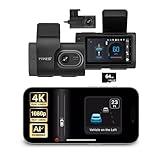
- [Full Coverage, Front and Rear] The TYPE S T400 PLUS dash cam for cars features a front-facing 4K camera and an optional 1080p rear camera. This dual dash cam setup empowers you to capture both the front and rear perspectives of your vehicle while driving, significantly enhancing safety. With this comprehensive coverage, you have access to crucial evidence in the unfortunate event of accidents.
- [Minimize the Blind Spots] The TYPE S AI dash cam incorporates a crucial Blind Spot Warning feature to improve road safety. This system actively monitors the vehicle's blind spots, alerting the driver to the presence of other vehicles in these hard-to-see areas. Using visual or audible signals, the TYPE S ADAS dash cam provides timely warnings, prompting the driver to exercise caution during lane changes or maneuvers.
- [Front & Rear Collision Warning] Powered by AI Algorithms, this TYPE S 4K dash cam features Front & Rear Collision Warning, a smart cam with a smart system that alerts you when you're too close to the car in front or if a vehicle behind is approaching too quickly. Using Ai dash cam advanced driver assistance algorithms, this dual dash cam provides real-time warnings, enabling quick responses and enhancing overall road safety.
- [Lane Departure Warning] The Lane Departure Warning built into the TYPE S AI Series dash cam uses AI-triggered advanced sensors to monitor your vehicle's lane position. If any deviation is detected, it issues a prompt alert, enhancing driving safety by notifying you of deviations and potentially preventing lane-related incidents with the wireless ADAS dash cam.
- [Stop & Go Reminder] Stay vigilant at traffic stops as the front and rear G-Sensor dash cam by TYPE S recognizes when the car ahead starts moving while you're still. Our intelligent reminder keeps you on track, gently prompting you to get moving and prevent any traffic disruptions, making it a reliable wireless dash cam.
IIHS noted that in the newer observation, systems configured through a settings menu rather than a button were more likely to be switched on. Activation was also higher among manufacturers using haptic alerts or offering a haptic choice. These are associations in an observational study, not proof that any single design feature caused drivers to keep the system active. Aimee Cox, the IIHS research scientist who led the newer study, said: “The new designs make the feature a little harder to turn off and a lot less annoying for the driver.”
What the assistance does not take off your hands
Lane assistance is driver support, not a substitute for attention. NHTSA classifies steering assistance that requires the driver to remain engaged as Level 1. When steering assistance is combined with acceleration or braking assistance, the system may be Level 2; the driver must still monitor the road and remain responsible. NHTSA explains these distinctions in its Automated Vehicle Safety guidance.
Rank #4

- 2-IN-1 SAFETY SYSTEM: Upgraded driving assist system combines both Blind Spot Detection (BSD) and Reverse Parking Assist. Uses 4 highly sensitive 58KHz ultrasonic sensors to monitor the side and rear of your vehicle, significantly reducing blind spot accidents during lane changes and reversing
- BLIND SPOT & LANE CHANGE ASSIST: BSD Mode detects obstacles within a 5-meter (16.4ft) range. When a vehicle enters your blind spot, the LED indicator lights up. If you activate your turn signal to change lanes while a vehicle is detected, the LED will flash and the buzzer will sound to warn you
- REVERSE PARKING MODE: Automatically activates when the car is shifted into reverse. The ultrasonic sensors scan the rear area within a 1.2-meter (3.9ft) range. The buzzer will emit warning beeps that increase in frequency as you get closer to obstacles, helping you park safely
- DURABLE & WEATHERPROOF: The sensors are IP67 waterproof and dustproof, designed to perform reliably in heavy rain, snow, and extreme temperatures ranging from -40°C to +85°C (-40°F to 185°F). Ensures stable detection in all weather conditions
- IMPORTANT INSTALLATION NOTE: Universal fit for most 12V cars, SUVs, and MPVs. Please Note: Installation requires drilling 4 holes in your plastic bumper (hole saw bit not included) and tapping into your vehicle's ACC, turn signal, and reverse light wires. Professional installation by a 12V auto-electrician is highly recommended
That distinction matters when deciding whether an alert is merely irritating or a useful prompt. A warning may be inconvenient during a maneuver, while a steering correction is a different intervention; neither transfers responsibility for driving to the vehicle. Broader research about preferences for partial automation also should not be confused with studies of lane-departure alerts: an IIHS consumer survey examined lane centering, automated lane changes and driver monitoring, rather than simply whether drivers liked a beep.
Independent reader supportYour contribution helps us test, update, and keep practical guides available for everyone.What to check if your car keeps beeping or steering
Without a make, model and year, there is no reliable universal menu path: names, behaviors, alert choices and settings differ across vehicles. Start by identifying the feature and its available controls in the vehicle’s own manual or on-screen settings.
Best Value

- [Blind Spot Detection System] This 24GHz Ultrasonic Radar Sensor Blind Area Detection System is a vehicle assistance device that greatly helps you detect the possible collision risks in the blind spot during driving.
- [Double Microwave Radar Sensor] High-speed frequency sensors for the left-rear and right-rear of the vehicle. The BSD system is activated with the turn signals, whenever there is a moving object pop into the rear of the vehicle, with the aid of LED lighting on, blinking, buzzer sound so that the driver can be cautious when lane changing to avoid the possibility of side crash accident.
- [3 Major Functions] This Blind Spot Sensor integrates BSD-blind spot monitoring, LCA-parallel lane change assist, Dow -Open Door Warning (optional two doors) 4 functions to help detect the possible collision risk.
- [Long Detecting Distance] The system uses a 24GHz millimeter-wave radar sensor chip, uses single transmit and four receive radar antennas, is equipped with sophisticated computer algorithms, and automotive-grade quality waterproof plugs, with a detection range of up to 98ft, can monitor the closing objects in the neighbor lane within a range of 26ft with speed gap over 0.5m/second.
- [Blind Spot Warning System] when the car behind us is stationary after stopping, there is no alarm for the blind spot; when the car behind us is slower than us, there is no danger of collision and no alarm; likewise, when we overtake, we are faster than the car behind us and there is no alarm.
- Identify the behavior. Check whether the feature only warns about a lane marking, applies a steering or braking correction, or provides lane-centering support.
- Look for alert choices. If the vehicle offers them, compare audible warnings with tactile alerts such as steering-wheel or seat vibration.
- Check the control and persistence. Find out whether the feature is adjusted with a dedicated button or in a settings menu, and whether your chosen setting carries over to the next trip. Do not assume it does.
- Use the vehicle-specific instructions. Consult the manual or the automaker’s guidance for the exact system and model year before changing settings. The available evidence does not support one set of steps for every car.
If the car’s behavior does not match the description in its manual, consult the manufacturer or a qualified service provider rather than assuming every alert or steering correction works the same way.
So, is lane assist all bad?
No single verdict fits every system or driver. The evidence supports a more precise conclusion: intrusive alerts are a recognized complaint, and design choices such as alert type and controls may affect acceptance. But the available studies do not show that every driver finds lane assistance annoying, that it is always beneficial, or that one alert design works best for everyone. Understanding whether your car warns, intervenes or centers—and staying attentive regardless—makes it easier to judge the feature on its actual behavior.
Quick Recap
Product prices and availability are accurate as of the date/time indicated and are subject to change. Any price and availability information displayed on Amazon at the time of purchase will apply.




