Hyundai and Genesis did not split into two independent companies. Hyundai Motor created Genesis as a separate luxury marque in November 2015, then gradually gave it its own design language, model names, customer experience, sales strategy, and business organization. Genesis remains Hyundai Motor Group’s luxury automotive brand, alongside Hyundai and Kia.
The reason for the separation was straightforward: Hyundai wanted to compete in the premium market without asking its mainstream Hyundai badge to carry a luxury identity. The company already had a foundation for that move in the Hyundai Genesis sedan and Equus flagship, so it turned those vehicles into the first products of a dedicated brand.
The short answer: Genesis was separated as a brand, not spun off as a company
When people say Hyundai and Genesis “split,” they are usually describing a brand separation and operating-model change, not a corporate divorce.
Hyundai Motor launched Genesis as an “all-new global luxury brand” on November 4, 2015. It was intended to operate alongside Hyundai and compete with established premium automakers such as Lexus, BMW, Mercedes-Benz, Audi, and others. Genesis received its own wing-shaped emblem, alphanumeric model names, design identity, and customer-service strategy.
What’s actually slowing this PC down?
Pick the symptom - the matching free tool is one click away.
#1 Best Overall

- Pullback Action: Experience realistic racing with the pullback action feature.
- Opening Doors: Explore the intricate interior details with the opening door feature.
- 1:38 Scale: Enjoy a detailed 1:38 scale die-cast model (approx. 5 inches long).
- Authentic Design: Modeled after the iconic 1967 Ford Shelby Mustang GT500.
- Display Piece: A must-have collectible for car enthusiasts and model collectors.
However, Genesis remained inside Hyundai Motor and Hyundai Motor Group. The separation happened in stages. Genesis initially used Hyundai’s existing sales and repair infrastructure, and Hyundai later created a more autonomous Genesis division with dedicated marketing, product, brand, and sales-planning functions.
So the most accurate explanation is this: Hyundai created Genesis to be its luxury brand, while keeping the two marques under the same corporate group.
Why Hyundai needed a separate luxury badge
1. The Hyundai name was associated with mainstream value
A luxury vehicle is judged on more than its engine, materials, technology, or equipment. Buyers also consider the meaning of the badge, the design language, the dealership environment, the purchase process, and the service experience.
Hyundai had made significant progress with larger and more expensive vehicles, but the Hyundai name was primarily associated with mainstream cars and value. That created a branding problem. A very expensive Hyundai could offer premium specifications, yet still be evaluated as an upscale version of a mainstream car rather than as a direct rival to a traditional luxury model.
Quick wins for a faster PC:
Fix the driver behind crashes, sound loss and screen glitchesFind Drivers →Clear out junk files and repair common Windows errorsFree Scan →Creating Genesis gave Hyundai room to build a different promise around exclusivity, design, service, and ownership. It did not require Hyundai to abandon its value-oriented positioning, and it allowed Genesis to establish a more premium identity without constantly explaining why a Hyundai should cost as much as a BMW or Mercedes-Benz.
2. Hyundai wanted access to the premium market
The Genesis strategy was also financial and strategic, not merely cosmetic. Hyundai’s investor materials described Genesis as a way to unlock an untapped profit opportunity and enter the growing premium market. Contemporary reporting, including Reuters coverage of the 2015 launch, also connected the move with the pursuit of higher-end customers and stronger margins at a time when Hyundai’s earnings were under pressure.
That does not mean every Genesis vehicle automatically generated a higher margin than every Hyundai vehicle. Rather, premium vehicles offered Hyundai the opportunity to earn more revenue per vehicle and compete in a segment where buyers often pay for design, technology, performance, materials, and service—not just transportation.
The premium program could also improve the wider organization. Developing luxury vehicles forces a manufacturer to strengthen areas such as chassis tuning, cabin quality, design, manufacturing precision, customer care, and retail presentation. Hyundai’s investor materials linked Genesis with elevating the broader brand and organization as well as pursuing premium-market growth.
3. Hyundai already had a luxury-car foundation
Genesis was not invented from nothing in 2015. The original Hyundai Genesis was introduced in 2008 as a luxury sedan sold under the Hyundai name. The Equus served as an even larger and more expensive flagship.
Those vehicles gave Hyundai several advantages:
- They demonstrated that Hyundai could develop and sell large, high-end sedans.
- The Genesis name already had some recognition among luxury-sedan buyers.
- Hyundai could use existing products as the starting point for the new brand.
- The company could expand a proven product lineage instead of launching an entirely unknown luxury name.
Under the new structure, the second-generation Hyundai Genesis sedan became the basis for the Genesis G80. The Equus successor became the Genesis G90. At the Korean launch, the flagship was initially called the EQ900, while the global name was G90.
Rank #2

- 【4 Pcs Diecast Cars Set】Four different diecast car models have different types of bodies and colors, including sports cars/trucks/sedans/racing cars, all measuring 4.9 × 2 × 1.4 inches. The standard 1:36 ratio, open doors, and bright color combinations faithfully capture the eternal aesthetics while reflecting vibrant the vitality of racing sports!
- 【Race Real Experience】Our 1:36 alloy model car adopts a double door mode, allowing kids to better observe the internal structural details of the race car toys, and incorporates high-quality elastic tires,these diecast cars high-performance wheels provide enhanced traction, allowing smooth operation across multiple surfaces including hard floors and textured fabrics.
- 【Double Packaging Box Design】There are 4 independent mini boxes in the box for easy storage and sharing. All boxes are neatly placed in a decorative gift collection box, which is perfect for giving a complete set of gifts or dividing into smaller packages for multiple children.
- 【Pull Back Cars Toy】Push car without batteries!Our car models can withstand wear and tear during daily play, and the surface paint can last for a long time without fading or peeling off Featuring a classic sports car exterior design and die cast cars that have been tested for shock absorption and pressure resistance.It is very durable. Accompany kids for long time activities.
- 【Ideal Gift For Kids 3 4 5 6 7 Year】Our 4pack car toys perfectly combines the joyful interaction of multiplayer games with the immersive experience of single player games. Not only does it have a precise and beautiful gift box, but it is also a birthday gift and Christmas gifts for son and grandson.
This history is important because the G80 and G90 were not unrelated vehicles that suddenly appeared under a new badge. They represented the next stage of products that had begun as Hyundai luxury cars.
Readers interested in the model at the center of that transition can also look for a Genesis G80 model car as a related collectible. That is a way to explore the brand’s product history—not something required to understand the corporate strategy.
Recommended Free Tools
What Hyundai changed to make Genesis feel like a real luxury brand
Simply replacing a Hyundai badge would not have been enough. Hyundai announced several elements intended to make Genesis recognizable as a coherent luxury family.
A distinct emblem
Genesis adopted a wing-type emblem rather than using Hyundai’s oval logo. A separate emblem helped communicate that the vehicle belonged to a different marque and made the transition visible on the car, in advertising, and at retail locations.
A dedicated naming system
The brand adopted an alphanumeric system built around the letter “G” and a number corresponding broadly to the vehicle’s segment. That produced names such as G70, G80, and G90.
The system served two purposes. It created consistency across international markets, and it made Genesis look like a complete luxury portfolio rather than a single expensive Hyundai sedan.
A separate design identity
Hyundai established a dedicated Prestige Design Division and recruited Luc Donckerwolke, whose previous automotive work included brands such as Audi, Bentley, Lamborghini, SEAT, and Škoda. The objective was to develop a visual identity that could stand apart from Hyundai and compete with established luxury marques.
A recognizable design language matters in the premium market because customers often buy into a brand family, not just an individual vehicle. The grille, lighting, proportions, interior themes, and emblem all help buyers identify the product as part of a luxury marque.
A different customer-service promise
Hyundai’s launch material emphasized a “human-centered” luxury approach, including performance, design, innovation, and a hassle-free ownership experience. It also described rapid and attentive service.
That reflects a key distinction between a luxury brand and an upscale trim level. A premium buyer is purchasing an ownership experience as well as a vehicle. Sales treatment, service convenience, communication, and dealership presentation all contribute to whether the brand feels genuinely different.
The Tool Desk
Outbyte PC Repair FREEClear out junk files and repair common Windows errorsFree Scan →Outbyte Driver Updater FREEFix the driver behind crashes, sound loss and screen glitchesFind Drivers →Why the separation was gradual instead of immediate
Hyundai did not build a completely independent Genesis dealer network overnight. During the initial transition, Genesis used existing Hyundai sales and repair centers. Hyundai said differentiated customer service would develop as the Genesis lineup matured.
Rank #3

- Doors Open
- Pullback Action
- Die Cast Metal Body
- PULL BACK ACTION WITH FREE ROLLING WHEELS
Its investor materials described a staged sales-channel plan:
- Share existing networks and resources while the brand and product range were being established.
- Open selected exclusive dealers and introduce online sales as Genesis gained scale.
- Move toward separately operated exclusive dealerships as the business justified greater retail independence.
This approach reduced the risk of launching a new luxury brand. A separate dealer network is expensive, and a small lineup may not generate enough sales to support it immediately. By sharing infrastructure at first, Hyundai could invest in the products and brand identity before committing to a fully separate retail footprint.
It also explains why some early Genesis owners experienced a relationship with Hyundai dealerships rather than with a completely independent Genesis retail system. The brand separation was real, but the operating separation was still developing.
Do these 3 things before closing this tab:
1Fix the driver behind crashes, sound loss and screen glitches2Clear out junk files and repair common Windows errors3Scan for outdated or missing drivers - takes under a minuteWhat changed in 2017?
On August 7, 2017, Genesis announced the formation of a separate division within Hyundai Motor. The stated purpose was to reinforce Hyundai Motor’s commitment to the success and independence of its global luxury brand.
The division included dedicated groups for:
- Marketing
- Product planning
- Brand management
- Sales planning
This was a meaningful step beyond a badge change. Dedicated teams could focus on Genesis-specific vehicles, advertising, retail strategy, and customer experience rather than treating Genesis as a Hyundai sub-line managed alongside mainstream products.
Still, “separate division” did not mean “separate corporation.” Genesis remained part of Hyundai Motor, which itself sits within Hyundai Motor Group.
Why not just sell luxury Hyundais?
Hyundai could have continued selling expensive sedans under its existing name. That might have been cheaper and simpler in the short term, but it would have limited the company’s ability to create a distinct luxury proposition.
A separate brand helped Hyundai solve several problems at once:
| Challenge | How Genesis addressed it |
|---|---|
| Hyundai’s mainstream value image | A new badge created distance from the core Hyundai identity. |
| Competition with established luxury brands | A dedicated name, emblem, and design language made direct premium competition more credible. |
| Premium pricing | Genesis could build its own perceived value rather than relying entirely on Hyundai’s pricing reputation. |
| Customer experience | Dedicated service and sales planning could be developed for luxury buyers. |
| Global consistency | G-series naming and a common design identity worked across international markets. |
| Organizational focus | A separate division could be held responsible for Genesis products and brand development. |
This is a common automotive strategy: a manufacturer creates a premium marque so the parent company can serve both mainstream and luxury customers without forcing one badge to represent contradictory market positions.
How the Genesis lineup developed
When Genesis launched in 2015, Hyundai announced a plan for six models by 2020, including sedans, SUVs, and environmentally friendly vehicles. The initial foundation consisted of the G80 and G90, followed by the G70 as the third model by 2017.
Rank #4

- Made of zinc alloy with ABS plastic parts
- 5.9 inch x 2.2 inch x 1.8 inch(size)
- The two sides of doors could be opened,front and back covercould be opened too
- You can pull back the car,then it can move forwards with Lights and Sound
- Very suitable as children 4 years and up toys for birthday,Christmas gift, new year. Also it can be a gift for your boyfriend
The lineup’s expansion was important because a luxury brand cannot depend indefinitely on one or two sedans. A complete premium portfolio needs vehicles for different body styles, price points, customer needs, and markets. Genesis subsequently expanded beyond sedans into SUVs and electrified models.
PC Slower Than It Used to Be?
A free scan shows the junk files, broken settings and background clutter dragging Windows down - then fixes them in one click.Free scan · Windows 10 & 11Outdated Drivers Are Slowing You Down
One free scan finds every outdated or missing driver and matches the right update for your exact hardware.Free scan · exact hardware matchAccording to Hyundai Motor Group’s later corporate reporting, Genesis passed one million cumulative global sales in less than eight years. Its 2025 strategy materials also set a target of 350,000 annual sales by 2030. Those are later growth milestones and ambitions; they should not be confused with the original 2015 reason for creating the brand.
The longer development story began before 2015
The 2015 announcement was the public launch of the Genesis marque, but Hyundai Motor Group’s retrospective account says the company had been building premium-vehicle capability for years.
A dedicated development team was established in 2004, and research facilities were expanded by 2011. The 2008 Hyundai Genesis and the Equus then provided real-world product and market experience.
That makes the Genesis launch easier to understand. Hyundai was not suddenly deciding to build luxury cars in 2015. It had spent years developing the technology and products, then decided that the existing Hyundai badge was not the best long-term vehicle for those ambitions.
Was Genesis intended to replace Hyundai?
No. Genesis was intended to complement Hyundai, not replace it.
Hyundai remained the group’s mainstream brand, serving customers across a broad range of affordable and mid-priced vehicles. Genesis was positioned above it as the luxury marque. The two brands could share engineering knowledge, manufacturing resources, and corporate support while presenting different promises to customers.
This separation also allowed Hyundai to preserve a clear hierarchy:
- Hyundai: mainstream vehicles emphasizing value, practicality, technology, and broad accessibility.
- Genesis: premium vehicles emphasizing design, refinement, performance, exclusivity, and a more attentive ownership experience.
The exact products and pricing can overlap with competitors in different markets, but the strategic purpose of the two-brand structure is to keep those identities distinct.
Free tools Windows power users keep installed
One-click scans. No signup required.
What “Genesis split from Hyundai” gets wrong
Genesis was not sold or spun off
There is no basis for describing Genesis as an unrelated company that left Hyundai Motor. Genesis remains Hyundai Motor Group’s luxury automotive brand.
Best Value
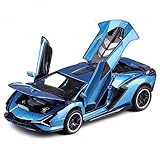
- Material:This model car is made of zinc alloy body,rubber tires and plastic parts.With Detailed interior and exterior trim, It is very sturdy.Car gets multiple processing, grinding sharp corners to prevent cuts child.
- Sound and light:Car doors,hood and trunk can be opened, accompanied with lights&sounds.Press the car body and open the doors can trigger the lights and real sounds.
- Pull back Cars:Place the car on the ground,just pull it back ,the model car will drive forward.Your kids can use it to play a chasing game with their friends.
- Size:Lamborghini Sian FKP37 is 1 /32 scale,Approx.6.3 * 2.7 * 1.6 inches.The size is similar with adult hands.It is very suitable for little boys and girls to grip.
- Gift:Fine workmanship,exquisite box with a display base,ideal birthday gift and holiday gift for kids boys and men who like collect model car.
The change was not just a logo swap
The badge was one part of the strategy. Hyundai also created a naming system, design organization, customer-service approach, sales-channel plan, and dedicated Genesis division.
The G80 and G90 were not completely new lineages
The G80 followed the second-generation Hyundai Genesis sedan, and the G90 followed the Equus flagship. The new brand built on existing products while giving them a different identity and place in the market.
The separation did not happen in one day
Genesis was announced as a standalone marque in 2015, but it initially shared sales and repair infrastructure with Hyundai. Retail and organizational autonomy developed progressively.
Higher margins were an objective, not a guaranteed result
Hyundai clearly saw premium vehicles as a potential source of stronger economics. That does not prove that every Genesis model or transaction was more profitable than every Hyundai equivalent. The careful wording is that Genesis was created to pursue premium-market growth and the potential for higher revenue and margins.
The bottom line
Hyundai and Genesis became two brands because Hyundai wanted to compete in the luxury market without weakening either brand’s identity. The Hyundai Genesis sedan and Equus had shown that the company could build expensive, premium-oriented vehicles, but the Hyundai badge was not ideal for challenging established luxury names.
Hyundai therefore created Genesis in 2015 and gave it the tools of a separate luxury marque: a wing emblem, G-series names, dedicated design, premium-service goals, and eventually an autonomous business division. The transition was intentionally staged, beginning with shared infrastructure and moving toward more exclusive Genesis retail operations.
Genesis is separate from Hyundai as a brand and business organization, but it is not separate from Hyundai Motor Group as an independent company.
What’s actually slowing this PC down?
Pick the symptom - the matching free tool is one click away.
Frequently Asked Questions
Did Genesis separate from Hyundai completely?
No. Genesis became a separate luxury brand and later received a more autonomous division, but it remains part of Hyundai Motor and Hyundai Motor Group.
When did Genesis become its own brand?
Hyundai announced Genesis as a global luxury brand on November 4, 2015.
Was the Genesis G80 originally a Hyundai?
Yes. The G80 followed the second-generation Hyundai Genesis sedan. The Genesis G90 followed the Equus flagship; in South Korea, the launch-market flagship was called the EQ900.
Why did Hyundai not sell luxury cars under the Hyundai name?
Hyundai’s mainstream badge was less suited to premium pricing and luxury-brand expectations. A separate Genesis identity allowed the company to compete on exclusivity, design, service, and ownership experience while preserving Hyundai’s broader market position.
Recommended Free Tools
Quick Recap
Product prices and availability are accurate as of the date/time indicated and are subject to change. Any price and availability information displayed on Amazon at the time of purchase will apply.




