What’s actually slowing this PC down?
Pick the symptom - the matching free tool is one click away.
The first Buick V8, the engine later nicknamed the Nailhead, was Buick’s 322-cubic-inch V8, introduced for 1953. It was not fitted to every 1953 Buick. Buick’s own engine-identification guidance ties the new V8 to the Series 50 and Series 70 cars, while the Series 40 used a straight-eight.
The engine and its date
Buick’s first V8 displaced 322 cubic inches and arrived in 1953. A Society of Automotive Engineers technical-paper record, listed under the title “New Buick V-8 Engine Offers Many Advantages” with a bibliographic citation naming V. Mathews and J. Turlay, identifies it as the first Buick V8 and dates its introduction to 1953. The same record includes this sentence: “Since the introduction of the first Buick V-8 engine of 322 cubic inches displacement in 1953, the trend has been toward larger engines.” That makes the engine’s displacement and date the most solidly documented facts about it.
Where the “Nailhead” name comes from
“Nailhead” is a later nickname, not Buick’s formal model designation. Automotive history accounts link it to the engine’s small, upright valves, which look like nail heads when viewed from above. Buick did not coin the term in any source available for this question, so it should be described as a popular name that grew up around the engine rather than an official one.
Which 1953 Buicks got the V8
Buick’s Heritage Alliance engine-number guide separates the cars by series:
Do these 3 things before closing this tab:
1Fix the driver behind crashes, sound loss and screen glitches2Repair Windows errors before they cause bigger problems3Scan for outdated or missing drivers - takes under a minute#1 Best Overall

- Complete Repair Coverage: Step-by-step repair procedures specific to your vehicle — from routine maintenance like oil changes and air filter replacement to complex engine and transmission repairs
- 700+ Photos & Illustrations: Every procedure is visually supported with clear, close-up photography taken during an actual vehicle teardown and rebuild — no guesswork required
- Beginner to Advanced: Written in plain language so a DIY owner with basic tools can tackle most repairs confidently, while still serving as a valuable reference for experienced mechanics
- Full Troubleshooting Section: Quickly diagnose problems with dedicated troubleshooting guides for engine, electrical, brakes, and drivetrain systems
- Time-Saving Tips Throughout: Pro shortcuts and notes highlight common pitfalls, helping you avoid costly mistakes and get your vehicle back on the trail faster
- Series 50 and Series 70: the 1953 V8 engine applies to these series.
- Series 40: the guide identifies this series with a straight-eight, not the new V8.
Anyone checking a 1953 Buick should confirm the series before assuming a V8 is present.
How to identify a 1953 V8 engine number
The Heritage Alliance’s guidance for 1953 Series 50 and 70 V8s places the engine number as follows:
Rank #2

- Step-by-step procedures written from a complete teardown and rebuild, giving you the confidence to tackle repairs at any skill level.
- Over 700+ clear photos and diagrams that simplify complex systems, helping you complete jobs faster and with fewer mistakes.
- Comprehensive troubleshooting and fault-finding guides to quickly diagnose problems and reduce costly downtime.
- Look on the top outer edge of the left cylinder bank.
- The stamping sits between the middle branches of the exhaust manifold.
- Read it as a die-stamped engine number. Do not confuse it with a casting number cast into the block, since the two serve different purposes and can lead to a wrong identification.
What “first” does and does not cover
The question asks only for the first Buick V8. Later Nailhead engines used different displacements, so they should not be used to answer it. Sources also divide the early history differently. One Automotive History Preservation Society account titled “Buick History: Generation 1 Nailhead V8 1953–1966” treats the first generation as running through 1966, while another description of the first series gives 1953–1956. Either way, the 322 introduced in 1953 is the first engine and the starting point of the family.
Sources
- Society of Automotive Engineers technical-paper record, “New Buick V-8 Engine Offers Many Advantages” (1953 introduction and 322-cubic-inch displacement).
- Buick Heritage Alliance, “Locating Your Buick Numbers” (series assignments and engine-number location).
- Automotive History Preservation Society, “Buick History: Generation 1 Nailhead V8 1953–1966” (generation dates and nickname background).
”
Independent reader supportYour contribution helps us test, update, and keep practical guides available for everyone.The Bottom Line
The first Buick V8 was the 322-cubic-inch engine introduced in 1953, and it is the engine later called the Nailhead. It appeared in the Series 50 and 70 cars, not the Series 40 straight-eight.
Quick wins for a faster PC:
Repair Windows errors before they cause bigger problemsFix Now →Fix the driver behind crashes, sound loss and screen glitchesFind Drivers →Clear out junk files and repair common Windows errorsFree Scan →Quick Recap
Best Value

- Item Package Dimension: 19.5L x 4.1W x 2.5H inches
- Item Package Weight - 2 Pounds
- Item Package Quantity - 1
- Product Type - AUTO ACCESSORY
- Repair & Service Manual
Rank #4
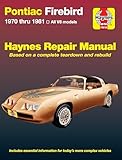
- Complete Repair Coverage: Step-by-step repair procedures specific to your vehicle — from routine maintenance like oil changes and air filter replacement to complex engine and transmission repairs
- 700+ Photos & Illustrations: Every procedure is visually supported with clear, close-up photography taken during an actual vehicle teardown and rebuild — no guesswork required
- Beginner to Advanced: Written in plain language so a DIY owner with basic tools can tackle most repairs confidently, while still serving as a valuable reference for experienced mechanics
- Full Troubleshooting Section: Quickly diagnose problems with dedicated troubleshooting guides for engine, electrical, brakes, and drivetrain systems
- Time-Saving Tips Throughout: Pro shortcuts and notes highlight common pitfalls, helping you avoid costly mistakes and get your vehicle back on the trail faster
Rank #3

- Step-by-step procedures written from a complete teardown and rebuild, giving you the confidence to tackle repairs at any skill level.
- Over 700+ clear photos and diagrams that simplify complex systems, helping you complete jobs faster and with fewer mistakes.
- Comprehensive troubleshooting and fault-finding guides to quickly diagnose problems and reduce costly downtime.
Product prices and availability are accurate as of the date/time indicated and are subject to change. Any price and availability information displayed on Amazon at the time of purchase will apply.




