Harley-Davidson is in a serious turnaround, not an imminent collapse. The company’s core motorcycle business, HDMC, lost money in 2025 after a sharp fall in sales, while its financing arm and electric-motorcycle subsidiary make consolidated results harder to interpret. By the second quarter of 2026, North American retail sales had improved for a third consecutive quarter, dealer inventory was down 17% year over year, and management raised its full-year guidance.
That is evidence of early stabilization—not a completed recovery. HDMC operating income was still down 49% in the first half of 2026, consolidated free cash flow was negative $104 million, HDFS earnings were falling after a major financing transaction, and LiveWire remained loss-making. Harley-Davidson’s future depends on whether its Back to the Bricks strategy can restore profitable motorcycle volume without sacrificing its premium pricing, dealer economics or brand identity.
Updated August 9, 2026. The latest reported results are for the quarter ended June 30, 2026, released July 23, 2026.
The short answer: Harley-Davidson has a motorcycle-business problem, not an immediate solvency crisis
The most accurate description of Harley-Davidson today is a company undergoing an operating reset. Its flagship motorcycle operation has suffered a multi-year decline in volume and profitability, but Harley-Davidson is not showing the characteristics of a business approaching liquidation. The company reported approximately $1.896 billion in consolidated cash and equivalents at June 30, 2026, although cash at the parent company should not be confused with the liquidity or capital position of every subsidiary.
What’s actually slowing this PC down?
Pick the symptom - the matching free tool is one click away.
#1 Best Overall

- DESIGN FEATURES - The CE 2 Level black cloth padding on the back side is designed to prevent cracking, so the product is more durable and you don't have to worry about the black cloth padding affecting the normal breathability, you just need to make sure that it fits with your jacket
- UNIQUE DESIGN FOR ALL SEASONS- One side of the ce level 2 back armor has multiple ventilation holes for use in the summer or in high temperatures, allowing it to breathe and wick away perspiration. The other side has an extra layer of black cushioning to keep you warm in the winter for all-season riding
- COMPREHENSIVE PROTECTION - Our CE2 Level back protector is larger in size and a little thicker than other shops in the market, back protection is all around. The size is size L. Please note that can size L be tucked into a jacket? If this size is big for you, then our size M may fit you better
- CE LEVEL SAFETY CERTIFICATION - Our motorcycle armor pad are CE certified to meet international safety standards, ensuring a high level of protective performance. The set includes full level 2 CE marking 1 back pad, 2 elbow pads and 2 shoulder pads, providing professional level protection and overall enhanced protection
- HIGH PERFORMANCE MATERIALS - The motorcycle jacket armor pad is made of PU memory foam with excellent abrasion resistance and tear resistance, ergonomic structure, CE grade armor protective gear will become hard and effectively disperse the force of impact when it is hit to ensure comprehensive protection of the body in all kinds of active environments
The distinction matters because Harley-Davidson is three businesses:
| Business | What it does | Why it matters now |
|---|---|---|
| HDMC | Designs, manufactures and sells Harley-Davidson motorcycles, parts, accessories, apparel and licensing | The core business and the source of the main strategic problem |
| HDFS | Provides motorcycle financing, servicing, insurance and related financial products | Still important to dealers and customers, but now operates with a smaller, more capital-light loan portfolio |
| LiveWire | Develops and sells electric motorcycles, electric balance bikes and related products | Strategically significant, but small and still loss-making |
In 2025, HDMC recorded a $28.7 million operating loss, while HDFS generated $490.4 million of operating income. That does not mean demand for Harley motorcycles suddenly improved because the financing division was profitable. Much of the HDFS increase came from a receivables transaction, reserve releases and transaction-related income. The company’s 2025 annual report is essential reading for separating those results.
What happened to Harley-Davidson’s core motorcycle business?
2025 was the clearest break point. Worldwide Harley-Davidson motorcycle retail sales fell to 132,535 units, down 12.4% from 151,229 in 2024. The decline was broad:
| Region | 2025 retail sales | Year-over-year change |
|---|---|---|
| United States | 82,698 | Down 12.9% |
| North America | 89,132 | Down 12.6% |
| EMEA | 21,454 | Down 10.9% |
| Asia-Pacific | 18,975 | Down 14.6% |
| Latin America | 2,974 | Up 2.2% |
| Worldwide | 132,535 | Down 12.4% |
Wholesale shipments fell even more sharply, declining 16.4% to 124,477 motorcycles. Harley was intentionally shipping fewer bikes than in the prior year to bring dealer supply closer to actual retail demand. Worldwide dealer inventory ended 2025 at approximately 40,000 motorcycles, about 17% lower than a year earlier.
That inventory reduction is healthy if the alternative is forcing dealers to carry unwanted stock and discount it. It also creates short-term financial pain: lower factory utilization spreads fixed manufacturing costs over fewer motorcycles, producing what Harley calls unfavorable manufacturing leverage.
| HDMC measure | 2025 result | What changed |
|---|---|---|
| Motorcycle retail sales | 132,535 units | Down 12.4% worldwide |
| Wholesale shipments | 124,477 units | Down 16.4% |
| Revenue | $3.578 billion | Down 13.2% |
| Operating income | -$28.7 million | Down from $277.8 million in 2024 |
| Operating margin | -0.8% | Down from 6.7% in 2024 |
| Parts and accessories revenue | — | Down 5.8% |
| Apparel revenue | — | Down 9.1% |
Consolidated net income remained positive but fell from $455.4 million in 2024 to $338.7 million in 2025. Diluted earnings per share declined from $3.44 to $2.78. Those consolidated figures are less useful than HDMC’s operating result when the question is whether the motorcycle business itself is healthy.
Q2 2026 was better—but it did not prove the turnaround
Harley’s second-quarter report contained genuine signs of progress. Worldwide retail sales rose 1% to 42,467 motorcycles, while North American retail sales rose 3% to 29,751. North American retail sales had now increased for three consecutive quarters. First-half worldwide retail sales were up 4% to 75,974 units, and global dealer inventory at June 30 was down 17% from the end of the second quarter of 2025.
| Q2 2026 measure | Result | Year-over-year change |
|---|---|---|
| Worldwide retail sales | 42,467 units | Up 1% |
| North American retail sales | 29,751 units | Up 3% |
| HDMC wholesale shipments | 39,209 units | Up 9% |
| HDMC revenue | $1.104 billion | Up 6% |
| HDMC operating income | $72 million | Up 18% |
| HDMC adjusted EBITDA margin | 10.4% | Up from 9.3% |
| HDFS operating income | $22 million | Down 69% |
| LiveWire revenue | $9.1 million | Up 52% |
| LiveWire operating result | -$17.9 million | Still a loss |
The strongest interpretation is that Harley is improving sell-through and inventory health. The weaker interpretation is that one quarter of modest retail growth has not repaired the economics of the business. First-half HDMC operating income was $91 million, down from $178 million a year earlier. First-half adjusted EBITDA was $189 million, compared with $249 million in the prior-year period.
Consolidated revenue fell 6% to $1.230 billion because HDFS revenue dropped sharply after the financing-arm restructuring. Consolidated net income fell 26% to $80 million, and diluted EPS fell 15% to $0.75. Q2’s HDMC improvement therefore existed alongside a weaker consolidated income statement.
Harley raised its 2026 outlook after the quarter. Management now expects:
- HDMC global retail sales: 133,500 to 138,500 units.
- HDMC global wholesale shipments: 133,500 to 138,500 units.
- HDMC operating income: $10 million to $50 million.
- HDFS operating income: $55 million to $70 million.
- LiveWire operating loss: $70 million to $80 million.
- Harley-Davidson capital investment: $175 million to $200 million.
The retail, wholesale, HDMC and HDFS ranges were raised; the LiveWire loss range was unchanged. These are management forecasts, not guarantees. Even the low end of the HDMC range would represent only modest profitability after the segment’s 2025 loss. The detailed Q2 earnings release and earnings presentation provide the underlying figures.
Why are Harley-Davidson sales falling?
1. Expensive discretionary products meet expensive financing
Motorcycles are discretionary purchases, and many customers finance them. Harley’s own filings cite high interest rates, weak consumer sentiment, reduced discretionary spending and uncertain economic conditions as important causes of weaker demand.
The Tool Desk
Outbyte PC Repair FREERepair Windows errors before they cause bigger problemsFix Now →Outbyte Driver Updater FREEFix the driver behind crashes, sound loss and screen glitchesFind Drivers →Rank #2
![JOYROOM Motorcycle Phone Mount, [1s Auto Lock][100mph Military Anti-Shake] Bike Phone Holder for Bicycle, [10s Quick Install] Handlebar Phone Mount, Compatible with iPhone, Samsung, All Cell Phone](https://m.media-amazon.com/images/I/5113ZNM8R8L._SL160_.jpg)
- 1 Click, Auto Lock- 2026 latest motorcycle phone mount features with a upgraded auto lock button. 4 arms will auto lock your phone with a click, and unlock by pressing both side. Real one hand operation. Thanks to the solid structured inner mechanism, the lock button won't get stuck (tested to stand with10,000+ times press)
- Hold Your Phone Like A Vise- Both the clamp and mount are cushioned for protection of the phone and handlebar. Has a high-speed lock switch, you can double lock your phone when you ride at bumpy road. No worry your phone will vibrate loose when you hit 100mps
- Solid Reinforced Ball-Joint- The bicycle phone mount is equipped with a upgraded robust ball part, which is made of military-grade A+ material with high tenacity, effectively solve the problem of snapping off. Good choice for long-term use
- 360° Adjustable- Thanks to the universal ball design, the bike cell phone holder is all-round adjustable, you can pivot the phone enough to any angle. A silicone pad is also filled into the thread, which can secure the angle from loosing up while you're riding
- Wide Compatibility- The bike phone holder is compatible with handlebar from 0.7” to 1.34”, you can use it on your ATV, scooter, stroller, peloton, etc. Cellphone from 4.7” to 7”, thickness (with case)≤0.71”, support iPhone,Samsung, LG, Google Pixel,Motorola,One Plus, etc. (Note: for Galaxy Z Fold 5, 6, 7 are only compatible when folded and without case.)
The effect is especially significant for a premium brand. A higher loan rate increases the monthly payment on an already expensive motorcycle. Customers may delay a purchase, choose a used bike, select a less expensive competitor or decide that a lighter, more versatile motorcycle offers better value.
This is not simply a marketing problem. Harley is dealing with a combination of financing costs, affordability, competition and product accessibility. Japanese, European, Chinese and Indian manufacturers offer alternatives across lower price points and a broad range of sizes and riding styles.
It is reasonable to describe younger and newer riders as a strategic challenge because Harley needs a reliable path from first motorcycle to larger Harley. It is not reasonable to claim, without stronger demographic evidence, that every younger rider rejects the brand or that a precise age-based collapse caused the sales decline. Harley’s filings do not provide a clean current age-by-age sales series.
2. The product mix is concentrated in large, expensive motorcycles
Harley’s 2025 wholesale mix shows where the pressure was greatest:
Quick wins for a faster PC:
Scan for outdated or missing drivers - takes under a minuteDriver Scan →Repair Windows errors before they cause bigger problemsFix Now →| Category | 2025 wholesale units | Year-over-year change |
|---|---|---|
| Grand American Touring, including Trikes | 69,252 | Down 19.2% |
| Cruiser | 41,172 | Down 11.0% |
| Sport and Lightweight | 9,638 | Down 21.9% |
| Adventure Touring | 4,415 | Down 2.6% |
Touring and cruiser motorcycles remain central to Harley’s identity and can carry attractive margins, but the concentration leaves the company exposed when large premium motorcycles become harder to finance. Harley needs products that are lighter, less expensive and less intimidating to new riders while still offering enough margin and accessory potential to support the dealer network.
3. The 2024 Touring comparison was difficult
Harley launched redesigned Touring motorcycles in 2024. The comparison with that launch period made 2025 more difficult, particularly as customers and dealers worked through a changed model cycle. The company also faced softer international conditions in 2025. Latin America was the exception, with retail sales up 2.2%, but its small volume could not offset declines in the larger regions.
4. Lower volume hurts both factories and dealers
Reducing shipments can be the right decision when dealers have too much inventory. However, fewer motorcycles also mean lower factory utilization, higher fixed cost per unit and fewer bikes entering the installed base that later generate service, parts, accessories, apparel and finance revenue.
Dealers feel the pressure first through slower inventory turns, discounting, floor-plan costs and weaker cash flow. That is why Harley’s plan places unusual emphasis on dealer profitability. Management says it wants to double dealer profitability in 2026 and double it again by 2029. Those are ambitious forward-looking targets, not results already demonstrated across the network.
5. Tariffs add cost, but they are not the whole explanation
Harley reported approximately $67 million of new or increased tariff costs in 2025. As of May 1, 2026, it estimated 2026 tariff costs at approximately $75 million to $90 million. The company has cited sourcing changes, pricing, inventory timing, government engagement and other mitigation efforts.
Tariffs can affect Harley through higher costs for imported motorcycles, components and materials, supplier price increases, logistics expenses and weaker international competitiveness. Harley must either absorb the cost, raise prices, or accept some combination of lower demand and lower margins.
But tariffs should not be used as a complete explanation for the sales decline. Harley also reported the effects of interest rates, consumer sentiment, model-cycle comparisons, weaker discretionary demand and inventory management. Q2 2026 gross profit also benefited from a tariff recovery, which may not recur at the same level.
Why the dealer network is a crucial test
There are two different sales numbers to watch:
- Retail sales are motorcycles sold by dealers to customers. They are the closest measure of consumer demand.
- Wholesale shipments are motorcycles Harley ships to dealers. They produce manufacturer revenue but can rise even when customer demand is weak if dealers are restocking, or fall when Harley is deliberately reducing excess inventory.
A manufacturer can therefore report stronger wholesale shipments without a healthy retail market. Conversely, falling shipments may be a responsible response to overstocked dealers rather than proof that the business is collapsing.
Recommended Free Tools
Rank #3

- PREMIUM QUALITY 2.50/2.75-10" DIRT BIKE REPLACEMENT INNER TUBES - These 2-pack heavy-duty replacement inner tubes for dirt bikes with a 14-inch(OD) tires 10-inch rim and 2.5 inches to 2.75 inches tire widths. These universal-fit inner tubes work best for motorbikes with 49cc, 50cc, and 70cc engine displacements.
- HIGHLY COMPATIBLE INNER TUBE REPLACEMENT FOR DIFFERENT DIRT BIKE BRANDS AND MODELS - A tire is only as good as its inner tube. With this 2-pack set of dirt bike inner tubes, you'll be prepared for any flats that may come your way whether it be on your front or rear tire. These inner tubes fit stock tires of Honda CRF50 and XR50, Suzuki DRZ70 and JR 50, Yamaha PW50 and TTR50, Coolster QG-210 and QG-213A, Razor MX650 and X500, and Baja Dirt Runner 49.
- HEAVY DUTY INNER TUBES - In extreme sports, there's no assurance of safety but this does not mean that you'll need to constantly worry about an impending disaster. These inner tubes will provide you with the peace of mind you deserve. Made with 2mm thick and shock-absorbent butyl rubber, these inner tubes prevent explosive punctures with their self-sealing properties.
- MAXIMUM IMPACT ABSORPTION - Experience exceptional riding performance with these thick, shock-absorbent butyl inner tubes. The higher impact-dampening effect ensures that bumps and dips won't be much of an issue whether you are riding on or off the road.
- US-BASED CUSTOMER SUPPORT TEAM - AR-PRO is a brand you can count on. We create durable and dependable products that will make your life easier! Unsatisfied with our products for some reason? You can contact us directly through our US-based customer support team.
The desired pattern for Harley is retail sales that remain positive, wholesale shipments that broadly track retail demand, and dealer inventory that stays controlled without heavy discounting. If wholesale growth again runs far ahead of retail sales, Harley could be rebuilding the channel inventory problem it has spent the past year trying to solve.
Dealer economics matter beyond new-bike sales. Dealers sell parts, accessories, apparel, service and financing products. A dealer that cannot earn a reasonable return may reduce inventory, cut staff, close a location or become less effective at introducing new riders to the brand. Harley’s stated goal of improving dealer profitability is therefore not a side project; it is central to the turnaround.
What happened to Harley-Davidson Financial Services?
HDFS helped make Harley’s 2025 consolidated results look stronger than the core motorcycle operation. In July 2025, Harley announced a partnership with KKR and PIMCO that:
- sold more than $5 billion of existing retail loan receivables;
- sold the partners a combined 9.8% equity interest in HDFS;
- committed HDFS to sell approximately two-thirds of future retail loan originations for at least five years;
- unlocked approximately $1.25 billion of cash; and
- supported debt reduction and shareholder returns.
In plain English, Harley moved HDFS toward a capital-light model. Instead of keeping the full economic and balance-sheet burden of every motorcycle loan, it can sell much of the receivables while retaining an important financing relationship with customers and dealers and earning servicing-related income.
Crashes, No Sound, or Screen Glitches?
Random freezes, missing sound and display glitches usually trace back to one bad driver. Find and replace yours safely.Free scan · under a minutePC Slower Than It Used to Be?
A free scan shows the junk files, broken settings and background clutter dragging Windows down - then fixes them in one click.Free scan · Windows 10 & 11The trade-off is lower near-term earnings from the finance portfolio. The 2025 HDFS result benefited from the transaction, including the release of credit-loss reserves and transaction-related income. Those benefits were real, but they were not a recurring improvement in motorcycle demand and should not be projected forward at the same scale.
That explains much of the Q2 2026 volatility: HDFS revenue fell 55% and operating income fell 69% to $22 million, primarily because the retail loan portfolio was smaller after the asset sale. HDFS is less capital-intensive and less exposed to holding the entire loan book, but its recurring earnings must now be judged through servicing, new originations, retained receivables and credit performance.
Harley’s medium-term target is HDFS operating income of $125 million to $150 million in or around 2029, compared with 2026 guidance of $55 million to $70 million. Whether it can rebuild that income without a deterioration in credit losses is an important part of the outlook.
Read Harley’s announcement of the KKR and PIMCO partnership alongside the quarterly results rather than treating HDFS as an ordinary captive finance operation.
Is LiveWire causing Harley-Davidson’s problems?
No. LiveWire is a genuine financial and strategic risk, but it is too small to be the primary cause of HDMC’s decline.
LiveWire recorded revenue of $25.7 million and an operating loss of $75.0 million in 2025, shipping 653 electric motorcycles. In the first half of 2026, its operating loss was $35.6 million. Q2 revenue increased 52% to $9.1 million, but the segment still lost $17.9 million, and full-year guidance remained a $70 million-to-$80 million operating loss.
The difficulties are familiar across premium electric motorcycles: slow adoption, limited charging infrastructure, reduced incentives, high development and marketing costs, and insufficient scale. LiveWire also sells STACYC electric balance bikes, so reported consolidated unit figures should not automatically be interpreted as full-size LiveWire motorcycle deliveries.
Harley’s 2026 filing says it does not plan to make additional LiveWire investments beyond the amount already outstanding under its term loan. LiveWire must therefore control costs and secure outside capital or other funding if its losses continue. That makes the subsidiary an option on future electric growth, but also a potential cash drain. The current evidence does not support calling it bankrupt; it does support treating its funding needs as a material risk.
Do these 3 things before closing this tab:
1Scan for outdated or missing drivers - takes under a minute2Clear out junk files and repair common Windows errors3Fix the driver behind crashes, sound loss and screen glitchesRank #4
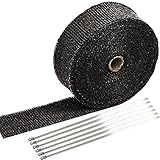
- Package includes one 2 inch X 50 feet Heat Wrap with (pack of 6) 12" Stainless Steel (304) Locking Zip Ties.
- The exhaust heat wrap tape can withstand 1400F direct/2000F radiant heat.
- High resistance to abrasions, oil spills, temperatures and vibration breakdown
- The thermal heat wrap can reduce heat under hood up to 50%
- Universal fitment for cars and motorcycles performance parts
What is Back to the Bricks?
Announced on May 5, 2026, Back to the Bricks is Artie Starrs’s plan to return Harley’s attention to its core brand, products, dealers and profit engine. Its broad pillars are:
- Use the Harley brand, revenue channels and dealer network more effectively.
- Improve dealer profitability.
- Regain share in categories where Harley believes it has credibility and a right to win.
- Reduce costs and improve free cash flow and EBITDA margins.
- Use a strengthened management team to execute more consistently.
The product reset
The strategy presentation identifies several product moves:
- A Harley-Davidson Sprint priced below $10,000.
- The return of an air-cooled Sportster positioned around the $10,000 price point.
- Customizable blank-canvas motorcycles.
- Approximately 20 new models and trim lines over three years.
- Greater use of existing platforms and investments rather than a completely new powertrain or platform program.
- Parts and accessories launches alongside new motorcycles.
There are two important pricing qualifications. Harley’s formal presentation says the Sprint will be priced below $10,000. Reuters reported Starrs describing it as approximately a $6,000 motorcycle, but that is not a confirmed U.S. MSRP, and Harley has not announced a launch date in the cited materials. Similarly, the planned air-cooled Sportster should not be confused with the currently existing liquid-cooled Sportster S and Nightster family.
The lower-entry strategy addresses a real weakness: Harley needs a more accessible first step into the brand. But a cheaper motorcycle creates its own questions. Can Harley produce it at an acceptable margin? Will it attract genuinely new customers or mainly cannibalize existing models? Can dealers make enough money on it? And will buyers see it as a real Harley rather than an inexpensive badge-engineered alternative?
Free tools Windows power users keep installed
One-click scans. No signup required.
The financial targets
Harley’s medium-term HDMC targets include:
- More than $350 million of HDMC EBITDA in 2027.
- Mid-single-digit compound annual growth in HDMC retail units.
- HDMC gross margin of 25% to 30%.
- Mid-single-digit growth in parts and accessories and apparel/licensing.
- Operating expenses below 20% of HDMC sales.
- HDMC EBITDA margin of 10% to 12%.
These are management targets, not current GAAP earnings guidance. EBITDA is not the same as operating income, free cash flow or consolidated net income. The $350 million-plus target specifically applies to HDMC and should not be presented as Harley-Davidson’s total profit forecast.
Why management changed
Artie Starrs became Harley-Davidson’s president and CEO on October 1, 2025, replacing Jochen Zeitz. Zeitz remained chairman through the transition and then became a senior adviser for a limited period. Starrs joined from Topgolf and previously held leadership roles at Pizza Hut.
The significance is less about his résumé than about the type of reset Harley is attempting. The company has changed commercial, marketing, technology and operations leadership, introduced the RIDE brand platform, and placed more explicit emphasis on dealers, Milwaukee and the core Harley identity.
That represents a shift away from broad experimentation toward focused execution. It does not, by itself, establish that the new leadership will succeed. The new products, dealer program and cost actions must produce measurable results over multiple quarters.
The RIDE platform and related leadership changes are described in Harley’s RIDE announcement and leadership update.
Independent reader supportYour contribution helps us test, update, and keep practical guides available for everyone.Where the brand controversy fits
Harley-Davidson’s August 2024 rollback of several diversity, equity and inclusion initiatives became a visible part of the company’s brand story. Harley said it would review sponsorships and affiliations, stop participating in the Human Rights Campaign workplace-equality ranking, eliminate supplier-diversity spending goals and focus company activities on growing motorcycling and supporting riders, first responders, military members and veterans. The Associated Press reported on the changes.
The controversy matters because Harley is trying to balance a traditional customer base with the need to broaden participation in motorcycling. It also creates potential brand risks, including boycotts, activist campaigns and customer alienation on either side of a public dispute.
However, the available financial evidence does not prove that the controversy caused the 2025 sales decline. Harley’s own disclosures emphasize interest rates, economic uncertainty, consumer sentiment, reduced discretionary spending, model comparisons, inventory and tariffs. It is fair to call the culture-war episode a brand-management risk; it is not fair to assign it a quantified share of the sales decline without independent evidence.
Best Value

- ODIs proprietary medium compound material provides comfort without sacrificing durability
Is the turnaround strategy credible?
Reasons it could work
- The brand still has unusual loyalty. Harley owns a distinctive position in American heavyweight motorcycles, with a large installed base and an established dealer and service network.
- Inventory is healthier. Lower dealer inventory reduces the need for discounting and gives dealers a better chance of selling motorcycles at rational prices.
- Existing platforms can limit investment. Reusing platforms and manufacturing investments could allow Harley to introduce products more efficiently than an all-new vehicle architecture.
- Lower-entry products address a real gap. A credible sub-$10,000 motorcycle could give new riders a less expensive path into the brand.
- Parts and accessories provide leverage. More motorcycles in use can generate recurring revenue, while accessories can increase the value of each sale.
- Dealer economics are finally central. A profitable dealer network is more likely to stock bikes, train staff, support events and convert curious visitors into riders.
Reasons it could fail
- Lower-priced motorcycles may not attract enough new riders or may carry inadequate margins.
- New models may cannibalize existing Harley sales rather than expand the customer base.
- Tariffs, supplier costs and logistics could absorb the early margin improvement.
- Discounting could return if retail demand weakens or shipments again exceed sell-through.
- The brand may struggle to appeal to new riders without alienating core customers.
- LiveWire may require additional capital despite Harley’s stated funding limits.
- A larger retained HDFS loan book could bring higher credit losses if consumer finances weaken.
- Dealer closures or financial stress could weaken Harley’s distribution, service and customer-acquisition system.
Market share also needs careful interpretation. Harley can gain share in a shrinking heavyweight segment and still sell fewer motorcycles and generate less profit. Share gains are useful evidence of competitive progress, but they do not prove a profitable recovery on their own.
What should riders, dealers and investors watch next?
The most useful test is not a single quarter or a headline about a new model. Watch whether the following indicators improve together:
- Sustained retail growth: North American retail sales should remain positive for several quarters, not merely benefit from an easy comparison.
- Retail and wholesale alignment: Shipments should track genuine customer demand rather than rebuild dealer inventory.
- Controlled inventory: Inventory should remain healthy without excessive incentives or forced dealer discounts.
- HDMC margin: Gross margin should move toward Harley’s 25%-to-30% target, with improvement coming from both volume and mix—not only cost cutting.
- HDMC operating income and EBITDA: The segment should improve consistently, not just in a quarter helped by one-time items or tariff recoveries.
- Dealer profitability: Harley’s promise to double dealer profitability needs to appear in actual dealer results and network health, not only in presentations.
- Sprint and Sportster sell-through: The new entry products should attract new customers without requiring heavy discounting.
- Parts and accessories: Revenue should return to growth as the installed base and attachment rates improve.
- Tariff control: Actual 2026 tariff costs should remain near or below the estimated $75 million-to-$90 million range, or mitigation should offset them.
- HDFS quality: Retained receivables and servicing income should rebuild without a significant rise in credit losses.
- LiveWire funding: Losses should decline without continuing large cash support from Harley-Davidson.
Three possible outcomes
Bull case
North American demand continues to grow, inventory remains controlled and the Sprint and returning Sportster bring new customers into the network. Harley’s existing platforms keep development costs manageable, parts and accessories recover, tariffs are mitigated, and HDMC reaches or exceeds its 2027 EBITDA target.
Base case
2026 proves to be a stabilization year rather than a return to historical sales volumes. Retail sales improve modestly, but margins remain under pressure and Harley reaches only the low or middle end of its guidance. HDFS earnings remain below the transaction-inflated 2025 result, leaving 2027 product launches and dealer execution as the decisive tests.
Recommended Free Tools
Bear case
Lower-priced products fail to convert enough new riders, discounting returns and dealer inventory rises. Tariffs and input costs erase HDMC’s margin gains, the core customer base ages faster than Harley can replace it, LiveWire needs additional capital, and credit losses increase as HDFS rebuilds its retained loan portfolio.
Bottom line: Harley has bought time, not yet proven a recovery
Harley-Davidson is not simply dying, and LiveWire is not the primary reason the company is struggling. The central issue is that HDMC has been selling too few expensive motorcycles to generate healthy factory utilization, dealer economics and operating leverage. The 2025 numbers made that clear: worldwide retail sales fell 12.4%, HDMC revenue fell 13.2%, and the segment swung to a $28.7 million operating loss.
Q2 2026 provides a plausible foundation for recovery. North American retail sales grew, dealer inventory was lower, HDMC revenue and quarterly operating income improved, and management raised guidance. But first-half HDMC profit was still sharply lower, free cash flow was negative, HDFS is earning less after becoming more capital-light, and LiveWire continues to lose money.
The next decisive test is whether Back to the Bricks turns early North American stabilization into sustained, profitable volume—particularly when the Sprint, the planned air-cooled Sportster and other new models reach customers. Until retail growth, dealer profitability, margins and recurring cash generation improve together, Harley-Davidson remains a turnaround in progress rather than a company that has fully recovered.
What’s actually slowing this PC down?
Pick the symptom - the matching free tool is one click away.
Primary figures in this article come from Harley-Davidson’s 2025 annual report, its Q2 2026 earnings presentation, and the company’s Back to the Bricks strategy announcement.
Frequently Asked Questions
Is Harley-Davidson going bankrupt?
There is no evidence in the cited results of an imminent bankruptcy or liquidation. Harley-Davidson had approximately $1.896 billion in consolidated cash and equivalents at June 30, 2026. However, its core HDMC motorcycle business was under significant pressure, and consolidated cash does not mean that HDFS and LiveWire have identical liquidity or capital positions.
What is Harley-Davidson’s Back to the Bricks strategy?
Back to the Bricks is Harley’s 2026 turnaround plan focused on core motorcycles and markets, better dealer profitability, lower costs, improved free cash flow, parts and accessories growth, and products such as a planned sub-$10,000 Sprint and an air-cooled Sportster. The strategy is intended to restore profitable volume rather than simply increase shipments.
Will Harley-Davidson’s Sprint cost $6,000?
Not officially. Reuters reported CEO Artie Starrs describing the Sprint as approximately a $6,000 motorcycle, but Harley’s formal strategy materials say only that it will be priced below $10,000. A confirmed U.S. MSRP and launch date were not provided in the cited company materials.
Is LiveWire the reason Harley-Davidson is in trouble?
No. LiveWire is strategically important but small compared with HDMC. It remained loss-making in 2025 and the first half of 2026, creating funding and execution risk. The main problem is the decline in profitable volume from Harley’s core combustion-motorcycle business.
The Bottom Line
Harley-Davidson is financially capable of pursuing a turnaround, but its motorcycle business has not yet demonstrated a durable recovery. The early 2026 improvement in North American retail sales and dealer inventory is encouraging. The real proof will come from sustained retail growth, healthier dealer profits, improving HDMC margins and positive recurring cash generation as the new lower-entry motorcycles reach the market.
Quick Recap
Product prices and availability are accurate as of the date/time indicated and are subject to change. Any price and availability information displayed on Amazon at the time of purchase will apply.