Windows Errors? Fix Them Before They Spread
Repair common Windows errors and clear accumulated junk for a smoother, more stable PC - no reinstall needed.Free scan · no reinstallOutdated Drivers Are Slowing You Down
One free scan finds every outdated or missing driver and matches the right update for your exact hardware.Free scan · exact hardware matchBefore buying a used track-day car, verify its identity and history, inspect its structure and mechanical condition, and confirm it meets the rules of the event you plan to attend. A car that starts, drives, has a current roadworthiness certificate, or has passed an event inspection is not necessarily safe or ready for track use now. If you cannot assess its condition yourself, arrange an independent pre-purchase inspection with a mechanic familiar with the model and track use.
What makes a used car suitable for track days?
A suitable car is not necessarily a purpose-built race car or a heavily modified one. A well-maintained road car can work for a first track day without extensive modifications, provided its current condition is sound and it fits the event’s rules. The important question is whether this particular car can handle the demands you intend to place on it—not whether it has track-oriented parts or a past history at a circuit.
As an Amazon Associate I earn from qualifying purchases.
Track sessions put repeated demands on brakes, tires, cooling, suspension, steering, and the fasteners and mounts that hold components in place. Wear or a defect that seems minor in ordinary driving can matter more under those conditions. Evaluate the car’s records, repairs, present condition, and likely work before it is driven hard.
Free tools Windows power users keep installed
One-click scans. No signup required.
Keep three separate questions in view: is the car road-legal where you plan to use it on public roads, does it meet the chosen organizer’s event requirements, and is it actually in sound condition? A positive answer to one does not settle the others. In particular, a technical inspection is not a safety warranty: the National Motorsports Safety Association says the owner and driver remain responsible for the vehicle and equipment, and that inspection does not certify that a vehicle is safe or fully compliant.
#1 Best Overall

- Durable Ratchet Head: Made from Hardened treated Chrome Vanadium steel alloy (Cr-V) Corrosion-Retardant: Satin Finish. Made in Taiwan
- Easy Storage: A sturdy plastic storage case is included. Non-Slip Grip: Knurled handle
- Easy to Read: High Contrast & Dual Range Scale. Accurate: Pre-Calibrated to ± 4%
- Accessories included: 1/2" Drive 5" long Extension Bar
- Simple and Reliable: “Click” sound tells the preset torque value is reached. Stop applying force when you hear and feel it.
A useful buying decision therefore has two stages: establish what the car is and what has happened to it, then decide whether its present condition and required work make sense for your plans. A roadworthiness check or a previous track inspection can contribute information, but neither replaces a fresh assessment of the car you are considering.
What should you ask for before travelling to see it?
Start with the information that can be checked remotely. Ask the seller for the registration, VIN, make and model, inspection or MOT details where applicable, service records, and a clear account of how the car has been used. In the UK, government used-car buyer guidance recommends comparing seller-provided details with DVLA records, checking MOT status and history and recalls, and matching the VIN and engine number to the V5C. Those are UK-specific checks; buyers elsewhere should use the equivalent registration, inspection-history, and recall services for their jurisdiction.
Before making the trip, compare the identifiers the seller gives you with the available official records and documents. Check that the car being advertised is the one described, and note any discrepancies to ask about in person. Look at inspection history for entries or patterns that need explanation, and check whether there are safety recalls relevant to the vehicle. A record check can help you identify questions; it cannot establish the car’s present mechanical condition.
Ask about use, incidents, and major work
If the car is advertised as a track car, ask how often and where it has been used on track, whether it has been crashed, and whether it has had structural or paint repairs. Ask who performed major engine, gearbox, suspension, or brake work and whether invoices or other supporting records are available. Find out what safety equipment and other modifications have been fitted, and whether the seller knows of recurring overheating, oil-pressure, braking, or warning-light issues.
For each substantial change, ask what was changed, why it was done, and who carried out the work. This is especially useful for modifications to brakes, suspension, seats, belts, or rollover protection, because the presence of a component does not show that it was installed correctly or that it meets the rules for your intended use. Ask about any repair or warning that was addressed more than once, rather than treating a currently unlit warning lamp as proof that the underlying issue is resolved.
Records help you assess what has been done, but there is no single logbook or service-record format established as mandatory for casual track-day use. Treat missing records as uncertainty to resolve, not proof that a fault exists or that the car is sound. If a seller’s account, paperwork, and official records do not agree, pause and establish why before proceeding.
It can help to write down the questions you want answered and bring the answers, records, and any unresolved gaps to the viewing. If the seller cannot answer a technical question, that alone does not prove a fault; it does mean you may need an independent assessment before you can make an informed decision.
The Tool Desk
Outbyte Driver Updater FREEFix the driver behind crashes, sound loss and screen glitchesFind Drivers →Outbyte PC Repair FREERepair Windows errors before they cause bigger problemsFix Now →How should you inspect the car in person?
Arrange enough time to inspect the car rather than relying on a short drive or a look around the exterior. If possible, view it in conditions where you can see the underside and relevant components; use a qualified inspector for areas you cannot safely or competently assess. Do not treat the checklist below as a substitute for the vehicle maker’s service information or a specialist’s judgment on a particular model.
Rank #2
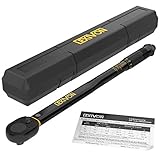
- PRECISE & HIGH QUALITY - Manufactured in Taiwan, our torque wrench is engineered for superior precision. It ships pre-calibrated to +/- 4% accuracy, ensuring dependable results every time. Includes a calibration certificate with a trackable serial number for your assurance.
- DURABLE - Built to last, featuring a reinforced ratchet gear head made from hardened, heat-treated Chrome Vanadium alloy steel for maximum strength and durability.
- LONGEVITY - Protect your investment with our proprietary Electro-Black finish, providing advanced rust and corrosion resistance for extended tool life.
- PERFORMANCE - Easily read and set torque levels with our patent-pending dual-range scale. The high-contrast, yellow-on-black markings are designed for easy visibility, even in low-light conditions.
- OMFORT - Equipped with a reversible ratchet head that drives in both directions and measures torque in a clockwise direction. The ergonomic, knurled handle ensures a non-slip, comfortable grip, reducing hand fatigue.
Work through the car systematically and make a note of what you can verify, what looks uncertain, and what needs a specialist’s opinion. A checklist is most useful when it leads to a concrete follow-up: a documented repair to review, a wear item to measure against the maker’s limits, or a safety-critical concern for a mechanic to assess. Do not let a clean-looking body or an uneventful short drive outweigh a concern about structure, brakes, steering, suspension, or leaks.
Structure, repairs, mounts, and fasteners
- Look for corrosion, damage, signs of repair, or distortion in the body structure and underside. Pay attention to mounting points that support suspension, steering, engine, gearbox, and subframes.
- Inspect visible suspension and steering components, engine and gearbox mounts, and exhaust supports for damage, looseness, or signs of poor workmanship. Check any installed rollover protection for apparent damage or insecure attachment, and have a qualified person assess it if you are unsure.
- Ask for an explanation and supporting records for major repairs. A repaired car is not automatically unsuitable, but the quality and scope of the work matter. Previous repairs may have been done incorrectly, so unexplained or visibly poor work deserves further assessment.
- Do not assume a component is safe because it is an upgrade or because the car passed an ordinary inspection. In the UK roadworthiness context, the MOT manual says modifications are assessed on their merits, including their effect on safety and roadworthiness. That guidance does not replace local legal advice or the event organizer’s rules.
Hyundai N’s track-day guidance calls for more thorough checks on older cars and highlights the security of engine, gearbox, subframe, exhaust, steering-rack, and suspension fixings. These are sensible areas to examine, not a model-independent certification checklist.
Give particular attention to the places where a component attaches to the car. A sound-looking part is not reassuring if its mount, surrounding structure, or fasteners are damaged or insecure. If a repair has changed a mounting point or involved structural work, ask an appropriately qualified inspector to assess the repair rather than relying on a visual impression alone.
Tires, wheels, and wheel bearings
- Inspect every tire for cuts, other damage, uneven wear, and adequate tread. Consider its age and specification in relation to the car and your intended use; a tire that looks acceptable at a glance still needs to be suitable for the job.
- Look over the wheels for damage and ask about vibration or looseness. Check for signs that a wheel bearing may be worn, and have a mechanic investigate if there is play, noise, or another concern.
- Check that wheel fasteners are secure using the vehicle or wheel manufacturer’s torque specification. A torque wrench and the correct wheel-nut socket can help, but there is no one torque value that applies to every car and wheel setup.
- Use a tire-pressure gauge to check and monitor pressures. Do not assume a single pressure is right for every vehicle, tire, wheel setup, or event; use applicable manufacturer guidance and event advice.
A sample Monticello Motor Club technical-review form includes checks for lug tightness, wheel bearings, tire tread and cuts, while Hyundai N’s guidance also calls out wheel balance, tread, sidewalls, and pressure. These examples illustrate inspection topics; they do not establish a universal tire threshold or event rule.
Do not judge a set of tires by tread alone. Damage, uneven wear, age, specification, pressure, wheel condition, and the way the tires suit the car all form part of the assessment. If you are unsure whether they are appropriate for the vehicle and event, ask a tire or vehicle specialist rather than assuming that a recently fitted set is suitable.
Brakes and brake fluid
- Inspect pads and rotors for condition and remaining life. Have a mechanic compare wear with the vehicle manufacturer’s service limits and the demands of your intended event.
- With the car stationary, check that the brake pedal feels normal and has normal travel. Look for leaks or damage at visible brake lines and calipers.
- Ask about the brake-fluid condition and service history. Track use puts greater demands on the brakes, and pad wear can be faster than it is in ordinary driving.
There is no universal minimum pad thickness or fluid-replacement interval established for every vehicle and event. Do not buy on the assumption that a particular remaining pad measurement or an old service entry is adequate without model-specific guidance.
Brake condition should be considered both as a safety issue and as part of the car’s near-term cost. A car may need attention to pads, rotors, fluid, or other brake components before it is driven hard. Have a mechanic assess any uncertain condition and identify what work is needed; do not infer readiness from the fact that the brakes work during an ordinary road drive.
Suspension, steering, engine, and transmission
- Look for leaking or worn dampers, damaged bushings, steering play, clunks, and loose linkages. Check for tire-to-body interference, especially if the car has altered suspension or wheel fitment.
- Ask about engine and transmission service and inspect for fluid leaks. Ask specifically about overheating and oil-pressure problems, including whether any warning lights have appeared or returned.
- Check the cooling system’s condition and have concerns investigated before track use. A short road drive cannot establish that a car will remain trouble-free under sustained track loads.
- Ask whether the gearbox, differential, brakes, and cooling system have been serviced. Evo’s track-preparation advice highlights these systems and critical fasteners and mounts, but it is preparation guidance rather than a universal service schedule. Follow the car maker’s service information and a specialist’s assessment for the model.
Track preparation should be based on the specific car’s maintenance needs, not a generic list of upgrades. A sound standard component may be preferable to a modified one with unclear history or workmanship. Ask the seller what work has been done and let the vehicle’s service information and an appropriate specialist determine whether additional work is needed.
Rank #3

- 【9-in-1 Torque Solution】Complete set includes 1/4", 3/8", and 1/2" drive click torque wrenches plus 6 essential adapters (extension bars, universal joint, drive adapters) securely stored in a sturdy portable case.
- 【High Precision & Dual Scales】Factory-calibrated to ±3% accuracy with included certificate; features dual-range scales (1/4": 10-220 in.lb, 3/8": 5-45 ft.lb, 1/2": 10-170 ft.lb) for versatile application coverage.
- 【Clear & Safe Audible Click】Upgraded loud "Click" sound provides a distinct, reliable signal (strong over 5 N.m, subtle under) when preset torque is reached, preventing overtightening and ensuring safety.
- 【Smooth 72-Tooth Ratchet & Quick Release】Reversible 72-tooth ratchet head offers a low 5° arc swing for use in tight spaces and smooth operation in both directions. Quick-release button ensures secure socket changes.
- 【Durable Construction & Wide Use】Hardened Cr-V steel ratchet heads and phosphated adapters resist wear; aerospace aluminum handles ensure lightweight strength and corrosion resistance. Ideal for precise torque on bikes, motorcycles, cars, trucks, wheels, and industrial applications. Backed by 24-month support.
Battery, warning lights, and equipment
Check that the battery is securely mounted and its terminals are secure. Note warning lights and ask for an explanation of any illuminated or recurring warnings; do not accept an unexplained fault as a harmless quirk. Also inspect visible belts and the exhaust for security and damage. A sample Monticello Motor Club form includes checks for suspension, steering, belts, and secure exhaust components, while Hyundai N’s list includes fluids, engine and transmission, leaks, battery security, and warning lights.
Ask whether any warning light has been diagnosed and whether the seller can provide supporting information about the fault and its repair. A warning light that has gone out does not, on its own, answer whether a recurring problem has been resolved. If its meaning or significance is unclear, make a diagnostic assessment part of the inspection rather than discounting it as a minor annoyance.
How do road legality and event rules affect the purchase?
Check both before committing to a car if you intend to drive it on the road or take it to a particular event. The requirements can differ by jurisdiction and organizer. Noise limits, helmet standards, rollover protection, seats, belts, and technical-inspection rules are not safely assumed from another venue’s requirements or from the car’s previous participation.
Ask the organizer of your chosen event what applies to your vehicle and configuration. A Monticello Motor Club technical-review form dated May 11, 2020, for example, lists checks and equipment for that club; it is an illustration of the sorts of requirements an organizer may set, not a current rulebook for other events. If the car has modifications, check their acceptability with both the relevant road authority and the organizer rather than inferring legality from their presence.
Make the enquiry specific: tell the organizer the car’s configuration and ask about applicable inspection, noise, helmet, seat, belt, and rollover-protection rules. If you expect to use the vehicle on public roads as well, check road legality separately with the relevant authority for your jurisdiction. A component may be acceptable for one purpose and still not answer whether the car satisfies another set of requirements.
A passed event inspection is useful as an eligibility check for that event, but it does not establish the car’s full safety, repair quality, history, or suitability for your plans. The National Motorsports Safety Association’s Technical & Safety Inspection guidance makes clear that the owner remains responsible for the vehicle and equipment.
The association states: “The technical inspection does not ensure, certify, or warrant that the vehicle or any part of it is safe or totally and ultimately compliant with all applicable rules nor does it in any way change the fact that the driver, crew members, and vehicle’s owner are ultimately responsible for the safety and operation of the vehicle and equipment.” Treat an event inspection as one part of preparation, not as a substitute for your own checks or a professional assessment.
Recommended Free Tools
How should you compare two used track-day cars?
Compare evidence and the work each car needs, rather than counting modifications or choosing the car with the most track-focused appearance. The following framework is a practical way to organize the checks, not a published scoring system.
Rank #4

- 【8-in-1 Torque Wrench Set】 Includes 1/4, 3/8, 1/2 inch drive torque wrenches that meet your different needs. 5Pcs Adapter: 1/4"Extension bar(4''), 3/8"Extension bar(6''), 1/2"Extension bar(5''), 3/8" Universal Joint, 1/2" to 3/8" Adapter with a sturdy plastic case for storage and portability
- 【Dual range scale & High Precision】 1/4 inch 10-230in.lb/1.1-26.0Nm with 1 in.lb micro-adjustment, 3/8 inch 5-50ft.lb/6.8-67.8Nm with 0.25 ft.lb micro-adjustment, 1/2 inch 10-180ft.lb/13.6-244.1Nm with 1 ft. lb micro-adjustment. Each wrench undergoes strict and specialized instrument testing before leaving the factory to ensure accuracy within ±3% and is provided with a formal calibration certificate
- 【Safe & Reliable】 This torque wrench set has been upgraded to have a louder "Click" sound, ensuring a clear and stronger click sound when the torque value exceeds 5 Nm, subtler click at lower than 5 Nm. The distinct click sound indicates that the preset torque has been reached, signaling you to stop applying force
- 【Releasable & Dual Direction】These torque wrenches has a quick release button with which accessories can easily be installed and removed, the accessories can grip and is not easy to fall down. With 72-tooth reversible ratchet head, it can be used in both clockwise and counterclockwise directions
- 【High Quality and Durable】 The torque wrench ratchet head is made from hardened treated Cr-Mo Steel for longevity. Handle crafted from high-grade aerospace aluminum for durability, and corrosion resistance. All adapters are treated with phosphating, with stronger wear resistance and a longer lifespan
| Comparison area | What to establish | Why it matters |
|---|---|---|
| Identity and history | Do the vehicle details and records match? Can you verify relevant inspection history and recalls? | Conflicting or unclear information makes it harder to judge what you are buying and what work may have been done. |
| Structure and repairs | Is the structure sound, and are major repairs documented and credible? | Repair quality and sound mounting points affect whether safety-critical components are properly supported. |
| Mechanical condition | What is the condition of the engine, transmission, cooling system, steering, suspension, and brakes? | These systems face demands during track use that an ordinary start-up or brief drive may not reveal. |
| Consumables | What work do the tires, brakes, and other worn items need? | Near-term replacement affects the true cost of bringing the car to a sound baseline. |
| Modifications | What has changed, why was it changed, who did the work, and can it be assessed for safety and legality? | Parts alone do not demonstrate correct installation, suitability, or compliance. |
| Use requirements | Does the configuration fit local road rules, if relevant, and the chosen organizer’s requirements? | Requirements vary by jurisdiction, vehicle, and event. |
| Baseline work | What needs attention before the car is driven hard, and who will do the work? | A lower purchase price may not be the lower-cost option if substantial repairs or preparation are required. |
For each candidate, write down the evidence you have, what remains uncertain, and what a qualified mechanic says needs attention. Price the necessary work before treating either car as a bargain. The guidance does not provide a universal cost estimate: the work depends on the specific model, condition, parts, labor, and event needs.
When comparing, separate confirmed facts from seller assurances and assumptions. For example, a documented repair is different from a repair described without supporting records; a visibly sound component is different from one whose condition has not been assessed. This does not mean the car with the most paperwork or fewest modifications is automatically the better choice. It means uncertainty and likely work should be part of the decision rather than hidden behind a low asking price.
There is no sourced fixed budget for bringing a used car to a track-ready baseline. Ask a mechanic to identify the work needed before hard use, then obtain costs for that specific work. Include both known wear items and any unresolved safety-critical issue in your comparison, and avoid treating optional upgrades as a substitute for repairs or required maintenance.
Do these 3 things before closing this tab:
1Repair Windows errors before they cause bigger problems2Scan for outdated or missing drivers - takes under a minute3Clear out junk files and repair common Windows errorsWhen should you walk away or commission an inspection?
Pause the purchase if the seller will not allow a reasonable inspection, the records conflict with the vehicle, major repairs or modifications cannot be explained, or you find unresolved concerns with structure, brakes, steering, suspension, or fluid leaks. These are prudent buyer decision points based on the safety-critical areas in track-day guidance, not a quoted legal standard.
If you cannot evaluate the vehicle yourself, commission an independent pre-purchase inspection by a qualified mechanic, preferably one familiar with that model and track use. Ask the inspector to focus on the areas that concern you and to identify work needed before the car is driven hard. Mechanic advice is especially valuable where repairs, modifications, warning lights, or condition are difficult to judge from a viewing.
Use an inspection to resolve uncertainty before purchase, not simply to obtain a general pass or reassurance. Share the seller’s account and available records with the mechanic, point out any visible concerns, and ask for an assessment of the car’s structure, repairs, and track-critical systems. If important areas cannot be assessed or a significant issue remains unexplained, you can delay the decision, seek further advice, or walk away.
Frequently asked questions
Is a roadworthy certificate or MOT enough to show a car is ready for a track day?
No. Roadworthiness checks address their applicable requirements, while track use places repeated demands on systems such as brakes, tires, cooling, suspension, and fasteners. A certificate or inspection history does not establish the car’s current overall condition or that it meets a particular organizer’s rules.
Does a passed track-day technical inspection mean the car is safe?
No. The National Motorsports Safety Association says technical inspection does not certify that a vehicle is safe or fully compliant, and responsibility remains with the owner and driver. Treat an event inspection as an eligibility check, not a warranty or replacement for due diligence.
Best Value

- ±3% HIGH PRECISION AND COOL APPEARANCE: 1/2 inch drive torque wrench (10-170ft.-lb/13.6-230.5Nm)has a calibration error range of ±3%, high precision, and comes with a corresponding serial number, which is easy to trace the original data, and you can use it with confidence.Hairich torque wrench not only has superior quality but also has a superior appearance. The classic combination of black and red is fashionable and textured, allowing you to enjoy a visual feast during use.
- PREMIUM MATERIAL AND DURABLE: Experience the ultimate durability and antiskid with the torque wrench. The main body of Hairich torque wrench set is made of chrome vanadium steel alloy, which is more strong and more durable. The head of the inch-pound torque wrench adopts a ratchet design with a reversing device to improve work efficiency. The square knurled handle is made of aluminum titanium alloy, which is ergonomic and comfortable to hold for long-time use.
- DUAL SCALE AND QUICK SETTING: Laser Printed by dual-range(ft-lb and Nm). Our professional torque wrench is easy to read and provides direct unit conversion, When the set torque value is reached, the torque wrench will make an audible and felt click to remind you to stop applying force. Pull down the lock knob and hold it until the torque setting is completed. Release the hand, and the lock knob will automatically rebound back to lock the value.
- ERGONOMIC DESIGN AND POWERFUL: Every design of our industrial torque wrench conforms to ergonomic, easy to handle.72-tooth ratchet, 5° ratcheting arc head, a quick-release button for easy loading and unloading, and an aluminum non-slip handle for excellent grip and control. A recent research review that, 72-tooth ratchets are very professional tooth ratchets, you just only rotate 5 degrees to finish it. Not easy to slip and wear, can be used in small spaces, and is more durable and powerful.
- EASY OPERATION AND SAFETY: Thanks to its bidirectional drive ratchet head, our torque wrench can be measured both clockwise and counterclockwise. When the set torque value is reached, a "click" sound will remind you to stop applying force to prevent damage to the item due to excessive torque. Notice: At low Nm settings under 5 Nm the "click" sound can be too light to hear.
What records should I ask a seller for?
Ask for the vehicle identifiers, applicable inspection or MOT details, service records, and information about use, incidents, repairs, and modifications. For major engine, gearbox, suspension, brake, or structural work, ask who performed it and whether invoices or other supporting records are available. No single record format is established as mandatory for casual track-day use.
How much brake-pad material or tire tread is enough?
There is no universal threshold established for every vehicle and event. Have a mechanic compare brake wear with the vehicle maker’s service limits and the intended use. Assess tires for damage, uneven wear, tread, age, and suitability, and check any event-specific requirements with the organizer.
Should I buy a car that has already been modified for track use?
Not just because it has modifications. Ask what was changed, why, who did the work, and whether the parts and installation are appropriate, safe, and acceptable under relevant road and event rules. A well-maintained road car may be suitable for a first track day without extensive modifications.
Quick wins for a faster PC:
Fix the driver behind crashes, sound loss and screen glitchesFind Drivers →Clear out junk files and repair common Windows errorsFree Scan →What should I do if I cannot inspect the car myself?
Arrange an independent pre-purchase inspection by a qualified mechanic, ideally one familiar with the model and track use. Ask for a clear assessment of repairs and safety-critical systems and what needs attention before the car is driven hard. An event inspection alone cannot guarantee the car’s overall safety.
Frequently Asked Questions
Is a roadworthy certificate or MOT enough to show a car is ready for a track day?
No. Roadworthiness checks address their applicable requirements, while track use places repeated demands on systems such as brakes, tires, cooling, suspension, and fasteners. A certificate or inspection history does not establish the car’s current overall condition or that it meets a particular organizer’s rules.
Does a passed track-day technical inspection mean the car is safe?
No. The National Motorsports Safety Association says technical inspection does not certify that a vehicle is safe or fully compliant, and responsibility remains with the owner and driver. Treat an event inspection as an eligibility check, not a warranty or replacement for due diligence.
What records should I ask a seller for?
Ask for the vehicle identifiers, applicable inspection or MOT details, service records, and information about use, incidents, repairs, and modifications. For major engine, gearbox, suspension, brake, or structural work, ask who performed it and whether invoices or other supporting records are available. No single record format is established as mandatory for casual track-day use.
What’s actually slowing this PC down?
Pick the symptom - the matching free tool is one click away.
How much brake-pad material or tire tread is enough?
There is no universal threshold established for every vehicle and event. Have a mechanic compare brake wear with the vehicle maker’s service limits and the intended use. Assess tires for damage, uneven wear, tread, age, and suitability, and check any event-specific requirements with the organizer.
Should I buy a car that has already been modified for track use?
Not just because it has modifications. Ask what was changed, why, who did the work, and whether the parts and installation are appropriate, safe, and acceptable under relevant road and event rules. A well-maintained road car may be suitable for a first track day without extensive modifications.
What should I do if I cannot inspect the car myself?
Arrange an independent pre-purchase inspection by a qualified mechanic, ideally one familiar with the model and track use. Ask for a clear assessment of repairs and safety-critical systems and what needs attention before the car is driven hard. An event inspection alone cannot guarantee the car’s overall safety.
The Bottom Line
Before buying, verify the car’s identity and history, assess its repairs and track-critical systems, confirm road and event requirements, and price the work it needs. Do not rely on a roadworthiness certificate, previous track use, or a passed event inspection as proof that the car is safe now. If you cannot judge its condition, get an independent inspection from a mechanic familiar with the model and track use.
Do these 3 things before closing this tab:
1Clear out junk files and repair common Windows errors2Scan for outdated or missing drivers - takes under a minute3Repair Windows errors before they cause bigger problemsQuick Recap
Product prices and availability are accurate as of the date/time indicated and are subject to change. Any price and availability information displayed on Amazon at the time of purchase will apply.