Crashes, No Sound, or Screen Glitches?
Random freezes, missing sound and display glitches usually trace back to one bad driver. Find and replace yours safely.Free scan · under a minutePC Slower Than It Used to Be?
A free scan shows the junk files, broken settings and background clutter dragging Windows down - then fixes them in one click.Free scan · Windows 10 & 11Before you make an offer, verify the car’s battery condition and real-world range, warranty, charging compatibility, history and recall status—and arrange an independent inspection by someone qualified to work on EVs. There is no universal battery-health percentage that makes a used electric hot hatch a safe buy. Whether a particular car suits you depends on its condition, coverage, charging setup and the range you actually need.
Use a staged check: gather the VIN and records before arranging a viewing, examine the car and test-drive it in person, then verify the inspection findings and paperwork before signing. Warranty terms, charging connectors, recall services and legal requirements vary by vehicle and market, so confirm details for the specific car rather than relying on generic claims.
As an Amazon Associate I earn from qualifying purchases.
Start with the car’s identity and records
Ask the seller for the vehicle identification number (VIN), current odometer reading, service and repair records, and any accident or vehicle-history report before arranging a viewing. These let you begin checking the car’s history and coverage rather than relying solely on its appearance or the seller’s description. Make sure the VIN on the paperwork corresponds to the vehicle you are considering; you will need the correct identifier to ask the manufacturer about warranty coverage and to check recalls.
Request the battery health report, battery warranty paperwork, general warranty paperwork and recall status. Ask which charging ports the car has, whether it supports DC fast charging, and whether charging cables are included. Compare the car’s charging capability and connector with the public network and home or workplace setup you intend to use; connector standards and charging infrastructure vary by market. If the seller does not know an answer, treat that as something to verify, not as proof that the car lacks or has the feature.
#1 Best Overall

- 1.Accurate and Efficient: Different colors on the bar represents different scopes, the red range on bar: 0 - 3/ 32; Yellow range on bar: 3/ 32 - 6/ 32; Green range on bar: 6/ 32 - 32/ 32, allowing you easy and fast to read and calibrated
- 2.Reusable:Tire tread gauge is made of sturdy material, reusable and long lasting, which is an efficient tool to moenitor tire tread levels, make driving safer
- 3.Convenient:Tire tread Depth gauge measures approx 3.35 x 1.06 inch, small size, also features a pocket clip for easy carrying, you can clip it on your pocket, ideal for quick and convenient getting and using
- 4.Simple to use :Place the black flat edge of the tire tread gauge on both sides of the tire tread, press down the color bar until it reaches the bottom of the tread groove, and read the depth measurement on the indicator bar.
- 5.Easy to read: There are 3 different color codes of areas on the bar that add simplicity and convenience, which show you a clear result of your tyre condition, really easy to read, giving you a fast and accurate measurement to tread depth, smart, high efficiency
Think about your daily commute and longer trips before assessing range. Write down the journeys you need the car to cover and whether you can charge at home, work or at public stations. Ask what usable range the car delivers, then judge whether it meets your needs. A battery state-of-health report describes the battery’s condition and performance compared with when it was new, but the available official guidance does not establish one percentage as a universal pass/fail threshold. A figure that looks reassuring on its own does not tell you whether the car’s practical range and charging arrangements suit your routine.
Gathering these details in advance can save a wasted trip and help you focus the viewing on unresolved questions. For example, if you depend on DC fast charging for longer journeys, confirm that support and connector compatibility before travelling to see the car. If battery coverage is important to your decision, obtain the actual paperwork and clarify transferability before treating advertised warranty language as relevant to you.
Check battery health, range and warranty
Ask for a battery health report
Ask the seller or dealer for a battery state-of-health report and clarify what it measures. Use it alongside the car’s usable range and your own driving needs, not as a standalone guarantee of how far the car will travel in every condition. Do not treat a single reported percentage as a universal buying cutoff: none is established by the official guidance cited here.
Ask for the report in a form you can review, and confirm that it relates to the vehicle you are inspecting. If the seller provides only a verbal description, ask whether a written report can be supplied or whether an EV-qualified inspector can assess battery condition. No required report format or universal threshold is established in the official guidance, so avoid turning one number into a pass-or-fail rule that applies to every used electric hot hatch.
Battery condition and usable range are related considerations, but they are not interchangeable questions. The report helps describe the battery’s condition compared with when it was new; the range question is whether the vehicle can meet your actual needs. Ask what range the seller is reporting and whether it is an estimate or a demonstrated figure, then consider it against the journeys you regularly make. Do not assume that a seller’s stated range will guarantee the same result for every driver or trip.
Verify coverage for this car
Read the warranty paperwork and verify coverage against the VIN with the manufacturer. Confirm what is covered, when coverage began, the remaining time or mileage, whether it transfers to a second owner, and whether servicing conditions apply. Do not assume a widely advertised warranty term applies to the specific vehicle. A headline duration alone does not confirm how much time or mileage remains, which components are included, or whether you qualify as the next owner.
Ask for the written terms and compare them with the vehicle’s records. If coverage depends on servicing conditions, check whether the service and repair history documents that the conditions were met. If the car has changed ownership, ask the manufacturer whether the battery warranty transfers and whether any steps are required to establish coverage. Do not rely on an informal assurance where the decision depends on warranty protection.
The Tool Desk
Outbyte Driver Updater FREEFix the driver behind crashes, sound loss and screen glitchesFind Drivers →Outbyte PC Repair FREERepair Windows errors before they cause bigger problemsFix Now →The Australian Government says many EV batteries have an eight-year or approximately 160,000 km warranty. That is broad market guidance, not a promise about a particular car, and it does not establish the remaining coverage on a used vehicle. Check the actual terms and eligibility for the car you are considering.
Rank #2

- Accurate and precise tire tread depth readings in 1/32 inch increments (1/128 inch resolution)
- Durable dial type gauge with easy-to-read 32nds scale (max. tread depth 14/32 inch)
- Color coded scale shows true tire health - safe range (green), showing wear (yellow), or needs replacement (red)
- Calibrated to meet or exceed industry standards for precise accuracy of tire tread depth (+/- 0.25%)
- Rugged, convenient, and compact design for easy storage with included leather pouch
In the United States, Federal Trade Commission guidance advises checking an unexpired manufacturer warranty using the VIN. That is U.S.-specific advice; warranty rights and procedures differ by country. Ask the relevant manufacturer or local authority how to check coverage in your market. Before signing, make sure any warranty detail or dealer promise that matters to your decision is recorded in writing.
Confirm charging compatibility
Do not assume that an included cable proves the car can use the charging you need. Check the charge inlet and any included cable for visible damage, confirm which connectors the vehicle accepts, and establish whether it supports DC fast charging. Verify those details against the charging networks and equipment available where you drive. If the seller cannot confirm a feature, ask the manufacturer to verify it for the VIN.
Consider both the car’s capability and your own charging setup. A vehicle may have a cable included but still not match the connector or charging options you intend to use. Conversely, a charging feature is useful only if it works with the relevant local network or equipment. Check what ports the car has, what the cable is intended for, and whether the car can fast charge if that matters for your trips. No single connector standard for all markets is identified in the available guidance, so verify compatibility locally rather than assuming that a model name or cable description settles the question.
Do these 3 things before closing this tab:
1Clear out junk files and repair common Windows errors2Fix the driver behind crashes, sound loss and screen glitches3Repair Windows errors before they cause bigger problemsAt the viewing, inspect the charge port and cable for visible damage. Ask the seller to demonstrate charging operation if it is practical and safe to do so, or ask an independent EV-qualified inspector to include charging operation in a written assessment. Do not confuse a visual check of the socket with proof that the vehicle will work with every charger or network you plan to use.
Inspect condition at the viewing
Compare the car with its records
Check that the odometer reading and visible condition make sense alongside the service records and vehicle-history report. Look for inconsistent gaps between body panels, paint that differs between panels, dents, rust or cracked glass. These observations do not replace a professional inspection, but they can help identify questions to resolve before proceeding.
Use the viewing to compare what you see with what you were told. If the condition appears inconsistent with the records, or if information about repairs or accidents is incomplete, ask the seller to explain and provide supporting records. A history report and service records are useful evidence, but neither should be treated as a substitute for examining the vehicle and commissioning an independent inspection.
Look for signs of water exposure
Check for signs of flood or standing-water damage. Water exposure can be especially serious in an EV: the U.S. National Highway Traffic Safety Administration warns that standing-water exposure can create high-voltage shock and fire hazards. If you suspect water damage, do not treat a clean-looking cabin as reassurance; have the car assessed by a qualified EV professional before considering a purchase.
The New Zealand consumer checklist also calls out flood-damage checks. These recommendations reinforce the importance of treating water exposure as a specific inspection question rather than relying on a general visual impression. If there is a concern, do not try to inspect or handle high-voltage components yourself. Ask an EV-qualified professional to assess the vehicle and explain the findings before you decide whether to proceed.
Rank #3

- 1. Accurately measures tire tread depth gauge, Calibrated from 0 to 1 inch in 1/32 inch
- 2. Color coded tire tread depth gauge clearly indicates the tire different phase by colors
- 3. Tire tread depth gauge of Red range on bar: 0-3/32; Yellow Range on bar: 3/32 - 6/32; 5. Green Range on bar: 6/32-32/32
- 4. Comes with a pocket clip, easy to carry a tire tread depth gauge
- 5. Tire tread depth gauge reads in 32nds Suitable for trucks, motorcycles, automobiles and any passenger vehicle
Check the tires
Look for cracks and uneven wear. A tread-depth gauge can measure tread depth, but it does not assess the rest of the tire’s condition, and legal limits vary by jurisdiction. New Zealand Consumer Protection says tires should meet that country’s minimum legal tread depth of 1.5 mm and recommends over 3 mm. Those figures are New Zealand guidance, not a global legal standard; check the rules where the car is registered and driven.
A tread-depth gauge is an optional tool for checking the depth of the tire grooves. Use it as one part of a visual check, not as a complete tire inspection or a way to establish that the vehicle meets every local requirement. Ask an inspector to assess any cracks, uneven wear or other condition concerns. If comparing cars, note tire condition for each one rather than assuming a similar odometer reading means similar wear.
Check the charge port and software
Inspect the charge port and supplied cable for visible damage. Confirm that the inlet matches your intended charging setup, and ask the seller or manufacturer whether the software is up to date. A cable’s presence alone does not establish DC fast-charging support or compatibility with a particular public network.
Ask the seller to show any available confirmation of software status, or check with the manufacturer if the answer matters and cannot be verified at the viewing. The guidance supports asking whether the software is up to date, but does not specify particular versions or model-specific updates. Do not infer that a car has no software concerns simply because no warning is displayed during a brief inspection.
Test-drive the car
Drive the car before making an offer. Pay attention to warning lights, unusual sounds, steering, braking, suspension behavior and regenerative braking. Consider whether the vehicle’s range and charging features meet your daily and longer-trip needs. General used-car guidance supports a test drive, but the sources cited here do not establish model-specific symptoms or faults for electric hot hatches.
During the drive, note anything you cannot explain and ask the seller about it. A test drive is an opportunity to assess the car’s basic behavior, not to diagnose every system or predict future reliability. If a warning light appears, a sound seems unusual or the steering, braking or suspension behavior concerns you, have the issue assessed by an independent professional before deciding. Do not dismiss a concern on the assumption that it is normal for an electric car; no model-specific symptoms are identified in the available guidance to support that conclusion.
Also revisit the practical questions you considered before the viewing. Does the range suit the journeys you need to make? Does the charging capability fit the network and equipment available to you? Those are individual-use questions, and no single advertised range or charging claim can answer them for every buyer.
What’s actually slowing this PC down?
Pick the symptom - the matching free tool is one click away.
Arrange an independent EV inspection
A vehicle-history report and your own visual checks cannot replace an independent inspection. Choose a mechanic experienced with EVs, and ask whether the inspection includes battery diagnostics, charging operation, a written findings report and high-voltage-system checks by personnel qualified to perform them. These are useful items to request, not a standardized package guaranteed by every inspection service.
Rank #4
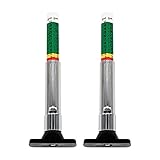
- Accurate measures tire tread depth gauge tool
- Calibrated from 0 to 1 inch in 1/ 32 inch
- Red range on bar: 0-3/32; Yellow Range on bar: 3/32 - 6/32; 5. Green Range on bar: 6/32-32/32
- Pocket-sized gauge, easy handy
- 2 pack
Before booking, ask what the inspector will and will not assess. In particular, ask how battery condition will be checked, whether charging operation is included, what inspection of the high-voltage system is appropriate, who is qualified to perform that work, and whether you will receive a written report. The recommended scope is a practical way to discuss the inspection; it should not be mistaken for a service package that every inspector provides automatically.
High-voltage work requires specialized EV training, according to NHTSA. Do not ask an unqualified person to inspect or work on high-voltage components. Before paying for an inspection, ask who will perform each part and what the written report will cover. If a concern is identified, ask the inspector to explain its significance and whether it needs to be resolved before purchase. Standard inspection prices or repair costs are not established in the available guidance, so obtain any relevant quote directly rather than relying on a generic estimate.
Independent inspection is useful even when the seller has supplied a history report or battery document. Those records provide information to review; an inspector can assess the actual vehicle and report findings within the agreed scope. Neither step creates a universal guarantee of future performance, but together they give you a stronger basis for a decision than appearance or sales claims alone.
Quick wins for a faster PC:
Scan for outdated or missing drivers - takes under a minuteDriver Scan →Clear out junk files and repair common Windows errorsFree Scan →Complete VIN, recall and paperwork checks before signing
- Check open recalls. Use the VIN to verify recall status with the manufacturer and the relevant official service in your country. The sources here do not identify a particular hot hatch or establish its recall status. Do not assume that a generic model search or seller assurance confirms the status of this particular car.
- Confirm warranty details. Verify coverage, start date, remaining time or mileage, transferability and any servicing conditions with the manufacturer, using the VIN. Check the actual paperwork and the service history rather than relying on a commonly advertised warranty term.
- Review the independent inspection report. Resolve concerns about battery condition, charging, water exposure or other findings before deciding whether to proceed. If an item is unclear, ask the inspector to explain what was checked and what remains outside the inspection scope.
- Get promises in writing. Ask the seller or dealer to put warranty details and any other commitments in the sale paperwork. FTC used-car and warranty advice applies to U.S. dealer purchases; it should not be treated as law elsewhere. Check local consumer rules and procedures in your market.
- Recheck the vehicle and documents. Confirm that the VIN, odometer reading and records you relied on refer to the vehicle being sold. Keep copies of the inspection report, warranty information and written commitments relevant to your decision.
Before you commit, consider the total purchase and ownership costs using the evidence for the specific vehicle. That means comparing the car’s condition, warranty position, charging fit and inspection findings, as well as the purchase terms. Repair-cost figures, inspection prices or a universal way to calculate ownership costs are not provided in the available guidance. Do not fill those gaps with an assumed battery-repair bill or a generic degradation estimate; ask for vehicle-specific information and quotes where needed.
Independent reader supportYour contribution helps us test, update, and keep practical guides available for everyone.Use the same checks when comparing cars
If you are considering more than one used electric hot hatch, compare them on the same evidence rather than choosing by claimed range or appearance alone. A consistent checklist makes it easier to see where one car has better documentation or coverage, and where a promising claim still needs checking.
| What to compare | Evidence to ask for or inspect |
|---|---|
| Battery condition and range | Battery health report and usable range assessed against your real driving needs. |
| Battery warranty | Written coverage, remaining time or mileage, transferability and servicing conditions, verified against the VIN. |
| Charging | Ports, DC fast-charging support, included cable condition and compatibility with your intended charging network. |
| History and recalls | Service and repair records, vehicle-history information and VIN-based recall status. |
| Physical condition | Tires, bodywork, glass and possible signs of water damage. |
| Inspection findings | Written results from an independent EV-qualified inspector, including the scope of battery and charging checks. |
| Total purchase and ownership costs | Compare the actual purchase terms and vehicle-specific findings; obtain individual quotes where costs are uncertain rather than applying unsupported generic figures. |
Use the same questions for every seller: can they provide a battery report, what does the warranty cover, does it transfer, can the car fast charge, and can they document service and repair history? Then compare the written inspection findings. This approach does not rank models or promise that the car with the strongest paperwork will be fault-free. It helps you base a choice on comparable evidence and your own charging and range needs.
What the available evidence cannot tell you
Official sources cited for this checklist do not establish a universal battery-health cutoff, a battery-degradation rate for used electric hot hatches, reliability rankings, model-specific common faults or repair-cost figures. Those claims should not be inferred from a general EV warranty or a single car’s report. Base the decision on the individual vehicle’s records, verified coverage, inspection findings and whether its real usable range and charging capability fit your use.
Free tools Windows power users keep installed
One-click scans. No signup required.
The evidence also does not identify a particular hot hatch, its recall history, or a single charging connector standard that applies everywhere. Legal tread limits and consumer-protection procedures differ by country, as do charging networks and connector standards. Verify the vehicle by VIN with its manufacturer and the appropriate local authority, and check local requirements for the place where you will use and register the car.
Best Value

- 1. Accurately measures tire tread depth gauge tool, Calibrated from 0 to 1 inch in 1/32 inch
- 2. Color coded tire tread depth gauge tool clearly indicates the tire different phase by colors
- 3. Tire tread depth gauge of Red range on bar: 0-3/32; Yellow Range on bar: 3/32 - 6/32; 5. Green Range on bar: 6/32-32/32
- 4. Comes with a pocket clip, easy to carry a tire tread depth gauge tool
- 5. Tire tread depth gauge tool reads in 32nds Suitable for trucks, motorcycles, automobiles and any passenger vehicle
There is no supported basis here for assuming that a used electric hot hatch will have a particular repair bill or battery condition simply because of its age, mileage or body style. A general warranty example is not a guarantee, and an inspection is not a promise about every future repair. Where the available guidance leaves a question unanswered, ask the seller, manufacturer, local authority or qualified inspector for information specific to the vehicle.
Frequently Asked Questions
What is a good battery health percentage for a used electric hot hatch?
The official guidance cited here does not establish a universal battery state-of-health percentage that makes a used EV a pass or fail. Ask for a battery health report, clarify what it measures, and consider it alongside the car’s usable range and your own driving needs.
How can I check the battery warranty on a used electric car?
Ask for the written warranty paperwork and verify coverage against the VIN with the manufacturer. Confirm what is covered, the start date, remaining time or mileage, transferability to a second owner and any servicing conditions. Procedures and consumer rights vary by market.
How do I know whether a used electric hot hatch can fast charge?
Ask the seller which ports the car has and whether it supports DC fast charging, then verify the details with the manufacturer if needed. Check that the connector and charging capability match the public network or equipment you intend to use. An included cable alone does not prove fast-charging support.
Should I get an independent inspection before buying a used EV?
Yes. Arrange an inspection by someone experienced with EVs, and ask whether battery diagnostics, charging operation, a written findings report and any appropriate high-voltage checks by qualified personnel are included. Inspection scope varies, so establish what will be checked before booking.
What should I check for when viewing a used electric car?
Compare the odometer and condition with the records; look for uneven body-panel gaps, paint differences, dents, rust, cracked glass and possible water damage; inspect tire cracks and wear; and check the charge port and cable for visible damage. Test-drive the car and follow up concerns with an EV-qualified inspector.
Is 1.5 mm the minimum tire tread depth everywhere?
No. New Zealand Consumer Protection cites 1.5 mm as that country’s minimum legal tread depth and recommends over 3 mm. Legal limits vary, so check the rules where the vehicle will be registered and driven. A tread-depth gauge measures tread only and does not assess the rest of the tire.
Recommended Free Tools
The Bottom Line
Before making an offer, get the VIN, battery health report, written warranty terms, charging details and service history; check recalls and inspect the car’s condition; then test-drive it and arrange an independent EV-qualified inspection. Decide whether the vehicle’s verified range and charging capability fit your needs, and do not rely on a universal battery-health cutoff, generic warranty promise or unsupported repair-cost estimate. Confirm market-specific details with the manufacturer and relevant local authority, and get seller commitments in writing.
Quick Recap
Product prices and availability are accurate as of the date/time indicated and are subject to change. Any price and availability information displayed on Amazon at the time of purchase will apply.




