Quick wins for a faster PC:
Repair Windows errors before they cause bigger problemsFix Now →Scan for outdated or missing drivers - takes under a minuteDriver Scan →Clear out junk files and repair common Windows errorsFree Scan →Before you visit or leave a deposit, get an itemized out-the-door quote for the exact sports car you are considering, confirm whether that car is actually available, and put delivery and warranty terms in writing. At handover, match the car to the paperwork and document its condition. These steps help you compare real offers rather than monthly payments or advertised prices that may omit important details.
What should you ask before discussing a monthly payment?
Start with the car and its price, not a payment target. Ask the dealer to email an itemized out-the-door quote for the specific vehicle or, if it is an order, the precise configuration you want. An out-the-door figure should let you see what you would pay to complete the purchase, subject to any clearly identified government charges that you must pay directly.
As an Amazon Associate I earn from qualifying purchases.
The Federal Trade Commission’s Consumer Advice, Car Dealer Ads and Promotions: Know Before You Go, recommends getting the out-the-door price in writing ahead of time. A written quote can make offers easier to compare, surface unwanted add-ons, and help identify charges introduced late in the process. Treat the quote as a starting document to check against the final buyer’s order—not as a guarantee that every estimate, such as tax or registration, will be exact.
Ask for the price components separately
- Vehicle price: Ask for the cash price before financing, with the vehicle’s MSRP and any discount shown separately.
- Dealer charges: Have the dealer identify each dealer-imposed fee and say whether it is required to buy the car from that dealer.
- Government charges: Request separate estimates for sales or use tax, title, registration, and other government charges. Ask which amounts are estimates and which are fixed.
- Optional products: Ask for every accessory, protection product, service plan, or other add-on to be listed with its price. Confirm which, if any, you have agreed to purchase.
- Discounts and rebates: Ask which advertised discounts apply to any buyer and which require a particular lender, trade-in, or other qualifying condition.
For a U.S. buyer, the FTC staff FAQ Automobile Industry Pricing Transparency: FAQs, updated in September 2026, says the advertised price generally should be the actual price any consumer can pay, excluding charges that the government requires the consumer to pay directly. Dealer-required fees and charges the dealer passes along generally belong in the advertised price. The FAQ also says optional items must not be misrepresented as mandatory, and a dealer should not charge for options the buyer did not approve. State-specific disclosure rules, including rules concerning document fees, may add requirements. The FAQ is staff guidance on FTC Act principles, not a substitute for checking the law and disclosures applicable where you are buying.
#1 Best Overall
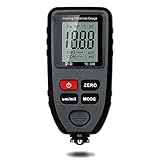
- Auto-Detection for Steel and Aluminum Coatings:This Coating Thickness Gauge utilizes advanced dual technology to automatically recognize ferrous and non-ferrous substrates, making it easy to measure coating thickness on both steel and aluminum without any guesswork
- Ideal for automotive paint inspection, powder coating checks, and metal surface finishing. Commonly used on used cars, anodized aluminum, bathroom fittings, bike frames, stadium seats, lockers, appliances, and more. (Note: Designed for metallic surfaces only.)
- A Must-Have for Used Car Buyers:Don't let hidden repairs catch you off guard. This tool lets you check the paint thickness on each car panel, helping you spot any previous accidents or repairs before buying a used vehicle
- Save Money on Used Car Purchases:When buying used cars, this paint thickness gauge helps you identify potential issues by ensuring the paint thickness is consistent across all panels. Great for detecting accident repairs and verifying if the car has been in a heavy crash
- Important Note: Please note that this gauge is specifically designed to measure coating thickness on metal substrates. It cannot be used on non-metallic materials such as plastic, fiberglass, or wood.
If a quote says an add-on is required, ask whether that means it is legally required, required by the dealer as a condition of its offer, or simply already installed on that particular car. Ask for the answer and the price in writing. Do not assume an item is optional just because the salesperson calls it optional, or mandatory because it appears on a worksheet. The key is to establish what the dealer is actually charging and what you have agreed to buy.
Is the car actually on the lot?
A low quote is not a useful comparison if it applies to a different vehicle, a car that is unavailable, or a configuration the dealer cannot supply. Ask whether the exact car is physically in stock, in transit, allocated but not yet built, or not yet allocated. If it is on the lot, ask for its VIN. If it is not, ask the dealer to identify the configuration and explain when the VIN will be available.
Confirm identity, equipment, and prior use
- Match the VIN on the quote to the car or to the vehicle record the dealer provides.
- Confirm paint, interior, packages, factory options, and dealer-installed equipment against the build sheet or order documentation.
- Ask whether the car has been used as a demonstrator, lease vehicle, or company car, or otherwise placed in service. Prior use may affect the warranty start date.
- Ask whether the quoted car is subject to a deposit, reservation, or other commitment, and whether another buyer has already contracted for it.
Do not compare a lightly equipped car with a more expensive, optioned example without accounting for the difference. A dealer discount, rebate, or advertised price can also depend on financing, a trade, or another condition; record the assumptions beside the figure instead of treating the headline number as universal.
Rank #2

- HIGH ACCURACY COATING THICKNESS MEASUREMENT – Digital paint thickness gauge for metal surfaces with 0.1 μm (0.01 mils) resolution and ±(3%+2 μm) accuracy, helping detect repainting, repairs, and uneven coating thickness during used car inspection, detailing work, and professional quality control. Suitable for checking doors, hood, roof, fenders, and other painted metal panels where accurate coating evaluation is required.
- EASY & FAST OPERATION — FACTORY CALIBRATED – Factory calibrated and ready to use right after installing batteries. Large backlit LCD with clear readings and simple buttons make this coating thickness meter easy for professionals and first-time users. Ideal for pre-purchase vehicle checks, car dealership inspections, trade-in evaluation, and mobile appraisers who need quick and convenient measurements without complicated setup.
- AUTOMATIC Fe / NFe SUBSTRATE DETECTION – Automatically detects Fe (steel/iron) and NFe (aluminum/copper) and selects the correct measuring method. Ideal for modern vehicles with mixed body materials and accurate results without manual switching. This helps users inspect steel doors, aluminum hoods, and other metal body parts with the correct measurement principle applied automatically.
- WIDE MEASURING RANGE FOR AUTOMOTIVE & INDUSTRIAL USE – Measuring range 0–1500 μm (0–59.1 mils) covers factory paint, repainting layers, and thicker coatings. Suitable for car body panels and industrial coated metal parts. Whether checking original automotive paint thickness or verifying thicker coating applications on metal components, the gauge provides a practical working range for many inspection scenarios.
- DUAL TECHNOLOGY: MAGNETIC INDUCTION + EDDY CURRENT – Uses magnetic induction for ferrous metals and eddy current technology for non-ferrous metals, providing stable, repeatable measurements across steel, iron, aluminum, and copper substrates. This dual-technology design allows one device to cover common automotive body metals without requiring separate meters or manual probe replacement.
How do you compare two dealer offers fairly?
Ask each dealer for a quote on the same VIN or the same specification and compare the offers on equivalent assumptions. A side-by-side review should separate the amount charged for the car from the cost of financing and from products you may choose to add.
- Vehicle: Same VIN or matching configuration, equipment, and condition.
- Cash out-the-door amount: The vehicle price plus itemized fees and estimated taxes and registration, with direct-pay government charges identified separately.
- Discount assumptions: Any rebate, trade-in, or lender qualification needed to receive the quoted price.
- Add-ons: Each accepted product and its price, with declined products excluded from the amount you agree to pay.
- Deposit and delivery: Deposit terms, expected timing, transport charges, and the written terms for a delay or a change in configuration.
- Warranty: Warranty start date, remaining time and mileage if previously placed in service, and the applicable coverage documents.
Once you have the cash price, review financing as a separate decision. Ask for the cash due at signing, amount financed, annual percentage rate (APR), loan term, and total of payments. A monthly amount by itself does not reveal the total borrowing cost: a longer term or an add-on financed into the loan can increase what you pay overall. The Consumer Financial Protection Bureau (CFPB) identifies interest and optional add-ons as factors that can increase the borrowed amount; it also points to insurance, maintenance, and fuel as longer-term ownership costs. Its auto-loan cost guidance was last reviewed on September 12, 2023.
MSRP, options, dealer add-ons, fees, taxes, registration, financing, insurance, maintenance, and fuel are different parts of the purchase and ownership picture. Keep them distinct in your notes. In particular, do not let a discussion of what fits a monthly budget replace a written vehicle price and a clear account of the amount financed and total payments.
Rank #3
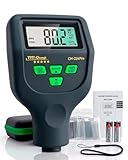
- AUTOMOTIVE PAINT THICKNESS GAUGE – CM-224PRO Designed for measuring coating thickness across vehicle panels during structured professional evaluation. Compare readings on doors, hood, roof and body panels to assess coating consistency and identify thickness variations that may indicate refinishing or prior repair. Suitable for dealerships and inspection professionals.
- 0–59.1 MILS RANGE WITH 0.01 MILS (0.1 µM) RESOLUTION – PROFESSIONAL CONSISTENCY Measures coatings from 0–59.1 mils (0–1500 µm) with stable resolution of 0.01 mils (0.1 µm), supporting consistent and repeatable comparison between factory coating and refinished surfaces during professional inspections.
- FE NFE AND ZINC AUTO DETECTION – AUTOMATIC SUBSTRATE RECOGNITION Automatically identifies steel (Fe), aluminum (NFe) and galvanized surfaces (Zn), supporting inspection of modern vehicles built with mixed body materials without manual switching or mode selection.
- PROFESSIONAL PROBE DESIGN – STABLE AND REPEATABLE CONTACT Engineered probe construction supports consistent surface engagement and repeatable readings during multi-point inspection routines in professional workshop environments.
- FAST PANEL-TO-PANEL MEASUREMENT FLOW – EFFICIENT FULL VEHICLE SCANNING Optimized for efficient professional workflow: place the probe vertically, read the value and continue across panels during dealership and workshop-based inspections.
What should you settle before paying a deposit or traveling?
For an in-stock car, verify its availability and ask when the dealer expects you can take delivery. For a car that is in transit or not yet allocated, ask for the estimated delivery date and what will happen if the vehicle is delayed or arrives with a different configuration. Ask whether transport or destination charges are included in the quote, what they cover, and whether any additional delivery charge applies.
Free tools Windows power users keep installed
One-click scans. No signup required.
Before sending money, get the deposit amount, how it will be applied, and the conditions for cancellation or substitution in writing. Read the actual reservation or purchase terms rather than relying on a verbal assurance. Delivery dates, fees, and cancellation rights are not uniform; they depend on the dealer, contract, and jurisdiction. The sources cited here do not establish a universal delivery timeline, fee, or cancellation rule.
What should you check when you take delivery?
Allow time for a deliberate handover. Bring the order, quote, and any written promises, and compare them with the car and final paperwork before signing that the vehicle and agreed items have been received. Inspect in good light and record visible condition concerns or differences in the delivery documents before accepting the car.
Rank #4

- 【Auto-ID Dual Tech & Material Note】This paint depth gauge automatically identifies Fe/NFe substrates without manual switching. The device is specifically designed for metal substrates and is not suitable for plastic, carbon fiber, or wood. It is ideal for detecting heavy paint on car bodies, boat hulls, and industrial steel structures to ensure accurate readings.
- 【High Precision & Wide Range】Equipped with a wear-resistant probe, this coating thickness gauge delivers lab-grade stability across a 0-78.7 mils (0-2000μm) range. It features high resolution of 0.004 mil / 0.1μm for 0-3.9 mils (0-99.9μm) and 0.04 mil / 1μm for 3.9-78.7 mils (100-2000μm), accurately detecting minute changes in powder coatings or anodized layers. With a measurement accuracy of ≤ ±(3% H+ 2μm / 0.079mil), it ensures reliable results for professional tasks, from measuring paint on curved bumpers (min radius 5mm/197mils) to verifying films on machinery.
- 【Single/Continuous Scan Mode】This paint meter offers more than just single scans by displaying real-time statistics (Avg, Max, Min) of the last 10 measurements in continuous scanning mode. Users can quickly identify uneven spraying on hoods or thickness variations in industrial furniture powder coatings through statistical data. This method reflects overall process quality better than single-point measurements.
- 【Data Storage & USB Output】This digital thickness gauge features a "Data Hold" function to lock readings after measuring in deep engine bays or narrow gaps. It is equipped with a Type-C interface that supports exporting 30 sets of stored data to a PC for generating professional inspection reports. This capability is perfect for creating check reports for used car sales or quality control logs.
- 【Smart Calibration & Ergonomics】This mil thickness gauge comes with Fe/NFe calibration foils and substrates for zero-point and thickness calibration before work. Operators must ensure no dust, wrinkles, or irregularities exist between the thickness standard sheet and the substrate during use. Pressing the OK key allows users to clear historical calibration records easily.
- Match the vehicle: Check the VIN on the car against the invoice and other purchase documents. Verify the ordered equipment, accessories, and keys.
- Walk around the exterior: Look over paint, body panels, wheels, and glass for visible marks, damage, or differences from the agreed specification.
- Check the interior: Inspect trim and the included equipment. Note any concerns or missing items in writing rather than relying on a later verbal follow-up.
- Review the paperwork: Reconcile the final price and itemized charges with the written quote. Confirm any deposit credit, agreed add-ons, and delivery details.
- Request the handover documents: Ask for the completed pre-delivery inspection record, warranty booklet, and maintenance schedule. Have the delivery date and any relevant prior-use information documented.
- Get an operating walkthrough: Ask the delivery representative to explain the vehicle’s important controls and features, and where to find the model-specific instructions.
General Motors’ official delivery-form resource describes a process that includes a pre-delivery check, consultation at delivery, vehicle presentation, and service introduction; it says the delivery form is completed and signed by the sales consultant and customer. That is an example of one manufacturer’s process, not a universal requirement for every dealer or marque.
Porsche’s 2023 U.S. warranty manual notes that flaws or damage to paint and other components may have been repaired or replaced at factory, transportation, and dealer inspection stages. That makes a careful condition record sensible; it does not mean a delivered car is defective or that a particular inspection tool is necessary. If you notice a concern, photograph it and have it written into the delivery record, with any agreed next step and timing documented.
Do these 3 things before closing this tab:
1Scan for outdated or missing drivers - takes under a minute2Clear out junk files and repair common Windows errors3Fix the driver behind crashes, sound loss and screen glitchesWhen does the warranty start?
Do not assume the warranty clock starts on the day you sign. Ask the dealer to confirm in writing the warranty commencement date and mileage for the specific VIN, and whether the vehicle has previously been placed in service. If it was a demonstrator, lease, or company car, ask what coverage remains and how the earlier use affects the start date.
Best Value

- (*^_^*) [Record Various Data] It can record the average value, maximum value, minimum value, dif at the same time, and supports up to 50 data for statistics, making the numerical data you measure more accurate and convenient. If the auto power off function is on and there is no for 3 minutes, the instrument will automatically shut down to save battery power.
- (*^_^*) [Multifunctional] Thickness gauges are used to measure the thickness of metal coatings and other coatings such as paint/enamel/chrome on steel, paint and anodized coatings on aluminum/copper. Automatic detection of substrate properties. It has small size and high precision battery level indicator. It also has automatic shutdown function, used for FE/NFE.
- (*^_^*) [Precision Integrated Probe] It is important to check the car paint to make sure the paint thickness is about the same on each panel and to determine if the car is in good condition with a car paint inspection thickness gauge when you buy the car. The instrument adopts the principles of electromagnetic induction (F probe) and eddy current effect (N probe) to automatically detect the properties of the substrate.
- (*^_^*) [What Can Be Read and Detect Paint Depth] The large LCD display of the paint depth gauge shows the metal type, operating mode, quantity, battery status and the reading in µm, mm or mils. The thickness gauge has a measurement range of 0-2000um, an accuracy of ±(3%+1um), and a resolution of 0um-999um (1um).
- (*^_^*) [Widely Uses] It is used to non-destructively measure the thickness of coatings and paints. It is an essential equipment for material surface treatment, widely used in manufacturing, metal processing industry, chemical industry, commodity inspection and other fields, and can also work stably in laboratories, workshops and outdoors. Suitable for automotive paints, powder coatings, anodized aluminum, bathroom accessories, bicycle frames, stadium seating, outdoor sheds, furniture, swings, c
Porsche provides a specific U.S. example: its current warranty page states that new-vehicle coverage for vehicles in the United States and Canada is four years or 50,000 miles, whichever comes first, beginning at first retail delivery or earlier demonstrator, lease, or company-car use. The 2023 U.S. Porsche warranty manual also describes the start date and coverage. Those terms are Porsche-specific, not an industry standard. Confirm the model-year booklet and VIN-specific record for the car you are buying; do not apply this figure to another brand, model, market, or vehicle history.
Which warranty terms should you get in writing?
Request the warranty booklet that applies to the model year and market, then ask the dealer to confirm how its terms apply to your car. A brand name or a general sales description is not enough to establish coverage for a particular VIN, especially if the car has prior use or is being sold outside the market covered by a familiar warranty summary.
- Start date and starting mileage, plus remaining time and mileage for a previously placed-in-service vehicle.
- Duration and mileage limits, including which limit ends coverage first.
- Covered systems and exclusions, including any separate powertrain, corrosion, battery, or accessory coverage relevant to the car.
- Maintenance requirements and the records you should keep.
- Authorized repair locations and how roadside assistance works, if included.
- Whether coverage transfers to a later owner and any conditions that apply.
Keep the invoice, delivery paperwork, warranty booklet, and written confirmation of the start date together. If the dealer’s statement conflicts with the booklet or the vehicle record, ask for clarification from the manufacturer or its authorized service channel before treating the coverage as settled. Warranty terms can vary by make, model year, market, and vehicle history; the applicable documents control.
What’s actually slowing this PC down?
Pick the symptom - the matching free tool is one click away.
What answers should make you pause?
A vague answer is a reason to get more detail—not proof of wrongdoing. Pause and seek a corrected written document if the dealer will not identify the car, will not itemize charges, describes an optional item as required without explaining the basis, or gives a monthly payment without showing the cash price and loan terms.
- The quote changes at signing: Compare each new line with the written quote and ask what changed and why before agreeing.
- A discount has conditions: Ask whether a particular lender, trade, or other qualification is needed, then compare the price both with and without that condition where possible.
- The car is substituted or delayed: Check the agreed configuration and the written deposit and substitution terms before accepting a different vehicle or revised delivery plan.
- The warranty start is unclear: Request the VIN-specific in-service date and applicable booklet rather than relying on a general claim about new-car coverage.
- Condition concerns are deferred: Put the concern, the promised remedy, and the expected timing in the delivery record or another signed document.
Rules and contract terms depend on location, so a dispute over a required fee, deposit, or disclosure may require checking the relevant state or local consumer-protection requirements. The FTC’s September 2026 pricing FAQ is a useful U.S. reference for advertised-price principles, while the CFPB’s guidance helps explain the separate costs of borrowing and ownership. Neither replaces the documents for your particular transaction.
Quick Recap
Product prices and availability are accurate as of the date/time indicated and are subject to change. Any price and availability information displayed on Amazon at the time of purchase will apply.




