The image shows Boom Supersonic’s XB-1 demonstrator during its second supersonic flight, on February 10, 2025. NASA ground teams used Schlieren photography to make the aircraft’s shock waves visible; the photograph is credited to NASA/Boom Supersonic. It was not taken during XB-1’s first supersonic flight, which took place on January 28.
What the photograph shows
Schlieren photography reveals changes in air density, including the shock waves formed as an aircraft travels faster than sound. In Boom Supersonic’s account, pilot Tristan “Geppetto” Brandenburg positioned XB-1 at a precise time and location over the Mojave Desert so ground-based telescopes fitted with special filters could photograph the aircraft in front of the sun. The result is an optical image of distortions associated with the shock waves—not a recording of the aircraft’s sound.
Boom released the image on March 3, 2025, and credited it to NASA/Boom Supersonic. The company said NASA teams on the ground captured it during XB-1’s second supersonic flight. Boom’s account of the flight describes the Schlieren technique and capture setup.
How the image flight differed from XB-1’s first supersonic flight
The photograph belongs to the February 10 flight, not the January 28 flight on which XB-1 first crossed Mach 1. Boom reported the following figures for the two flights:
Do these 3 things before closing this tab:
1Repair Windows errors before they cause bigger problems2Scan for outdated or missing drivers - takes under a minute3Clear out junk files and repair common Windows errors#1 Best Overall
| Flight | Date | Boom-reported maximum | Connection to the photograph |
|---|---|---|---|
| First supersonic flight | January 28, 2025 | Mach 1.122 at 35,290 feet | Not the Schlieren-image flight |
| Second supersonic flight | February 10, 2025 | Mach 1.18 at 36,514 feet | Flight during which the image was captured |
Boom reported that Chief Test Pilot Tristan Brandenburg flew the first crossing at Mojave Air & Space Port in California, reaching 652 KTAS, or 750 mph, as well as Mach 1.122 at 35,290 feet. Those are company-reported test results, not independently measured figures in the cited accounts. Boom’s report on the first flight gives those details.
For the February 10 flight, Boom reported a maximum of Mach 1.18 at 36,514 feet and said XB-1 crossed the sound barrier three times without an audible sonic boom reaching the ground. The company described that flight as the conclusion of XB-1’s flight-test program. These, too, are details from Boom’s flight-test account rather than independent measurements. Boom’s account of the second supersonic flight provides its figures and description.
Rank #2

- U.S. Air Force's supersonic strategic bomber with vaaiable-sweep wing
- Muti-Colored Parts(MCP), no painting needed
- Main wings can be build at minimum sweep or maxium sweep
- Landing gears and bomb bays can be built open or closed
- Cartograf decal included
Why the shock waves are visible
Ordinarily, air-density changes around an aircraft are invisible to the naked eye. Schlieren imaging uses optical effects to make those variations visible. When XB-1 moves supersonically, shock waves create abrupt changes in air density; the photograph records the resulting distortions against the bright solar background. The image therefore shows the aircraft and features in the air around it, rather than a visible “sound wave.”
Independent reader supportYour contribution helps us test, update, and keep practical guides available for everyone.What Boom said about the image
Boom Founder and CEO Blake Scholl said: “This image makes the invisible visible—the first American made civil supersonic jet breaking the sound barrier.” That is the company’s characterization of the photograph, not an independent historical finding. Boom’s March 3, 2025 release published the image and quotation.
Quick Recap
Best Value
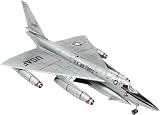
- 1/91
- 1957
- Atlantis Modelive ()
Rank #4

- Relaxing journey – Take some time to relax with the LEGO Icons Concorde (10318) building project for adults
- What’s in the box? – Everything you need to construct a detailed LEGO replica model of Concorde, the world’s most famous supersonic commercial passenger airplane
- Fun Features – Includes a tiltable droop nose, functioning landing gear, a retractable tail bumper wheel, delta wings with movable elevons, hinged upper and lower rudders and an accessible seating area
- Build and display – This collectible model comes with a stand for display in flight, takeoff or landing modes
- A gift idea for aircraft lovers – Give this LEGO Icons building set as a gift for adult fans of Concorde and model airplanes
Rank #3
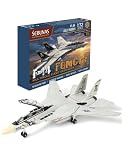
- Experience the legendary F-14 Tomcat through a highly detailed model designed for aviation collectors and hobby enthusiasts. The finished model becomes a striking desktop or showcase centerpiece.
- This 3D puzzle is designed for beginner-level assembly enthusiasts, offering an immersive hands-on building experience that helps cultivate patience, concentration, and mechanical problem-solving skills.
- This product is manufactured using high-quality, environmentally friendly plastic and employs an ultra-fine etching process to ensure durability, structural precision, and realistic aircraft details.
- Encourages understanding of aircraft engineering concepts while improving hand-eye coordination and spatial thinking through engaging mechanical assembly.
- Ideal gift for childs, engineers, collectors, model builders, and puzzle lovers for birthdays, Children’s Day, Christmas, or special hobby occasions.
Product prices and availability are accurate as of the date/time indicated and are subject to change. Any price and availability information displayed on Amazon at the time of purchase will apply.




