Recommended Free Tools
The 1969 Dino 246 GT brought a larger 2.4-litre V6, distinctive Pininfarina styling and a rear-transverse engine layout to Ferrari’s compact mid-engined sports car. “Automotive perfection” is an enthusiast’s judgment, not an objective specification—but the 246 GT’s blend of engineering, design and character helps explain its enduring appeal.
What was the Dino 246 GT?
The Dino 246 GT was the coupe successor to the Dino 206 GT. Ferrari’s official history lists the 246 GT in 1969 and specifies a rear-mounted, transverse 65-degree V6. The 246’s displacement rose to 2,419.20 cc from the 206’s 2.0 litres, giving the later car its “246” name. Ferrari lists output as 143 kW (195 hp) at 7,600 rpm and a top speed of 235 km/h; these are manufacturer-published specifications, not independent test results. Ferrari’s model history provides those figures.

Power figures differ by source. The Automobile Club d’Italia (ACI) gives the 246’s engine output as 181 CV, while Ferrari states 195 hp. These are each sources’ stated figures and units; they should not be treated as identical or silently reconciled. For Ferrari’s own specification, the manufacturer’s figure is the clearest reference. ACI’s history of the Dino 246 GT describes the evolution from the 206 and its 2.4-litre engine.
What made its engineering distinctive?
A transverse V6 in a mid-engined sports car
The 246 GT’s V6 sat behind the occupants and across the car, a compact arrangement that distinguished the Dino’s mechanical package. Ferrari specifies a 65-degree angle between the cylinder banks. Rather than treating the car simply as a smaller Ferrari, it is useful to see the Dino as a model with its own identity and a focused engineering layout.
What’s actually slowing this PC down?
Pick the symptom - the matching free tool is one click away.
#1 Best Overall
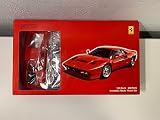
- Fujimi Item#: 08256
- Precision **ASSEMBLY-REQUIRED PLASTIC MODEL KIT** with parts mounted on sprue trees
- For ages 10 and older; To avoid choking or injury, keep all model kit parts away from small children
- Assembly & painting required. Requires glue, paint, & modeling tools (not included)
- For damaged product & defective part, contact Fujimi (626) 968-0322
A larger engine than the 206 GT
The move from the 206 GT’s 2.0-litre V6 to the 246’s 2.4-litre engine was the key mechanical step between the two models. ACI describes the 206 engine as stemming from an engine project associated with Alfredo Ferrari, Enzo Ferrari’s son. That background helps explain the Dino name’s connection to the V6 project, without implying that every later Dino detail was a direct continuation of the original work.
How did the design and construction set it apart?
ACI credits Aldo Brovarone at Pininfarina with the body design and Scaglietti with building it. The low, curving coupe shape gave the compact car a distinct visual identity. It also wore Dino script where a reader might expect Ferrari’s familiar prancing horse, reflecting its Dino marque identity rather than making it an ordinary Ferrari-badged model. ACI’s account provides those design and construction attributions.
Rank #2
![Hot Wheels Dino 206 GT [Red] Ferrari 5/5, 150/250-1:64 Scale Diecast Toy Vehicle](https://m.media-amazon.com/images/I/51otmsV5NFL._SL160_.jpg)
- Striking Red Finish: Ferrari Dino 206 GT in a striking red finish that showcases authentic detailing and vibrant color
- Collectible Series Numbers: Number 5/5 in the Ferrari Set and Number 150/250 in the Overall Series
- Authentic Scale Model: 1:64 Scale Diecast Toy Car with precise proportions and quality construction
- Premium Diecast Construction: Made with high-quality diecast metal materials for durability and authentic weight
- Hot Wheels Collection: Official Hot Wheels Ferrari Dino 206 GT model vehicle for collectors and enthusiasts
ACI reports that Belgian journalist and racing driver Paul Frère described the Dino in 1969 as especially enjoyable on curving roads with good visibility, and predicted it would become a lifestyle icon through its innate elegance. That is a period comment as reported by ACI; the page does not identify an independently checked original publication for the quotation.
How does the Dino fit into Ferrari’s 1969 story?
Ferrari’s company history says Fiat acquired 50% of Ferrari in 1969. It also recounts an earlier agreement under which Fiat would produce the Dino six-cylinder engine. These corporate and engine-production arrangements provide context for the Dino’s development, but they do not establish that Fiat built the 246 GT. Ferrari’s company history describes the agreement and the 1969 acquisition.
Rank #3

- Original Hot Wheels Ferrari Dino 206 GT from the Ferrari 2026 series (150/250)
- Classic Italian sports car with iconic design
- Timeless lines and low, elegant body
- Authentic red finish in typical Ferrari style
- Detailed implementation in scale 1:64
Which versions were made, and how many?
The 246 GT is the coupe; the 246 GTS is the open-roof derivative. CLASSIC.COM identifies three GT series and reports these production counts:
| GT series | Years shown by CLASSIC.COM | GTs reported |
|---|---|---|
| L | 1969–70 | 357 |
| M | 1970–71 | 506 |
| E | 1971–74 | 1,624 |
The three GT-series counts total 2,487 coupes, matching CLASSIC.COM’s GT-only total. CLASSIC.COM’s Dino 246 GT page says GT production ended in 1974.
Combined-production claims need a scope label. Car Collector International reports 2,487 GTs plus 1,274 GTSs, or 3,761 cars in total. ACI, by contrast, describes 2,487 units across both GT and GTS versions. The GT-only series figures align with Car Collector International’s GT count, so ACI’s combined-scope wording conflicts with the other breakdown. Car Collector International’s buyer guide gives the GT/GTS breakdown; ACI’s figure appears in its historical account linked above.
Independent reader supportYour contribution helps us test, update, and keep practical guides available for everyone.What do the market figures say?
When accessed in 2026, CLASSIC.COM displayed a $401,367 market benchmark for the Dino 246 GT. The site says its benchmark is derived from accumulated market data and warns that the value of an individual car depends on its condition. It is a dated market snapshot, not an appraisal or a guaranteed sale price. Its database also showed a highest recorded sale of $755,000 on June 28, 2022, and a lowest recorded sale of $192,500 on April 28, 2025; those are records in that source’s database, not a complete account of every transaction. CLASSIC.COM’s market page is the source for the benchmark and sale records.
Quick wins for a faster PC:
Fix the driver behind crashes, sound loss and screen glitchesFind Drivers →Repair Windows errors before they cause bigger problemsFix Now →Scan for outdated or missing drivers - takes under a minuteDriver Scan →Best Value
What should a buyer examine?
A model’s appeal or published benchmark cannot establish the condition of a particular example. Car Collector International’s buyer guide recommends a careful review of:
- Identity, paperwork and provenance
- Originality and matching numbers where applicable
- Documented maintenance and engine condition
- Chassis, underbody and signs of corrosion
- Paint quality and evidence of accident repair
The guide advises having an inspection carried out by a specialist familiar with the model. That is buyer-guide advice, not a substitute for a professional assessment of the specific car. Car Collector International’s buyer guide covers those checks.
Quick Recap
Product prices and availability are accurate as of the date/time indicated and are subject to change. Any price and availability information displayed on Amazon at the time of purchase will apply.




