Quick wins for a faster PC:
Fix the driver behind crashes, sound loss and screen glitchesFind Drivers →Clear out junk files and repair common Windows errorsFree Scan →Radial pull is a sideways force from a tire that can make a vehicle drift or pull even when the steering wheel is held straight. The tire’s shape or internal construction can contribute, but so can inflation pressure, alignment, uneven wear, brake drag, ride height or suspension problems. The useful first step is to inspect the whole vehicle; controlled tire swaps or a shop’s loaded lateral-force test can then help determine whether a tire is involved.
What radial pull means
In this context, “radial pull” usually refers to a tire-related vehicle pull: a tire generates lateral force under load and tends to steer the vehicle to one side. The term used by service sources is often tire pull or vehicle pull. One important contributor is conicity, in which a tire behaves somewhat like a cone rather than a uniform cylinder.
A tire’s internal components can settle unevenly during manufacture. Hunter explains that a belt positioned closer to one side can make that side of the tire stiffer and taller; when loaded, the tire can act like a cone and create lateral force. Hunter Engineering Company’s Road Force Elite GSP9700 operations manual states: “Conicity is the primary lateral tire force measurement that contributes to vehicle pull problems.” (Hunter Engineering Company manual.)
What matters on the steering axle is the net effect of the two tires. If their lateral forces differ, the vehicle may pull; if similar forces oppose one another, they can partly offset. A pull after fitting new tires or rotating them makes a tire-position or conicity issue plausible, but it does not prove one is at fault.
#1 Best Overall

- Accurate, Dependable Readings: Factory‑calibrated to ±1 PSI, so you can confidently match your vehicle’s recommended PSI (check the door jamb sticker). Ideal for monthly checks and road trips — consistent results every time, cold or warm.
- Bright Backlit Display & Nozzle Light: The illuminated nozzle helps you find the valve stem in the dark, while the backlit LCD makes readings crystal clear in dim garages or at night. No more squinting or holding a flashlight.
- 4 Measurement Units, One Button: Quickly switch among PSI, Bar, Kgf/cm², and KPA with a single press. No complex settings — just press and cycle to your preferred unit. Perfect for drivers who need multiple scales.
- Broad Compatibility for Everyday Vehicles: 0–150 PSI covers cars, SUVs, motorcycles, and spare tires (often 60 PSI). Fits standard Schrader valves; just press on for a reading.
- Auto‑Off to Extend Battery Life: The gauge automatically powers down after 30 seconds of inactivity, so the included 2*AAA batteries last longer. Always ready for your monthly checks without surprise dead batteries.
Not every steering-wheel problem is radial pull
A steering wheel that sits off-center while the vehicle tracks straight is a different symptom from a vehicle that drifts when the wheel is released. Hunter’s manual distinguishes ply steer, which can leave the wheel crooked without necessarily causing a drift or lane change. Diagnose the actual motion of the vehicle rather than assuming that a crooked steering wheel identifies a tire problem.
Clues that help identify the cause
- Pull began after new tires or a rotation: A tire’s lateral force or its new position may be involved. The timing is a clue, not a diagnosis.
- Pull developed after many miles: Angled tread wear from driving conditions or misalignment, or unequal wear between tires on the same axle, can contribute.
- Pressure differs side to side: Lateral force can vary significantly with inflation pressure. Check both sides against the vehicle maker’s specification before changing tire positions.
- The vehicle pulls despite apparently sound tires: Alignment, brake drag, ride height and suspension condition can also cause or contribute to the symptom.
How to diagnose a vehicle pull
Begin with a road test and inspection, not a parts swap. A tire-related pull can coexist with another fault, and a tire test alone cannot rule out mechanical or alignment causes.
Rank #2

- PROCESS LEVEL ACCURACY: This heavy duty tire pressure gauge is calibrated manually to ANSI B40.1 Grade A (±1% of span)
- PRESSURE RANGE 0-75 PSI: ETENWOLF’s tire gauge can measure pressure of pickup, motorcycle, truck, bike, SUV, RV or ATV
- EASY TO READ IN THE DARKNESS: The large glow dial helps you clearly read the pressure at night or in low light
- EASY TO USE: 360 degree swivel chuck allows you to measure and take a reading from a tire valve at any angle
- ACCURACY IN EXTREME WEATHER: PSI gauge works normally even in extreme cold or hot weather
- Check pressures. Use the pressure specification on the vehicle’s tire-information placard or in its owner’s manual, not the maximum pressure molded on the tire. Measure when tires are cold if practical, and correct side-to-side differences.
- Inspect the tires. Look for angled or uneven tread wear, damage and unequal wear across an axle. Note whether the pull began after a tire change or rotation.
- Check the vehicle. Have alignment assessed, including cross-camber, cross-caster and thrust angle as appropriate. Inspect for brake drag, ride-height differences and suspension problems. Tire Rack recommends checking alignment before its tire-isolation sequence.
- Road-test under controlled conditions. A qualified technician should confirm the direction and consistency of the pull on a suitable road. Road crown and wind can affect how a vehicle tracks.
- Isolate a tire if needed. A technician can use controlled tire-position changes or a loaded lateral-force measurement to see whether the symptom follows a tire or its position.
Ways to distinguish a tire problem from a vehicle problem
| Method | What it can reveal | What it requires or cannot do |
|---|---|---|
| Alignment and mechanical inspection | Can identify non-tire causes such as alignment, brake, ride-height or suspension issues. | Requires appropriate inspection and measurements; it does not by itself quantify each tire’s lateral force. |
| Controlled tire-position swaps | If the pull changes or reverses direction when tires are moved, a tire or its position is implicated. | Requires safe lifting and attention to tire direction, wheel fitment and vehicle instructions. A swap is an isolation test, not a substitute for inspection and a road test. |
| Loaded lateral-force measurement | Measures tire-and-wheel lateral force under load and can help a technician select placements that reduce the net force on the steering axle. | Requires a shop with suitable equipment and a technician who can interpret the result. It does not replace vehicle inspection or a road test. |
Controlled swaps
Tire Rack describes a sequence that starts with the front tires: swap them side to side and observe whether the pull reverses. If it does, a front tire is implicated; further repositioning can help identify which one. If the pull stays in the same direction, test the rear pair side to side. A reversal points toward a rear tire; no change points away from a tire cause and toward alignment or suspension checks. The exact sequence should be handled by a technician because tire direction, wheel fitment, vehicle instructions and safe lifting matter. Tire Rack says a brief side-to-side test of directional tires will not harm them; that is not permission to continue normal driving with directional tires mounted contrary to their required direction.
Loaded lateral-force testing
A suitable road-force balancer uses a load roller while the tire-and-wheel assembly rotates, measuring lateral force in both directions. The technician can compare the assemblies and try placements intended to reduce net force on the steering axle. Hunter cautions that the arrangement with the least calculated net pull may not be best if other vehicle variables are contributing. A conventional balance or alignment measurement alone does not quantify all tire lateral forces. The Hunter Road Force Elite BM08068-00 operations manual describes current operating guidance for measurement and assembly placement.
The Tool Desk
Outbyte PC Repair FREERepair Windows errors before they cause bigger problemsFix Now →Outbyte Driver Updater FREEFix the driver behind crashes, sound loss and screen glitchesFind Drivers →Rank #3
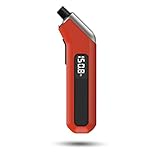
- PROCESS LEVEL ACCURACY: Each ETENWOLF’s digital tire pressure gauge is calibrated manually to ANSI B40.7 Grade 2A(plus-minus 1 PSI).Presta valve adapter not included, if used for bicycles, it must be purchased separately
- ACCURACY IN EXTREME PRESSURE RANGE: Whether tire pressure is below 12 PSI or above 140 PSI, ETENWOLF’s digital tire gauge is accurate as well
- ACCURACY IN EXTREME WEATHER: Built-in AI chip with thermal compensation inside, ETENWOLF’s tire gauge works normally even in extreme cold or hot weather(-4°F-130°F/-20°C-54°C)
- PRESSURE RANGE 3-200 PSI : ETENWOLF’s digital tire pressure gauge can measure pressure of all types of vehicles
- REPLACEABLE AAA BATTERIES: Batteries are easy to replace and helps to extend the tire pressure gauge’s life span, with LED light to illuminate dark areas for easy tire pressure reading
What can be done about radial pull?
Correct the cause found in the inspection
If pressure is unequal, adjust it to the vehicle maker’s specification. If the vehicle has an alignment, brake, ride-height or suspension fault, address that condition rather than trying to mask it with tire placement. Uneven wear may also limit how much a tire move can help.
Reposition tires to reduce the net pull
If testing implicates a tire, a technician may be able to move tires to positions where their lateral forces offset one another more effectively. The result needs a road test; the lowest measured net force is not automatically the best answer when another vehicle condition remains unresolved.
Rank #4

- HIGH ACCURACY: Every ETENWOLF's pencil tire gauge is calibrated to ANSI B40.1 Grade B, it is accurate to 2% of span in the middle 50% of range and 3% of span in the lower and upper 25% of range. Each ETENWOLF pencil tire pressure gauge is manually calibrated and has its unique calibration number printed on the pencil
- WIDER RANGE: ETENWOLF's tire gauge offers 2 pressure ranges: 10-50PSI, 20-120PSI for all types of vehicles
- ALL METAL: ETENWOLF tire gauges are made of all solid metal, zinc alloy head and stainless steel body, they are durable and can be used for many years unless you lose them
- DEFLATION: You can also use ETENWOLF's tire gauge to deflate tires when the tire pressure is overinflated
- 16 CAPS IN 2 CASES: ETENWOLF even offers 16 valve stem caps, so you won't worry about losing tire caps anymore
Ask about warranty review for an isolated tire
If one tire is isolated as the source, contact the seller or tire manufacturer and ask them to assess warranty eligibility. Tire Rack’s page on pulling-tire diagnosis describes coverage for the defect it discusses only during the first 25% of tread wear; that is a retailer’s summary, not a universal industry rule. The applicable warranty controls eligibility, measurement criteria and any remedy.
Independent reader supportYour contribution helps us test, update, and keep practical guides available for everyone.When to take it to a shop
If pressure and visible tread condition do not explain the pull, ask a qualified tire or alignment shop to inspect alignment, brakes, ride height and suspension, then road-test the vehicle. If the shop suspects tire lateral force, ask whether it has equipment capable of measuring that force under load; not every shop does. A digital tire-pressure gauge is useful for checking pressure, but it cannot measure conicity or determine whether alignment, brakes or suspension are responsible.
Free tools Windows power users keep installed
One-click scans. No signup required.
Best Value

- RUGGED DESIGN: The stainless steel components prevent rust and corrosion while the precision-crafted nozzle seamlessly seals onto the valve stems for highly accurate readings (±2% span). We also provide 4 valve stem caps for convenient replacement.
- MEASURES PSI, kPa, BAR; Measurement range from 10-75 PSI, 70-550 kPa, 0.7-5.5 BAR. Attention! Do not exceed the maximum pressure of the gauge, doing so will permanently damage the device.
- UNIVERSAL APPLICATION: Not only are these gauges easy to use, but include an integrated deflator valve, chuck, and ABS indicator bar
- CONVENIENT DESIGN stows easily in a glove box, tool belt, workbench, or even a pocket; the pocket clip makes it easy to carry with you while on the job
- Further service provided by AstroAI, BATTERY FREE means no maintenance and total reliability under all weather conditions; a necessary tool for roadtrips and optimal safety
Sources: Tire Rack, “How Do I Diagnose A Tire Pull?”; Hunter Engineering Company, Road Force Elite GSP9700 Series Wheel Balancer manual; and Hunter Engineering Company, Road Force Elite Balancer BM08068-00 manual.
Quick Recap
Product prices and availability are accurate as of the date/time indicated and are subject to change. Any price and availability information displayed on Amazon at the time of purchase will apply.




