Quick wins for a faster PC:
Repair Windows errors before they cause bigger problemsFix Now →Scan for outdated or missing drivers - takes under a minuteDriver Scan →Clear out junk files and repair common Windows errorsFree Scan →A donk is, in the strictest enthusiast sense, a customized 1971–1976 Chevrolet Impala or Chevrolet Caprice built with a high-riding stance, oversized wheels, low-profile tires, and extensive visual, audio, suspension, or performance modifications. Traditional examples often have candy paint, chrome, custom interiors, powerful sound systems, and dramatic ride height.
In casual conversation, people also use donk for almost any large American car, SUV, or truck on enormous wheels. That broader usage is common, but enthusiasts often use high-riser, hi-riser, or big-wheel car for those vehicles. The important distinction is that the vehicle’s platform—not just the size of its wheels—is central to the traditional definition.
The short answer: what makes a car a donk?
A traditional donk combines five basic ingredients:
- A 1971–1976 Chevrolet Impala or Caprice body.
- A raised or unusually tall stance.
- Large-diameter aftermarket wheels and short-sidewall tires.
- Heavy customization, such as elaborate paint, chrome, upholstery, lighting, audio, or engine work.
- A strong visual presence associated with Southern and, especially, South Florida car culture.
The Chevrolet model range is the defining clue. As Sage “Donkmaster” Thomas explained in a SEMA interview, strict scene usage associates a donk with the 1971–1976 full-size Impala or Caprice. The term is not a Chevrolet factory designation, and there is no federal or industry rule that establishes exactly how high the car must sit or how large its wheels must be.
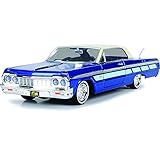
#1 Best Overall

- Brand new box. real rubber tires. true-to-scale detail. officially licensed product. has opening ho
- Doors and trunk. made of diecast metal with some plastic parts. detailed interior
- Exterior
- Engine compartment. dimensions approximately
- H-2 inches.
A 24-inch wheel is a common modern benchmark, and many contemporary builds use 24-, 26-, 28-, or 30-inch wheels. But “24 inches minimum” is a convention used by some enthusiasts and publications, not a universal definition. Earlier South Florida cars used smaller wheels, including 17-inch wire wheels, while Red’s Miami describes experimenting with 20-inch wheels during the late 1990s. Those details are documented by Performance Racing Industry and Red’s Miami.
How to identify a traditional donk
When you see a tall, flashy American car on giant wheels, use this checklist rather than judging by wheel diameter alone:
- Check the body: Is it a 1971–1976 Chevrolet Impala or Caprice?
- Look at the stance: Is the body raised, level, or dramatically higher than stock?
- Inspect the wheel-and-tire package: Are the wheels unusually large with a low-profile tire?
- Look for customization: Candy paint, metallic finishes, extensive chrome, custom upholstery, lighting, and large audio systems are common.
- Consider the mechanical work: Some have upgraded brakes, suspension, cooling, engines, transmissions, axles, or chassis components.
The wheels are usually the first thing anyone notices, but the chassis identity is what separates a classic donk from a generic big-wheel build. A Chevrolet Tahoe, Ford Crown Victoria, Oldsmobile Cutlass, Chevrolet Monte Carlo, or modern SUV can be donk-inspired or can fit the broader high-riser description. Under strict enthusiast terminology, however, it is not the traditional 1971–1976 donk.
Strict, style-based, and colloquial meanings
The word has three overlapping meanings:
- Strict meaning: A customized 1971–1976 Chevrolet Impala or Caprice.
- Style meaning: A high-riding, large-wheel, heavily customized American vehicle that follows the visual language of donk culture.
- Colloquial meaning: Almost any vehicle with extreme wheels and a raised stance.
All three usages appear in public coverage, but they are not equally precise. Enthusiasts and builders generally favor the narrow platform-based definition. Road & Track and Autoblog both discuss the gap between popular usage and the more specific community taxonomy.
What’s actually slowing this PC down?
Pick the symptom - the matching free tool is one click away.
Donk, box, bubble, or high-riser?
These names usually refer to related full-size Chevrolet generations or to the broader style:
| Term | Usual vehicle range | Defining idea |
|---|---|---|
| Donk | 1971–1976 Chevrolet Impala or Caprice | The earlier full-size Chevy high-riser platform |
| Box or Box Chevy | Commonly 1977–1990 Chevrolet Caprice or Impala | The squarer successor body, often customized in a similar way |
| Bubble | Commonly 1991–1996 Chevrolet Caprice or related rounded-generation cars | The rounded successor body |
| High-riser or hi-riser | Any make or model | A broad style category based on the tall stance and large wheels |
| Big-wheel car | Any make or model | A descriptive modern term for a vehicle on unusually large wheels |
| Lowrider | Many makes and models | A lowered stance, often with wire wheels and hydraulic or air suspension |
The year boundaries are common community shorthand rather than an official classification system. A modified 1977–1990 Caprice is usually called a box, while a modified 1991–1996 rounded Caprice is usually called a bubble. Hot Rod’s terminology guide provides the commonly used distinction.
Donk versus lowrider: what is the difference?
Donks and lowriders can share customization techniques, music, cruising traditions, chrome, elaborate paint, and strong regional identities. They are not interchangeable, though. Their visual objectives usually point in opposite directions:
- Lowriders emphasize a lowered body, wire wheels, detailed bodywork, and sometimes the ability to raise or lower the car with hydraulics or air suspension.
- Donks and high-risers emphasize height, large-diameter wheels, thin tire sidewalls, imposing body proportions, and a high-impact stance.
A lowrider is not automatically more authentic than a donk, and a donk is not simply a lowrider with the suspension reversed. They are neighboring customization cultures with areas of technical and cultural overlap, but the intended silhouette is generally low versus high. Autoblog’s overview also treats the two as distinct styles rather than synonyms.
Recommended Free Tools
Why were 1971–1976 Impalas and Caprices used?
There is no single proven engineering explanation for why these cars became the defining donk platforms. The cultural and practical reasons are more convincing when taken together:
- They were physically imposing: These are large, full-size American cars with substantial visual presence.
- They became accessible: During the 1980s, older Impalas and Caprices often entered Southern Black communities as used cars or family hand-me-downs.
- They offered space: Their large trunks could accommodate substantial sound equipment, while the roomy cabins supported elaborate interiors.
- They provided a broad customization platform: Their size, large wheel openings, and body-on-frame construction made ambitious suspension, wheel, audio, and drivetrain projects feasible.
- They became culturally recognizable: Once the style developed, the same scarcity and identity that made the cars accessible earlier helped make clean examples desirable later.
The scale is part of the appeal. For perspective, a Car and Driver test of a 1971 Chevrolet Impala recorded a 121.5-inch wheelbase and an overall length of 216.8 inches. Those figures describe that tested car, not every 1971–1976 body style, but they show why the platform can carry a dramatic stance and substantial audio or interior build.
Accounts from South Florida describe young owners receiving older family cars and transforming them with paint, wheels, engines, and sound systems. That history helps explain why a donk is more than a wheel-and-suspension formula: it is also a form of personal expression and community identity. Folio Weekly’s account of the South Florida scene discusses that family-car connection, while Red’s Miami’s history documents the region’s role in developing the style.
Where and when did donk culture begin?
The safest historical description is that donk culture evolved in South Florida rather than appearing on one documented day. South Florida is consistently identified as the principal birthplace, but different accounts emphasize different stages of the development:
Do these 3 things before closing this tab:
1Clear out junk files and repair common Windows errors2Scan for outdated or missing drivers - takes under a minute3Repair Windows errors before they cause bigger problems| Period | What changed |
|---|---|
| Early to mid-1980s | Older full-size Chevrolets became accessible to young owners as family cars and affordable used vehicles. Custom paint, sound systems, wheels, and engine work began to shape the local identity. |
| Early 1990s | Builder accounts place the recognizable modern high-riser and large-wheel movement in this period. |
| 1993 and after | Red’s Miami’s Liberty City operation, which began in 1993, became an important shop and scene milestone. That date should not be treated as proof that the entire culture was invented in 1993. |
| Mid-to-late 1990s and early 2000s | Miami hip-hop, music videos, cruising, shows, customization shops, and broader Southern car culture helped make the style more visible. |
| Later years | Social media, dedicated racing content, and national events expanded the audience beyond South Florida. |
This timeline avoids two common oversimplifications: claiming that the style began exclusively in the 1980s, or claiming that it began exactly in 1993. The evidence supports an evolution from accessible family cars and local customization into a recognizable movement that spread nationally.
Why is it called a “donk”?
The name’s origin is disputed. Several explanations circulate in enthusiast and cultural accounts:
- The Impala emblem supposedly looked like a donkey.
- The raised or bouncing rear of the car supposedly evoked a donkey.
- Donk may have referred to the car’s large rear or trunk, using slang for a large backside.
- Sage Thomas has offered a community explanation that people were “acting a donkey” while partying in the cars.
The donkey-logo theory is popular, but it should not be presented as settled history. The available accounts do not establish one explanation with a conclusive primary historical record. Autoweek presents the competing explanations, and A Way with Words’ terminology discussion shows how the word has been explained within the culture.
How is a donk built?
Some donks are relatively mild cruisers with bolt-on wheels and a carefully chosen stance. Others require extensive fabrication, chassis work, drivetrain upgrades, and race-car safety equipment. The right build process starts with the intended use, not with the largest wheel available.
Rank #2
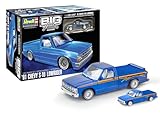
- Revell Model Kit #14562, Skill Level 4, Contains 171-Parts, Recommended for ages 12 and up
- Highly detailed 1:25-scale plastic model of the classic 1991 Chevy S-10 can be built one of three ways—lowrider, turbocharged all-wheel-drive street pickup, or a Nineties-style custom mini truck.
- Classic small-diameter lowrider wheels with tampo-printed whitewall tires. Includes a 1:64-scale diecast 1991 S-10 lowrider from the original Revell tooling.
- The diecast includes Revell’s easy-to-adjust lowrider suspension and a wild rotatable bed assembly. All-new waterslide decal sheet includes matching options for the 1:64- and 1:25-scale S-10s.
- Molded in white and clear with chrome plated parts and soft black tires. Paint and glue required(not included).
1. Choose the purpose before buying parts
| Goal | Priorities |
|---|---|
| Weekend cruiser | Rust-free body, reliable cooling, functional brakes, moderate wheel size, comfortable suspension, and dependable electrical and audio systems |
| Show car | Bodywork, paint, upholstery, audio, wheel finish, stance, lighting, and presentation |
| Street-performance car | Brakes, tires, cooling, drivetrain strength, suspension geometry, steering, alignment, and street reliability |
| Drag car | Chassis control, axle and transmission strength, traction, safety cage, harnesses, tires, and compliance with track rules |
A street cruiser does not need the same suspension, cage, transmission, or axle package as a dedicated drag car. Conversely, a high-horsepower race build cannot be evaluated by show-car standards alone.
2. Start with a sound donor
Before planning paint or wheels, inspect the vehicle’s structure and mechanical foundation. A prospective builder should check:
- Frame, floor, body mounts, suspension pickup points, and wheel wells for rust.
- Brake lines, hoses, calipers or wheel cylinders, rotors or drums, and master-cylinder condition.
- Steering box, tie rods, ball joints, idler and pitman arms, and suspension bushings.
- Cooling system, radiator, hoses, water pump, fans, and temperature control.
- Differential, driveshaft, U-joints, transmission, wheel bearings, and axle condition.
- Title, VIN, and ownership history.
- Previous modifications that may have weakened the frame or compromised clearance.
A clean, structurally sound car is usually a better starting point than a cheap but neglected example. Autoweek’s builder guidance similarly emphasizes the importance of a solid foundation before attempting a major donk conversion.
Free tools Windows power users keep installed
One-click scans. No signup required.
3. Select the wheel and tire package by measurement
A donk wheel package is not defined only by diameter. The builder must match the wheel and tire to the car’s hubs, brakes, suspension, fenders, steering, and intended load. Measure or verify:
- Bolt pattern and hub bore.
- Wheel width, offset, and backspacing.
- Brake-caliper and rotor clearance.
- Inner-fender and suspension-component clearance.
- Outer-fender clearance and tire protrusion.
- Clearance at full steering lock.
- Clearance at full suspension compression and rebound.
- Tire load rating and speed rating.
- Overall tire diameter and its effect on gearing and electronics.
For example, 275/25R26 means an approximate 275-millimeter section width, a sidewall height equal to 25 percent of that width, radial construction, and a 26-inch wheel diameter. It is an explanation of tire notation—not a universal fitment recommendation for a 1971–1976 Chevrolet. Actual fit depends on the specific wheel, tire brand, body style, brake package, offset, and suspension.
In conventional plus-sizing, a larger wheel is paired with a shorter tire sidewall so the overall outside diameter stays close to the original. That can limit changes to speedometer readings, gearing, ABS, traction control, and stability systems. Extreme donks may intentionally use a different overall diameter, but the resulting effects need to be calculated rather than assumed away.
4. Understand offset and backspacing
Wheel offset is the distance between the wheel’s hub-mounting surface and its centerline. Positive offset places the wheel farther inward; negative offset pushes it outward. Backspacing is the related measurement from the wheel’s mounting surface to its inner edge.
Incorrect offset can cause the tire or wheel to contact:
- Brakes, shocks, control arms, or other inner components.
- The outer fender or bodywork.
- The frame during turns.
- The wheel well during compression or rebound.
It can also change steering feel, road-following behavior, and scrub-radius-related steering forces. A wheel that looks perfect while the car is parked may rub with the steering at full lock, the suspension fully compressed, or passengers and luggage added. Tire Rack’s offset guide recommends evaluating those clearances rather than relying on a static visual check.
5. Modify the suspension carefully
The final stance may involve custom springs, coilovers, air suspension, lift components, revised control arms, altered bump stops, or other changes. Depending on wheel diameter, tire profile, offset, body style, and desired ride height, an extreme build may also require:
- Additional shock travel or different shock positioning.
- Corrected suspension geometry and alignment angles.
- Inner-fender or wheel-well trimming.
- “Tubbed” wheel wells for additional tire clearance.
- Body, floor, frame, or channeling work on unusually extreme cars.
- Brake, hub, or wheel-bearing adaptations.
- Driveline-angle corrections after changing ride height.
Not every donk needs a body lift, frame cut, or tubbed wheel well. The amount of fabrication varies substantially. Autoweek, JEGS, and QA1’s suspension guidance all point to the same practical conclusion: wheel size affects ride height, suspension travel, wheel position, rubbing, and drivability as a system.
6. Upgrade brakes, hubs, and steering where necessary
Large wheels do not automatically improve braking. A heavier wheel-and-tire assembly can increase the work required of the brakes, and a high-power engine creates another reason to improve braking capacity. The finished car should have:
- Brakes appropriate for the vehicle’s weight and power.
- Brake components that clear the selected wheels.
- Sound wheel studs, hubs, bearings, and correct fasteners.
- Steering components without excessive play.
- Correct alignment after suspension and wheel changes.
- Brake hoses and lines routed away from moving or rubbing parts.
NHTSA recommends correctly sized, properly load-rated, correctly inflated tires, along with regular checks of tread, damage, balance, alignment, and tire age. Its TireWise guidance is applicable whether the car is a stock sedan or an extreme custom build.
7. Strengthen the drivetrain for the actual use
A large wheel-and-tire package can add rotating and unsprung mass. High-power engines add torque. Together, they may increase stress on axles, U-joints, driveshafts, transmissions, differential gears, wheel studs, hubs, brakes, and wheel bearings.
That does not mean every donk needs a racing drivetrain. It means the engine, wheel weight, tire grip, vehicle weight, and intended use need to be considered together. A car that cruises occasionally places different demands on its components than one launched repeatedly at a drag strip.
Windows Errors? Fix Them Before They Spread
Repair common Windows errors and clear accumulated junk for a smoother, more stable PC - no reinstall needed.Free scan · no reinstallOutdated Drivers Are Slowing You Down
One free scan finds every outdated or missing driver and matches the right update for your exact hardware.Free scan · exact hardware matchThomas told SEMA that some big-wheel race cars can weigh roughly 5,000–6,000 pounds and that racing them places unusual demands on wheels, U-joints, driveshafts, transmissions, axles, and safety equipment. That is a description of some race cars—not a weight specification for every donk.
8. Add the visual and audio identity
Mechanical work is only part of the formula. Donks may receive candy paint, metallic finishes, extensive chrome, custom grilles and trim, upholstered interiors, large audio systems, lighting, and detailed engine compartments. Some builds prioritize a clean, level cruiser stance; others deliberately exaggerate the front or rear height.
Rank #3
Those choices are not merely cosmetic when they add weight or affect visibility, electrical demand, cooling, tire clearance, or suspension loading. A large audio installation, for example, may require electrical-system upgrades and careful mounting rather than simply adding speakers and amplifiers to the trunk.
Independent reader supportYour contribution helps us test, update, and keep practical guides available for everyone.How do donks drive?
A well-engineered donk can be enjoyable to cruise, and a carefully built restomod can perform far better than its appearance suggests. But the wheel, tire, ride-height, and chassis changes create trade-offs that depend heavily on the specific build.
| Change | Possible consequence |
|---|---|
| Shorter tire sidewall | Sharper response in some situations, but less cushioning and greater vulnerability to pothole or curb damage |
| Heavier wheel-and-tire assembly | More unsprung and rotating mass, potentially poorer ride quality, slower suspension response, longer stopping distances, and additional brake or suspension wear |
| Wider tire or altered offset | More grip in some conditions, but possible tramlining, road-groove sensitivity, rubbing, and changed steering forces |
| Raised body or altered suspension | Different suspension geometry, more body roll, changed center of gravity, and possible stability or alignment problems if poorly designed |
| Different overall tire diameter | Speedometer and gearing changes, plus possible ABS, traction-control, or stability-system errors on vehicles equipped with those systems |
These are engineering possibilities, not guarantees. A moderate cruiser with correct load-rated tires, sound suspension geometry, proper alignment, and sensible wheel weight can behave very differently from an extreme build with excessive offset, inadequate tire clearance, or compromised suspension travel. Tire Rack discusses the risks associated with low-profile tires and heavier wheel packages, while its offset guide explains why wheel position affects clearance and handling.
Are donks fast?
Some are, but speed is not a requirement of the style. Donks generally fall into three broad groups:
- Cruisers and show cars: Built around paint, wheels, stance, upholstery, sound, and presentation.
- Street-performance builds: Retain street equipment while adding engine, brake, suspension, cooling, and drivetrain upgrades.
- Big-wheel drag cars: Built around power, traction, chassis control, specialized parts, and track safety requirements.
Hot Rod documented one extreme example: a 1973 Impala with 26-inch wheels, upgraded brakes, custom suspension, a roll cage, and an LS-based engine producing a reported 2,200 horsepower. That car demonstrates what the platform can become; it should not be treated as representative of an ordinary street donk.
Large wheels can make drag racing more difficult because of wheel weight, tire selection, available sidewall, traction, and drivetrain loading. Some race builders retain large wheels specifically because the combination creates a distinctive “fast and flashy” identity. The result requires purpose-built components rather than assuming that a powerful engine alone will make the car competitive.
Donk racing and safety rules
The National Donk Racing Association’s published material describes separate Donk, G-body, and open classes, with rules that distinguish weight and power configurations. Its competition guidance calls for roll cages and harnesses and says its safety requirements follow NHRA and IHRA standards. Always read the rules for the specific track and class; a street build should not be taken to a drag strip on the assumption that its show equipment is sufficient.
The NDRA events page available in the cited material is labeled “2024 Schedule,” so prospective racers should verify current dates, class rules, technical inspection requirements, and venue information directly before traveling.
Are donks legal?
There is no responsible nationwide yes-or-no answer. A donk may be legal in one jurisdiction and fail inspection or equipment requirements in another. The result can depend on:
- State and local suspension or lift-height rules.
- Bumper and headlight height.
- Fender or mudguard coverage.
- Whether the tires extend beyond the body.
- Steering and suspension alterations.
- Lighting, exhaust, and emissions equipment.
- Inspection requirements.
- Whether the vehicle is used on public roads or only at a track.
- Whether modifications compromise required safety equipment.
Federal rules also need to be understood correctly. NHTSA’s interpretation of the “make inoperative” provision distinguishes individuals modifying their own personal vehicles from manufacturers, dealers, or repair businesses. That does not make every modification safe or legal, and it does not override state inspection and equipment laws.
For a concrete example of why geography matters, North Carolina General Statutes §20-135.4 prohibits operating a private passenger automobile when suspension, frame, or chassis alterations make the front fender four or more inches higher than the rear fender. That is a North Carolina rule, not a national definition of an illegal donk.
Finished-build safety checklist
Before driving a heavily modified donk on public roads, have the car inspected by a qualified suspension, tire, brake, or custom-chassis professional. The inspection should include:
- Brake performance, pedal feel, hose routing, and line clearance.
- Steering travel and the condition of the steering box, linkage, ball joints, and tie rods.
- Wheel-stud engagement, fastener type, and torque.
- Tire load and speed ratings, inflation pressure, age, tread, and damage.
- Tire clearance at full steering lock.
- Clearance through full suspension compression and rebound.
- Wheel balance and four-wheel alignment.
- Suspension travel and bump-stop engagement.
- Driveshaft and U-joint operating angles.
- Lighting visibility and legal placement.
- Fender and tire coverage.
- Seat-belt mounting and the relationship between belts and any roll cage.
- Cooling-system and fuel-system safety.
- Track-specific cage, harness, fire-suppression, helmet, and inspection requirements if the car will race.
Do not buy wheels first and try to make the car fit afterward. The safer workflow is to define the use, inspect the donor, measure the hubs and wheel wells, choose a tire with adequate load capacity, mock up the wheel package, verify clearance through steering and suspension movement, and then finalize suspension, braking, alignment, and legal requirements.
Donk glossary
- Donk
- Strictly, a customized 1971–1976 Chevrolet Impala or Caprice; more broadly, a high-riding, large-wheel custom American car.
- High-riser or hi-riser
- A broad term for a vehicle built with a tall stance and large wheels, regardless of make or model.
- Box or Box Chevy
- Commonly a customized 1977–1990 Chevrolet Caprice or Impala with the squarer successor body.
- Bubble
- Commonly a customized 1991–1996 rounded Chevrolet Caprice or related-generation car.
- Plus-sizing
- Using a larger wheel with a shorter tire sidewall while attempting to keep the overall tire diameter near the original.
- Offset
- The distance between a wheel’s hub-mounting surface and its centerline, determining how far inward or outward the wheel sits.
- Backspacing
- The distance from the wheel’s mounting surface to its inner edge.
- Tubbed wheel well
- A widened or modified wheel-well area that creates additional clearance for a wide tire or extreme wheel position.
- Lowrider
- A lowered custom vehicle, often with wire wheels and hydraulic or air suspension.
- Wire wheels
- Wheels made with thin spokes, historically associated with many custom and lowrider styles and also used on early donks.
- Spinners
- Decorative wheel components designed to continue rotating after the vehicle stops; they are an accessory, not a definition of a donk.
The bottom line
A donk is not simply any car with big rims. In its strictest and most useful historical sense, it is the South Florida-born high-riser style associated with a 1971–1976 Chevrolet Impala or Caprice, oversized wheels, low-profile tires, a raised stance, and bold customization.
The broader style now includes boxes, bubbles, other American cars, SUVs, show cruisers, and serious drag cars. The terms matter because a 1971–1976 Impala donk, a 1980s Box Chevy, a 1990s bubble, and a generic high-riser are related but not identical categories. More importantly, the visual formula has real engineering consequences: wheel weight, tire load, offset, clearance, suspension geometry, braking, alignment, drivetrain stress, and local law all matter. The best donks are not defined only by how tall or flashy they look, but by how carefully the entire car has been engineered for its intended use.
The Bottom Line
A traditional donk is a customized 1971–1976 Chevrolet Impala or Caprice with a raised stance, oversized wheels, and bold personalization. “Donk” is also used loosely for other big-wheel high-risers, but 24-inch wheels are a modern convention—not a universal rule. Whether a particular build is comfortable, safe, fast, or legal depends on its wheel and tire fitment, suspension geometry, brakes, drivetrain, construction quality, and local regulations.
Quick Recap
Product prices and availability are accurate as of the date/time indicated and are subject to change. Any price and availability information displayed on Amazon at the time of purchase will apply.