What’s actually slowing this PC down?
Pick the symptom - the matching free tool is one click away.
Ford says its Universal EV Platform was engineered by treating efficiency, performance, weight, aerodynamics, rolling resistance and battery size as connected trade-offs—not as separate targets. The first planned vehicle is a midsize, four-door electric pickup scheduled to launch in 2027. Ford has not yet published its final price, EPA range, battery capacity or charging-time specification.
What “chasing physics” means
Ford’s phrase describes a first-principles approach: improve the whole vehicle so it can meet customers’ needs with less energy and potentially a smaller battery. Reducing aerodynamic drag or weight, for example, can affect the energy needed to move the vehicle; those decisions interact with battery size, cost and performance. Ford says its engineers evaluated these factors together rather than optimizing one in isolation. Doug Field, Ford’s chief EV, digital and design officer, summed up the idea in an August 2025 article: “Physics is not proprietary.”
That is Ford’s explanation of its design method, not proof of a production truck’s efficiency or performance. The company has not released final specifications or independent production results for a vehicle on the platform.
How Ford says it simplified the vehicle
Fewer parts in the body and electrical system
Ford says large, single-piece aluminum “unicastings” helped the team eliminate three-quarters of the body parts, two-thirds of the welds and half of the fasteners compared with a traditional pickup body. Ford also says the design removes more than 4,000 feet of wiring compared with its first-generation electric SUV. These are Ford-reported comparisons, not independently verified production measurements. Ford’s explanation of the platform’s simplicity describes the approach.
#1 Best Overall
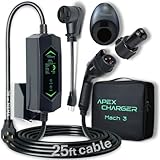
- Universal Charger J1772 to Tesla Charger Adapter: Compatible with all EVs in the US including NACS charging port. 2.4" LED display for live vehicle charging updates 9.6kW (40A) on 240V or 1.44kW (12A) on 120V
- Plug & Play Installation: Simple equipment setup w/ Level 2 NEMA 14-50 outlet for EV charging and NEMA 5-15 outlet adaptor for Level 1 ev charger. No professional installation or extra tools required.
- Fast & Portable ev charger: Enjoy up to 40Amp EV charger level 2 power w/ this versatile mobile ev charger w/ a long cord. Cool stuff for home or on the go use. This supercharger let's u stay powered. A great Tesla emergency charger when you need it most. The maximum 40A of current is the equivalent to 9.6 kW of power.
- Cost-Efficient & Forward compatible: level 2 ev charger w/ smart power management. An electric car charger built to react to new electric vehicle model technology & future charging advancements. Control your charging directly through the display or via app (Bluetooth and Wi-Fi enabled)
- Trusted Support & Warranty: Our portable electric car charger is backed by excellent customer service and a 5-year warranty. We're here to ensure a worry-free experience every step of the way. You’ll probably upgrade your vehicle twice before changing the charger
A different assembly sequence
Ford describes an “assembly tree”: the front and rear vehicle assemblies and a structural battery core are prepared along separate branches, then brought together. The aim is to reduce reliance on a traditional single-line assembly process. In its account of Ford’s Louisville plant announcement, the Associated Press reported company targets of 20% fewer parts than a typical vehicle, 25% fewer fasteners, 40% fewer workstations from dock to dock, and 15% faster assembly. Those figures are announced targets, not measured results from production. The AP report covers the plant and the targets.
Fewer parts, joints, fasteners and wiring runs can reduce the amount of material and assembly work in a vehicle. Ford’s case is that simplifying the structure and factory process can help make an EV more affordable; the cited figures do not establish the resulting production cost or retail price.
Rank #2

- 【Efficient Charging】VDLPOWERVP level 2/level 1 EV charger is equipped with NEMA 6-20 Plug(220V/240V), it offers 16A current and up 3.5kW output. Two charging options, low current charging can effectively reduce battery wear and prolong service life. Choosing to connect the conversion line for charging can realize a full day's commute mileage in one night.
- 【Level 1 & Level 2 EV Charger Adapter】This portable ev charger is equipped with NEMA 6-20 plug (Level 2, 240V, 16A) and NEMA 5-15 adapter (Level 1, 110V, 12A), you can connect our electric vehicle chargers to a standard household socket or a dedicated industrial socket, use it flexibly from anywhere in the garage or driveway.
- 【Intelligent Charging-Durable and Safe】The intelligent chip design of its control box can keep monitoring the charging status at any time, provides multiple safety protections such as lightning protection and leakage protection. This electric vehicle charger is made of premuim and sturdy materials and is FCC certified. EV Control box is IP65 waterproof and dustproof.
- 【Easy Charging and Indication Displays】Just connect to the outlet and the car, the ev charger can work properly. LED indicators that can tell you the status as well as indicate errors while charging your electric vehicle. It can help you get the charging station status information quickly.
- 【Portable Design】The ev charger has a 20ft charge cable, which is long enough for you to charge without getting tangled.The appropriate cord length and weight allow you to easily put it in the trunk of an electric car whether you are visiting friends or renting a vacation house.
Why battery size is part of the strategy
Ford’s 2026 explanation characterizes the battery as accounting for about 40% of vehicle cost and upwards of 25% of vehicle weight. Those are Ford’s figures, not an independently established industry-wide rule. The company’s reasoning is that improving efficiency could help a vehicle deliver useful range with a smaller, less costly battery than it would otherwise need. Ford’s battery-efficiency explanation sets out that argument.
Ford says some customers expect around 300 miles of range and that the platform’s efficiency and smaller-battery approach are intended to help meet that expectation. This is not a published EPA range estimate for the pickup. Battery capacity, chemistry and final range have not been announced. Ford says the architecture can support battery chemistries and form factors beyond the initial lithium iron phosphate (LFP) battery, but that flexibility does not establish which batteries will be used in specific future vehicles.
Quick wins for a faster PC:
Fix the driver behind crashes, sound loss and screen glitchesFind Drivers →Repair Windows errors before they cause bigger problemsFix Now →Rank #3

- LEVEL 1 CHARGING - The Lectron Level 1 Charger lets you quickly charge your EV with a standard 120V outlet; You get 15 amps and 1.65 kW of power for the standard full-charge time for your car, at home or at wor
- CONVENIENT OVERNIGHT CHARGING - The Lectron 15 Amp EV Charger is a more affordable and faster charging option compared to other Level 2 EV chargers, delivering an extra 40-50 miles of overnight charge at home — without breaking the bank
- J1772 COMPATIBILITY - This J1772 charger is compatible with all electric vehicles that use the J1772 standard, including BMW, Ford, Honda, Hyundai, Kia, Porsche, Nissan, and Chevy
- SAFE AND RELIABLE - FCC and ETL certified (UL2594 standard) for safety with overvoltage, overcurrent, and short circuit protection; Energy Star certified for efficiency; IP65 rated for dust and water resistance
- PORTABLE CONVENIENCE - Whether you're on a road trip or visiting a friend, you can easily plug in your EV and charge with our portable EV charger. Please refer to the included User Manual for complete operating instructions and compatibility requirements
What Ford has announced about the first vehicle
The first planned vehicle is a midsize, four-door electric pickup, to be assembled at Louisville Assembly Plant for U.S. and export markets. Ford has scheduled its launch for 2027. In its 2025 announcement, Ford gave a target starting MSRP of about $30,000; that is a target, not a final sticker price. Ford’s platform and truck announcement provides those plans.
Ford says the truck will have a NACS charging port. The company says separate adapters will be available for CCS DC fast-charging stations and J1772 AC charging stations, and discusses home charging and access to public charging through the BlueOval Charge Network. Ford has not identified a specific adapter model in the cited material, so compatibility details should be checked when approved equipment and vehicle specifications are released. Ford’s 2026 Q&A covers the charging plans.
Rank #4

- 【High Compatibility】 AplysiaTech EV charger is compatible with SAE J1772 electric vehicles that meet SAE J1772 standards. our EV charger comes with convert NEMA 5-15 and 6-20 plugs that allow it to be used for both level 1 & level 2.
- 【Level 1/2 Electric Car Charger】 Our EV charger cable is 4 times faster than a standard EV charger and getting you 44 miles with only 4 hours under 240V charge. It has a power range of 95-265V, up to 16A, Enable you to charge quickly.
- 【Safety guarantee】 This Level 1/Level 2 EV charger weatherproof rating is IP66 controller IP54, CE certification, with lightning protection, leakage, grounding, low voltage, overvoltage, overcharge, overheating and overcurrent and other multiple protection.
- 【Easy to Carry】 Don't worry about charging while traveling or on business. We provide a fireproof NEMA 5-15P to 6-20R adapter, This EV charger can be carried directly in the car, always available, and can be charged anywhere there is a 120V or 240V socket.
- 【Portable Car Charging Station】Our portable EV charger is lightweight designed and included storage bag to makes it easy to carry around and stay organized in your car, allowing you to charge anywhere, anytime, without having to find an EV charging station outside. We provide a durable NEMA 5-15P to 6-20R adapter, This EV charger can be carried directly in the car, always available, and can be charged anywhere there is a 120V or 240V socket.
What remains unconfirmed
- Price: Ford has shared a target starting MSRP, not a finalized retail price.
- Range: Around 300 miles is described as an expectation for some customers, not an EPA estimate for the truck.
- Battery: Capacity and final chemistry have not been specified.
- Charging: Ford has named the port and adapter categories, but not a charge-time specification or a specific adapter model.
- Other vehicles: Ford says the platform is designed for multiple body styles, but its 2026 Q&A does not confirm a particular SUV model or timing. It likewise does not confirm use in a future Mustang Mach-E.
- Timing: The pickup’s 2027 launch is a forward-looking schedule, not a report of deliveries already beginning.
What the platform announcement does—and does not—show
Ford’s stated engineering logic is clear: make the vehicle more efficient, simplify its structure and wiring, and change how it is assembled in pursuit of affordability. The company’s reported part, weld, fastener and wiring reductions describe design comparisons; the factory figures are targets. None establishes the final efficiency, range, price, build quality or production rate of a retail vehicle. Those judgments will require finalized specifications and results from vehicles built for customers.
Ford president and CEO Jim Farley described the platform as “the foundation for a new generation of electric vehicles” in the company’s August 2025 account of its assembly plans. For now, the announced pickup is the concrete starting point; other body styles remain possibilities rather than confirmed products.
Quick Recap
Best Value

- Universal Compatibility: This level 2 ev charger is built for all SAE-J1772 compliant electric vehicles and plug-in hybrids. Compatible with leading EV brands for efficient charging anywhere. (TSL adapter sold separately.)
- Fast & Flexible Charging: Featuring five adjustable current settings (8A/16A/24A/32A/40A), this EV charger adapts to different charging requirements. The heavy-duty NEMA 14-50 plug delivers stable and dependable 240V charging performance.
- Fast Charging: This 40A EV charger delivers up to 9.6 kW of Level 2 charging power through a NEMA 14-50 plug for fast and efficient home charging.. The 25-foot charging cable offers extended reach for garages and driveways, while the built-in 1–12 hour delay timer helps reduce electricity costs by scheduling charging during off-peak hours.
- Safety Protection System: This J1772 Portable Electric Car Charger is built with multiple safety protections, including over-voltage, over-current, overheating, and short-circuit protection for secure charging performance. (Note: it is recommended to use the charger in a dry environment and connect it only to a properly grounded outlet. Use only the original adapter included with the charger.)
- Smart Charging Control: Take full control of your EV charge with adjustable current settings and a programmable delay timer. Simply connect the charger to your vehicle and power source, then use the control interface to select your preferred current or set a charging delay of 0–12 hours. For example, a 2-hour delay will start charging automatically after the set time, helping you save on electricity costs and charge more conveniently.
Product prices and availability are accurate as of the date/time indicated and are subject to change. Any price and availability information displayed on Amazon at the time of purchase will apply.




