The Toyota S-FR never became a production car. Toyota unveiled the small, rear-wheel-drive sports-car concept at the 2015 Tokyo Motor Show, followed it with the more aggressive S-FR Racing Concept at the 2016 Tokyo Auto Salon, and then stopped publicly advancing the project. Later Japanese automotive reports said commercialization had been shelved, but Toyota never published a detailed official cancellation statement.
As of the 2026 model year, the S-FR is absent from Toyota’s official U.S. sports-car lineup. It remains one of Toyota’s most convincing modern “what-if” cars: a promising lightweight concept that looked close to production but never reached a showroom.
As an Amazon Associate I earn from qualifying purchases.
The Toyota S-FR story in one sentence
Toyota showed the S-FR as an entry-level sports-car concept, explored a racing version, and apparently abandoned the production plan before the car received a confirmed engine, price, launch date, production facility, or sales market.
That distinction is important. The S-FR was a real Toyota concept, and Toyota built physical show cars, but it was never an officially launched model like the 86, GR86, GR Supra, or GR Corolla.
#1 Best Overall
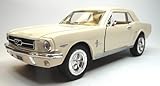
- Authentic 1:36 Scale: Meticulously crafted 1964 1/2 Ford Mustang model car with impressive 5-inch length.
- Realistic Details: Die-cast metal body with opening doors and eye-catching blue finish.
- Interactive Play: Engaging pull-back action for thrilling motion across smooth surfaces.
- Collectible Quality: Ideal for model car enthusiasts and collectors seeking miniature automotive replicas.
- Brand: KiNSMART, a trusted name in die-cast vehicle models and toys.
What was the Toyota S-FR?
Toyota introduced the S-FR on October 8, 2015, ahead of the 2015 Tokyo Motor Show. The company described it as a compact, lightweight, entry-level sports-car concept intended to carry forward Toyota’s tradition of fun-to-drive cars.
The concept was aimed at the part of the enthusiast market that values simplicity, responsiveness, and customization rather than outright power. Toyota also presented it as a way to attract new sports-car fans. Its design and positioning recalled the company’s older lightweight sports-car heritage, particularly the Sports 800 and the 2000GT, although the S-FR was a modern concept rather than a direct re-creation of either car.
The name is commonly interpreted as referring to a small front-engine, rear-wheel-drive sports car. Toyota’s official material emphasized the car’s lightweight sports-car character, but it did not turn the name into a confirmed production specification.
Free tools Windows power users keep installed
One-click scans. No signup required.
Why people thought it was going into production
The S-FR looked more realistic than many auto-show concepts. It had a relatively simple body, conventional proportions, a compact cabin, and a design that appeared adaptable to a street car. That led to widespread speculation that Toyota would place it below the 86—now the GR86—as a smaller and less expensive rear-wheel-drive coupe.
But Toyota never made the commitments that normally accompany an approved production program. The company did not announce:
- a production name or final model designation;
- a confirmed engine or output;
- a final transmission choice;
- a price;
- a production plant;
- a homologation or certification program;
- a firm launch date; or
- the countries in which it would be sold.
As a result, many specifications repeated online should be treated as proposals, estimates, or automotive-reporting speculation—not as final S-FR facts. There was no production S-FR whose official specifications could be listed.
The S-FR Racing Concept gave the idea a second act
In December 2015, Toyota announced the S-FR Racing Concept for the 2016 Tokyo Auto Salon, held January 15–17, 2016. This version transformed the friendly-looking road-car concept into a much more aggressive show and racing interpretation.
The Tool Desk
Outbyte Driver Updater FREEFix the driver behind crashes, sound loss and screen glitchesFind Drivers →Outbyte PC Repair FREEClear out junk files and repair common Windows errorsFree Scan →The Racing Concept featured wide fenders, hood air outlets, carbon-fiber-reinforced-plastic aerodynamic components, front canards, and a large rear spoiler. It demonstrated how Toyota could take the S-FR design in a performance-oriented direction.
However, the racing concept was not proof that a street-production version had been approved. Auto manufacturers routinely use show cars and racing derivatives to test reactions, support a performance image, or explore design themes. The S-FR Racing Concept confirmed Toyota’s interest in the design at that moment; it did not confirm a factory production schedule.
Rank #2

- Highly detailed 1:24 scale diecast model kit of 1929 Ford Model A
- Comes with everything needed for assembly including screwdriver
- Features opening parts, rolling wheels and pre-painted metal body
- Easy to assemble, creates fully functional rolling replica model car
- Fun and educational STEM activity for kids to build realistic miniature vehicle
A short timeline of the S-FR’s disappearance
| Date | What happened |
|---|---|
| October 8, 2015 | Toyota officially presents the S-FR as a lightweight, entry-level sports-car concept for the Tokyo Motor Show. |
| December 3, 2015 | Toyota announces the S-FR Racing Concept for the 2016 Tokyo Auto Salon. |
| January 15–17, 2016 | The racing concept is scheduled for display at Tokyo Auto Salon 2016. |
| 2016–2017 | Automotive reports continue discussing possible production, but Toyota does not publish a confirmed production specification or launch program in the official material reviewed. |
| June 26, 2018 | Japanese automotive reporting says the S-FR commercialization plan had been shelved and discusses a possible alternative compact-sports-car project. |
| 2023–2024 | Reports circulate about a possible Toyota-Daihatsu-Suzuki compact sports-car collaboration, but no official Toyota production announcement follows. |
| 2026 model year | Toyota’s official U.S. sports-car listings include the GR86, GR Corolla, and GR Supra, but not the S-FR. |
Was the S-FR canceled?
The most accurate answer is that the project was reportedly shelved or abandoned, but Toyota did not issue a detailed public cancellation explanation in the material reviewed.
Japanese automotive reports in 2018 described the commercialization plan as having been abandoned or put on hold. Those reports are the clearest indication that the S-FR would not proceed, but they should be attributed as industry reporting rather than described as a Toyota-confirmed cancellation announcement.
PC Slower Than It Used to Be?
A free scan shows the junk files, broken settings and background clutter dragging Windows down - then fixes them in one click.Free scan · Windows 10 & 11Outdated Drivers Are Slowing You Down
One free scan finds every outdated or missing driver and matches the right update for your exact hardware.Free scan · exact hardware matchThere is also a difference between “Toyota canceled a production model” and “Toyota stopped developing a concept that had never been formally announced for production.” The available evidence supports the second description more strongly. Toyota revealed the concept and a racing derivative, but never announced the final product program that would have made the S-FR a road-car model.
Why did Toyota abandon it?
Toyota has not publicly identified one definitive reason. Several explanations are plausible, but none should be stated as confirmed fact.
The business case for very small sports cars
A lightweight, inexpensive sports car can be appealing to enthusiasts while still being difficult to make profitable. Development, tooling, crash testing, emissions certification, electronics, and warranty support cost money whether the car is large or small. A low-volume two-seat sports car may not generate enough sales to justify those costs without sharing substantial hardware with another model.
Overlap with the 86 and GR86
The S-FR was expected to sit below Toyota’s rear-wheel-drive coupe. That could have created an attractive ladder for buyers, but it might also have divided a limited sports-car audience. The GR86 already occupies Toyota’s accessible rear-wheel-drive sports-car role in the United States, even though it is larger and more powerful than the S-FR concept.
Safety and emissions requirements
A small sports car still has to meet the same broad categories of modern regulatory requirements as other vehicles sold in its markets. Those costs can weigh heavily on a low-volume model. Changing emissions rules, safety standards, and market-specific certification requirements are reasonable factors to consider, but Toyota has not confirmed that any one of them killed the S-FR.
Uncertain demand for inexpensive manual sports cars
The S-FR’s appeal depended on buyers wanting a small, relatively simple, engaging car. That audience is real, but it is not necessarily large enough to support a new global model. Reports and industry observers have suggested that demand uncertainty may have contributed to the project’s fate. Again, this remains analysis rather than an official Toyota explanation.
The defensible conclusion is therefore broader: the S-FR appears to have faced the difficult economics and market risks common to small sports cars, but no authoritative Toyota source establishes a single reason for its disappearance.
Rank #3

- AUTHENTIC REPLICA: Highly detailed 1:40 scale model of the iconic 1957 Chevrolet Bel Air Coupe, measuring 5 inches in length with classic finish
- WORKING FEATURES: Functioning doors that open and close, plus pull-back motor action for interactive play value
- QUALITY CONSTRUCTION: Die-cast metal body construction provides durability and authentic feel, enhanced with detailed plastic components
- REALISTIC DETAILS: Features rubber tires for enhanced realism and smooth rolling action on various surfaces
- DISPLAY WORTHY: Perfect size for collectors and enthusiasts, combining playability with showcase appeal
Did the Toyota-Daihatsu-Suzuki rumors revive the S-FR?
Later reports suggested that Toyota, Daihatsu, and Suzuki might develop a small sports car together. Those reports revived interest in the basic idea behind the S-FR: an affordable, compact, lightweight enthusiast car developed through collaboration.
What’s actually slowing this PC down?
Pick the symptom - the matching free tool is one click away.
Nothing in the available evidence establishes that the original S-FR returned, however. There was no verified Toyota launch announcement, production schedule, homologation program, sales listing, or official statement renaming a joint project as the S-FR. The rumored collaboration should be treated as an unfulfilled possibility, not as a confirmed second life for Toyota’s concept.
What replaced the S-FR?
Nothing replaced it directly.
Toyota’s 2026 U.S. sports-car lineup lists the GR86, GR Corolla, and GR Supra. Of those, the GR86 is the closest in purpose because it is Toyota’s accessible rear-wheel-drive sports coupe. It is not an S-FR successor in the strict sense: the GR86 is a larger four-seat coupe developed with Subaru, while the S-FR was conceived as a smaller entry-level concept.
The GR Corolla is a high-performance all-wheel-drive hatchback, and the GR Supra is a larger, more powerful sports car. Neither is a replacement for the compact, lightweight formula Toyota previewed with the S-FR.
Toyota has continued to develop GR products and display sports-car concepts, but the official sources reviewed do not identify any production vehicle as a renamed S-FR, a direct continuation of the S-FR, or its formal successor.
Recommended Free Tools
What happened to the actual S-FR cars?
Toyota built multiple physical show versions, including the original S-FR concept and the S-FR Racing Concept. Their appearance at major Japanese auto events is part of the reason the project remains memorable. The cars were not customer-production vehicles, and their current display or ownership status is not established by the research available here.
The S-FR also survived as a collectible. Collector documentation records a Toyota S-FR Tomica Premium die-cast released as a 2015 Tokyo Motor Show event exclusive. It represents the concept car in miniature; it is not a replacement part, a production-car proof point, or evidence that Toyota sold the real vehicle.
For collectors, availability and pricing can vary significantly because the item was tied to a specific event. Anyone shopping for a Toyota S-FR die-cast model should verify the scale, packaging, authenticity, seller description, and current condition before buying. The existence of a listing does not by itself prove that it is the documented Tomica Premium event item.
Independent reader supportYour contribution helps us test, update, and keep practical guides available for everyone.What the S-FR tells us about concept cars
The S-FR is a useful reminder that a polished concept is not the same thing as a production commitment. Toyota gave the car a coherent identity, displayed it at a major motor show, and developed a racing interpretation. That sequence made the S-FR feel like an imminent model, but the missing production details were significant.
Do these 3 things before closing this tab:
1Scan for outdated or missing drivers - takes under a minute2Repair Windows errors before they cause bigger problems3Fix the driver behind crashes, sound loss and screen glitchesA concept can serve several purposes before a company decides whether to build it. It can measure public reaction, explore a design language, test an enthusiast theme, support a brand message, or gather feedback for other products. Even a popular concept may be rejected if its projected sales, regulatory cost, manufacturing complexity, or internal positioning do not work.
Rank #4

- Doors Open
- Pullback Action
- Die Cast Metal Body
- PULL BACK ACTION WITH FREE ROLLING WHEELS
In the S-FR’s case, the design succeeded as a piece of automotive theater. The production business case apparently did not progress far enough—or did not remain attractive long enough—for Toyota to announce a saleable road car.
Confirmed facts versus common S-FR claims
| Claim | How it should be described |
|---|---|
| Toyota revealed the S-FR in 2015. | Confirmed: it was introduced as a concept at the Tokyo Motor Show. |
| Toyota revealed an S-FR Racing Concept. | Confirmed: Toyota announced it for Tokyo Auto Salon 2016. |
| The S-FR was going to cost a specific amount. | Unconfirmed: Toyota did not announce a final production price. |
| The S-FR was going to use a specific engine or transmission. | Unconfirmed unless tied to a separate, authoritative source; the concept’s rumored specifications were not final production facts. |
| Toyota canceled it for one specific reason. | Unproven: Toyota did not publish a definitive explanation in the research reviewed. |
| The Daihatsu-Suzuki-Toyota reports prove the S-FR is returning. | Incorrectly broad: the reports were unconfirmed and did not produce a verified S-FR launch. |
| The GR86 is the S-FR’s successor. | Only loosely comparable: it fills an accessible sports-car role but is larger, more powerful, and developed as a different vehicle. |
The bottom line on the Toyota S-FR
The Toyota S-FR became a “what-if” sports car. Toyota officially revealed it in 2015, developed a racing-themed version for the 2016 Tokyo Auto Salon, and created enough visual polish to make production seem likely. But the company never announced a finalized road-car program, and later Japanese reporting said commercialization had been shelved.
Rumors of a later joint-developed compact sports car did not turn into a confirmed S-FR revival. By the 2026 model year, the S-FR remains absent from Toyota’s lineup. The real car never reached production, but the concept lives on in photographs, enthusiast discussions, and at least one documented Tomica Premium collectible.
Quick wins for a faster PC:
Scan for outdated or missing drivers - takes under a minuteDriver Scan →Clear out junk files and repair common Windows errorsFree Scan →Fix the driver behind crashes, sound loss and screen glitchesFind Drivers →Frequently Asked Questions
Was the Toyota S-FR ever produced?
No. Toyota presented the S-FR as a concept in 2015 and never launched it as a customer-production car.
When was the Toyota S-FR Racing Concept shown?
Toyota announced the S-FR Racing Concept in December 2015 for the 2016 Tokyo Auto Salon, held January 15–17, 2016.
Why was the Toyota S-FR canceled?
Toyota did not publish a definitive reason in the sources reviewed. Automotive reports said commercialization was shelved, while cost, safety and emissions requirements, limited demand, and overlap with the 86 have been suggested as possible factors.
Is the GR86 the Toyota S-FR’s replacement?
Not directly. The GR86 occupies a similar accessible rear-wheel-drive sports-car role, but it is a larger four-seat coupe developed with Subaru. Toyota has not identified it as the S-FR’s successor.
Can I buy a Toyota S-FR?
You cannot buy a production S-FR road car because Toyota never sold one. A documented Tomica Premium die-cast miniature of the concept was released as a 2015 Tokyo Motor Show event exclusive, although current availability and authenticity must be checked with individual sellers.
Quick Recap
Product prices and availability are accurate as of the date/time indicated and are subject to change. Any price and availability information displayed on Amazon at the time of purchase will apply.




