There is no objective winner for the title of strangest car ever made. The label depends on what stands out: an unfamiliar engine, an unexpected cabin layout, a radical design study, or a vehicle built to test an idea rather than sell to the public. These five examples show how unusual cars often answered specific design questions—and why a concept, prototype, experiment and production car are not interchangeable.
What makes a car “strange”?
Strangeness is an editorial judgment, not an engineering category. This selection is illustrative, not a definitive global ranking; many other cars could reasonably qualify. In fact, the Smithsonian’s account of the 1894 Balzer automobile is a reminder that early automobiles varied widely before familiar design conventions took hold.
The examples below are grouped by what made them depart from the norm. For each, the useful questions are what was unusual, what purpose it served, and whether the vehicle reached production or influenced later cars.
Unfamiliar engineering and packaging
1894 Balzer automobile: an early rotary-engine experiment
Designed and produced by Stephen M. Balzer, the 1894 Balzer was an experimental gasoline-powered automobile with a rotary engine. Its unusualness belongs to an era when automobile design had not yet converged on a standard layout. Balzer did not mass-produce cars, and the Smithsonian says his motor company was not commercially successful. Smithsonian National Museum of American History: Balzer automobile.
Recommended Free Tools
#1 Best Overall

- Scale model kit
- Hobby, Maqueta a escala fiel
- Para aficionados, Schaalgetrouwe modelbouwset
- hobby, Scale model kit
- Hobby, Modellino in scala fedele
1959 Renault Projet 900: cabin forward, engine at the rear
Renault’s unique Projet 900 concept put the cabin forward and the engine at the rear. The layout was intended to create more interior space and improve passenger comfort. Renault’s museum also identifies aluminum construction and air suspension among its features. Rather than an odd arrangement for its own sake, it was a packaging experiment aimed at making more room for occupants. Renault Museum: Projet 900.
Concept cars that tested future ideas
1938 Buick Y-Job: a design laboratory on wheels
Built on a 1937 Buick chassis, GM describes the Y-Job as the industry’s first concept car. It combined a concealed convertible top beneath a metal deck with hidden headlights, flush door handles and electrically operated windows. GM says some of its features later appeared in production cars, making the Y-Job more than a styling curiosity.
Rank #2

- Revell Model Kit #14528, Skill Level 4, Contains 100-Parts, Recommended for ages 12 and up
- One-piece lift-up 1970 Plymouth Duster funny car body. Easy-to-assemble fully detailed tube frame.
- Blown-and-injected 426 HEMI race engine with a soft rubber blower drive belt. Vintage-style emergency light bar with loud speaker.
- Molded in white and clear with chrome plated parts and black vinyl tires.
- Illustrated assembly instructions. Requires paint and glue. (not included)
GM’s 2026 history article quotes a 1956 company press release describing the dream car as a tool for “advanced research comparable to the laboratory and the proving ground.” The statement captures the concept car’s role: to explore possibilities before deciding what belongs in a showroom. GM Heritage: vehicle history.
Experimental cars are not all the same
“Concept,” “prototype” and “experimental car” describe different roles, and a car’s label alone does not establish whether it was drivable, intended for production or built as a one-off. Two manufacturers’ own accounts illustrate why status matters:
Rank #3
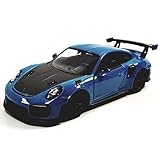
- Doors Open
- Pullback Action
- Die Cast Metal Body
- PULL BACK ACTION WITH FREE ROLLING WHEELS
- Porsche: In its 2014 account of the “Project: Top Secret!” exhibition, Porsche described 16 special vehicles, including concepts, prototypes and one-off record, test and experimental cars. Seven had not previously been shown publicly, according to that account. Porsche says projects sometimes fail to reach series production for technical or economic reasons; particularly significant ones may be retained by its museum. The figures apply to that exhibition, not to Porsche’s entire experimental-car history. Porsche Newsroom: “Project: Top Secret!”
- Rolls-Royce: The company distinguishes its EX cars from concepts by describing each as a finished, drivable vehicle. It says some EX experiments informed production models. That definition is specific to Rolls-Royce’s EX program; it should not be assumed to describe every vehicle called an experimental car. Rolls-Royce: The experimental cars
How strange ideas reached—or missed—the road
An unusual design can be a solution to a practical constraint, a preview of future styling, or a test whose purpose is to learn even if the car never enters a showroom. The Y-Job’s features influenced production cars, while Renault’s Projet 900 was a unique concept aimed at cabin space and comfort. In Porsche’s account, technical or economic obstacles can keep experimental projects from series production; Rolls-Royce, meanwhile, says some of its finished, drivable EX experiments informed production models.
That is why “strangest” is more useful as a way to explore automotive ambition than as a contest. A car may look bizarre because it challenges a settled convention—or because the convention had not yet been established.
Quick Recap
Best Value

- POSSUM IN A PEANUT
- This pull-back peanut piloted by a possum is 5" (12.7 cm) long
- More than just a possum in a peanut, we consider this toy to be a transdimensional portal into a superior alternate reality.
Rank #4
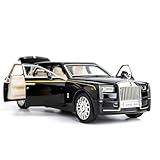
- Product size: 6.69*2.36*1.97 inches Weight: 0.7 pounds Outer packaging: exquisite color translucent packaging box
- Material: Die-cast car model, made of zinc alloy, with plastic parts, rubber tires, detailed interior and exterior decoration.
- Function: Press the two wheels of the front car to trigger the sound of the engine and the lights, with upright car logos,the angel logo is stored in the hood. The details of the body interior are realistic. Place the car on a flat ground, press the body and pull it back, the car will drive forward. (With pull back function)
- This Rolls-Royce Phantom 1/32 car model pull back car is very suitable for children to play with. The paint is exquisite and feels good, and it is heavy to hold. It is also very suitable for car model enthusiasts as a decoration.
- Accessories and collections: This product is very suitable for static accessories and can be used as an accessory next to a computer. For those who are passionate about collecting model car models, this is a great art collection.
Product prices and availability are accurate as of the date/time indicated and are subject to change. Any price and availability information displayed on Amazon at the time of purchase will apply.




