A defeat device is any element of a vehicle’s design that bypasses, defeats, or renders inoperative a required emissions control. Under U.S. federal law, making, selling, or installing one is prohibited. The reason is practical: a vehicle can perform well during an emissions test while its controls work less effectively in the conditions people actually drive in, and that gap is what the ban targets.
What the Term Means
The U.S. Environmental Protection Agency (EPA) describes a defeat device as a device that bypasses, defeats, or renders inoperative a required emissions-control element. The certification regulation uses a more precise term, the auxiliary emission control device (AECD), and defines a defeat device as an AECD that “reduces the effectiveness of the emission control system under conditions which may reasonably be expected to be encountered in normal vehicle operation and use,” subject to a set of listed exceptions. The definition appears in 40 CFR § 86.1803-01, as quoted in EPA’s Daimler Clean Air Act settlement FAQ.
The term covers more than a bolt-on part. EPA materials describe design elements that can include software, control logic, calibration, or hardware. Whether something looks like a separate gadget is largely beside the point. What matters is what the element does to the effectiveness of emissions controls under expected conditions of use.
The Legal Framework
Three parts of federal law and regulation work together:
#1 Best Overall

- Excellent for diesel vehicles driven regularly at slow speeds, low loads, short durations or make frequent stops as these are more prone to having the problem of crystallization deposit build up in the SCR system.
- Regular use every 5,000 miles not only keeps the system clean, but works to prevent the white crystallization issues from returning.
- Will not void manufacturer’s new vehicle warranty. Specifically designed and safe to use on vehicles which have DOC catalytic converters, DPF particulate filters, SCR selective catalytic reduction devices, ASC ammonia slip catalyst or DEF / AdBlue systems.
- Works with all AdBlue, Aria 32 (Automotive Nitrogen Oxide Liquid Reducing Agent), AUS 32 (Aqueous Urea Solution), BlueHDi, BlueTEC, Cummins, DEF UREA, Duramax, EcoDiesel, PowerStroke, TDI Clean Diesel, and many more.
- DEF Crystal Clean is specifically designed to only be installed in the Diesel Exhaust Fluid / AdBlue tank which usually has a blue cap. Do not add to the diesel fuel tank.
- Clean Air Act section 203(a)(3)(B) (42 U.S.C. § 7522(a)(3)(B)) prohibits manufacturing, selling, or installing a device that intentionally circumvents EPA emissions standards by bypassing, defeating, or rendering inoperative a required part of the vehicle’s emissions-control system.
- 40 CFR Part 86, Subpart A contains the operative definitions. Section 86.1803-01 defines AECDs and defeat devices, and section 86.1809-12 sets out the prohibition that applies to certified vehicles.
- Tampering is addressed separately. EPA states that the Clean Air Act also prohibits tampering with an emissions-control device, such as removing it or making it inoperable.
Agency FAQs summarize these provisions. For exact wording and current effective text, check the U.S. Code and the eCFR directly, because summaries can lag amendments.
Legal AECD or Defeat Device?
Modern engines rely on many AECDs. A system may sense temperature, vehicle speed, or engine load and adjust emissions controls accordingly. That capability is not automatically unlawful. The difference lies in whether the design reduces control effectiveness in normal use without qualifying for an exception, and whether it was disclosed and justified during certification.
| Question | Permitted AECD | Defeat device |
|---|---|---|
| Effect on emissions control in normal use | Does not reduce effectiveness under conditions reasonably expected in normal operation, or the reduction is covered by an exception | Reduces effectiveness under conditions reasonably expected in normal operation and use, without a qualifying exception |
| Disclosure and justification | Disclosed and justified in the certification process | Not disclosed or justified as a permitted AECD |
| Regulatory status | Lawful when applicable conditions are met | Prohibited to manufacture, sell, or install |
The listed exceptions that can keep a feature outside the defeat-device definition include:
- conditions substantially included in the federal test procedure;
- a feature justified to protect the engine or vehicle against damage or accident;
- a feature limited to engine-starting requirements;
- an AECD justified for emergency vehicles.
Each exception has its own conditions, and EPA reviews the justification as part of certification. Being listed is not an automatic pass.
Do these 3 things before closing this tab:
1Clear out junk files and repair common Windows errors2Scan for outdated or missing drivers - takes under a minute3Repair Windows errors before they cause bigger problemsRank #2

- 21GU Mis-Filling Prevention Device (MFPD)
- Permanently Installed In DEF Tank Fill Pipe
- Fixed magnetic field within the device actuates a magnetic interface in the spout of the 21Gu nozzle to allow the flow of DEF
- Rugged durability with superior flow performance
Why the Law Bans Them
Emissions standards set limits that vehicles must satisfy through certification. A test result describes how a vehicle performs under the prescribed procedure. A device that deliberately weakens emissions control in ordinary driving can allow a vehicle to meet the standard in the lab while emitting more pollution on the road. That undermines the purpose of the standard itself.
The pollutant most prominent in the enforcement record is nitrogen oxides (NOx). In EPA’s Volkswagen materials, NOx is identified as the major excess pollutant at issue and as a serious health concern. When announcing enforcement work, Cynthia Giles, then Assistant Administrator for EPA’s Office of Enforcement and Compliance Assurance, said: “Using a defeat device in cars to evade clean air standards is illegal and a threat to public health.”
How a Defeat Device Operates
Defeat devices take several forms. The three patterns below describe what regulators have examined, not a catalog of how every device works.
Recognizing a test
The clearest case is software that detects when a vehicle is undergoing an emissions test and switches to a more complete control strategy. Under ordinary driving, the same software operates with reduced controls, so emissions are higher. This is the mechanism EPA described in the Volkswagen case.
Recommended Free Tools
Rank #3

- Meets GM Original Equipment specifications to be approved for use in GM vehicles as well as in non-GM diesel vehicles that have an SCR (Selective Catalytic Reduction) system to meet regulated NOx emissions (Based on EPA certification testing. Your actual emissions will vary based on several factors including temperature, terrain, and driving conditions).
- High quality formula is made from high purity urea and deionized water.
- Meets API regulations and ISO 22241 standard for purity and concentration
- Nozzles sold separately
Reducing controls based on conditions
Some systems respond to temperature, speed, or engine conditions by reducing emissions-control effectiveness across a range of driving. Whether such a system is lawful depends on whether the reduction falls within the exceptions, was disclosed and justified, and actually applies to conditions reasonably expected in normal use.
Altering fuel-injection timing
EPA’s enforcement overview gives a practical example: software that alters diesel fuel-injection timing can be a defeat device. Changing injection timing can affect combustion and the operation of emissions controls, which is why such changes draw regulatory attention.
Are Software Updates Defeat Devices?
Not automatically. A software or calibration change is a defeat device only if it meets the regulatory definition. Regulators and courts look at a set of questions:
- Does the change reduce emissions-control effectiveness under conditions reasonably expected in normal operation and use?
- Was the feature disclosed and justified during certification?
- Does a listed exception apply, such as protection against damage or accident?
- Was the change designed to circumvent the standard, or made for another documented purpose?
Manufacturers update software for drivability, reliability, and compliance. An update that changes emissions behavior without disclosure, or one that reduces controls in ordinary use, is the kind of change that raises legal questions. Owners should not assume that any reprogramming or calibration change is either legal or illegal; the facts of the specific change control.
Rank #4

- 【Replace Part Number】Replace Part Number:04627241AF,4627241AF,04627241AD,04627241AA,DFI3,4627241AA,04627241AB,4627241AB,4627241AD,04627241AE,4627241AE,4627241,FC44-5J281-AC,FC4Z-5J281-B,FC445J281AC,FC4Z5J281B
- 【Fitment】 Diesel Exhaust Fluid Injector compatible with RAM 2500 3500 4500 5500 6.7L Diesel 2013 2014 2015 2016 2017 2018 2019 2020 2021 2022; And For Ford F250 350 450 6.7L Diesel 2017 2018 2019 2020.
- 【Function】This Diesel Emission Fluid Injector ensures precise DEF injection, reducing harmful emissions and maintaining compliance with regulations. Its accurate operation enhances fuel efficiency and optimizes engine performance.
- 【High-Quality】Crafted from high-quality materials, this DEF Injection Nozzle is engineered to endure harsh diesel engine environments. Its robust design delivers reliable, long-lasting performance in all weather and road conditions.
- 【Easy Installation】This DEF Injector is a direct-fit replacement for diesel trucks, ensuring fast and easy installation.
How Regulators Identify Defeat Devices
Certification testing alone is not the final check. After the Volkswagen case, EPA expanded its screening to include driving cycles and conditions that may reasonably be expected in normal operation and use. In its settlement FAQs, EPA said it would perform additional testing “using driving cycles and conditions that may reasonably be expected to be encountered in normal operation and use, for the purposes of investigating a potential defeat device.” EPA’s later case FAQ states that this approach helped uncover additional cases, including software issues in 3.0-liter Volkswagen vehicles and in FCA vehicles.
A difference between laboratory and road emissions does not, by itself, prove a defeat device. Investigators must still establish what the system does, under what conditions, and whether it falls within the regulatory definition and exceptions.
Independent reader supportYour contribution helps us test, update, and keep practical guides available for everyone.The Volkswagen Diesel Case
EPA issued a notice of violation alleging that certain Volkswagen, Audi, and Porsche diesel vehicles used software to circumvent emissions standards. According to EPA’s case overview, the civil settlements addressed allegations involving approximately 590,000 model-year 2009–2016 diesel vehicles. The major excess pollutant at issue was NOx.
What EPA reported about emissions levels
EPA described software that recognized an emissions test and enabled more complete controls during the test, while ordinary driving produced higher NOx emissions. EPA reported that certain affected 2.0-liter vehicles emitted up to 40 times the emissions standard, and certain 3.0-liter vehicles up to nine times the standard. These are EPA’s case-specific maximums for particular vehicle categories. They should not be read as a typical level for every affected vehicle or every road condition.
Free tools Windows power users keep installed
One-click scans. No signup required.
Best Value
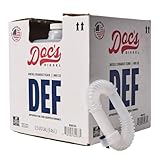
- Clean Fluid Cuts Derates: High-purity DEF keeps the SCR system reading clean, so you cut the emissions fault codes and power-limiting derates that off-spec fluid sets off. Less downtime waiting on a shop.
- Works in Any DEF Tank: Suitable for any modern diesel truck, pickup, or piece of equipment with an SCR system and a standard DEF tank.
- Cuts NOx Emissions: Meets ISO 22241, so the fluid works with the SCR system to reduce NOx output and keep emissions equipment running as built, which keeps the truck compliant.
- What You Get: One 2.5 gallon jug of ready-to-use DEF. Pour straight into the DEF tank to the full mark, then top off as the SCR system draws it down.
- Cold And Storage Ready: Stable for long-term storage when sealed, and it freezes at 12F then returns to full strength once thawed. Keep a jug on the truck so a low-DEF warning never leaves you stranded.
Settlement timeline
| Date | Settlement element (as described by EPA) |
|---|---|
| October 25, 2016 | First partial settlement, addressing 2.0-liter vehicles, approved by the court |
| April 13, 2017 | Third settlement, addressing civil penalties and injunctive relief |
| May 17, 2017 | Second partial settlement, addressing 3.0-liter vehicles, approved by the court |
Dates are listed in the order EPA records them. Penalty terms and remedies are specific to that settlement structure and should not be generalized to other cases.
What This Means for Vehicle Owners
- Removing or disabling required emissions controls is prohibited. Tampering is addressed separately from defeat devices, and both are covered by federal law.
- Recall and repair measures exist for affected vehicles. EPA settlement FAQs describe recall and repair steps intended to bring vehicles into compliance with their certified emissions standards.
- Check your own vehicle through official channels. Whether a particular vehicle is covered, its recall status, and the appropriate repair depend on its make, model year, engine, and recall history. Use the manufacturer’s recall notices or EPA’s case pages rather than third-party advice.
- Avoid generic modifications. A repair for a vehicle in a recall should follow the manufacturer’s instructions. Aftermarket changes to emissions systems carry legal risk and may not restore certified performance.
Limits of This Explanation
This article covers the U.S. federal framework administered by EPA. Other countries and states may define, exempt, or enforce emissions rules differently, and state programs may add their own requirements. Penalty amounts, recall scope, and enforcement policies can change, so confirm current figures with EPA and the governing law. This is general information, not legal advice for a specific vehicle or situation.
EPA’s Volkswagen figures describe that case’s allegations and settlement terms as the agency reported them. They are not a measurement of every diesel vehicle on the road.
Quick Recap
Product prices and availability are accurate as of the date/time indicated and are subject to change. Any price and availability information displayed on Amazon at the time of purchase will apply.




