Quick wins for a faster PC:
Scan for outdated or missing drivers - takes under a minuteDriver Scan →Repair Windows errors before they cause bigger problemsFix Now →Fix the driver behind crashes, sound loss and screen glitchesFind Drivers →Some unusual wheels are designed to move sideways, some replace the familiar central hub with support around the rim, and others are built to cope with rough planetary ground. They are not interchangeable upgrades for ordinary cars: each solves a particular engineering problem, and several examples are patents or concepts rather than road-ready products.
What makes a wheel design “weird”?
A conventional wheel rolls along the plane of its rotation. Unusual designs change either how the wheel makes contact with the ground, how it is supported and driven, or the directions in which it can move. That can make a mechanism useful for a robot, conveyor or rover without making it a practical replacement for a car wheel.
The examples below have different evidence behind them: commercial product descriptions, a historical technical report, a patent publication, a manufacturer’s concept vehicle, and NASA’s accounts of rover technology. None of the cited sources provides a common test comparing cost, traction, efficiency, durability or safety, so they do not establish which design is best.
What are omni wheels, and can a wheel move sideways?
An omnidirectional wheel combines its main rotation with another rolling action. In a common design, small rollers are mounted around the main wheel’s rim. The wheel rolls in its usual direction, while the smaller rollers can turn to let a robot or conveyor move laterally. The added motion is useful in confined spaces, but it depends on the specific mechanism.
Recommended Free Tools
#1 Best Overall
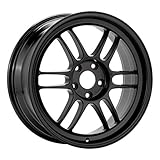
- Built to Enkei’s Spec-E testing standard, demanding higher impact drop energy and 20% more rotational fatigue cycles than standard JWL guidelines
- Dual-spoke distribution spreads side stresses across two spokes to increase wheel rigidity under heavy lateral g-forces while optimizing brake caliper clearance
- Multi-stage protective surface treatment shields against extreme track heat cycles, road salt corrosion, and brake dust accumulation
- Pocket milling around the bolt circle relieves extraneous weight from the center hub area without compromising structural integrity
- Precision-machined center bore accepts hub-centric centering rings to eliminate high-speed chassis vibration and wheel stud fatigue
Rollers around the rim
Omnia Wheel describes omni wheels for robotic mobility and conveying, making these a concrete example of the design category in commercial use. That is the manufacturer’s description of its applications; it is not evidence that omni wheels are suitable replacements for road-car tires. See Omnia Wheel’s product information.
A segmented-rim alternative
Not every omnidirectional mechanism uses the same small-roller arrangement. A U.S. National Technical Information Service record describes a 1974 report by NASA Marshall Space Flight Center on a segmented-rim wheel whose elements can drive movement perpendicular to the wheel’s normal plane. The record establishes the report and its described mechanism, not present-day commercial availability. View the NTIS report record.
For historical context, robotics researcher Raul Rojas’s account identifies J. Grabowiecki’s 1919 patent as the earliest omnidirectional wheel and places Bengt Ilon’s modern design around 1973. Those dates are Rojas’s historical account, rather than an independently verified patent chronology. Read Rojas’s history of omnidirectional wheels.
Rank #2

- High Compatibility and Ample Quantity: 1/64 scale wheels are ideal for model car enthusiasts and are compatible with most models on the market; The package includes a total of 21 sets, meaning you have enough quantity to customize or upgrade multiple cars, providing an easy way to enhance your diverse collection
- Assorted Styles for Customization: striking a balance between aesthetics and functionality, these 1/64 scale wheels come in a variety of designs such as five claw wheels, six claw wheels, seven claw wheels, ten claw wheels, tree fork wheels, and six spoke wheels. The sheer variety helps you match the tires according to different types and colors of your cars, enhancing the authenticity of each model
- Various Design and Colors: designed meticulously for your 1: 64 scale cars, these wheel tire give a fresh, unique touch to your existing models; To further extend your customization options, the wheels are available in multiple colors such as white, black, silver, and gold; So, choose a nice combination according to your model car color and theme
- Easy Installation: installation of these 1/64 scale model wheels car tires is easy, suitable for both model car accessories and model car collections; Each set includes 2 axles and 4 wheels, providing a complete package for convenience; The innovative design and smooth setup process make it an ideal addition for both novice and experienced enthusiats
- Gift for Model Car Collectors: featuring diverse styles, model car replacement wheels serve as an ideal gift for model car collectors; Whether for a birthday, holiday, or any special occasion, it's a thoughtful gift that model car collectors will surely appreciate and enjoy
How do spherical wheels work?
A spherical wheel can offer contact in multiple directions, but a sphere still needs a mechanism to support and drive it. Two designs in the sources illustrate different approaches; neither should be mistaken for a conventional automotive wheel.
The Tool Desk
Outbyte Driver Updater FREEFix the driver behind crashes, sound loss and screen glitchesFind Drivers →Outbyte PC Repair FREEClear out junk files and repair common Windows errorsFree Scan →A patented spherical assembly
Patent publication WO2021102556A1 describes an omnidirectional assembly with a spherical body formed from two hemispherical members. A hub and drive roller support and drive the assembly, while the hemispherical parts rotate around different axes. The patent discloses a design; it does not establish that the mechanism is sold as a product or used on road cars. Read the WIPO patent publication.
Hankook’s robotic wheel and concept vehicle
Hankook presents WheelBot2 as a robotic wheel with spherical tires designed for motion in multiple directions. Its PathCruizer vehicle is identified as a concept model, not a production car. This is a manufacturer’s description of its innovation work, not a comparative performance test. See Hankook’s WheelBot2 description.
Rank #3
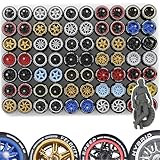
- Variety Pack: This set includes an assortment of 1/64 scale wheels .Comes with 2 miniature figures of random styles with the set
- Random Selection: The specific wheels included are randomly selected, allowing for unique combinations.
- Realistic Details: Each wheel features intricate designs and tread patterns for an authentic appearance.
- Compatible Scale: Suitable for use with 1/64 scale diecast vehicles and models.
- Easy Installation: Simply remove existing wheels and press-fit these replacements for a fresh look.
Why are some wheels hubless?
A hubless or centreless wheel makes its support structure part of the visual spectacle: the center is open, so the wheel can appear to float around the vehicle structure. Mechanically, the design must support and drive the wheel at or around its rim instead of relying on a conventional central hub.
The patent source describes a spherical body within an envelope and a drive roller, but a patent is evidence of a disclosed invention—not proof of a commercially available, road-certified vehicle. The cited sources do not establish service life, braking performance, cost or road certification for hubless designs, so the striking appearance alone cannot tell a driver whether one would be practical on the road.
What’s actually slowing this PC down?
Pick the symptom - the matching free tool is one click away.
What wheels do lunar rovers use?
On rough planetary terrain, a wheel may need to handle ground unlike a paved road. NASA describes Lunokhod as using eight rigid wire-mesh wheels with bicycle-type spokes and metal cleats. These are purpose-built rover wheels, not ordinary tires with a futuristic tread pattern.
Rank #4

- Premium 1:64 Scale Wheels with Printed Logo: Each set features soft rubber tires and detailed sidewall branding for an authentic appearance
- Random Selection of Rim Styles: Includes 10 randomly assorted sets with unique designs, finishes, and colors to enhance your diecast collection
- Compatible with 1:64 Scale Cars: Designed for seamless compatibility with Hot Wheels, Matchbox, and other diecast brands
- Premium Rubber Tires for Realism: High-quality rubber adds an authentic, high-end finish to every custom car project
- Mixed Styles for Unique Looks: Each pack includes randomly assorted rim designs to bring variety to your collection
NASA also describes the Spring Tire, developed in the mid-2000s by NASA Glenn engineer Vivake Asnani with Goodyear. It used hundreds of coiled steel wires woven into a flexible mesh, intended to support a load while conforming to terrain. NASA’s feature documents the design and development history; it does not establish the Spring Tire’s current deployment. Read NASA’s feature on reinventing the wheel.
How these unusual wheels differ
| Design | How it moves or is supported | Intended setting | Evidence described here |
|---|---|---|---|
| Roller-equipped omni wheel | Main wheel rolls normally; rim rollers allow lateral motion | Robotic mobility and conveying | Manufacturer product description |
| Segmented-rim omnidirectional wheel | Rim elements can drive movement perpendicular to the wheel’s normal plane | Mechanism described in a technical report | 1974 NASA Marshall report record at NTIS |
| Spherical assembly | Two hemispherical members rotate around different axes, supported and driven by a hub and roller | Omnidirectional mechanism | Patent publication |
| WheelBot2 and PathCruizer | Spherical robotic tires are described as enabling motion in multiple directions | Robotics and a concept vehicle | Manufacturer innovation description; PathCruizer is a concept model |
| Lunokhod wheels | Rigid wire mesh, bicycle-type spokes and metal cleats | Lunar rover terrain | NASA historical feature |
| Spring Tire | Coiled steel wires woven into flexible mesh | Rough-terrain wheel development | NASA account of mid-2000s development with Goodyear |
The table compares the mechanisms and the kinds of evidence available, not their performance. The sources do not supply a shared test protocol or comparable figures for load, speed, efficiency, traction, durability or safety.
Quick Recap
Product prices and availability are accurate as of the date/time indicated and are subject to change. Any price and availability information displayed on Amazon at the time of purchase will apply.




