Free tools Windows power users keep installed
One-click scans. No signup required.
Waymo’s new 239,000-square-foot factory in Mesa, Arizona, is not a conventional car plant. Operated with Magna, it takes vehicles supplied by automakers and integrates Waymo’s autonomous-driving hardware, software and vehicle modifications before they enter service. Waymo says the facility is scaling toward the capacity to prepare tens of thousands of autonomous vehicles per year—but it has not published a verified current production rate.
What Waymo’s Arizona factory actually does
Waymo announced the Mesa facility on May 5, 2025, as part of a multimillion-dollar investment with Magna International. The site is best understood as an autonomous-vehicle integration and conversion plant, rather than a factory that builds complete cars from raw materials.
Base vehicles arrive from automakers. Waymo and Magna then install and configure the equipment needed for the Waymo Driver, including autonomous-driving sensors, computing hardware, wiring and rider-facing systems. The vehicles are validated and prepared for deployment into Waymo’s commercial fleet.
That distinction matters. Waymo is not manufacturing every Jaguar, Zeekr or Hyundai vehicle used by its service. It is creating a repeatable industrial process for turning several vehicle platforms into autonomous vehicles.
#1 Best Overall

- Part Number: JetRacer AI Kit Acce
- JetRacer is an autonomous AI racing car powered by NVIDIA Jetson Nano by interactive programming via web browser. It allows high frame rate processing due to torch2trt(PyTorch to TensorRT translator) optimizing, so that faster autonomous line following driving can be easily achieved
- JetRacer AI Kit also supports DonkeyCar Open Sourse Projetct. DonkeyCar utilizes deep learning neural network framwork Keras/TensorFlow, together with computer vision library OpenCV, to achieve self driving
- Highly Integrated JetRacer Expansion Board, Rechargeable, Battery Voltage Detection, No Messy Wiring, Simple Assembly
- Race Track Map Image, Provides digital 3mX2m large size track map image for your convenience. Multiple Control Method: wireless gamepad controlling, PC web page controlling, Mobile page controlling
Waymo says the Mesa operation has created hundreds of jobs and is designed to shorten the time between vehicle completion, validation and public service. In one example, the company said a vehicle could collect its first public passenger less than 30 minutes after leaving the facility, while vehicles bound for another city could enter service within hours of reaching a local depot. Those are Waymo’s claims about an optimized workflow, not a guaranteed result for every vehicle.
Waymo’s factory announcement describes the facility and its intended production process.
Which vehicles are being prepared?
Jaguar I-PACE
The Jaguar I-PACE is the established vehicle platform in Waymo’s commercial fleet. In May 2025, Waymo said it had received its final I-PACE delivery and planned to build more than 2,000 additional fully autonomous I-PACE vehicles through 2026.
That is a specific production plan, separate from Waymo’s broader statement that the plant could eventually handle tens of thousands of vehicles per year.
What’s actually slowing this PC down?
Pick the symptom - the matching free tool is one click away.
Zeekr RT becomes the Ojai
Waymo also planned to integrate its sixth-generation Driver with the Zeekr RT platform. The production vehicle was later branded the Ojai, and Waymo began welcoming initial Ojai riders in 2026.
Waymo describes the Ojai as the first vehicle to debut its sixth-generation Waymo Driver. The Ojai is therefore important not only as a new fleet vehicle, but also as an early demonstration of Waymo’s effort to adapt one autonomous-driving system across multiple vehicle platforms.
Rank #2

- There are several options for this item, this option DOESN'T include Pi 5. All kits are equipped with a camera, mounting accessories, TF card, cooling fan, etc. For more content details, please check the image 2
- The UGV Rover ROS2 Kit is an AI robot designed for exploration and creation with excellent expansion potential, based on ROS 2 and equipped with Lidar and depth camera, seamlessly connecting your imagination with reality.
- Suitable for tech enthusiasts, makers, or beginners in programming, it is your ideal choice for exploring the world of intelligent technology.
- Equipped with the high-performance Raspberry Pi computer to meet the challenges of complex strategies and functions, and inspire your creativity. Adopts dual-controller design, combines the high-level AI functions of the host controller with the high-frequency basic operations of the sub controller, making every operation accurate and smooth.
- Easy to be controlled remotely via UGV Rover Web Application without downloading any software, just open your browser and start your journey. You can use the basic ROS 2 functions of the robot without installing a virtual machine on the PC. Supports high-frame rate real-time video transmission and multiple AI Computer Vision functions, the UGV Rover is an ideal platform to realize your ideas and creativity!
Read Waymo’s update on the Ojai’s first rider trips.
Hyundai IONIQ 5
Waymo and Hyundai have a multiyear partnership covering IONIQ 5 vehicles equipped for Waymo’s system. The base vehicles are assembled at Hyundai Motor Group Metaplant America in Georgia before autonomous technology is integrated.
Quick wins for a faster PC:
Scan for outdated or missing drivers - takes under a minuteDriver Scan →Repair Windows errors before they cause bigger problemsFix Now →Fix the driver behind crashes, sound loss and screen glitchesFind Drivers →That means the public information supports a split manufacturing arrangement: Georgia for the Hyundai vehicle, and Waymo’s integration operations for the autonomous-driving equipment and modifications. It does not establish that all IONIQ 5 manufacturing takes place in Mesa.
In July 2026, Waymo said it had begun autonomously driving its growing IONIQ 5 fleet with an autonomous specialist present. That is an operational-testing milestone, not proof that the platform had already reached fully driverless public service in every announced market.
The partnership details are outlined by Waymo and Hyundai.
How the integration process differs from ordinary vehicle production
Waymo has not published a complete factory work instruction, but the high-level sequence is clear:
Rank #3

- The factory setting is C1 freerun mode (30fps). A firmware update is required in order to use this product with the C2 Camera. The firmware can be downloaded from the support page on the official website.
- USB power supply: No additional power supply is needed, the USB interface will supply the power.
- Standard UVC protocol: Works with Windows, Mac and Linux without the need to install dedicated drivers. Note: This product is incompatible with Raspberry Pi.
- External synchronization: The camera exposure can be controlled by an external trigger pulse, enabling users to synchronize with another camera or LiDAR.
- Cables are not included.
- A base vehicle is supplied by an automaker.
- Waymo-specific autonomous hardware and vehicle modifications are integrated.
- The Waymo Driver’s computing, sensors, wiring and rider systems are installed or configured for that platform.
- The completed vehicle undergoes validation and operational checks.
- It is moved into a service fleet or shipped to another city’s depot.
The challenge is not simply attaching an identical kit to every car. Different vehicles have different body structures, electrical architectures, charging systems, thermal systems, interior layouts and door controls. Waymo says the sixth-generation Driver uses a more versatile hardware architecture that can be adapted to platforms such as the Ojai and IONIQ 5, but adaptation and validation remain necessary for each configuration.
The manufacturing goal is consequently standardization where possible: reusable components, repeatable installation methods and a common autonomous-driving system that can be configured for different vehicles.
Why Waymo needs a bigger fleet
Factory capacity is connected directly to Waymo’s ride-hailing expansion. In May 2025, Waymo said it had more than 1,500 commercial robotaxis and was providing more than 250,000 paid trips per week across Phoenix, San Francisco, Los Angeles and Austin.
In February 2026, the company said it had provided 15 million rides during 2025 and was targeting further expansion in the United States and internationally. More service areas require more than software and mapping. Waymo also needs enough vehicles to:
- maintain acceptable pickup wait times;
- cover vehicles that are charging, being cleaned or undergoing repairs;
- provide fleet redundancy when a vehicle is unavailable;
- support city launches without reducing service in existing markets; and
- replace or supplement older vehicle platforms.
The Mesa plant addresses one important constraint: the supply of autonomous-ready vehicles. It does not, by itself, guarantee demand, profitability or successful operation in a new city.
Waymo’s 2025 ride-volume and expansion figures are company-reported; they should not be read as independently audited industry totals. The company’s investment and growth context is available in its 2026 funding announcement.
Rank #4

- 【Flagship Performance, Outperforming All】Offers four development board options: Raspberry Pi5, Jetson Nano B01, RDK X5, and Orin Nano 8GB SUPER. The RDK X5 and Orin Nano, with their powerful computing capabilities, can perfectly run visual autonomous driving and road network planning simultaneously, achieving frame rates of up to 22-25fps for a smooth experience.
- 【Dual-Core Technology, Unlocking Autonomous Driving】Innovatively integrates two core technologies: visual autonomous driving (lane keeping + road sign recognition) based on powerful GPU computing power, and road network planning technology based on ROS 2. It can simulate real-world road driving, offering more professional gameplay and closer resemblance to industrial application scenarios.
- 【AI Large-Scale Model Fusion, AI Voice Interaction】Deeply integrates AI large-scale language models to achieve intelligent voice interaction. Integrates iFlytek Spark/OpenRouter. Pre-installed AI large-scale model fusion SLAM sandbox navigation eliminates the need for map reconstruction; experience autonomous driving right out of the box. (Map sold separately)
- 【High-Performance Hardware Configuration】Utilizes an Ackerman steering chassis for road sign and traffic light recognition, closely mimicking real-world driving and assisting users in developing autonomous driving technologies; equipped with a Nuwa-HP60C depth camera + TminiPlus Lidar/SLAM C1 Lidar, and a high-torque 520 Nm motor; a large-capacity battery provides 170% longer battery life, and includes a large-capacity TF card/SSD to meet multitasking needs.
- 【Rich Configuration and Professional Resources, From Beginner to Expert】Includes a full-stack AI large-scale model-specific course and detailed robot resources. Yahboom provides professional technical support, helping users easily get started and deeply master ROS and AI robot technologies, from development board large-scale models to robot applications.
What “tens of thousands per year” means
Waymo has said the Mesa facility will be capable of building tens of thousands of fully autonomous vehicles annually at full capacity. In 2026, it described the factory as meaningfully scaling toward that level, particularly as the sixth-generation Driver moved onto the Ojai platform.
That language describes capacity or an intended scale—not a disclosed current output. Waymo has not provided, in the cited material:
Do these 3 things before closing this tab:
1Repair Windows errors before they cause bigger problems2Scan for outdated or missing drivers - takes under a minute3Clear out junk files and repair common Windows errors- a verified daily or monthly Mesa production count;
- an independently audited utilization rate;
- a breakdown of I-PACE, Ojai and IONIQ 5 units processed there; or
- enough cost information to calculate the conversion cost, labor hours, payback period or fleet-level profit.
The more than 2,000 additional I-PACEs planned through 2026 is a concrete program commitment. Tens of thousands per year is a longer-term facility-capacity statement. Treating the latter as current production would overstate what Waymo has publicly established.
Why Mesa?
Waymo has pointed to Mesa’s proximity to Phoenix, an existing Waymo market, as well as access to other current and planned service areas. The company also cited consistent weather as useful for validation work and its established technical-service presence in the region.
Consistent weather can make some testing and operational planning easier, but it does not make Arizona universally superior for autonomous-vehicle validation. The location is also practical because Waymo already has regional technical and fleet infrastructure there. The company previously described its Mesa technical service center in an Arizona operations update.
Independent reader supportYour contribution helps us test, update, and keep practical guides available for everyone.How the factory relates to new-city launches
Waymo’s 2026 updates described preparations for fully autonomous operations in Denver, Las Vegas, San Diego and Tampa, alongside a broader national and international expansion effort. The company has also discussed autonomous testing of the IONIQ 5 with a specialist present.
The Tool Desk
Outbyte Driver Updater FREEFix the driver behind crashes, sound loss and screen glitchesFind Drivers →Outbyte PC Repair FREEClear out junk files and repair common Windows errorsFree Scan →Best Value
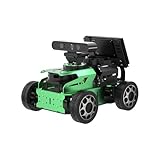
- Empowered by Large Al Model, Human-Robot Interaction Redefined. JetAcker robot car deploys multimodal models with ChatGPT at its core, integrating 3D vision and a 6-microphone array. This synergy enhances its perception, reasoning, and actuation capabilities, enabling advanced embodied AI applications and delivering natural, context-aware human-robot interaction.
- Driven by AI & ROS, powered by Jetson. JetAcker AI robot car is a high-performance educational robot developed for ROS learning scenarios. Equipped with Jetson Nano/Orin Nano controllers and compatible with both ROS1 and ROS2, it integrates deep learning frameworks with TensorRT acceleration, making it ideal for advanced AI applications such as SLAM and vision recognition.
- SLAM Development and Diverse Configuration. JetAcker smart robot car is equipped with a powerful combination of a 3D depth camera and Lidar. It utilizes a wide range of advanced algorithms, including gmapping, hector, karto, cartographer and RRT, enabling precise multi-point navigation, TEB path planning, and dynamic obstacle avoidance. Using 3D vision, it can capture point cloud images of the environment to achieve RTAB 3D mapping navigation.
- Classical Ackermann Steering Mechanism. The Ackermann chassis combines maneuverability and steering precision, facilitating the learning and validation of real-world vehicle steering principles. This design enables realistic simulation of autonomous driving scenarios for enhanced educational experiences.
- Comprehensive Learning Tutorials. Through JetAcker's structured curriculum, master cutting-edge technologies including ROS development, SLAM mapping and navigation, 3D depth vision, OpenCV, YOLOv8, MediaPipe, Large Al model integration, Movelt and Gazebo simulation, and voice interaction.
A larger supply of vehicles makes those launches more feasible, but factory capacity is only one part of the equation. Each city still requires:
- mapping and local validation;
- regulatory and operational approvals;
- charging, cleaning and maintenance capacity;
- remote-assistance and rider-support operations;
- coordination with local emergency services; and
- enough vehicles to provide dependable service.
A vehicle leaving Mesa is not automatically ready to operate everywhere. The plant solves a vehicle-supply bottleneck, not every technical, regulatory or commercial bottleneck.
Waymo’s update on preparations for Denver, Las Vegas, San Diego and Tampa is available here.
The strategic shift: from one-off fleets to a manufacturing system
Waymo’s earlier commercial fleet was closely associated with the Jaguar I-PACE. The Mesa strategy is broader: establish a manufacturing system that can support multiple automakers and vehicle types while keeping the Waymo Driver as the reusable core.
PC Slower Than It Used to Be?
A free scan shows the junk files, broken settings and background clutter dragging Windows down - then fixes them in one click.Free scan · Windows 10 & 11Outdated Drivers Are Slowing You Down
One free scan finds every outdated or missing driver and matches the right update for your exact hardware.Free scan · exact hardware matchThat could provide several advantages:
- Higher availability: a larger fleet can absorb charging, maintenance and cleaning downtime.
- Platform flexibility: Waymo is less dependent on one aging or discontinued vehicle.
- Shorter integration cycles: repeatable processes can reduce installation and validation time.
- Potential economies of scale: engineering, tooling and facility costs can be spread across more vehicles.
- Regional efficiency: Mesa is close to important Southwestern operations.
There are trade-offs. Multiple platforms create manufacturing and validation complexity, while a supply chain spanning Jaguar, Zeekr/Geely and Hyundai exposes Waymo to different vehicle architectures and production arrangements. The cited sources do not establish specific tariff, import or regulatory risks, so those issues should not be assumed from the factory announcement alone.
What the Mesa factory proves—and what it does not
The facility is meaningful evidence that Waymo is industrializing the conversion of ordinary base vehicles into autonomous fleet vehicles. It shows the company is preparing for a much larger fleet than a small pilot program can support.
It does not prove that Waymo is already producing tens of thousands of robotaxis, that the plant is operating at full capacity, or that every announced city will launch on schedule. Actual output, vehicle mix, utilization and unit economics remain undisclosed in the cited public material.
For readers who want to experience the service, availability and fares vary by market, route, timing and demand. The current options are shown in the Waymo One service information and the Waymo app, rather than through a single nationwide price.
Quick Recap
Product prices and availability are accurate as of the date/time indicated and are subject to change. Any price and availability information displayed on Amazon at the time of purchase will apply.




