Volkswagen’s deal with Rivian is real, but “VW puts $5 billion into Rivian” is an incomplete description. The original June 2024 plan was worth $5 billion. By the joint venture’s launch in November 2024, the announced maximum had risen to up to $5.8 billion through 2027. As of August 16, 2026, Volkswagen-related funding, licensing, joint-venture contributions, and equity payments had reached approximately $4.3 billion in announced value or funding.
The strategic purpose is not to repair every existing Volkswagen software problem. Volkswagen and Rivian created an equally owned company, Rivian and Volkswagen Group Technologies—usually called RV Tech—to develop a new electrical architecture and software platform for future software-defined vehicles.
As an Amazon Associate I earn from qualifying purchases.
The short version
- Volkswagen gets: access to Rivian-derived vehicle software, electronics architecture, engineering expertise, and a strategic stake in Rivian.
- Rivian gets: billions in milestone-based capital, a major automotive development customer, and a partner with manufacturing and brand scale.
- The structure: a Rivian equity investment, technology licensing, development work, joint-venture funding, and a possible loan—not one unconditional $5 billion cash payment.
- The target: future Volkswagen Group vehicles, including programs associated with Volkswagen, Audi, and Scout—not a blanket retrofit of every current VW model.
- The key test: whether the jointly developed technology reaches production vehicles, works reliably for customers, and helps both companies control costs.
Volkswagen’s November 2024 announcement describes RV Tech as an independently operated, equally owned joint venture. Its work covers vehicle electrical architecture, electronic control units, software, and network architecture for software-defined vehicles. Volkswagen’s joint-venture announcement raised the planned deal ceiling from the original $5 billion to up to $5.8 billion, with the arrangement expected to run through 2027 or no later than January 2028.
The Tool Desk
Outbyte Driver Updater FREEScan for outdated or missing drivers - takes under a minuteDriver Scan →Outbyte PC Repair FREEClear out junk files and repair common Windows errorsFree Scan →Why the headline said $5 billion
On June 25, 2024, Volkswagen announced an initial $1 billion investment in Rivian and said it intended to invest up to another $4 billion in Rivian and the proposed joint venture. That produced the widely repeated $5 billion figure. The original Volkswagen announcement was therefore accurate at the time—but it described an intended maximum, not money delivered immediately.
#1 Best Overall

- VION R1S Roof Sunshade (for Rivian R1S) – includes 3rd row roof sunshade.
- Innovative Two-Piece Structure VION’s dual-panel design offers better coverage and alignment with your R1S roof liner, unlike traditional single-piece shades.
- Full Blackout Sun Protection Experience ultimate cabin comfort with our full blackout roof sunshade - designed to block sunlight completely and reduce overhead burning feeling for every drive.
- Dual-material and Full Blackout Ease the overhead burning sensation while driving with our dual-material fabric in an innovative design.
- Seamless Magnetic Connection Embedded magnets prevent gaps where the two shades converge, ensuring total coverage and a streamlined fit.
The later arrangement is larger and more complicated. The $5.8 billion figure is a ceiling for several different transactions and commitments. It should not be read as $5.8 billion of unrestricted cash deposited into Rivian’s bank account.
How much has Volkswagen actually provided?
The public filings show a series of payments and commitments rather than one transaction. The amounts below are economically different, so adding them provides a rough picture of the relationship’s scale—not a single accounting measure of cash paid directly to Rivian.
| Date | Amount | Form | Purpose or status |
|---|---|---|---|
| June 2024 | $1.0 billion | Convertible note | Initial Volkswagen investment; later converted into Rivian shares. |
| December 3, 2024 | — | Share conversion | The note converted into 95,377,269 Rivian ordinary shares. |
| November 2024 | Approximately $1.3 billion | Joint-venture contribution, licensing, and technology consideration | Connected with RV Tech beginning operations. |
| June 30, 2025 | $1.0 billion | Rivian equity | Released after Rivian achieved an agreed financial milestone. |
| April 30, 2026 | $1.0 billion | Rivian equity | Volkswagen received approximately 62.9 million Class A shares at $15.90 per share after agreed winter-testing milestones were completed. |
| October 2026 window | Up to $1.0 billion | Joint-venture term-loan facility | Available subject to contractual conditions. |
| Future | Up to $460 million | Additional Rivian equity or convertible instrument | Tied to a future milestone. |
These figures come from Rivian’s filings and Volkswagen’s reporting. Rivian’s 2025 Form 10-K, Rivian’s first-quarter 2026 filing, the April 30, 2026 filing, and Volkswagen’s 2025 annual-report disclosures distinguish between equity, joint-venture funding, licensing consideration, development services, and potential debt.
The most accurate summary is that Volkswagen had committed or delivered approximately $4.3 billion in announced investment, licensing, or related funding through April 30, 2026, while up to $460 million of additional equity and a possible $1 billion joint-venture loan remained subject to future conditions.
What Volkswagen bought—and what it did not
Volkswagen did not acquire Rivian outright, and it did not buy every piece of Rivian’s intellectual property. The transaction has four central components:
- A strategic equity stake in Rivian. Volkswagen receives Rivian shares in exchange for milestone-based investments.
- A 50% interest in RV Tech. Rivian and Volkswagen Group each own half of the joint venture.
- Licenses to existing Rivian technology. The joint venture can build on Rivian’s electrical architecture and software technology under the agreed arrangement.
- Development and customization services. RV Tech engineers are working on technology adapted for future Volkswagen Group vehicle programs.
That makes the relationship part investment, part technology procurement, and part joint product development. Calling the entire transaction a stock purchase misses the technology and engineering services. Calling it a conventional supplier contract misses the equity investment and shared ownership.
What “fixing Volkswagen’s software” really means
Rivian is not publicly described as repairing the software in every Volkswagen already on the road. The narrower and more supportable description is that Rivian is helping Volkswagen develop a new software-defined vehicle platform for future products.
Rank #2
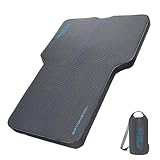
- 【Superior Support and Comfort】This Sleeping Pad boasts a 4.5-inch thickness and 9-pound foam filling, delivering unparalleled support and comfort. With a weight capacity of up to 440 pounds, this sleeping pad accommodates a variety of body types. Its unique internal structure ensures even distribution of air and foam throughout the pad, effectively reducing pressure points and providing a good night's sleep.
- 【Adjustable Softness】This mattress utilizes a unique combination of foam and air, making it fully adjustable for personalized softness and support. This means you can easily adjust the pad's comfort to your liking, allowing for the best sleeping experience. Compared to single-material sponge or memory foam pads, this sleeping pad offers a higher level of personalization and comfort.
- 【Silent and Stable Support for Quality Sleep】The mattress provides a stable sleeping surface with minimal noise, ensuring that your movements won't disturb your sleep or your partner's. Unlike other air mattresses that may make annoying squeaking or rubbing sounds, this unique combination of air and foam construction keeps you comfortable and quiet throughout the night.
- 【Easy Inflation and Deflation】The mattress is incredibly easy to inflate, just twist the valve, and you're good to go.
- 【Four-Season Insulation】This sleeping pad boasts an R-value of 13, offering exceptional insulation in cold environments and surpassing many other sleeping pads on the market. The 9-pound foam filling ensures comfort and appropriate insulation in various outdoor environments. Suitable for spring, summer, autumn, and winter, this sleeping pad provides a consistently comfortable sleep experience throughout the year.
A software-defined vehicle treats software as a central part of the vehicle’s functionality rather than as a collection of isolated systems that are largely fixed at the factory. The relevant technology includes:
- vehicle computers and electronic control units;
- the communication networks connecting those computers;
- the way vehicle functions are organized in software;
- over-the-air update capability; and
- the electrical architecture that ties the entire system together.
Volkswagen’s objective is to reach a more centralized, reusable architecture faster than it could by developing every layer independently. Rivian contributes a technology base and software experience; Volkswagen contributes funding, vehicle programs, engineering requirements, and access to a much larger industrial organization.
What is a zonal architecture?
Many older vehicles spread functions across a large number of individual electronic control units. Each unit may manage a specific system, and extensive wiring connects those units throughout the car.
A zonal architecture groups electronics according to physical areas of the vehicle—its zones. A smaller number of powerful computers can then manage more functions across those areas, using software and high-speed networks to coordinate the vehicle.
Do these 3 things before closing this tab:
1Fix the driver behind crashes, sound loss and screen glitches2Clear out junk files and repair common Windows errors3Scan for outdated or missing drivers - takes under a minutePotential benefits include:
- less wiring and hardware duplication;
- fewer separate control units to develop and package;
- a more consistent software foundation across vehicle models;
- easier deployment of over-the-air updates; and
- greater flexibility to add or change features through software.
Those are potential benefits, not guarantees. A zonal system also raises the stakes for software quality, cybersecurity, network reliability, functional safety, regulatory compliance, and update infrastructure. A simpler physical architecture can still produce a complicated ownership experience if the software is unreliable or the underlying systems are poorly integrated.
Why Volkswagen needs the partnership
For Volkswagen, the attraction is speed and reuse. The Group sells vehicles under numerous brands and must coordinate different platforms, suppliers, factories, markets, and regulatory requirements. A common electrical and software foundation could reduce duplicated development and make it easier to support several brands from related technology.
The partnership also gives Volkswagen access to Rivian-originated technology without buying the entire company. That limits the commitment compared with an acquisition while giving VW a direct role in the organization developing the platform.
Rank #3

- VION R1S Roof Sunshade (for Rivian R1S) – includes 3rd row roof sunshade.
- Innovative Two-Piece Structure VION’s dual-panel design offers better coverage and alignment with your R1S roof liner, unlike traditional single-piece shades.
- Full Blackout Sun Protection Experience ultimate cabin comfort with our full blackout roof sunshade - designed to block sunlight completely and reduce overhead burning feeling for every drive.
- Dual-material and Full Blackout Ease the overhead burning sensation while driving with our dual-material fabric in an innovative design.
- Seamless Magnetic Connection Embedded magnets prevent gaps where the two shades converge, ensuring total coverage and a streamlined fit.
It is reasonable to interpret the deal as a response to the difficulty of building modern vehicle software at the scale and complexity of a global automaker. But that is analysis, not proof that Rivian has solved Volkswagen’s earlier software challenges. The real evidence will come when the architecture is industrialized and deployed in customer vehicles.
Quick wins for a faster PC:
Fix the driver behind crashes, sound loss and screen glitchesFind Drivers →Clear out junk files and repair common Windows errorsFree Scan →Which brands and vehicles are involved?
RV Tech’s work targets the Western Hemisphere and future vehicle programs. Volkswagen has identified reference vehicles associated with Volkswagen, Audi, and Scout in its winter-testing program. Rivian has also said the resulting technology is intended for future R2, R3, and R3X products, as well as future Volkswagen Group programs.
That does not mean every Volkswagen, Audi, or Scout model will use Rivian technology. The public announcements refer to future programs and reference vehicles, not a universal retrofit of current cars or a guaranteed Group-wide architecture.
What unlocked the April 2026 payment?
RV Tech completed winter testing of its production-intent zonal architecture in March 2026. Testing took place over several months in Phoenix, Arizona, and Arjeplog, Sweden, and used reference vehicles associated with Volkswagen, Audi, and Scout.
The tests evaluated production-intent electronics and software, including over-the-air functionality. Volkswagen described the milestone as successful completion of winter testing, while Rivian’s April filing said the agreed testing milestones had been achieved. Volkswagen then paid $1 billion on April 30, 2026 for approximately 62.9 million Rivian Class A shares at $15.90 each.
Crashes, No Sound, or Screen Glitches?
Random freezes, missing sound and display glitches usually trace back to one bad driver. Find and replace yours safely.Free scan · under a minutePC Slower Than It Used to Be?
A free scan shows the junk files, broken settings and background clutter dragging Windows down - then fixes them in one click.Free scan · Windows 10 & 11“Production-intent” is important wording. It means the design was being tested with production development in mind; it does not mean that the system had already entered broad series production or that customers had proven it in large numbers.
What Rivian gets from the deal
Rivian’s side of the bargain is more than a headline investment. The company receives:
Rank #4

- Perfectly Fit: 2Pcs Running Boards prefectly fit the R1S 2025+. EVbase-ev running boards for R1S are positioned properly, directly under the frame rail, NOT cantilevered with brackets
- Utility for R1S Running Boards: The Running boards for R1S 2025 will make it easier to enter car. With a maximum weight capacity of 550lb. Precision stainless steel pivot pins for rock-solid stability and maintenance-free self-lubricating bushings for all-weather performance
- Keep Original Functions: Durable, sturdy, and without noise. Compatible with Jack Pucks! Brackets are designed for easy use with jack pucks. Accessible to all factory jack puck locations. Aerodynamically optimized design minimizes range/efficiency impact
- Extra Protection Layer: For R1S running board side step is crafted from sturdy Q235 steel with OEM-grade powder coating and e-coating for maximum rust prevention and corrosion protection, providing an extra layer of protection, shielding the lower body from mud, rocks, debris, and other road hazards
- Easy to Install: Installation of fit for R1S running boards is straightforward and non-destructive. Bolt-on design, and DIY friendly with no drilling or permanent modifications required. Includes all necessary installation hardware. The product after-sales guarantee is one year. If you encounter any problems with the installation, Please contact me in time. We are willing to provide you with the best service
- substantial milestone-based capital;
- engineering and development revenue;
- a major automaker as a customer and partner;
- potential scale for its software and electronics spending;
- validation with suppliers, investors, and future commercial partners; and
- access to Volkswagen’s manufacturing and global automotive experience.
That support matters as Rivian develops and launches the R2 platform and prepares future products. Rivian’s first-quarter 2026 materials reported $4.83 billion in cash, cash equivalents, and short-term investments, plus $564 million available under its asset-based lending facility—approximately $5.394 billion of liquidity before considering additional capital sources. Rivian’s Q1 2026 earnings materials also identified the April equity investment and possible joint-venture financing among its capital resources.
That does not make Rivian financially risk-free. It remains exposed to manufacturing costs, demand, capital spending, debt maturities, product-launch execution, and the possibility that future milestone funding will not be released.
Why the deal is not automatically a bailout
Volkswagen’s money clearly improves Rivian’s financing position and helps fund engineering and future products. But “bailout” implies that the transaction is primarily an emergency rescue. The structure points to something broader: Volkswagen is paying for technology and development while also taking an equity position and sharing ownership of the development company.
Rivian’s cash position can improve temporarily without proving sustainable companywide profitability. VW-related software-and-services revenue may reflect funded development work rather than a mature, recurring software business. Rivian itself warns that the joint venture may not meet its operational objectives and that expected efficiencies, cost savings, or future revenue opportunities may arrive more slowly or be smaller than anticipated.
Independent reader supportYour contribution helps us test, update, and keep practical guides available for everyone.The risks for Volkswagen
- Integration risk: Rivian’s technology must work with Volkswagen’s brands, suppliers, factories, regulations, and existing vehicle-development processes.
- Partner risk: Volkswagen is relying on a smaller company that still faces substantial manufacturing and financial challenges.
- Loss of control: Sharing development with an equally owned joint venture can make strategic and technical decisions more complicated.
- Industrialization delays: A platform can perform well in testing but take much longer to validate, certify, and manufacture at scale.
- Limited reuse: Brand-specific requirements could prevent the architecture from delivering the hoped-for economies of scale.
The risks for Rivian
- Dilution: Issuing shares to Volkswagen increases capital but reduces existing shareholders’ percentage ownership.
- Customer concentration: Rivian’s software-and-services revenue is materially connected to the Volkswagen relationship.
- Milestone dependence: Future payments depend on financial, technical, regulatory, or other contractual conditions.
- Priority conflicts: Rivian must balance its own vehicle roadmap with Volkswagen’s requirements and deadlines.
- Uneven benefits: Volkswagen may gain access to a scalable platform before Rivian’s vehicle margins or production economics materially improve.
What has been proven so far?
The partnership has demonstrated meaningful progress, but not yet full commercial success.
- RV Tech began operations on November 13, 2024.
- The joint venture had more than 1,500 employees by November 2025, according to Volkswagen’s progress update. Volkswagen’s one-year progress release reported the staffing milestone.
- RV Tech completed winter testing of its production-intent zonal architecture in March 2026.
- The testing covered electronics, software, and over-the-air functionality in reference vehicles.
- The milestone triggered Volkswagen’s $1 billion April 2026 equity payment.
What has not yet been demonstrated publicly is equally important: broad production deployment, customer-scale reliability, a successful R2 ramp at viable cost, materially lower development expense across brands, or sustainable profitability created by the partnership.
Recommended Free Tools
How to judge whether the deal is working
Readers should evaluate the partnership against outcomes, not just investment announcements:
Best Value

- 【Perfect fit for Rivian R1T R1S】: This dog seat cover is cut specifically for Rivian R1T R1S cars' back seat, It matches well with your car's backseat without moving.
- 【Premium Material and Craftsmanship】: Made from premium 600D Oxford fabric materials, this backseat cover for dogs ensures long-lasting use and withstands daily wear and tear.
- 【Stable and Secure】: Our pet bench seat covers featuring security anchors and non-slip backing, In addition, the seat cover is designed with two seat belt openings , that will not affect the use of the pet harness, ensures your dog stays put.
- 【Excellent Car Seat Protection】: The bench dog car seat cover not only protects your car back seat from scratching, Also protect your car seat from sand, dirt, fur, hair, foot print, keeping your car clean and damage-free.
- 【Easy to Clean and Maintain 】: This backseat pet cover for dogs is made of waterproof and scratch-proof material, which is easy to wipe clean or wash in the washing machine after a long journey.
- Milestone execution: Are technical and financial milestones completed on schedule?
- Production deployment: When does RV Tech hardware and software appear in a customer-delivered Volkswagen Group vehicle?
- R2 execution: Does Rivian launch R2 on schedule and at an economically viable cost?
- Software quality: Are over-the-air updates reliable, timely, secure, and useful?
- Cost reduction: Does shared architecture reduce complexity or development expense?
- Cross-brand scale: Can the platform support multiple brands without becoming another layer of fragmentation?
- Financial durability: Does the funding reduce Rivian’s need for additional external capital through the R2 ramp?
- Governance: Can the equally owned joint venture resolve disagreements quickly?
- Customer experience: Do owners notice better reliability, functionality, and update capability?
What to watch next
- Whether the up-to-$1 billion joint-venture term-loan facility is drawn during the October 2026 availability window.
- Whether the remaining up-to-$460 million equity milestone is achieved.
- The first production Volkswagen Group vehicle that publicly demonstrates RV Tech hardware and software.
- Rivian’s R2 launch timing, manufacturing costs, and margins.
- The cadence and reliability of software updates in vehicles using the new architecture.
- Whether Volkswagen consolidates around the joint platform or continues maintaining multiple competing software stacks.
Bottom line
Volkswagen’s Rivian deal is best understood as a strategic technology partnership financed by milestone-based investment. The original $5 billion headline has grown into an announced maximum of up to $5.8 billion, but the money is divided among Rivian equity, joint-venture funding, technology licensing, development services, and a possible loan.
Volkswagen is seeking a faster route to software-defined vehicles and a more reusable electrical architecture. Rivian receives capital, engineering revenue, and a powerful automotive partner. The March 2026 winter-testing milestone and April $1 billion payment show that the arrangement is advancing—but they do not yet prove that Rivian has fixed Volkswagen’s software problems, that every future VW EV will use the technology, or that either company has secured a financial payoff.
Frequently Asked Questions
Did Volkswagen invest $5 billion directly into Rivian?
No. The original plan announced in June 2024 was worth up to $5 billion, but it combined Rivian equity, joint-venture funding, technology licensing, development services, and other commitments. The later announced maximum rose to up to $5.8 billion.
Free tools Windows power users keep installed
One-click scans. No signup required.
How much money has Volkswagen provided to Rivian?
Through April 30, 2026, Volkswagen-related investment, licensing, joint-venture contributions, and funding totaled approximately $4.3 billion in announced value or funding. The figures are not all the same economically or accounted for in the same way.
Will Rivian software be added to every Volkswagen?
There is no public evidence of a universal retrofit. The partnership targets future software-defined vehicles and programs associated with Volkswagen, Audi, Scout, and Rivian’s future R2, R3, and R3X products.
What is RV Tech?
RV Tech is an independently operated joint venture owned 50% by Rivian and 50% by Volkswagen Group. It develops vehicle electrical architecture, electronic control units, network architecture, and software.
Quick Recap
Product prices and availability are accurate as of the date/time indicated and are subject to change. Any price and availability information displayed on Amazon at the time of purchase will apply.




