The Tool Desk
Outbyte Driver Updater FREEFix the driver behind crashes, sound loss and screen glitchesFind Drivers →Outbyte PC Repair FREERepair Windows errors before they cause bigger problemsFix Now →Cars are moving from many independent electronic control units (ECUs) toward domain, zonal and centralized architectures because connected, software-intensive features need more computing capacity and simpler ways to share data. Cloud-ready ECUs help vehicles securely exchange data with backend services and receive software updates—but safety-critical control still needs to work locally in the vehicle.
Why vehicle electronics are changing
In a traditional distributed electrical and electronic (E/E) architecture, many ECUs each handle a relatively narrow task. As vehicles add driver assistance, connected services and increasingly complex software, this arrangement can mean duplicated hardware, extensive wiring and many point-to-point dependencies to manage.


STMicroelectronics describes the move toward more centralized vehicle architectures as a response to growing function complexity and demands for safety, security, performance and lower cost. The aim is not simply to put every function in one computer. It is to organize computing, communications and software so that vehicle functions can be developed and updated more coherently.
SAE’s 2024 paper identifies zone-based architecture, centralized computing, high-performance computers, standardized software, advanced onboard communications, over-the-air (OTA) updates and cybersecurity as technical foundations for software-defined vehicles. In such a vehicle, software can change or add capabilities over its service life, rather than being fixed entirely at manufacture.
Quick wins for a faster PC:
Clear out junk files and repair common Windows errorsFree Scan →Scan for outdated or missing drivers - takes under a minuteDriver Scan →Domain, zonal and centralized architectures: what differs?
These terms describe different ways to organize vehicle electronics, and they can coexist in a hybrid design. A domain architecture groups functions by what they do. A zonal architecture groups electrical connections and local inputs and outputs by where they are in the vehicle. Centralization describes where computing workloads are placed.
| Architecture | How it is organized | What it changes |
|---|---|---|
| Distributed | Many ECUs handle individual functions or components. | Computing is spread through the vehicle. The arrangement can create duplicated hardware and numerous point-to-point dependencies as functions grow. |
| Domain-oriented | ECUs or domain controllers group related functions, such as body, powertrain, chassis or advanced driver-assistance systems (ADAS). | Related functions share a logical grouping, but their physical connections may still span the vehicle. |
| Zonal | Zone control units group connections and local I/O by physical region. | Regional hubs collect signals and manage local power distribution, conversion, sensing and actuation, then communicate with central compute. |
| Vehicle-centralized | A small number of powerful vehicle computers run suitable workloads, alongside embedded controllers. | More computation is concentrated in high-performance computers; local controllers can remain for sensors, actuators and functions that need local execution. |
Infineon describes zone control units as regional hubs that aggregate communications, power distribution, conversion, actuation and sensing before routing information toward central compute. Bosch describes the direction of travel as a few powerful vehicle computers connected to embedded control units, sensors and actuators through a vehicle-centralized, zone-oriented architecture. In practice, these are complementary ideas: a vehicle can use zonal wiring and I/O while retaining domain controllers or local ECUs for particular functions.
What makes an ECU cloud-ready?
Cloud-ready does not mean sending a brake, steering or other safety-critical control loop to a remote data center. It means the ECU and its software platform can securely participate in a connected vehicle lifecycle. That can include communicating with backend or edge services, exposing stable service-oriented interfaces, processing and uploading vehicle data, and accepting authenticated software updates.
For software-defined vehicles, OTA capability is more than a download mechanism. Software components should be updateable independently where the vehicle’s design permits it, and the update process needs security controls and a way to monitor the software lifecycle. Stable interfaces also help teams integrate components without requiring every function to be built as one indivisible software package.
Recommended Free Tools
Rank #3

- VIN Required After Purchase – Message us your VIN for proper vehicle matching before shipment
- Verify Part Number Before Ordering – Exact match required; VIN can be provided for fitment assistance
- Remanufactured OEM Module – Designed to restore original vehicle system function
- Plug & Play Installation – No additional programming or relearn procedures required in most cases
- Expert Technical Support Available – Contact us through Amazon messaging for compatibility or installation help
The European Commission’s CORDIS programme identifies a cloud-edge continuum, distributed high-performance computing, OTA updates, large data flows and AI at the edge as elements of emerging vehicle architectures. Cloud and edge services can support data-intensive workloads and lifecycle services; time-critical decisions still need an execution path with latency and reliability appropriate to the function.
Where the main architecture options differ
The table compares the typical architectural emphasis, not a guarantee about every vehicle. Actual network performance, safety mechanisms, cybersecurity and update capability depend on implementation.
Rank #4
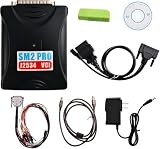
- 【Professional ECU Programming Solution for Automotive Service】 Designed for automotive technicians, repair shops, and experienced users, the SM2 PRO J2534 ECU programmer provides a reliable solution for ECU communication, diagnostics, data reading, writing, and backup tasks. Its stable hardware platform helps simplify complex ECU service procedures and improve workshop efficiency.
- 【67-in-1 ECU Read & Write Capability】 Supports multiple ECU communication solutions for compatible vehicle control modules and various engine and transmission systems. The tool helps technicians perform ECU data reading, writing, backup, and maintenance operations with improved workflow efficiency.
- 【Three Flexible Working Modes: OBD / Bench / Boot】 Switch between different programming environments based on service requirements. OBD mode enables in-vehicle communication, Bench mode allows ECU programming outside the vehicle, and Boot mode supports advanced ECU access procedures when required.
- 【Complete Cable Kit for Convenient Setup】 Includes a full set of connection accessories to support different ECU service environments. The organized cable kit helps reduce preparation time and provides a more convenient experience for automotive workshops and professional users.
- 【Reliable J2534 Pass-Thru Communication Interface】 Built with J2534 communication technology, this ECU interface provides stable vehicle communication for compatible diagnostic software platforms. Users can work with their own valid software licenses for automotive maintenance, troubleshooting, and ECU service applications.
| Consideration | Distributed | Domain-oriented | Zonal | Centralized or hybrid |
|---|---|---|---|---|
| Compute placement | Many function-specific ECUs | Controllers grouped by function area | Regional controllers handle local I/O; compute may remain elsewhere | High-performance computers run suitable cross-domain workloads, with local controllers as needed |
| Wiring and power | Can require many point-to-point connections | Functions are grouped logically; grouping alone does not remove physical wiring complexity | Regional hubs can consolidate local connections and power distribution | Can reduce duplicated hardware, but still depends on the zonal and in-vehicle network design |
| Network needs | Many connections must be coordinated | Communication crosses domain boundaries where functions interact | Needs reliable communication between zones and central compute | Cross-domain workloads increase demands on bandwidth, latency and determinism |
| Software reuse and OTA | Updates can involve many separate ECUs | Function grouping can support reuse, depending on interfaces and platform design | Defined interfaces and communication standards can support shared software stacks | Can support reusable software and lifecycle updates when platform, interfaces and update processes are designed for them |
| Safety and fault isolation | Local controllers can keep functions separate | Depends on domain boundaries and implementation | Local control can coexist with regional aggregation | Requires deliberate fault containment; local embedded controllers may still be necessary for safety-critical loops |
| Cybersecurity | Every connected ECU and interface needs appropriate protection | Shared domains create integration and access-control considerations | More connectivity between zones and central compute needs to be secured | Backend connectivity and centralized software increase the importance of secure identity, updates and monitoring |
| Thermal and energy cost | Distributed hardware has vehicle-level power and packaging costs | Depends on controller count and workload allocation | Depends on regional controller and network design | High-performance computing concentrates thermal and power demands; system-level trade-offs matter |
| Diagnostics and scaling | Many separate units can complicate vehicle-wide diagnostics | Functional grouping can organize diagnosis by domain | Regional organization can help map faults to vehicle areas | Shared platforms can help scale software across vehicle lines, but integration and diagnostics must span central and local components |
Infineon says zonal designs replace point-to-point ECU dependencies with defined interfaces and communication standards, helping establish platform standardization and shared software stacks. That is a potential architectural benefit, not an automatic result: interfaces, diagnostics and software integration still need to be designed and maintained.
Independent reader supportYour contribution helps us test, update, and keep practical guides available for everyone.Why the practical answer is usually hybrid
Centralization can make cross-domain applications and data-intensive functions easier to support, but it does not eliminate complexity. A study published in the Journal of Systems and Software warns that centralization can simply shift system complexity. Concentrating workloads also puts pressure on network bandwidth and determinism, computer thermal and power budgets, cybersecurity, fault containment and software integration.
Do these 3 things before closing this tab:
1Fix the driver behind crashes, sound loss and screen glitches2Repair Windows errors before they cause bigger problems3Scan for outdated or missing drivers - takes under a minuteBest Value
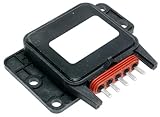
- Professional, premium aftermarket replacement
- Provides the performance and dependability you expect from ACDelco
- Manufactured to meet expectations for fit, form, and function
- International products have separate terms, are sold from abroad and may differ from local products, including fit, age ratings, and language of product, labeling or instructions
Local embedded controllers remain useful when a function needs predictable timing, safety certification or a defined degraded mode if communication or central compute is unavailable. A 2025 peer-reviewed study notes that strict functional-safety requirements can still be met using local embedded mini-ECUs. The engineering choice is therefore about allocating each workload to a suitable place—not maximizing the number of functions running on the central computer.
- Keep a workload local when it needs deterministic response, direct actuator control or dependable operation if another part of the system fails.
- Consider central compute for suitable workloads that benefit from shared processing, cross-domain data or common software platforms.
- Use zonal organization when consolidating regional wiring, power distribution and I/O can simplify the vehicle’s physical architecture.
- Evaluate the whole lifecycle across bandwidth, diagnostics, security, thermal limits, updates and compatibility with existing platforms.
A staged path from legacy ECUs to zonal systems
Replacing a mature vehicle architecture all at once is not the only route. SAE’s 2026 framework describes progressive function consolidation as a lower-risk path toward fully zonal architecture. A staged approach can introduce common interfaces and platform capabilities before moving suitable workloads.
- Define service interfaces and a common software platform. Establish how functions communicate and how software components can be integrated while legacy domain ECUs remain in service.
- Introduce the in-vehicle network and zonal controllers. Add high-speed Ethernet and regional controllers where they can consolidate wiring, local I/O and power distribution.
- Move suitable workloads to central high-performance computers. Allocate workloads according to their computing needs and timing constraints; retain local controllers where safety, determinism or degraded operation requires them.
- Build the connected lifecycle into the design. Provide for authenticated OTA updates, secure connectivity, observability and cybersecurity processes rather than treating them as additions after the architecture is set.
The European Commission’s Software-defined Vehicle of the Future ecosystem brings manufacturers and suppliers together around open building blocks, middleware, APIs and in-vehicle electronic control architecture. It signals a standards and collaboration direction for the industry; it does not mean that all vehicle makers already use one common architecture.
Quick Recap
Product prices and availability are accurate as of the date/time indicated and are subject to change. Any price and availability information displayed on Amazon at the time of purchase will apply.




