On February 22, 2018, UPS announced plans to deploy 50 plug-in electric delivery trucks developed with Workhorse. The public record confirms that announcement and an earlier group of 18 Workhorse all-electric trucks that delivered packages from UPS facilities in the Houston area. It does not confirm that all 50 trucks were deployed, and it does not provide operating results for those specific 50 vehicles.
What UPS announced in February 2018
The announcement was a plan, not a completed rollout. UPS said it would put 50 plug-in electric delivery trucks on the road, designed with Workhorse, and it described three goals:
- Zero tailpipe emissions. The trucks were described as eliminating exhaust emissions at the vehicle.
- Acquisition cost comparable to conventional trucks, without subsidies. UPS framed this as an industry first. The claim concerned purchase price, not total cost of ownership.
- Real-world testing to shape a larger fleet. UPS said results from the 50 trucks would inform design refinements for a larger fleet in 2019 and beyond.
The release attributes the rationale to Carlton Rose, then President, Global Fleet Maintenance and Engineering at UPS:
“Electric vehicle technology is rapidly improving with battery, charging and smart grid advances that allow us to specify our delivery vehicles to eliminate emissions, noise and dependence on diesel and gasoline.”
#1 Best Overall

- REAL USPS MAIL TRUCK FUN: USPS mail delivery truck with a mail slot, opening rear door, and cool features like working headlights and a horn. Sits one rider between the ages of 3 and 5, max weight of 60 lbs.
- MUSIC AND LIGHTS INCLUDED: Kids can enjoy their favorite tunes with the FM radio/MP3 player while the working headlights brighten up their playtime adventures
- SAFE DRIVING ADVENTURE: Equipped with foot pedal acceleration, this toy allows forward and reverse movements at a safe speed of 2.5 MPH, perfect for young drivers
- SMOOTH RIDES EVERY TIME: Power Trax traction strip tires ensure a steady, smooth ride, and the included rechargeable battery means the fun never has to stop for long
- EVERYTHING INCLUDED FOR FUN: Comes with a mailbox, 3 play envelopes for realistic mail adventures, plus a 6-volt rechargeable battery and wall charger for endless play
That quote reflects UPS’s position in 2018. It is not a statement about the trucks’ status today.
Why UPS wanted electric delivery vehicles
The stated logic rests on three points. Battery, charging and smart-grid improvements had made it practical to specify delivery vehicles that produce no emissions. Electric trucks would also cut noise in neighborhoods where delivery routes run early and repeatedly. And they would reduce the fleet’s dependence on diesel and gasoline. The announcement did not publish a fuel-savings target or a total fleet budget, so the case rests on those qualitative goals plus the acquisition-cost claim.
The Houston-area demonstration
The most detailed public operating data comes from the U.S. Department of Energy’s FY 2017 Vehicle Technologies Office Electrification Annual Progress Report, published in 2018. It describes a two-year demonstration in which 18 Workhorse all-electric trucks delivered packages from UPS facilities across the Houston region. The figures below are the report’s own, and each applies to the report period and the Houston project only.
Rank #2

- 📦 📬 AUTHENTIC DETAILS: Die-cast metal replicas featuring accurate UPS Mercedes-Benz Sprinter and USPS mail truck designs with detailed logos and markings
- 📦 📬 PREMIUM QUALITY: Constructed with durable die-cast metal and plastic parts for long-lasting play value and collectibility
- 📦 📬 PERFECT SIZE: Each vehicle measures approximately 5 inches in length, ideal for display or hands-on play
- 📦 📬 DUAL PACK VALUE: Set includes two iconic delivery vehicles - the modern UPS Sprinter van and classic USPS Grumman LLV mail truck
- 📦 📬 MOVING FEATURES: Both vehicles feature rolling wheels and opening doors for interactive play experience
| Measure | Value reported by DOE | Scope and qualification |
|---|---|---|
| Vehicles in the project | 18 all-electric trucks | Houston region, two-year demonstration |
| Electricity consumed | About 85,632 kWh | Project vehicles, report period |
| Diesel comparison | About 9,247 gallons | Estimated diesel used by a similar number of diesel package trucks over the same travel distance |
| Average operating cost | About $0.07 per mile | Report-period estimate for the Houston project |
| Estimated savings to date | $16,259 | Report-period estimate; not a lifetime or 50-truck result |
| CO2 reduction to date | 206,954 pounds | Houston project, calculated against the diesel comparison above |
DOE’s verdict on usefulness was measured: “Through the ongoing demonstration period, the project vehicles have been able to adequately meet the needs of UPS for delivery of packages within the region.” The same report also documented implementation problems. Vehicle utilization was below expectations, and software, component and service issues were cited as contributing factors. The available summary does not break down which issues affected which vehicles or how long they lasted, so readers should treat the operating picture as mixed rather than settled.
Quick wins for a faster PC:
Fix the driver behind crashes, sound loss and screen glitchesFind Drivers →Clear out junk files and repair common Windows errorsFree Scan →Were the trucks zero-emission?
The vehicles produced no tailpipe emissions, which is what “zero-emission” means for a battery-electric truck at the point of operation. It does not mean zero emissions across the full energy chain. Electricity has to be generated, and the emissions from that generation depend on the local power mix. The CO2 figure in the DOE report is a comparison against estimated diesel use, not a measurement of the electricity supply behind the trucks. Readers comparing trucks should keep those two boundaries separate.
What happened to the 50 trucks
The public record does not establish whether UPS put all 50 trucks into service, how many were actually built or delivered, or how they performed. The 2018 announcement describes a plan, and the Houston demonstration is a separate, earlier group of 18 vehicles. Neither proves the 50-truck plan was completed.
Rank #3
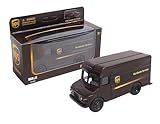
- Authentic & Official: Realistic replica of the UPS Package Car featuring certified logos and markings, officially licensed by United Parcel Service for true-to-life accuracy.
- Purpose & Play: Fun pullback action lets kids race the truck forward—no batteries needed—perfect for imaginative delivery missions and hands-on play.
- Perfect Size: Measures approximately 5.5” L x 2” W x 2.5” H, ideal for small hands, easy storage, and on-the-go play.
- Quality Materials: Made from durable, lightweight plastic designed to withstand active play while remaining safe for children ages 3+.
- Trusted Brand: From Daron, a leader in realistic vehicle replicas that inspire creativity, learning, and fun through authentic design.
Several kinds of evidence would settle the question, and none of them appears in the sources reviewed:
- A later UPS statement or newsroom release naming the number of Workhorse trucks in service.
- Operating results for the 50-truck group, published by UPS, Workhorse or DOE.
- Workhorse disclosures that break out UPS deliveries by year and unit count.
Until one of these appears, the accurate statement is that UPS announced 50 trucks in 2018, and the final count and performance of those trucks are not confirmed.
The Tool Desk
Outbyte Driver Updater FREEFix the driver behind crashes, sound loss and screen glitchesFind Drivers →Outbyte PC Repair FREERepair Windows errors before they cause bigger problemsFix Now →UPS and Workhorse: the relationship timeline
Workhorse’s 2020 investor presentation contains retrospective milestones for the relationship. Those are company-presented recollections, not independent records, and the sources do not say whether the Houston and Texas deployments were the same fleet.
Rank #4

- Officially Licensed by UPS: Features authentic UPS logos and design details, delivering a realistic and engaging delivery truck experience for young logistics lovers.
- Interactive Play Features: Equipped with opening side and rear doors, working lights and sounds, and a free-wheeling forklift with cargo boxes for immersive, hands-on fun.
- Perfectly Sized for Little Hands: Built with kid-friendly dimensions for easy handling and imaginative delivery scenarios—ideal for ages 3 and up.
- Durable Construction with Realistic Details: Made from high-quality materials and designed for rough-and-ready play, with smooth rolling action and detailed finishes.
- Part of the Daron Transportation Toy Line: Since 1990, Daron has been a trusted name in officially licensed transportation toys, inspiring creativity through realistic and educational play.
| Date | Event | Source type |
|---|---|---|
| 2012 | Workhorse signed an agreement with Navistar to electrify UPS delivery trucks | Workhorse investor presentation, January 2020 |
| 2014 | UPS purchased E-100 vehicles, per the presentation | Workhorse investor presentation (retrospective) |
| 2015 | 18 all-electric vehicles delivered; in October 2015 UPS announced deployment of 18 Workhorse E-100 vehicles in Texas | Workhorse investor presentation; UPS announcement |
| 2016 | UPS order for 200 additional Workhorse electric vehicles, per the presentation | Workhorse investor presentation (retrospective) |
| February 22, 2018 | UPS announces plan for 50 plug-in electric trucks designed with Workhorse | UPS announcement, via GlobeNewswire |
| 2018 (report date) | DOE FY 2017 report describes the 18-truck Houston-area project | U.S. Department of Energy progress report |
Workhorse’s current W4 CC is a different vehicle
Workhorse currently markets the W4 CC as an all-electric Class 4 cab chassis. Its product page, accessed October 8, 2026, lists up to 150 miles of range, a 7,000 lb payload, and support for Level 2 and Level 3 charging. The page also warns that “driver habits, inclement weather, and other factors can limit range.”
These specifications describe a current product. The page does not identify the 2018 UPS trucks as W4 CC models, so their specifications should not be assumed from it.
Other Workhorse figures that are not about UPS
Two sets of Workhorse numbers are often mixed up with the UPS story. Neither describes UPS’s trucks.
Best Value

- 📦 AUTHENTIC REPLICA: Highly detailed 1:48 O scale die-cast metal model of the 2019 Mercedes-Benz Sprinter Cargo Van in pristine finish
- 📦 FUNCTIONAL FEATURES: Features working pull-back action motor, opening rear doors, and detailed cargo area interior
- 📦 QUALITY CONSTRUCTION: Built with die-cast metal body, rubber tires, and precise plastic components for enhanced durability
- 📦 REALISTIC DETAILS: Accurately captures the distinctive Sprinter van design with detailed exterior elements and proportions
- 📦 PERFECT SIZE: Ideal 1:48 scale model makes it suitable for display or play while maintaining authentic proportions and details
- FedEx order, September 2024. A Form 8-K filed with the SEC records an order for 15 W56 step vans from FedEx. Workhorse reported 31 MPGe in real-world delivery-route testing and an estimated 607 metric tons of annual tailpipe emissions avoided, based on stated assumptions.
- Company-wide fleet totals, March 2026. Workhorse reported more than 20 million in-service miles across more than 1,100 vehicles, more than 2.3 million gallons of petroleum-based fuel avoided, and more than 45 million pounds of CO2 reductions since inception. These are company-reported, fleet-wide figures.
Workhorse’s August 2026 quarterly results also contain forward-looking statements about capital access, deliveries, development plans and EV demand. Those are expectations, not outcomes.
For UPS, the only figures that describe the Houston-area trucks are the DOE numbers above. The 50-truck plan has no published operating results.
Quick Recap
Product prices and availability are accurate as of the date/time indicated and are subject to change. Any price and availability information displayed on Amazon at the time of purchase will apply.




