The Tool Desk
Outbyte Driver Updater FREEFix the driver behind crashes, sound loss and screen glitchesFind Drivers →Outbyte PC Repair FREEClear out junk files and repair common Windows errorsFree Scan →Mobileye is not one driver-assistance feature or a consumer self-driving brand. It is an automotive technology platform that supplies EyeQ processors, perception and control software, mapping, safety models, and complete sensor architectures to automakers, suppliers, and commercial mobility operators. Its products range from collision warnings and automatic braking to planned eyes-off and no-driver systems.
What a Mobileye badge means in a particular vehicle depends on the product tier, sensors, software, vehicle integration, operating domain, geography, and regulatory approval. Mobileye reported that more than 230 million vehicles had been built with EyeQ technology through 2025; that installed-base figure does not mean those vehicles have identical capabilities or are autonomous.
As an Amazon Associate I earn from qualifying purchases.
Mobileye in one sentence
Mobileye is an OEM-neutral supplier of advanced driver-assistance and automated-driving technology. Automakers may integrate its chips and software directly or receive a complete system through a Tier 1 supplier such as Aptiv, Magna, Valeo, ZF, or another integration partner. The final vehicle may display the feature under the automaker’s own brand.
Mobileye generally does not sell a universal autonomous-driving upgrade directly to individual car owners. Factory systems are selected and configured within vehicle programs. Commercial products are sourced by automakers, fleets, robotaxi operators, transit agencies, and delivery companies. Filings also identify aftermarket products such as Mobileye 8 Connect and Shield+, but current retail stock, installation support, and pricing should be confirmed through an active official sales channel.
#1 Best Overall
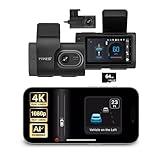
- [Full Coverage, Front and Rear] The TYPE S T400 PLUS dash cam for cars features a front-facing 4K camera and an optional 1080p rear camera. This dual dash cam setup empowers you to capture both the front and rear perspectives of your vehicle while driving, significantly enhancing safety. With this comprehensive coverage, you have access to crucial evidence in the unfortunate event of accidents.
- [Minimize the Blind Spots] The TYPE S AI dash cam incorporates a crucial Blind Spot Warning feature to improve road safety. This system actively monitors the vehicle's blind spots, alerting the driver to the presence of other vehicles in these hard-to-see areas. Using visual or audible signals, the TYPE S ADAS dash cam provides timely warnings, prompting the driver to exercise caution during lane changes or maneuvers.
- [Front & Rear Collision Warning] Powered by AI Algorithms, this TYPE S 4K dash cam features Front & Rear Collision Warning, a smart cam with a smart system that alerts you when you're too close to the car in front or if a vehicle behind is approaching too quickly. Using Ai dash cam advanced driver assistance algorithms, this dual dash cam provides real-time warnings, enabling quick responses and enhancing overall road safety.
- [Lane Departure Warning] The Lane Departure Warning built into the TYPE S AI Series dash cam uses AI-triggered advanced sensors to monitor your vehicle's lane position. If any deviation is detected, it issues a prompt alert, enhancing driving safety by notifying you of deviations and potentially preventing lane-related incidents with the wireless ADAS dash cam.
- [Stop & Go Reminder] Stay vigilant at traffic stops as the front and rear G-Sensor dash cam by TYPE S recognizes when the car ahead starts moving while you're still. Our intelligent reminder keeps you on track, gently prompting you to get moving and prevent any traffic disruptions, making it a reliable wireless dash cam.
Mobileye’s current portfolio is described on its official products page, while its 2025 Form 10-K explains its OEM and supplier relationships.
The technology stack
A Mobileye-equipped vehicle is best understood as a chain rather than a single chip:
- Sensors: cameras, radar, and, on higher-automation systems, lidar.
- EyeQ computing: automotive processors run perception, sensor fusion, planning, and control workloads within vehicle power, thermal, reliability, and cost limits.
- Perception: software identifies vehicles, pedestrians, cyclists, lanes, signs, lights, road edges, construction areas, and drivable space.
- Localization and mapping: REM (Road Experience Management) supplies prior road context and positioning information.
- Driving policy: planning software determines a safe response; RSS (Responsibility-Sensitive Safety) provides formal safety constraints.
- Vehicle control: the automaker’s steering, braking, and acceleration systems execute the selected maneuver.
- Driver interface and monitoring: displays, alerts, takeover requests, and an interior camera determine how the human must supervise the system.
Perception is not autonomy. Recognizing an object does not guarantee that the system will predict its movement, choose the right maneuver, or execute it safely in every condition.
EyeQ processors
Mobileye uses different EyeQ generations and configurations for different products. Its product overview lists EyeQ4 Mid, EyeQ5 Mid, or EyeQ6 Lite for Base ADAS; EyeQ6 High for Surround ADAS; multiple EyeQ5 High or EyeQ6 High processors for SuperVision; three or four EyeQ6 High processors for Chauffeur; and eight EyeQ5 High or four EyeQ6 High processors for Drive. These are architecture descriptions, not a direct ranking of real-world safety. Sensors, software, actuators, redundancy, validation, driver monitoring, and the approved operating domain matter just as much. Mobileye’s claims about EyeQ6 performance are company claims, not independent test results (Mobileye’s 2024 results announcement).
Rank #2

- [Advanced ADAS Technology] WOLFBOX G850 PRO mirror dashcam enhances safety with Advanced Driver Assistance System alerts, including forward collision, pedestrian collision, lane departure, lead vehicle start, and distance monitoring. This rearview mirror camera allows you to auto monitor your surroundings, ensuring you drive confidently and securely
- [Enhanced BSD Algorithm] Monitor blind spots effectively with this digital rear view mirror. Detect dangers during lane changes by your car and following car, plus rear collision alerts. WOLFBOX mirror dash cam front and rear delivers thorough protection
- [4K Dual Channel Recording] Record in ultra-high definition with front 2160P(2560*1440)@30fps and rear 1080P@25fps cameras. The WOLFBOX dash cam mirror features a full IPS touch screen for easy operation, and both channels utilize WDR/HDR and wide angle lens to capture super clear details when driving through shadows, direct sunlight, or nighttime conditions
- [5.8GHz WiFi Connectivity] This rear view mirror dash cam features upgraded 5.8GHz WiFi for a seamless connection. Connect to the WOLFBOX App effortlessly, allowing you to download and share videos instantly. Streamline your video management and enjoy effortless access to your footage with this advanced functionality
- [Voice Control Functionality] Operate your WOLFBOX dash camera for cars with simple voice commands. Keep your attention on driving while seamlessly interacting with your backup camera mirror. 12 voice commands available, including turn on WiFi, take picture, and lock the video, among others
Computer vision and sensor fusion
Cameras provide rich semantic detail for lanes, traffic lights, signs, and object classification. Radar supplies range and relative velocity and can remain useful when visual contrast is poor. Lidar adds precise three-dimensional geometry and ranging. Combining them can provide complementary evidence and redundancy, but it also increases cost, packaging, calibration, computing, cleaning, and validation requirements.
| Sensor or source | Useful strengths | Important limits |
|---|---|---|
| Cameras | Object classification, lanes, signs, lights, visual detail | Glare, darkness, fog, rain, dirt, snow, and ambiguous scenes |
| Radar | Range and velocity, including in some poor-visibility conditions | Less visual detail and classification ability than cameras |
| Lidar | Precise three-dimensional geometry and distance | Cost, packaging, weather sensitivity, cleaning, and integration complexity |
| Maps | Prior road context and localization | Coverage gaps, stale data, connectivity loss, and temporary road changes |
REM mapping
REM uses data collected from vehicles to build and update road information such as lane geometry, road edges, signs, and localization features. Mobileye describes Cloud-Enhanced ADAS as using this information to improve lane centering, speed assistance, sign relevance, construction warnings, and red-light warnings (Mobileye product documentation).
A map is not a live guarantee of road truth. Construction, weather, newly changed signs, incomplete coverage, or a connectivity interruption can make map information stale or unavailable. Onboard sensors must continue to verify the current scene.
Quick wins for a faster PC:
Repair Windows errors before they cause bigger problemsFix Now →Scan for outdated or missing drivers - takes under a minuteDriver Scan →RSS safety model
Responsibility-Sensitive Safety is a formal model for reasoning about following distance, braking, right-of-way, and responses to other road users. Mobileye describes RSS as a structured safety framework and says it has been used in standards-related work (annual-report material). RSS is neither a perception system nor a safety guarantee. Poor perception, bad localization, software defects, actuator limits, unusual layouts, and misuse can still produce failures.
Rank #3

- ❗❗❗NOTE: This product must be powered by the original cigarette lighter charger; it cannot be powered by a USB cable or a Type-C cable. IIWEY N5 dash cam equipped with a 3" IPS screen, FHD 1080P+1080P+1080P+1080P, which can record 360° all-round including front, rear, sides, and interior. It also features a 2.5K+1080P+1080P+1080P mode for diverse needs. In addition, N5 is equipped with 170° super wide-angle front and rear cameras and 150° wide-angle side cameras, providing a wide field of view.
- ❗❗❗NOTE: N5 dash cam DON'T HAVE GPS function. The 128GB SD card has been installed in the card slot. It connects to your cellphone via built-in WiFi, no Bluetooth. The rear camera must be wired and connected to the front camera for use. It uses a super-capacitor instead of a battery, so please keep the dash cam connected to a power source while in use, we recommend to use the included car charger, or you can use our HARDWIRE KIT (ASIN B0DHJNRPB9, sold separately).
- 【Loop Recording & Free 128GB SD Card】N5 Dashcam comes with a 128GB Micro-SD card. (supports up to 256GB) Loop recording will start immediately once you turn on the engine. No seconds will be missing. The video will be saved in segments, and the storage space will be automatically detected. When memory is full, the earliest recorded video will be automatically deleted to achieve seamless loop recording.
- 【5GHz WiFi & Free App Control】❗❗❗NOTE: There are currently two free apps available: iiwey and viidure. You can find both apps on the Google Play Store and the Apple Store. The N5 dashcam boasts built-in 5GHz WiFi for 4x faster connectivity than 2.4GHz (with 2.4GHz support). It pairs with a free app for Android or iOS, enabling seamless control, video preview, download, and sharing.
- 【WiFi Using Note】Please note that each time you want to connect the APP to the dash cam, you need to long press the " ◀ " button to turn on WiFi before you can connect. ❗❗❗If the WiFi is not connected to the APP for more than 5 minutes, the dash cam will automatically turn off the WiFi function. This measure is to prevent the dash cam from overheating.
Mobileye’s product ladder
The brand name alone does not identify a vehicle’s automation level. These tiers describe the intended architecture; an automaker may enable only a subset of the functions.
| Tier | Typical sensing and compute | What it is intended to do | Driver responsibility |
|---|---|---|---|
| Base ADAS | Usually forward-facing camera and compact EyeQ configuration | Forward-collision warning, automatic emergency braking, pedestrian/cyclist warnings, lane-departure warning, lane keeping, sign recognition, headway monitoring, and related cruise functions where integrated | Driver remains fully responsible; this is assistance, not self-driving |
| Cloud-Enhanced ADAS | Base ADAS plus REM-derived road context | More context-aware lane, sign, speed, construction, hazard, and signal assistance in supported areas | Driver supervision remains required; connectivity and map coverage may matter |
| Surround ADAS | Surround cameras, radar, and typically EyeQ6 High | Broader sensing for advanced warnings, braking, parking, and selected assistance functions | “Surround” describes coverage, not a universal automation level |
| SuperVision | 360-degree cameras, REM, RSS, and two EyeQ5 High or EyeQ6 High processors | Hands-off assistance across approved road types | Hands-off, eyes-on: the driver must continuously watch the road and be ready to intervene |
| Chauffeur | Surround cameras, imaging radar, front lidar, redundant perception, and three or four EyeQ6 High processors | Planned hands-off, eyes-off automation in defined conditions | Conditional automation; availability and takeover rules depend on approval, vehicle, location, and operating domain |
| Drive | Cameras, imaging radar, front lidar, REM, RSS, and substantial EyeQ processing | No-driver commercial applications such as robotaxis, transit, ride-pooling, and delivery | Intended for approved commercial services, not a normal consumer accessory |
Product definitions and specifications can change; the current Mobileye portfolio is the appropriate reference for new programs.
Hands-on, hands-off, eyes-off, and no driver are different
- Hands-on: the driver must keep hands available and supervise continuously.
- Hands-off, eyes-on: the system may steer and manage speed without constant hands-on contact, but the driver must watch the road. Reading, sleeping, watching video, or using a phone is unsafe and outside the intended use.
- Hands-off, eyes-off: the system may perform the driving task in a defined operational design domain (ODD), but it may still request a takeover or stop when conditions exceed its approval.
- No-driver: a commercial service is designed to operate without a human driver in its approved service area and conditions. This is not the same as unrestricted autonomy everywhere.
Marketing language is less authoritative than the vehicle’s owner manual, regulatory approval, and exact software version. A vehicle equipped with Mobileye hardware may provide only conventional ADAS.
Outdated Drivers Are Slowing You Down
One free scan finds every outdated or missing driver and matches the right update for your exact hardware.Free scan · exact hardware matchPC Slower Than It Used to Be?
A free scan shows the junk files, broken settings and background clutter dragging Windows down - then fixes them in one click.Free scan · Windows 10 & 11What “powered by Mobileye” tells you—and what it does not
The phrase usually means that Mobileye supplies some combination of the processor, camera perception, software, mapping, or complete ADAS stack. It does not identify the EyeQ generation, active features, sensor count, steering or braking authority, hands-free status, optional equipment, or market availability. Two vehicles using Mobileye technology can behave differently because automakers choose different actuators, interfaces, monitoring thresholds, maps, restrictions, and validation policies.
Rank #4
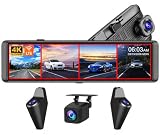
- 4K ULTRA HD: Crystal-clear 4K resolution rear view mirror dash cam with 11.26-inch display provides superior video quality and wide viewing angle for comprehensive road coverage
- MULTI-CHANNEL RECORDING: Features 4-channel simultaneous recording capability with front, rear, and side cameras for complete 360-degree surveillance of your vehicle
- SMART FEATURES: Equipped with ADAS (Advanced Driver Assistance System) and BSD (Blind Spot Detection) for enhanced driving safety and awareness
- NIGHT VISION: Advanced night vision technology ensures clear recording in low-light conditions, maintaining video quality 24/7
- CONNECTIVITY: Built-in WiFi capability allows easy file transfer and remote viewing, Supports SD card expansion for immediate recording storage
Real-world limitations and failure modes
Environmental conditions
- Dirt, snow, condensation, insects, or a blocked camera or radar.
- Heavy rain, fog, glare, low sun, darkness, or poor contrast.
- Faded, missing, contradictory, or temporarily relocated lane markings and signs.
- Construction lanes, unusual intersections, emergency vehicles, traffic officers, and objects with unusual shape or motion.
Maintenance and integration
- Windshield replacement without camera recalibration.
- Radar misalignment after a minor collision or bumper repair.
- Wheel-alignment problems affecting lane centering.
- Roof loads, towing equipment, modified bumpers, or nonstandard wheels interfering with sensors.
- Software changes, map gaps, connectivity loss, or an obstructed driver-monitoring camera.
Human misuse
The most serious practical risk is over-trust. Drivers may mistake lane centering for complete scene understanding, assume emergency braking is guaranteed, ignore takeover alerts, or use the feature outside its ODD. Take control immediately when behavior is unexpected; manually brake or steer rather than waiting for intervention. Stop using the system after a sensor or calibration warning, keep the road view clear, follow the owner’s manual after repairs, and report persistent false alerts to the dealer. Never test system limits in traffic.
How to evaluate a Mobileye-equipped vehicle
- Identify the exact tier: Base ADAS, Cloud-Enhanced ADAS, Surround ADAS, SuperVision, or an automaker-branded system using selected Mobileye components.
- Read the responsibility language: determine whether it is hands-on, hands-free/eyes-on, conditional eyes-off, or a no-driver service.
- Check the ODD: verify supported roads, maximum speed, geography, weather, day/night limits, lane-marking requirements, map or connectivity dependence, construction behavior, lane-change permissions, and takeover procedures.
- Inspect the sensor configuration: note camera locations, radar, lidar, driver monitoring, and any redundant steering, braking, or perception paths.
- Ask about updates and service: find out whether updates are over the air, whether maps or features require a subscription, and what recalibration is required after glass, sensor, alignment, or collision work.
- Seek independent evidence: consult regulators, new-car assessment programs, consumer testing, recall databases, the owner manual, and technical service bulletins. A company architecture description is not independent performance testing.
Consumer, aftermarket, and commercial buying reality
Factory-integrated Mobileye systems are normally purchased indirectly through a vehicle. There is no universal public retail price for “Mobileye”; cost varies by vehicle program, hardware, software scope, and market. Commercial systems are quote-based and depend on volume, integration, support, connectivity, validation, and the required ODD. Mobileye’s investor materials discuss business-level average system-price metrics, not a consumer checkout price (quarterly-results update).
Aftermarket products can add warnings to vehicles without suitable factory ADAS, but they are not equivalent to integrated automatic emergency braking or hands-free driving. Installation, calibration, current availability, and support must be verified before purchase. For enterprise sourcing, ask who owns integration and validation, how maps degrade, what redundancy is provided, which approvals are required, and who is responsible when the system requests a takeover.
What’s actually slowing this PC down?
Pick the symptom - the matching free tool is one click away.
How Mobileye compares with other approaches
Mobileye is best compared by architecture and deployment model, not by a single “self-driving” score. Nvidia DRIVE and Qualcomm Snapdragon Ride are automotive compute and software platforms that may support automakers building more of their own stack. Waymo is primarily an autonomous-mobility operator and technology company. Tesla uses a vertically integrated vehicle and driver-assistance model with different sensors, software, branding, and business choices. Automakers and Tier 1 suppliers may also develop substantial portions of perception, planning, interfaces, and control internally.
Useful comparison questions include sensor philosophy, compute scale, OEM neutrality, production maturity, mapping strategy, redundancy, regulatory deployment, integration responsibility, and independent evidence.
Bottom line
Mobileye is a scalable technology stack, not a promise of one uniform autonomy level. A basic EyeQ-powered car may warn about collisions and keep within a lane; another Mobileye program may support hands-off supervision, planned eyes-off operation, or a commercial no-driver service. To understand what a specific vehicle can do, identify the exact product, sensors, ODD, driver-monitoring rules, software version, and maintenance requirements—and follow the vehicle maker’s manual rather than the badge alone.
Quick Recap
Product prices and availability are accurate as of the date/time indicated and are subject to change. Any price and availability information displayed on Amazon at the time of purchase will apply.




