Free tools Windows power users keep installed
One-click scans. No signup required.
A twin-turbo engine has two separate turbocharger units. They use exhaust energy to force denser air into the engine, but they may be arranged in parallel, sequentially, or in a staged system. Twin-turbo does not mean twin-scroll, twice the power, or zero turbo lag.
A twin-turbo engine has two separate turbocharger units. The turbos use energy in the engine’s exhaust to force more air into the cylinders, allowing the engine to burn more fuel and produce more power than it could with the same displacement under comparable conditions.
As an Amazon Associate I earn from qualifying purchases.
“Twin-turbo” describes the number of turbochargers, not a single universal design. The two units may work in parallel, operate sequentially, or form a staged high-pressure/low-pressure system. It also does not mean the engine has two cylinders, twice the power, or a twin-scroll turbocharger.
Recommended Free Tools
How a turbocharger works
A conventional turbocharger contains two main aerodynamic sections connected by a shaft. Hot exhaust gas spins a turbine wheel. That turbine spins the compressor wheel on the other end of the shaft, and the compressor forces denser air into the engine.
#1 Best Overall

- ENZYME TECHNOLOGY - Uses enzyme technology designed to help engines start more reliably and run cleaner, even after periods of inactivity
- SAY GOODBYE TO ETHANOL-RELATED PROBLEMS - Prevents and cures most ethanol-related issues, including poor performance, rough idling, and decreased fuel economy, giving you peace of mind on the road or on the water
- MAXIMIZE FUEL ECONOMY - By removing and preventing gum, carbon deposits, and varnish build-up, Star Tron keeps your fuel delivery system clean, resulting in improved fuel economy
- WORKS FOR ALL ENGINES AND FUEL TYPES - Whether you have a car, boat, RV, or lawn mower, Star Tron works in all engines and all fuels, making it the ideal fuel treatment and stabilizer for any vehicle
- PREVENT WATER BUILD-UP - Helps prevent phase separation by dispersing water throughout fuel as submicron-sized droplets that are safely eliminated while the engine operates, keeping your engine running smoothly in humid or wet conditions
Because the engine receives more oxygen, its control system can add more fuel while maintaining the intended air-fuel mixture. More air and fuel can create more combustion energy, increasing potential torque and horsepower. The actual result depends on boost pressure, turbocharger size, engine displacement, fuel, cooling, compression ratio, exhaust flow, and software calibration.
A twin-turbo engine uses two of these turbocharger units. The units can be identical, or they can have different sizes and jobs depending on the engine’s design.
What are the main twin-turbo layouts?
Parallel twin-turbo
In a parallel system, both turbochargers contribute at the same time—or across much of the same operating range. On many V-type engines, one turbo is associated with each cylinder bank. That is a common arrangement, but it is not a rule for every twin-turbo engine: exhaust manifolds, intake plumbing, valves, and control strategies vary by manufacturer.
The parallel layout can package two smaller turbochargers where one very large turbocharger would be difficult to fit. It can also provide the airflow capacity needed at high engine speed while avoiding some of the response penalty associated with a single oversized turbo.
Sequential twin-turbo
A sequential system brings the turbochargers into operation at different engine speeds or loads. Valves and bypass passages control how exhaust energy and intake air reach the turbochargers.
A smaller turbo may contribute early, when exhaust flow is relatively low, while a second turbo joins the system as engine speed and load increase. The intended benefit is a compromise between low-speed response and high-speed airflow. The exact changeover strategy is highly design-specific; “sequential” does not describe one identical behavior across all vehicles.
Two-stage or compound-style turbocharging
In a two-stage arrangement, the turbochargers have different roles. A smaller high-pressure turbocharger can help build boost, while a larger low-pressure turbocharger supplies additional airflow as demand rises. Some systems combine staged operation with parallel operation.
Quick wins for a faster PC:
Clear out junk files and repair common Windows errorsFree Scan →Fix the driver behind crashes, sound loss and screen glitchesFind Drivers →Repair Windows errors before they cause bigger problemsFix Now →This approach can support high specific power—the ability to produce substantial output from a given engine displacement—while preserving a broad, usable torque band. It also requires more sophisticated plumbing, valves, sensors, heat management, and control software.
Twin-turbo versus twin-scroll: they are not the same
| Term | What it means |
|---|---|
| Twin-turbo | Two separate turbocharger units. |
| Twin-scroll | Usually one turbocharger with two separated exhaust-flow passages, or scrolls, leading to the turbine. |
Two turbos and two scrolls sound similar, but they are not the same: twin-turbo uses two turbochargers, while twin-scroll usually uses one turbocharger divided into two exhaust-flow passages.
Rank #2

- CLEANS FUEL SYSTEM: Hot Shot’s Secret Gasoline Extreme is designed to thoroughly clean, lubricate, and safeguard all components of a gasoline engine & fuel system, such as valves, pumps, injectors, rings, pistons, and upper cylinders.
- BOOSTS FUEL ECONOMY: By thoroughly cleaning the fuel system, this fuel additive boosts MPG up to 7.9%, ensures combustion efficiency, & engine power, resulting in a smoother & more efficient driving experience.
- FIXES ISSUES: This fuel treatment addresses common issues associated with rough-running engines in a single treatment. Designed to improve fuel economy, smooth out idling, & unclog fuel injectors, this will have your engine running great again!
- RESTORES PERFORMANCE: High-performance cleaner that utilizes P.E.A. technology to deeply clean & restore engine power, dissolve gum & varnish buildup, removes deposits from the combustion chamber, resulting in improved overall engine performance.
- EASY TO USE: With a simple application of 12 oz. for every 20 gallons of gasoline, this product is easy to use! Just pour it into your fuel tank during your next fill up or every 10,000 miles
A twin-scroll turbocharger separates exhaust pulses from different cylinder groups before they reach the turbine. That can reduce interference between pulses and improve turbine energy use. In some applications, a twin-scroll arrangement can provide effects similar to a twin-turbo system in a smaller or simpler package, but it remains a different hardware configuration.
Why do manufacturers use two turbochargers?
The main reason is flexibility. Engineers can use two turbochargers to balance several competing goals:
The Tool Desk
Outbyte PC Repair FREERepair Windows errors before they cause bigger problemsFix Now →Outbyte Driver Updater FREEScan for outdated or missing drivers - takes under a minuteDriver Scan →- High-load airflow: two units can supply the air volume required for high power.
- Response: appropriately sized turbochargers may respond more quickly than one very large turbocharger.
- Torque spread: staged systems can broaden the engine’s useful torque range.
- Packaging: two smaller units may fit a particular engine bay or exhaust layout better than one large unit.
- Specific power: turbocharging can produce high output from a relatively compact engine.
These are potential advantages, not guarantees. Turbo sizing, exhaust routing, intercooling, wastegates, bypass valves, engine displacement, software calibration, and the vehicle’s intended use all matter. A twin-turbo engine is not automatically quicker to respond, more fuel-efficient, or more reliable than every single-turbo or naturally aspirated engine.
Does twin-turbo mean twice the power?
No. The phrase only identifies a two-turbocharger architecture. Power depends on much more than the number of turbos, including:
- engine displacement and cylinder count;
- airflow and boost pressure;
- turbocharger size and efficiency;
- fuel quality and fuel-system capacity;
- compression ratio and combustion design;
- intercooler and engine cooling performance;
- exhaust backpressure;
- engine speed and software calibration; and
- the manufacturer’s durability, emissions, noise, and drivability targets.
That is why two twin-turbo engines can have dramatically different output figures.
Does twin-turbo eliminate turbo lag?
No. Turbo lag is the delay between requesting more power and the turbocharger system producing the desired boost. Two turbochargers, sequential control, smaller turbine assemblies, electric assistance, and careful calibration may improve response, but no conventional exhaust-driven turbo system guarantees zero lag.
Windows Errors? Fix Them Before They Spread
Repair common Windows errors and clear accumulated junk for a smoother, more stable PC - no reinstall needed.Free scan · no reinstallOutdated Drivers Are Slowing You Down
One free scan finds every outdated or missing driver and matches the right update for your exact hardware.Free scan · exact hardware matchResponse also depends on throttle position, engine speed, gear selection, exhaust energy, transmission programming, and how aggressively the manufacturer prioritizes smoothness over immediate reaction.
What are the disadvantages of a twin-turbo engine?
Two turbochargers can deliver impressive output, but they also add hardware and engineering challenges. Compared with a simpler naturally aspirated layout—or some single-turbo designs—a twin-turbo system may include more:
- turbocharger bearings, turbines, and compressor assemblies;
- oil and coolant lines;
- wastegates, bypass valves, and actuators;
- pressure sensors and temperature sensors;
- exhaust and intake plumbing;
- heat shielding and thermal-management equipment; and
- electronic control logic.
That can make packaging, diagnosis, and repairs more involved. More components can mean more potential failure points, but it is not accurate to conclude that every twin-turbo engine is unreliable. Reliability depends on the specific engine, maintenance, calibration, operating conditions, and how the system is engineered.
Rank #3
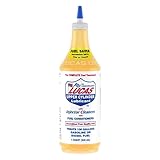
- The world’s #1 fuel additive for both gasoline and diesel engines
- A great tune-up in a bottle – treats gasoline, diesel fuel and increases MPG
- Cleans and lubricates the fuel system, including fuel injectors, carburetor and combustion chamber
- Improves fuel economy by burning excess exhaust emissions
- Increases power and acceleration by improving fuel flow and reducing deposit buildup
Heat management matters
Turbocharger turbine housings operate at very high temperatures and can retain heat after hard use. Chevrolet’s Corvette track guidance, for example, provides model-specific coolant and shutdown instructions after aggressive driving. That guidance should not be generalized to every twin-turbo vehicle.
Do these 3 things before closing this tab:
1Repair Windows errors before they cause bigger problems2Fix the driver behind crashes, sound loss and screen glitches3Clear out junk files and repair common Windows errorsUse the owner’s manual for the exact car, especially after track use, towing, extended high-load driving, or a hot shutdown. Do not assume that an aftermarket idle-down routine, cooling modification, or operating procedure is appropriate for every engine.
Representative current U.S.-market cars with twin-turbo engines
The following are representative examples based on cited 2026 U.S.-market specifications and current manufacturer material. They are not an exhaustive worldwide list. Equipment, output, trim availability, and model-year specifications can change, so verify the manufacturer’s page and the vehicle’s window sticker before treating any specification as current.
| Vehicle | Engine and cited specification | Why it is useful here |
|---|---|---|
| 2026 Nissan Z | 3.0-liter twin-turbo V6; 400 hp. The Z NISMO is listed with 420 hp. | A relatively approachable modern sports-car example. |
| 2026 Chevrolet Corvette ZR1 | 5.5-liter flat-plane-crank twin-turbo V8; 1,064 hp and 828 lb-ft of torque. | An extreme-output example using twin turbos with a large-displacement V8. |
| 2026 Audi RS 6 Avant performance | 4.0-liter V8 with two turbochargers nested in the V. | A clear example of “hot-V” turbocharger packaging. |
| 2026 Cadillac CT4-V Blackwing | 3.6-liter twin-turbocharged V6. | A high-performance sedan using a twin-turbo V6. |
| 2026 Cadillac CT5-V | 3.0-liter twin-turbocharged V6. | A useful comparison with the different CT5-V Blackwing. |
| Porsche Cayenne Turbo GT | 4.0-liter twin-turbo V8; cited specification of 650 hp and 626 lb-ft. | An SUV application of twin-turbocharging. |
| BMW M4 | 3.0-liter inline-six marketed with BMW M TwinPower Turbo branding. The cited U.S. page lists 473 hp for the M4, 503 hp for the Competition Coupe, and 523 hp for the Competition xDrive Coupe. | An inline-six performance example, with an important terminology caveat. |
2026 Nissan Z: a clear twin-turbo sports-car example
Nissan lists the 2026 Z with a 3.0-liter twin-turbo V6 producing 400 horsepower. The Z NISMO uses a 420-horsepower version of that 3.0-liter twin-turbo V6. Nissan’s material also identifies a water-cooled intercooler and turbo-speed monitoring technology.
The Z is a useful example because its specification states the turbocharged layout directly. “Approachable” here is relative to the performance-car market; pricing, availability, and dealer inventory are separate and can change.
2026 Chevrolet Corvette ZR1: twin turbos at an extreme
The 2026 Corvette ZR1 shows that twin-turbocharging is not limited to downsized six-cylinder luxury cars. Chevrolet describes it as using a twin-turbocharged 5.5-liter flat-plane-crank V8, with a cited output of 1,064 horsepower and 828 lb-ft of torque. BorgWarner has separately announced that its twin turbochargers were selected for the Corvette ZR1 platform.
Within the examples in this article, the cited Corvette ZR1 specification is the highest-output twin-turbo engine. That is not a claim that it is the most powerful twin-turbo production vehicle worldwide.
2026 Audi RS 6 Avant performance: the hot-V layout
Audi’s U.S. model material states that the 2026 RS 6 Avant performance places two turbochargers inside the V of its 4.0-liter V8. This is commonly called a hot-V layout because the turbochargers sit between the cylinder banks, close to the exhaust ports.
Rank #4

- DESIGNED TO EXCEED EXPECTATIONS: Red Line complete SI-1 fuel system cleaner treatment for cleaning and preventing corrosion in fuel systems
- PERFORM AND PROTECT: Fuel additive cleans injectors, carburetors, valve and combustion chamber deposits with a powerful, concentrated blend of high-temp and low-temp detergents
- EFFICIENT FUEL BURN: Gas treatment that enhances gasoline stability, while reducing the build up of gum and varnish formation
- EASY TO USE: Use one bottle per tank for most effective treatment, additive cleans nearly 100% efficiency in one treatment
- 15 Ounce (2 Pack)
Keeping the turbochargers close to the exhaust can support compact exhaust routing and rapid heat and gas management, but do not assume every turbocharged V8 uses this placement. The hot-V description is specific to the cited Audi application.
BMW M4: why marketing names require caution
BMW identifies the M4 as having a 3.0-liter BMW M TwinPower Turbo inline-six. The listed outputs are 473 horsepower for the M4, 503 horsepower for the Competition Coupe, and 523 horsepower for the Competition xDrive Coupe.
However, “TwinPower Turbo” is BMW’s consumer-facing branding and should not automatically be read as a definitive statement that every model carrying the name has two separate turbocharger units. For a rigorous hardware comparison, verify the exact engine documentation for the model year and trim rather than inferring turbo count from the badge.
Cadillac CT4-V Blackwing and CT5-V: a badge-confusion lesson
Cadillac’s 2026 V-Series lineup lists the CT4-V Blackwing with a 3.6-liter twin-turbocharged V6 and the CT5-V with a 3.0-liter twin-turbocharged V6.
What’s actually slowing this PC down?
Pick the symptom - the matching free tool is one click away.
The CT5-V Blackwing is different: it uses a hand-built 6.2-liter supercharged V8. A performance badge—or the word “Blackwing”—does not identify the induction system by itself. Always check the engine specification.
Porsche 911 and Cayenne: an evolving family of technologies
Porsche says twin turbocharging entered the broader 911 Carrera range in 2015. The Cayenne Turbo GT is another clear example, with a cited 4.0-liter twin-turbo V8 producing 650 horsepower and 626 lb-ft of torque.
Porsche also illustrates why newer powertrain terminology needs careful reading. Its cited 911 Turbo S material describes two electric exhaust turbochargers in a performance-hybrid system. Electric turbochargers should not be treated as identical to a conventional pair driven only by exhaust energy. When comparing vehicles, identify whether the turbos are conventional exhaust-driven units, electrically assisted, or part of a hybrid architecture.
Independent reader supportYour contribution helps us test, update, and keep practical guides available for everyone.Which cars do not automatically count as twin-turbo?
Do not classify a vehicle from a name alone. In particular:
- “Turbo” does not mean twin-turbo. It may refer to one turbocharger.
- Twin-scroll is not twin-turbo. A twin-scroll system generally uses one turbocharger with two exhaust scrolls.
- Supercharged is not turbocharged. The Cadillac CT5-V Blackwing’s supercharged V8 is an example.
- A hybrid powertrain is not automatically a conventional twin-turbo system. Porsche’s electric-turbo 911 Turbo S demonstrates the need to read the full powertrain description.
- A marketing label is not always a hardware count. BMW’s “TwinPower Turbo” name should be paired with engine-specific technical documentation before making a definitive two-turbo claim.
How to verify whether a specific car is twin-turbo
- Check the manufacturer’s engine specification. Look for wording such as “twin-turbocharged,” “dual turbochargers,” or an equivalent technical description.
- Confirm the exact model year and trim. The same badge can use different engines or outputs in different markets and years.
- Separate turbo count from turbo type. Look for terms such as parallel, sequential, two-stage, hot-V, electric turbocharger, or twin-scroll.
- Check the owner’s manual or service information. This is particularly important before buying parts, gauges, sensors, or diagnostic equipment.
- Do not infer from horsepower. Output alone cannot establish whether an engine uses one turbo, two turbos, a supercharger, or a hybrid-assisted system.
Bottom line
Twin-turbo means an engine uses two turbocharger units. The turbos may operate in parallel, sequentially, or in a staged arrangement, and the design can improve the balance between response, airflow, torque spread, packaging, and power. It does not guarantee twice the power, zero turbo lag, better fuel economy, or superior reliability.
Best Value
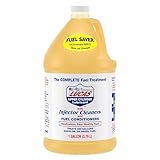
- The world’s #1 fuel additive for both gasoline and diesel engines
- A great tune-up in a bottle – treats gasoline, diesel fuel and increases MPG
- Cleans and lubricates the fuel system, including fuel injectors, carburetor and combustion chamber
- Improves fuel economy by burning excess exhaust emissions
- Increases power and acceleration by improving fuel flow and reducing deposit buildup
The 2026 Nissan Z, Chevrolet Corvette ZR1, Audi RS 6 Avant performance, Cadillac CT4-V Blackwing, Cadillac CT5-V, and Porsche Cayenne Turbo GT are clear representative examples from the cited U.S. specifications. BMW’s M4 requires more careful wording because “M TwinPower Turbo” is a branding term, while the Cadillac CT5-V Blackwing shows why a performance badge does not tell you the induction system.
Because manufacturers revise engines and electrification strategies, recheck the relevant official specification if this guide is republished more than 30 days after its original research.
Frequently Asked Questions
Does twin-turbo mean twice the power?
No. Twin-turbo only describes the use of two turbocharger units. Power also depends on displacement, boost, turbo sizing, fuel, cooling, compression, exhaust flow, and calibration.
Does twin-turbo eliminate turbo lag?
No. Two turbochargers may improve response when they are correctly sized and calibrated, but exhaust-driven systems can still experience lag.
Are twin-scroll and twin-turbo the same?
No. Twin-turbo generally means two separate turbochargers, while twin-scroll generally means one turbocharger with two separated exhaust-flow passages.
Is a twin-turbo engine always better than a single-turbo engine?
No. Twin-turbocharging is a design choice. It can support airflow, response, and a broad torque band, but it also adds components and control complexity.
Which car in this guide has the most powerful twin-turbo engine?
Among the cited examples in this guide, the 2026 Chevrolet Corvette ZR1 has the highest listed output, at 1,064 horsepower. That comparison is limited to this dossier’s examples and is not a worldwide production-vehicle ranking.
Free tools Windows power users keep installed
One-click scans. No signup required.
The Bottom Line
In short: twin-turbo means two turbochargers, not two cylinders, two scrolls, or twice the power. The arrangement can improve airflow and response when properly engineered, but it adds hardware and thermal-management complexity. Verify the exact model year, trim, market, and technical specification before labeling a vehicle twin-turbo.
Quick Recap
Product prices and availability are accurate as of the date/time indicated and are subject to change. Any price and availability information displayed on Amazon at the time of purchase will apply.




