Turbocharged and naturally aspirated high-compression engines are different engine designs, but neither label alone tells you whether to buy regular or premium gasoline. Turbocharging describes how an engine takes in air; compression ratio is a separate design measure; regular and premium describe fuel grades. For a specific car, use the fuel grade and rating system in its owner’s manual and on its fuel door.
Turbocharging, compression ratio, and fuel grade are different things
Turbocharged versus naturally aspirated
A turbocharger uses exhaust energy to drive a compressor that pushes more air into the engine. A naturally aspirated engine draws air in without turbo boost. These terms describe induction, not the fuel grade an engine requires.
What compression ratio means
Geometric compression ratio describes how much the engine compresses the air-fuel charge in a cylinder. It is not the same as boost pressure, and an engine’s static compression ratio by itself does not determine its required gasoline grade. Engine design, fuel injection, cooling, and calibration all affect the final requirement.
What octane measures
Octane measures a gasoline’s resistance to knock—uncontrolled combustion that can damage an engine—not its energy content or general quality. Higher octane can resist knock under conditions that increase its risk, including higher compression. On U.S. pump labels, the number is usually AKI, shown as “(R+M)/2,” the average of the research octane number (RON) and motor octane number (MON). RON and MON use different test conditions. A U.S. AKI number should not be compared directly with a RON number on a pump in a market that labels fuel by RON. The U.S. Energy Information Administration explains octane ratings and knock.
Crashes, No Sound, or Screen Glitches?
Random freezes, missing sound and display glitches usually trace back to one bad driver. Find and replace yours safely.Free scan · under a minutePC Slower Than It Used to Be?
A free scan shows the junk files, broken settings and background clutter dragging Windows down - then fixes them in one click.Free scan · Windows 10 & 11#1 Best Overall
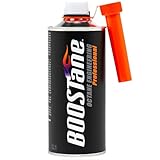
- INCREASES OCTANE UP TO 116 - Formulated to increase octane levels up to 116. Provides professional racers and racing enthusiasts with a safe and convenient alternative to expensive racing fuels.
- IDEAL FOR ANY - Naturally aspirated or forced induction (turbo or supercharged) high-performance engine. BOOSTane Professional contains anti-corrosion properties against ethanol and carbon buildup.
- BACKED BY SCIENCE - BOOSTane Professional is a third-party tested for quality and effectiveness in high-performance applications. Our scientific approach to engineered octane boosters has allowed us to become an industry leader.
- RACE FUEL EQUIVALENT - BOOSTane Professional additive can turn your unleaded pump gas into a high-performing race fuel equivalent. BOOSTane is a cost-effective alternative when race fuel is not available.
- NOT STREET LEGAL - Caution: This gas octane booster is specifically engineered for racing, which demands a higher octane boost. It is not street-legal.
Why turbo boost and high compression affect knock risk
Both higher compression and turbo boost can increase the pressure and temperature that make knock more likely. That creates a design challenge, not a universal fuel rule: two engines with similar compression ratios—or two turbo engines—may have different fuel requirements because their hardware and calibration differ.
Engine controls can help protect against knock. The National Highway Traffic Safety Administration describes strategies such as adjusting boost, spark timing, and fuel injection. Depending on the engine, running lower-octane fuel may cause the controls to reduce boost or alter timing. That can reduce maximum output, but it does not mean every turbo engine is approved to run on regular. Follow the instructions for the exact vehicle. NHTSA’s technical analysis describes these engine-control strategies.
Rank #2
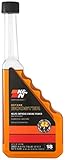
- BOOSTS POWER: Octane boost helps increase performance when added during gas fill up
- CLEANS FUEL INJECTORS: Specially formulated to clean internal fuel system parts and components
- INCREASES OCTANE: Helps your car run better by reducing knocks, pings, and hesitation
- SAFE ON PARTS: Safe for use on catalytic converters and oxygen sensors
- TREATS A FULL TANK: Formulated to treat up to 18 gallons of gasoline
Neither a turbo nor a high compression ratio automatically means premium
A high-compression engine can be designed for regular gasoline. The National Academies cites Mazda Skyactiv as an example: a 13:1 compression ratio while operating on 87 AKI (91 RON) regular gasoline. That example shows why compression ratio alone cannot establish a fuel requirement; it is not guidance for other vehicles. The National Academies discusses the example in its analysis of alternative-fuel adoption.
Likewise, turbocharged engines do not all require premium. Some are designed to run on regular; others require or recommend premium. A lower grade can be acceptable for some premium-recommended vehicles while limiting performance, but do not assume that trade-off applies to your car without checking its documentation.
The Tool Desk
Outbyte Driver Updater FREEFix the driver behind crashes, sound loss and screen glitchesFind Drivers →Outbyte PC Repair FREERepair Windows errors before they cause bigger problemsFix Now →Rank #3

- Restores lost horsepower and performance. Antiknock formulation stops engine knock and pings caused by low quality fuel.
- Typical results boost octane over 20 points or 2 rating numbers. Contains the highest concentrate of real MMT allowed for street use.
- Works with all unleaded gasoline, ethanol E10, E15, E85 and racing fuel. One bottle treats up to 20 gallons of gasoline
- Will not harm catalytic converters or oxygen sensors. Use with all fuel injected, direct injected, GTDI & carbureted street, racing, supercharged and turbo engines.
- Bottle is designed to work in ALL gas tanks including standard, obstructed and capless (no gas cap) systems.
Required premium and recommended premium are not the same
- Premium required: The manufacturer specifies premium as necessary for the engine. Do not substitute regular unless the vehicle’s manual explicitly permits it under particular conditions.
- Premium recommended: The manufacturer advises premium, often to achieve rated performance. Check whether the manual permits a lower grade and what effect it may have.
- Regular specified: Use the stated regular grade. Premium is not automatically beneficial in an engine designed for regular.
U.S. Department of Energy figures illustrate why it is worth checking rather than guessing: in model-year 2023 vehicle configurations, 26.7% required premium and 26.3% recommended it. These percentages describe DOE/EPA Fuel Economy Guide configurations, which can include multiple engine and transmission combinations for a make and model; they are not shares of vehicles sold or cars on the road. DOE provides the figures and explains the configuration measure.
How to choose the right gasoline for your car
- Check the fuel-door label. Note the specified grade and whether the label says “required” or “recommended.”
- Confirm it in the owner’s manual. Find the fuel section for your exact engine and model year. Follow any instructions for temporary use of a lower grade and any stated performance effects.
- Match the rating system to your market. In the United States, pump grades use AKI; some other markets label gasoline by RON. Use the rating the vehicle documentation specifies rather than treating the scales as identical.
- When sources appear to disagree, follow the vehicle-specific instructions. If the manual or fuel-door label is unclear, ask the manufacturer or a dealer to confirm the requirement for your engine and market.
What regular gasoline is for—and where 89 fits
Regular, midgrade, and premium are gasoline grades distinguished by octane rating; they are not categories of engine. The appropriate grade depends on the vehicle’s instructions, not simply on whether the engine is turbocharged. An 89-octane midgrade may be relevant when a manufacturer specifies or permits it, but there is no universal rule that every turbo needs 91 or higher—or that every engine can use 87. Check the manual and fuel-door label rather than choosing based on engine type alone.
Quick Recap
Best Value
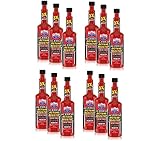
- Lucas Octane Booster 15oz | 10026 049807100261 Lucas Octane Booster 15oz | 10026
Rank #4

- BOOSTS OCTANE UP TO 5 NUMBERS: This improved formula raises octane levels by up to 50 points, helping your engine perform at its peak.
- ELIMINATES KNOCKING AND PINGING: Reduces engine knock and detonation caused by low-octane fuel, ensuring smoother and more reliable engine operation.
- INCREASES THROTTLE RESPONSE AND POWER: Enhances throttle response and overall power output, making it ideal for racers, tuners, and everyday drivers alike.
- WIDE COMPATIBILITY: Formulated for use with a broad range of unleaded gasoline engines, whether on the track or during daily commutes.
- EASY TO USE: Each 16 fl oz can treats your fuel tank directly, providing a concentrated dose of performance-enhancing additives in one simple application.
Product prices and availability are accurate as of the date/time indicated and are subject to change. Any price and availability information displayed on Amazon at the time of purchase will apply.




