Free tools Windows power users keep installed
One-click scans. No signup required.
On March 6, 2025, the White House carved out goods from Canada and Mexico that claimed and qualified for USMCA preference from the new IEEPA border tariffs. That gave some North American auto supply-chain goods relief from those duties; it did not exempt cars and parts from every tariff. A separate 25% Section 232 auto-tariff program followed later that month, with limited rules for qualifying content and an offset for eligible U.S. vehicle manufacturers.
What changed on March 6, 2025?
The White House adjusted the IEEPA tariffs it had announced on imports from Canada and Mexico. Under the March 6 policy, goods that claimed and qualified for USMCA preferential treatment were not subject to those border-related duties. Goods that did not qualify generally faced a 25% tariff, with different treatment for specified energy products and potash.
The White House tied the adjustment in part to the integrated North American auto supply chain. Its fact sheet said the American automotive industry “should not suffer significant disruption just because of the structure of its supply chain.” That was the administration’s stated rationale, not an independent assessment of the policy’s effects.
In practical terms, the change was a carveout from one set of duties, not a blanket vehicle exemption. USMCA preference is claimed under trade rules and depends on whether a good meets the agreement’s requirements; being made or shipped from Canada or Mexico alone does not establish that it qualifies.
Do these 3 things before closing this tab:
1Repair Windows errors before they cause bigger problems2Scan for outdated or missing drivers - takes under a minute3Clear out junk files and repair common Windows errors#1 Best Overall
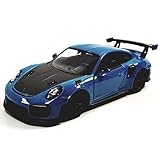
- Doors Open
- Pullback Action
- Die Cast Metal Body
- PULL BACK ACTION WITH FREE ROLLING WHEELS
How was the later auto tariff different?
A separate action used Section 232 authority rather than the IEEPA border-tariff framework. The International Trade Administration’s program guidance says the March 26, 2025 proclamation imposed 25% duties on specified imported automobiles starting April 3, 2025, and on specified auto parts starting May 3, 2025. These were auto-specific duties, not simply a continuation of the March 6 Canada-and-Mexico measure.
The Congressional Research Service described USMCA-related content exclusions for the Section 232 program and a separate process for parts intended to apply duties only to non-U.S. content. Those provisions do not turn the March 6 IEEPA adjustment into a universal exemption from the later auto tariffs. The governing authority, product coverage, date and relief rules differ.
Rank #2

- Pullback Action: Experience realistic racing with the pullback action feature.
- Opening Doors: Explore the intricate interior details with the opening door feature.
- 1:38 Scale: Enjoy a detailed 1:38 scale die-cast model (approx. 5 inches long).
- Authentic Design: Modeled after the iconic 1967 Ford Shelby Mustang GT500.
- Display Piece: A must-have collectible for car enthusiasts and model collectors.
| Measure | What it covered | How relief worked |
|---|---|---|
| March 6, 2025 IEEPA adjustment | Canada- and Mexico-origin goods subject to the announced border duties | Goods claiming and qualifying for USMCA preference were not subject to those IEEPA duties; nonqualifying goods generally faced 25%, with specified energy and potash treated differently. |
| Section 232 auto tariffs | Specified imported automobiles from April 3, 2025, and specified parts from May 3, 2025 | USMCA-related content rules applied, with a separate process for parts. The CRS described the parts exemption as pending that process. |
| April 29, 2025 Section 232 amendment | Parts-tariff liability of eligible manufacturers assembling vehicles in the United States | Eligible manufacturers could apply a capped offset against liability; it was not a cash refund. |
| 2026 Canada measures | Certain Canadian products under proclamations issued July 20 and September 8, 2026 | Product-specific coverage and exceptions apply. The July proclamation excluded articles subject to Section 232 duties; the September proclamation modified the covered scope, effective September 15. |
What did the manufacturer offset do?
On April 29, 2025, the administration amended the Section 232 approach to let eligible manufacturers producing vehicles in the United States apply an offset against some auto-parts tariff liability. The White House set the first-period offset at 3.75% of the aggregate MSRP value of U.S.-assembled automobiles for April 3, 2025, through April 30, 2026. For May 1, 2026, through April 30, 2027, it set the offset at 2.5% of U.S. production value.
The International Trade Administration explains that the offset reduces qualifying tariff liability; it is not a cash payment or refund. The amount a manufacturer can claim is capped at the lesser of the applicable production-value allowance and its qualifying parts-tariff liability. It is a manufacturer-directed mechanism, not a general consumer rebate or a blanket exemption for every imported part.
Recommended Free Tools
Rank #3
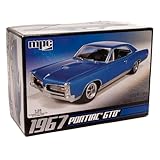
- V8 POWER: The model features a 400 cubic inch V8 engine, reflecting the muscle and power that defined the GTO's reputation.
- DETAILED SUSPENSION & EXHAUST: The kit incorporates separate rear suspension and exhaust detailing, adding to the realism of the model.
- BUCKET SEATS & CONSOLE: The model's interior features bucket seats and a floor shifter with a console, capturing the iconic look and feel of the GTO.
- OPTIONAL SUPERCHARGER: For those seeking more power, the kit offers an optional supercharger, allowing you to customize your model.
- CLEAR & COMPREHENSIVE INSTRUCTIONS: The included instructions are clear and user-friendly, making the kit accessible to modelers of different skill levels, from beginners to experienced hobbyists.
Are auto tariffs still in effect?
As of October 7, 2026, the March 6 IEEPA adjustment is historical, and the separate Section 232 program and later Canada-related measures must be considered on their own terms. The 2026 White House proclamations established additional duties of 50% for certain Canadian products, then modified the covered scope in September. That rate is not a universal tariff on all Canadian vehicles or parts: the proclamations contain exceptions, and the July measure says it does not apply to articles subject to Section 232 duties.
For a particular shipment, the applicable result depends on the product’s classification and the specific measure, origin and exception involved. A general statement such as “cars from Canada are tariff-free” or “all Canadian auto parts face 50%” is not reliable without checking the current rules for the item. Importers should consult current official tariff guidance and the relevant HTSUS classification before making a customs or pricing decision.
What the policy record does—and does not—show
The official sources establish the stated rates, dates, eligibility rules and administration rationale. They do not establish that the March adjustment itself caused a particular change in vehicle prices, employment or production. The White House described the supply-chain disruption it wanted to avoid; that stated aim is not evidence of a measured outcome.
Quick Recap
Product prices and availability are accurate as of the date/time indicated and are subject to change. Any price and availability information displayed on Amazon at the time of purchase will apply.
Quick wins for a faster PC:
Repair Windows errors before they cause bigger problemsFix Now →Fix the driver behind crashes, sound loss and screen glitchesFind Drivers →Clear out junk files and repair common Windows errorsFree Scan →



