Trump signs executive order to reverse Biden’s electric vehicle policies, but President Donald Trump signed Executive Order 14154 on January 20, 2025, and the order did not instantly cancel every EV tax credit, emissions rule, charging grant, or state requirement. The order directed reviews and possible agency changes; later actions altered parts of the landscape.
The order, titled “Unleashing American Energy,” called for eliminating what the administration labeled the federal “EV mandate,” reviewing IRA and IIJA funding, reconsidering EV subsidies and state emissions waivers, and pursuing changes within existing legal authority. As of August 13, 2026, the broader reversal also included CAFE rulemaking, California waiver disapprovals, an EPA vehicle-regulation action, and a federal lawsuit against California.
Key takeaways
- Executive Order 14154, titled “Unleashing American Energy,” was signed by President Donald Trump on January 20, 2025, and directed agencies to eliminate what the administration called the federal “electric vehicle mandate.”
- The order did not, by itself, repeal every Biden-era EV tax credit, emissions rule, fuel-economy standard, charging grant, or state vehicle requirement.
- The order called for a pause and review of certain Inflation Reduction Act and Infrastructure Investment and Jobs Act disbursements, including NEVI and Charging and Fueling Infrastructure funds; USDOT later said existing obligations continued to be reimbursed during the review.
- According to the Congressional Research Service (2025), Biden Executive Order 14037 set a nonbinding goal that zero-emission vehicles would represent 50% of new passenger cars and light trucks sold in 2030; the goal was not itself a nationwide ban on gasoline-powered vehicles.
- EPA said three California vehicle-emissions waivers were disapproved through Congressional Review Act resolutions signed on June 12, 2025, but the broader dispute over state authority continued.
- NHTSA’s June 2025 CAFE interpretive rule did not itself change existing CAFE standards; later CAFE, EPA, and litigation actions formed a separate and continuing policy reversal.
What did Trump’s executive order actually do?
Executive Order 14154 changed the federal policy direction on electric vehicles and instructed agencies to review or pursue changes to EV-related programs, but the order was not a single-step repeal of all Biden EV policies. The White House text of Executive Order 14154 states that federal policy would be “to eliminate the ‘electric vehicle (EV) mandate’ and promote true consumer choice.”
The order directed agencies to use existing legal authority to:
PC Slower Than It Used to Be?
A free scan shows the junk files, broken settings and background clutter dragging Windows down - then fixes them in one click.Free scan · Windows 10 & 11Crashes, No Sound, or Screen Glitches?
Random freezes, missing sound and display glitches usually trace back to one bad driver. Find and replace yours safely.Free scan · under a minute#1 Best Overall

- Flex Level 1 EV Charger - The EVDANCE Level 1 electric car charger is compatible with J1772 electric vehicles and plug-in hybrid vehicles (North American Standard). *Tesla requires a SAE J1772 adapter.
- Convenient to Use - This charger has both NEMA 6-20 plug for 16A 240V charging (3.68kW, 10-12 mi/h) and a NEMA 6-20 to 5-15 plug adapter for 12A 120V charging (1.44kW, 2-5 mi/h). The included bag makes it easier to carry on the go. It also has a 25ft cable length, you can use it flexibly from anywhere in the garage or driveway.
- Check Your Outlet Type -This charger works with standard 120V NEMA 5-15/5-20 outlets (2-5 mph charging speed) and 240V NEMA 6-20 outlets (10-12 mph) . It's not compatible with NEMA 6-15/10-30/14-30/14-50/6-50 outlets – you'll need a NEMA 14-50/14-30/10-30/6-50 to 6-20 adapter (sold separately) to connect.
- Compatible EV Models -This EV charger works with most major electric vehicles, including Ford, Chevrolet, Hyundai, Audi, Nissan Ariya, Rivian R1S, Kia, and others. However, it's not compatible with Mini Cooper Electric Hardtop,Toyota Prus Prime/Z4X/RAV4Prime, Porsche Taycan Base/4S/Turbo/Turbo S or Tesla models (Tesla requires a J1772 to Tesla Adapter, sold separately). For a full list of compatible models, check out the Full Compatibility List on our product page.
- Indication Displays - LED display that can tell you the status as well as indicate errors while charging your electric vehicle.
- remove regulatory barriers to consumer choice and seek a level regulatory playing field;
- review EV-related funding and pause certain disbursements under the Inflation Reduction Act of 2022 and Infrastructure Investment and Jobs Act;
- consider ending subsidies and other government-imposed market preferences that favor EVs;
- review federal actions connected with EVs, emissions, fuel economy, and federal fleets; and
- consider terminating state emissions waivers where the administration determined that termination was appropriate.
The order also gave agencies 90 days to report findings and recommendations concerning specified IRA and IIJA disbursements. According to the White House’s 2025 executive-order text, the 90-day reporting period concerned agency review and recommendations; the deadline did not automatically repeal the statutes that created the programs.
Did Trump cancel the “electric vehicle mandate”?
No. Trump’s executive order did not cancel one legally defined nationwide EV mandate because the Biden-era EV policy consisted of several different goals, regulations, tax provisions, infrastructure programs, and state waiver decisions. “EV mandate” was the Trump administration’s political and policy characterization of the combined effect of those measures, not a single Biden statute that the order instantly repealed.
The distinction matters because the legal mechanism determines what can change immediately:
| Policy area | Biden-era instrument | Trump administration action | Immediate effect of Executive Order 14154 |
|---|---|---|---|
| 2030 zero-emission vehicle goal | A nonbinding executive-branch sales goal | The new administration rejected the policy direction and called for consumer choice | Did not itself create or repeal a nationwide gasoline-vehicle sales ban |
| EV tax incentives | Tax incentives created or modified through federal law | The order directed agencies to consider ending subsidies and market preferences | Did not itself erase every tax credit; statutory and administrative steps would be needed |
| EV charging grants | IRA and IIJA programs, including NEVI and CFI | The order called for certain disbursements to be paused and reviewed | Targeted specified funding flows for review rather than automatically canceling every obligation |
| Federal vehicle emissions rules | EPA greenhouse-gas standards and related regulatory actions | Later EPA action addressed the Endangerment Finding and vehicle greenhouse-gas standards | Did not accomplish the February 2026 EPA action by itself |
| Fuel-economy standards | NHTSA CAFE standards | NHTSA began a reset or replacement process | Did not itself rewrite all existing CAFE standards |
| California vehicle rules | EPA waivers allowing California-specific emissions programs | Three waivers were later targeted through Congressional Review Act resolutions | Did not automatically invalidate every state vehicle rule on January 20, 2025 |
What did Biden’s EV policy actually include?
Biden’s EV policy was a collection of separate measures rather than a single command that all new vehicles had to be electric. According to the Congressional Research Service’s 2025 report on automobiles, air pollution, and climate change, Biden Executive Order 14037 established a nonbinding goal that 50% of new passenger cars and light trucks sold in 2030 would be zero-emission vehicles.
Quick wins for a faster PC:
Repair Windows errors before they cause bigger problemsFix Now →Fix the driver behind crashes, sound loss and screen glitchesFind Drivers →The 50% goal covered battery-electric vehicles, plug-in hybrid vehicles, and fuel-cell vehicles. The goal was not, by itself, a statutory prohibition on gasoline-powered vehicles. Other Biden-era measures operated through different legal channels, including:
- EPA greenhouse-gas standards: emissions rules that automakers had to meet under federal environmental law;
- NHTSA CAFE standards: fuel-economy requirements affecting manufacturers’ corporate fleets;
- tax incentives: federal tax provisions that reduced the cost of qualifying clean vehicles or related equipment;
- charging infrastructure funding: federal grants and formula funds for charger deployment; and
- California waivers: EPA authorizations that allowed California to enforce certain vehicle-emissions standards more stringent than federal rules, subject to the applicable legal framework.
Trump’s administration argued that the combined pressure of these programs pushed automakers toward electrification and limited consumer choice. Supporters of the Biden policies described the same measures as emissions controls, fuel-economy requirements, tax incentives, and infrastructure investments rather than a direct ban on gasoline vehicles. Those descriptions should not be treated as interchangeable legal conclusions.
Rank #2
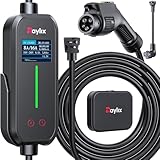
- [2026 INTELLIGENT CHARGING UPGRADE — PRECISION CONTROL MEETS SMART SCHEDULING] After surveying 100K+ U.S. EV owners, the Raylix R&D team found that nearly all drivers recognized the necessity of adjustable current and scheduled charging. Our upgraded J1772 charger features 4-level adjustable current (8A/10A/12A/16A) and a 1–12 hour smart delay timer. Whether you're charging overnight or during off-peak hours, enjoy smarter energy use, lower costs, and total convenience—on your schedule.
- [ONE CHARGER, ALL J1772 EVs/PHEVs READY!] Compatible with all SAE J1772 electric vehicles and plug-in hybrids—whether it’s Ford, GM, Nissan, Audi, BMW, Kia, Hyundai, Honda, Chevy, or more. Perfect for home or on-the-road charging, our 16A Level 1 & 2 charger ensures your EV is always powered and ready for any journey.
- [CHARGE 4× FASTER — NO MORE WAITING] In a rush? Our 16A Level 1 & 2 charger delivers charging speeds up to 4× faster than standard 8A Charger Level 1. Whether it's an early commute, a spontaneous trip, or last-minute errands, your EV will be ready when you are.
- [LEVEL 1 & 2 PORTABLE CHARGER — CHARGE ANYWHERE, ANYTIME] Designed for maximum flexibility, Raylix Level 1 & 2 EV charger features both 5-15 and 6-20 plug compatibility. Whether you're charging in your garage, at a friend's house, or at a roadside motel. NEMA 6-20 plug for Level 2 ev charging (240V, 16A, 3.68kW, 9-12 miles/hr) and a NEMA 5-15 adapter for Level 1 ev charging (120V, 12A, 1.44kW, 3-5 miles/hr) NOTE: In compliance with North American electrical safety standards, the charger automatically limits current to 12A when using a 5-15 outlet—protecting both your vehicle and your home’s electrical system.
- [AT-A-GLANCE CHARGING COMMAND: TOTAL CONTROL, INSTANTLY] While most ev chargers solutions confine vital data to in-car screens, the Raylix tesla charger breaks free with its enhanced TFT color display. This Raylix-exclusive feature delivers crystal-clear, real-time updates—voltage, current, power load, AND critical charging temperature—directly on the unit. Just one glance gives you complete charging insight. It’s not just information; it's the empowering peace of mind and satisfying control that transforms every charge into a masterfully managed experience.
Did Trump stop EV charging-station funding?
Trump’s order targeted certain EV charging-fund disbursements for a pause and review, but it did not mean that every charging project was immediately canceled. The order specifically identified funding for EV charging stations under the National Electric Vehicle Infrastructure Formula Program and the Charging and Fueling Infrastructure Discretionary Grant Program.
The practical implementation was more limited than a blanket shutdown. In later guidance, USDOT said existing obligations continued to be reimbursed during the review and issued revised NEVI guidance intended to remove mandates and burdens that were not required by clear statutory language. The department’s announcement of the revised NEVI guidance is therefore more precise than saying that Trump stopped all federal charger construction.
Free tools Windows power users keep installed
One-click scans. No signup required.
| Question | What the record supports | What the record does not support |
|---|---|---|
| Were NEVI and CFI funds targeted? | Yes. Executive Order 14154 called for certain IRA and IIJA disbursements to be paused and reviewed. | It does not support saying every federal charging dollar was permanently canceled on January 20, 2025. |
| Did existing project obligations disappear? | USDOT later said reimbursement of existing obligations continued during review. | The order did not establish that every planned project would proceed unchanged. |
| Did NEVI policy remain unchanged? | No. USDOT issued revised guidance aimed at removing nonstatutory mandates and burdens. | The available record does not establish a single nationwide outcome for every state’s NEVI plan. |
What happened to California’s EV mandate?
California’s vehicle rules were separately targeted through Congressional Review Act action, and the federal government later challenged California’s EV-related requirements in court. On June 12, 2025, EPA announced that President Trump had signed resolutions disapproving three California vehicle-emissions waivers: Advanced Clean Cars II, Advanced Clean Trucks, and the heavy-duty engine Omnibus NOx waivers.
EPA’s announcement described the action as ending California’s vehicle waivers, but the legal and practical consequences were not identical to an executive-order repeal. The waivers had been issued under a federal statutory framework, and the Congressional Review Act resolutions created a separate legislative-disapproval mechanism. The EPA announcement identifying the three waivers is the appropriate source for the names and June 12, 2025 date.
The issue also affects states that followed California’s emissions standards under the federal framework commonly associated with Section 177. State implementation did not resolve the dispute nationwide. EPA maintains a vehicle-emissions California waivers and authorizations status page, while state materials such as Washington’s later implementation provisions show that states continued addressing the effect of the federal action.
Can states still require electric vehicles?
There was no single nationwide yes-or-no answer established by Executive Order 14154. The order did not automatically invalidate every state vehicle rule, and the federal government’s later lawsuit against California shows that federal preemption remained contested rather than settled by the order alone.
What’s actually slowing this PC down?
Pick the symptom - the matching free tool is one click away.
Rank #3
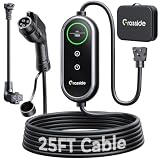
- Universal J1772 Compatibility: Designed with a standard J1772 connector, this J1772 charger works with most J1772 electric vehicles and PHEVs, including BMW, Mercedes-Benz, Hyundai, Kia, Nissan, Rivian, Ford, Chevy, Volkswagen, Toyota and more. Note: Tesla vehicles require a J1772 to Tesla adapter (not included)
- Flexible Outlet Compatibility: This portable EV charger comes with a NEMA 6-20 plug and a NEMA 5-15/5-20 to 6-20 adapter. Supports Level 1 (8–12A) and Level 2 (16A). Max 12A (1.44kW) on 120V NEMA 5-15/5-20 outlets, and full 16A (3.84kW) with a 240V NEMA 6-20 outlet. One charger is designed to cover home, garage, and travel charging needs with reliable performance
- Adjustable Smart Charging Control: Customize charging safely with adjustable current settings (8A/10A/12A/16A) to match different circuits. The 0–12 hour delay timer helps schedule overnight charging during lower electricity rates. Integrated LCD display shows real-time voltage, current, power, and charging status for clear monitoring without apps. Note: Press 'A' or 'T' for 3s to set and confirm.
- Home Charging & Travel Backup: For daily home use while remaining fully portable for travel. This level 1 ev charger includes a durable 25FT ev charging cord, providing flexible reach for garage or driveway charging. Charge overnight to take advantage of lower utility rates—potentially saving up to $500 annually on electricity costs. The included carrying case makes storage easy and keeps a dependable backup charger available in your trunk for road trips or visiting friends
- Engineered For Safety & Durability: Built for dependable daily use, this electric car charger features an IP65 waterproof rating for all weather operation. Equipped with a UL-listed cable, fully rubberized connector, and advanced protection against overcurrent, overheating, and electrical faults. Designed to ensure safe, stable, and long-term charging performance in demanding environments
On March 12, 2026, the Justice Department and USDOT sued California, arguing that federal fuel-economy law preempted California’s EV-related requirements. The federal lawsuit announcement states the administration’s position; it is not itself a final judicial holding. The ultimate effect on California and states that adopted related standards depends on litigation, statutory interpretation, and state implementation.
For drivers, the important distinction is that a state rule, an EPA waiver, and a federal fuel-economy standard are different legal instruments. Removing or disapproving a waiver does not automatically answer every question about state enforcement, existing model-year obligations, or the authority of states that relied on California standards.
Did Trump change CAFE standards?
Trump’s administration began a process to reset or replace CAFE standards, but the first major NHTSA action did not itself change the existing standards. Transportation Secretary Sean Duffy’s January 28–29, 2025 memorandum directed USDOT and NHTSA to begin rulemaking to rescind or replace existing CAFE standards.
On June 6, 2025, NHTSA issued an interpretive rule explaining its authority to reset the CAFE program and arguing that earlier standards had not complied with statutory restrictions. NHTSA expressly stated: This rule does not itself change existing CAFE or medium- and heavy-duty standards.
The statement appears in NHTSA’s June 6, 2025 CAFE interpretive-rule announcement.
The Tool Desk
Outbyte PC Repair FREERepair Windows errors before they cause bigger problemsFix Now →Outbyte Driver Updater FREEFix the driver behind crashes, sound loss and screen glitchesFind Drivers →The distinction between legal foundation and immediate regulatory change is important. The June interpretive rule established the administration’s position and foundation for later standards and enforcement decisions; it was not itself a replacement schedule for every existing CAFE requirement.
On December 3, 2025, the White House and USDOT announced a further CAFE reset framed around standards that could be achieved with conventional gasoline and diesel vehicles. The White House CAFE fact sheet describes that policy announcement, but the available research does not provide an effective date for every resulting standard. The CAFE reset should therefore be reported as a later rulemaking and policy development, not as an instant effect of the January executive order.
Rank #4

- Road-Trip Ready & Apartment-Friendly: Comes with a 20ft heavy-duty cable that easily spans a standard parking space, plus a NEMA 5-15 adapter for plug and play convenience. Whether you're charging at home or hitting the highway, this portable EV Charger is your ultimate travel companion for weekend getaways and camping trips
- Delay Timer & Adjustable Current: Use the built-in timer to delay your start by 1-12 hours and easily harvest off-peak energy savings. Then pick from 6/8/10/12/16A (Level 2) to match your garage grid. It automatically locks in your favorite setting and never forces you to re-adjust. No complicated apps or Wi-Fi needed, just straightforward, reliable control
- Tactile Buttons & LED Screen: No glitchy smartphone apps or finicky touchscreens that lag, freeze, and misfire in winter. Our EV charger is engineered with a high-definition LED display that tracks critical real-time data, including live voltage and current. Tactile buttons deliver direct, satisfying click feedback that remains highly responsive even when wearing heavy winter gloves or operating in torrential downpours—conditions where standard touchscreens completely fail
- ETL Certified Safety & IP65 All-Weather Shield: ETL certified to meet US safety standards for charging. Engineered with a certified IP65 dust-and-waterproof enclosure and a heavy-duty TPE cable that operates reliably across a wide -22°F to 130°F range. An intelligent multi-protection defense system (GFCI, over-voltage, over-current, surge, short-circuit, and over-temp) keeps a 24/7 watch for 100% safe, unattended overnight charging in any weather
- J1772 Compatible + Dual-Level Charging: Works with all J1772 EVs (Tesla requires a separate J1772 adapter). Level 2: built-in NEMA 6-20 plug. Level 1: included NEMA 5-15 adapter fits any standard outlet. Please confirm your outlet is NEMA 6-20 or 5-15 before purchase
What happened after the January 2025 executive order?
The administration’s vehicle-policy reversal developed through several later mechanisms. The timeline below separates the executive order from agency interpretation, legislative disapproval, rulemaking, litigation, and later EPA actions.
| Date | Action | Legal or practical significance |
|---|---|---|
| January 20, 2025 | Trump signed Executive Order 14154, “Unleashing American Energy.” | Established the policy direction of eliminating the administration’s “EV mandate,” reviewing funding, and reconsidering waivers and subsidies. |
| January 28–29, 2025 | USDOT and NHTSA began the CAFE reset process following Secretary Duffy’s memorandum. | Started rulemaking work; did not immediately replace all fuel-economy standards. |
| June 6, 2025 | NHTSA issued its CAFE interpretive rule. | Provided a legal foundation for later action but expressly did not itself change existing CAFE or medium- and heavy-duty standards. |
| June 12, 2025 | Three California vehicle-emissions waivers were disapproved through Congressional Review Act resolutions signed by Trump. | Targeted Advanced Clean Cars II, Advanced Clean Trucks, and the heavy-duty engine Omnibus NOx waivers. |
| 2025 | USDOT issued revised NEVI guidance. | Removed prior mandates and burdens that USDOT said were not required by clear statutory language; existing obligations were reported as continuing to be reimbursed during review. |
| December 3, 2025 | The White House and USDOT announced a CAFE reset. | Advanced the administration’s plan to make fuel-economy standards more achievable with conventional gasoline and diesel vehicles. |
| February 12, 2026 | EPA announced a final rule rescinding the 2009 Endangerment Finding and federal vehicle greenhouse-gas standards. | Broadened the vehicle deregulation agenda beyond the January 2025 order; this was a later EPA action. |
| March 12, 2026 | DOJ and USDOT sued California over its EV-related requirements. | Put the federal government’s fuel-economy preemption argument before the courts. |
| July 1, 2026 | EPA recognized SEMA’s Certified Emissions program as an alternative certification authority for qualifying aftermarket parts. | Related to the administration’s later “Freedom to Fix” initiative, not to the original EV executive order. |
What did the reversal mean for gas-powered cars and EV buyers?
The immediate consumer takeaway was a change in federal policy direction, not an instant change to every vehicle a person could buy. The administration moved away from EV-specific preferences and toward standards it described as compatible with consumer choice and conventional gasoline and diesel vehicles.
| For whom | Likely policy significance | What should not be assumed |
|---|---|---|
| Gasoline-vehicle shoppers | The administration’s stated direction was more favorable to conventional gasoline and diesel vehicles and less focused on steering buyers toward EVs. | The January order did not itself create a new nationwide right to sell every gasoline vehicle or repeal every emissions requirement. |
| EV shoppers | Federal subsidies, charging support, and regulatory preferences became subject to review or reversal. | The order did not itself prohibit EV purchases or erase every EV tax credit. |
| Charging-network users | Federal charger deployment programs faced review and revised NEVI requirements. | Every existing or planned charger was not automatically canceled. |
| Automakers | Manufacturers faced a shifting mix of CAFE rulemaking, EPA action, state disputes, and federal litigation. | The policy transition did not produce one definitive replacement rule covering all vehicle regulations at once. |
| States and fleets | State waiver authority, California-linked programs, federal-fleet policy, and infrastructure funding could change through different procedures. | A presidential executive order alone did not settle all federal-state authority questions. |
No defensible aggregate figure shows how many Biden EV policies Trump reversed. Executive orders, agency rules, tax incentives, grants, waivers, and lawsuits are different policy instruments, so adding them together would create a misleading count.
Are EV tax credits gone?
Executive Order 14154 did not itself repeal every EV tax credit. The order directed agencies to consider eliminating subsidies and other government preferences that favor EVs, but tax incentives created by statute generally require separate statutory, administrative, or legal action to change.
The January 2025 order therefore cannot be used as proof that all EV credits ended on the day it was signed. The current eligibility of a particular vehicle, buyer, income level, or charging installation must be checked against the applicable law and current agency guidance rather than inferred from the executive order alone.
What is the difference between the executive order and the later EPA action?
Executive Order 14154 was a January 2025 policy and agency-direction document; EPA’s February 2026 announcement was a later regulatory action concerning the legal basis and scope of federal vehicle greenhouse-gas regulation. The two events should not be presented as the same action.
Best Value

- 【Delay Timer - Adjustable Current】Ev charger can adjust the current (8A/10A/12A/16A) through the physical button of level 1 ev charger. Charging power can reach up to 3.68KW (240V/16A). One-touch switch for ev charger operation. Built-in 2–8 hour delay timer for off-peak charging to save on electricity bills.
- 【NEMA 6-20 Plug & NEMA 5-15 Adapter】Nema 6-20 plug for 240V outlets and 5-15 adapter for standard 120V realize plug-and-charge (With 5-15 adapter, need to adjust the current to 12A or below, otherwise the charger may be demeged). Overall length of ev charger level 2 is 27FT, providing enough charging distance across garages at home or outdoor. Portable storage bag supports you take portable EV Charger during travel, business trip, electric vehicle charging stations anywhere.
- 【ETL/FCC and IP67 Safety】J1772 charger is equipped with advanced safety functions such as overvoltage, overheating, and short-circuit automatic shutdown. IP67 waterproof and dustproof, extreme temperature protection level for withstanding harsh weather conditions from -40°F to 131°F in sunny, rain, snow and sandstorm. Electric car charger has ETL certified, FCC listed, meets UL safety standards. Industrial-grade construction with high-strength TPU-coated cables and 99.95% oxygen-free copper cores.
- 【J1772 Connector】J1772 charger works for all J1772 standard electric vehicles, Ford, GM, Nissan, Audi, Kia, Honda, BMW, Hyundai, Gmc, Chevy, Mercedes, and all PHEV/BEV. [Not fits Tesla cars/Nacs connector]
- 【One-Touch Charging Operation】16A electric car charger supports plug-and-charge functionality and features one-touch scheduled charging and current adjustment. Its intuitive and user-friendly operation allows flexible customization of personalized charging plans. Level 1 ev charger automatically shuts off when your car is fully charged.
On February 12, 2026, EPA announced a final rule rescinding the 2009 Endangerment Finding and federal vehicle greenhouse-gas standards. EPA described the move in its announcement of the later vehicle-regulation deregulatory action. The later EPA action broadened the administration’s vehicle agenda, while the January order supplied the earlier policy direction and instructions for review.
The July 1, 2026 recognition of SEMA’s Certified Emissions program was another separate development. EPA said the program could serve as an alternative certification authority for qualifying aftermarket parts under the administration’s later “Freedom to Fix” initiative. The SEMA action is relevant to the broader vehicle-regulatory agenda, but it was not part of Executive Order 14154.
What is the clearest way to describe the policy reversal?
The most accurate description is that Trump’s January 20, 2025 executive order began a federal effort to unwind or reduce EV-specific policy preferences, while later agencies, Congress, and courts determined which individual measures could actually change. The order changed policy direction immediately, but its legal and consumer effects arrived piecemeal.
For reporting or shopping decisions, classify each development by four questions:
- What mechanism was used? Identify whether the action was an executive order, agency rule, Congressional Review Act resolution, statute, guidance document, or lawsuit.
- What did it target? Separate sales goals, emissions standards, CAFE standards, tax incentives, charging grants, federal-fleet policy, and state waivers.
- Did the action have immediate effect? A pause, review, interpretive rule, proposed replacement, final rule, and lawsuit have different consequences.
- What is the legal status? Label the action as final, proposed, paused, rescinded, legislatively disapproved, or under litigation rather than treating every announcement as settled law.
Frequently Asked Questions
Are EV tax credits gone because of Trump’s executive order?
No. Executive Order 14154 did not itself repeal every EV tax credit. The order directed agencies to consider ending subsidies and other EV preferences, but statutory tax incentives require separate legal or administrative action, so credit eligibility cannot be determined from the executive order alone.
Did Trump’s executive order stop EV charging-station funding?
No. The order targeted certain IRA and IIJA charging-fund disbursements for review, including NEVI and Charging and Fueling Infrastructure funds. USDOT later said existing obligations continued to be reimbursed during the review and issued revised NEVI guidance.
Can states still require electric vehicles after the order?
No single nationwide answer was established by the executive order. Three California vehicle-emissions waivers were later disapproved through Congressional Review Act resolutions, and DOJ and USDOT sued California in March 2026, arguing that federal fuel-economy law preempted California’s EV-related requirements.
Did Trump’s order ban gas-powered cars?
No. The January 2025 order did not itself ban gasoline-powered cars or immediately repeal every gasoline-vehicle regulation. The administration’s policy direction became more favorable to conventional gasoline and diesel vehicles, while specific emissions and fuel-economy requirements changed or were challenged through later actions.
The Bottom Line
Bottom line: Trump signed Executive Order 14154 on January 20, 2025, to direct the federal government away from Biden-era EV preferences and toward consumer choice. The order did not instantly repeal every EV credit, charging program, emissions rule, CAFE standard, or state requirement. The later CAFE reset, California waiver disapprovals, EPA vehicle action, and lawsuit each used separate legal mechanisms and remained important to the final outcome.
Quick Recap
Product prices and availability are accurate as of the date/time indicated and are subject to change. Any price and availability information displayed on Amazon at the time of purchase will apply.




