Toyota Concept-i was a concept vehicle Toyota unveiled at CES in Las Vegas on January 4, 2017. Its defining idea was an AI agent named Yui, which Toyota said would learn alongside the driver and communicate through light, sound, and touch rather than relying only on a screen or voice. The “wings” in the headline are a styling feature. Toyota’s announcement did not describe any ability to fly, and the concept was never presented as a vehicle for sale.
What Toyota Concept-i was
Concept-i was shown as a design study rather than a model with a price or delivery date. Toyota said the vehicle was designed by CALTY Design Research in Newport Beach, California, and that its user experience technology was developed at the Toyota Innovation Hub in San Francisco. The company framed the project around what it called “kinetic warmth,” its stated belief that mobility technology should feel warm, welcoming, and fun. In Toyota’s words, the vehicle’s AI was meant to anticipate people’s needs, inspire their imaginations, and improve their lives.
Yui: the AI agent at the center of the concept
The AI agent was nicknamed Yui. Toyota said Yui would learn with the driver over time and form what the company called a meaningful relationship. The system was described as combining driving patterns and schedules with measures of emotion, mapped against where and when the driver travels. That combination is the core of the concept: the car would not simply respond to commands, but build a picture of its occupant’s habits and mood.
Toyota’s description stops short of explaining how emotion would be measured or what data would be stored. Readers should treat the emotional mapping as a stated design goal from a 2017 concept presentation, not as a demonstrated capability.
Crashes, No Sound, or Screen Glitches?
Random freezes, missing sound and display glitches usually trace back to one bad driver. Find and replace yours safely.Free scan · under a minuteWindows Errors? Fix Them Before They Spread
Repair common Windows errors and clear accumulated junk for a smoother, more stable PC - no reinstall needed.Free scan · no reinstall#1 Best Overall

- High-quality toy car: Package size: 8.6×3.7×2.9 in. package weight: 1.3 pounds. Suitable for playing.
- Exquisite design: Four doors can be opened. The hood and Tailgate can also be opened. Made of zinc alloy, plastic and electronics. Safe material. This model car has detailed interior and exterior. Wheels simulates shock absorption.
- Cool light and sound: Press the front of the car to trigger sounds and lights. Press steering wheel to trigger horn sound.
- Pull back model car: Place the toy car on the ground, hold down its body and pull it back, it will drive forward. Very interesting.
- Awesome Gift: It is an ideal gift toy model car for children, also great to use for collection and decoration.
How Yui was meant to communicate
Toyota specifically rejected the idea that an AI cabin should talk only through a screen or a voice assistant. Yui was designed to use several channels at once. The table below lists the examples Toyota gave and marks where its announcement did not go into detail.
| Channel | Use Toyota described | Detail given in the announcement |
|---|---|---|
| Light (footwell) | Colored footwell lights signaling whether the car is in automated or manual driving | Colors and exact timing not stated |
| Projection | Projectors to help warn about blind spots | Projection method and placement not stated |
| Exterior visual messages | Visual messages shown on the outside of the vehicle | Specific messages not stated |
| Sound | Part of the multisensory interface Toyota described | Specific sounds and their meanings not stated |
| Touch | Part of the multisensory interface Toyota described | Specific tactile feedback not stated |
The sound and touch channels appear in Toyota’s list of how Yui would communicate, but the announcement gives no concrete example of either. Anyone reading the concept as a finished interaction design should note that the most specific details are the footwell lights, the blind-spot projectors, and the exterior messages.
Rank #2

- High-quality toy car: Package size: 8.6×3.7×2.9 in. package weight: 1.3 pounds. Suitable for playing.
- Exquisite design: Four doors can be opened. The hood and Tailgate can also be opened. Made of zinc alloy, plastic and electronics. Safe material. This model car has detailed interior and exterior. Wheels simulates shock absorption.
- Cool light and sound: Press the front of the car to trigger sounds and lights. Press steering wheel to trigger horn sound.
- Pull back model car: Place the toy car on the ground, hold down its body and pull it back, it will drive forward. Very interesting.
- Awesome Gift: It is an ideal gift toy model car for children, also great to use for collection and decoration.
Driver control and automated support
Toyota said that under certain conditions, the driver could choose between automated and manual driving. The system was described as monitoring the driver’s attention and road conditions, with the aim of increasing automated support when it was needed. The footwell lights mentioned above were the visible signal of which mode the car was in.
These are Toyota’s descriptions of the intended concept. The announcement does not provide independent evidence of how well such monitoring would work or whether it would be safe in practice.
The Tool Desk
Outbyte Driver Updater FREEFix the driver behind crashes, sound loss and screen glitchesFind Drivers →Outbyte PC Repair FREERepair Windows errors before they cause bigger problemsFix Now →Rank #3
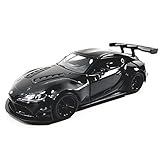
- AUTHENTIC DESIGN: Highly detailed 1:36 scale die-cast metal Toyota GR Supra Concept Racing Edition with authentic styling and sporty features
- QUALITY CONSTRUCTION: Crafted from durable die-cast metal with premium paint finish and detailed interior and exterior components
- COLLECTIBLE VALUE: Part of the KiNSMART die-cast car collection, featuring precise detailing and realistic racing aesthetics
- COLLECTIBLE VALUE: Part of the KiNSMART die-cast car collection, featuring precise detailing and realistic racing aesthetics
- COLLECTIBLE VALUE: Part of the KiNSMART die-cast car collection, featuring precise detailing and realistic racing aesthetics
Why the wings are only a design feature
The “wings” in the headline refer to the vehicle’s appearance. Coverage of the concept, including Futurism’s report by Kristin Houser (updated January 21, 2017), used the word in its headline framing. Neither Toyota’s announcement nor the contemporaneous coverage described flight capability, so calling Concept-i a flying car would misrepresent it.
Toyota’s own framing of the idea
Toyota’s release attributes the central argument to Bob Carter, then senior vice president of automotive operations for Toyota:
Rank #4

- High-quality toy car: Package size: 8.6×3.7×2.9 in. package weight: 1.3 pounds. Suitable for playing.
- Exquisite design: Four doors can be opened. The hood and Tailgate can also be opened. Made of zinc alloy, plastic and electronics. Safe material. This model car has detailed interior and exterior. Wheels simulates shock absorption.
- Cool light and sound: Press the front of the car to trigger sounds and lights. Press steering wheel to trigger horn sound.
- Pull back model car: Place the toy car on the ground, hold down its body and pull it back, it will drive forward. Very interesting.
- Awesome Gift: It is an ideal gift toy model car for children, also great to use for collection and decoration.
“It is the experience of the people who engage with those vehicles.”
The full statement continues: “At Toyota, we recognize that the important question isn’t whether future vehicles will be equipped with automated or connected technologies. It is the experience of the people who engage with those vehicles. Thanks to Concept-i and the power of artificial intelligence, we think the future is a vehicle that can engage with people in return.”
Free tools Windows power users keep installed
One-click scans. No signup required.
Best Value
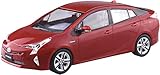
- A plastic model that needs to be assembled.
- 1/32 scale color-coded plastic assembly kit
- Painting not required
- Seals included
What happened after the 2017 announcement
Toyota’s January 2017 release said on-road evaluation of the concept in Japan was planned “within the next few years.” That was a plan stated at the time of the unveiling. The announcement and the coverage reviewed for this piece do not establish whether that evaluation took place, and they do not show that Concept-i or Yui entered production. Nothing in those sources indicates that Yui’s features were sold in a consumer Toyota. Readers looking for a current status should check Toyota’s newsroom directly, since the 2017 materials cannot answer that question.
Quick Recap
Sources
- Toyota USA Newsroom, “Toyota Concept-i Makes the Future of Mobility Human,” January 4, 2017 (primary source for the announcement, design credits, Yui, the interface examples, the Carter statement, and the planned Japan evaluation).
- Kristin Houser, Futurism, “Toyota’s Futuristic Concept Car Comes With Wings and a Built-In AI,” updated January 21, 2017 (contemporaneous coverage and the headline framing).
“
Product prices and availability are accurate as of the date/time indicated and are subject to change. Any price and availability information displayed on Amazon at the time of purchase will apply.




