A teardown of a failed Toyota twin-turbo V6 shows the kind of catastrophic main-bearing damage that can destroy the engine and leave a Tundra without motive power. It is compelling physical evidence of the failure mode described in Toyota’s recall filings—but it does not, by itself, prove that the V35A engine has a design defect or disprove Toyota’s explanation that machining debris can trigger the failure.
The engines involved belong to the V35A family used in third-generation Tundras. The recall population is large, but a potentially involved vehicle is not the same as a confirmed failure. Owners should identify coverage by VIN, follow the applicable Toyota campaign instructions, and avoid treating an oil change, borescope inspection, additive, or aftermarket scan tool as a recall remedy.
As an Amazon Associate I earn from qualifying purchases.
What the Toyota Tundra teardown actually shows
The independent teardown covered by The Drive and the I Do Cars video focuses on a used, failed Toyota twin-turbo V6 reportedly obtained secondhand. The engine shows severe damage around the main-bearing area, including pitting, scarring, and the mechanical destruction associated with a bearing failure.
The Tool Desk
Outbyte Driver Updater FREEFix the driver behind crashes, sound loss and screen glitchesFind Drivers →Outbyte PC Repair FREERepair Windows errors before they cause bigger problemsFix Now →The teardown host argued that the visible damage appeared concentrated in the main bearings rather than being equally distributed across the connecting-rod bearings. That observation led to questions about whether Toyota’s machining-debris explanation fully accounts for the damage pattern.
#1 Best Overall
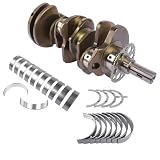
- 4Runner Tacoma Tundra FJ Cruiser Crankshaft and Bearings of 4.0L V6 1GR-FE Engine
- Part# 13401-31011, 1340131011, 11701-31080, 11011-31040, 13041-31090
- Replacement for Toyota Tacoma 4.0L V6 2005 2006 2007 2008 2009 2010 2011 2012 2013 2014 2015
- Replacement for Toyota Tundra 4.0L V6 2005 2006 2007 2008 2009 2010
- Replacement for Toyota 4Runner 4.0L V6 2003 2004 2005 2006 2007 2008 2009
That is a legitimate question to raise, but the video cannot answer it conclusively. The engine’s complete maintenance, operating, oil-change, and failure history was not known. In addition, metal produced when a bearing fails can circulate through the engine and obscure or mix with any original manufacturing debris. A single used engine is therefore useful for showing the aftermath of failure, but it is not a controlled experiment or a representative statistical sample.
Three separate claims are often being mixed together
| Evidence layer | What it supports | What it does not establish |
|---|---|---|
| Observed damage | The teardown visibly documents damaged main-bearing surfaces, scarring, pitting, and severe resulting engine damage. | It does not identify the first event that started the damage. |
| Toyota’s explanation | Toyota says machining debris may adhere to a main bearing, after which continued operation under higher loads can cause the bearing to fail. | The filing does not prove that every damaged engine failed for exactly the same reason. |
| Independent interpretation | The teardown host questions whether debris alone explains the apparent distribution of damage. | That opinion is not a laboratory finding proving a design defect. |
The accurate takeaway is narrower than many headlines suggest: the teardown is consistent with the main-bearing failure mode at the center of Toyota’s recalls, while the initiating cause may involve debris, bearing-load sensitivity, manufacturing variation, design margin, operating conditions, or a combination of factors.
Which engine is involved?
The third-generation Toyota Tundra launched with the i-FORCE twin-turbo V6 and an i-FORCE MAX hybrid version. The affected engine family is identified in National Highway Traffic Safety Administration filings as the V35A.
Recommended Free Tools
Toyota’s consumer-facing 2022 product material commonly describes the engine as a 3.4-liter twin-turbo V6, while some Toyota sourcebook material labels the displacement as 3.5 liters. That difference in labeling does not identify recall eligibility. The engine family, production period, vehicle configuration, and VIN are what matter.
| Powertrain | Published output | Why the distinction matters |
|---|---|---|
| i-FORCE twin-turbo V6 | Up to 389 horsepower and 479 lb.-ft. of torque | This conventional-gas configuration is the primary configuration identified in the 2024 and 2025 engine-debris recall material. |
| i-FORCE MAX hybrid | Up to 437 horsepower and 583 lb.-ft. of torque | It uses the same broad twin-turbo V6 platform with an electric motor-generator, but recall coverage is configuration-specific. |
A V6 badge does not automatically mean a Tundra is included—or excluded—from a campaign. Toyota’s 2025 announcement described the affected vehicles as conventional-gas models, and the 2026 campaign describes certain 2024 non-hybrid Tundras. Owners should check the VIN rather than infer coverage from the model year, trim, or hybrid badge.
How Toyota says the failure happens
A crankshaft rotates on several main bearings inside the engine block. These bearings maintain a lubricated surface between the rotating crankshaft and the stationary engine assembly. If a bearing loses its proper surface condition or clearance, the crankshaft can begin damaging the bearing and surrounding components rapidly.
Toyota’s 2025 NHTSA Part 573 filing says machining debris may not have been fully cleared during manufacturing in a specified production period. Toyota’s stated sequence is:
Windows Errors? Fix Them Before They Spread
Repair common Windows errors and clear accumulated junk for a smoother, more stable PC - no reinstall needed.Free scan · no reinstallOutdated Drivers Are Slowing You Down
One free scan finds every outdated or missing driver and matches the right update for your exact hardware.Free scan · exact hardware matchRank #2

- On vehicles equipped with a two piece drive shaft & carrier bearing, there is the potential for take off vibration, depending on the severity, this can be corrected with shimming down the carrier bearing.
- Includes: (6) Carrier bearing shims. Hardware
- Toyota Carrier Bearing Drop Kit (07-13 Tundra)
- Backed by Rough Country's Limited Lifetime Replacement Warranty.
- Machining debris remains in the engine.
- The debris adheres to a crankshaft main bearing.
- The affected bearing experiences abnormal wear or damage.
- Continued operation, particularly under higher loads, can cause the bearing to fail.
- The engine may knock, run roughly, fail to start, or stall while driving.
A stall can cause a loss of motive power and increase crash risk, which is why Toyota’s notices treat the condition as a safety defect rather than an ordinary maintenance concern.
Why the 2026 filing matters
Toyota’s later filing provides more than the original debris explanation. In its 2026 investigation, Toyota said it collected and tore down both failed and non-failed field engines. It sent bearings for supplier analysis, studied how changes in cam-housing clearance affected bearing pressure, and conducted bench testing with debris shapes and sizes representative of material found in engines from the production period under study.
Toyota also reported that #1 main bearings from the later production period displayed the same wear pattern seen in engines covered by earlier recalls. According to the filing, that later production period followed the engines included in the earlier campaigns but preceded certain improvements to the #1 main bearing.
This is significant because the latest official record reflects additional field-engine comparisons, supplier work, and bench testing—not simply a repetition of the first recall language. It strengthens Toyota’s documented engineering case for expanding the recall, although it remains Toyota’s engineering conclusion rather than a finding that every independent critic must accept.
What’s actually slowing this PC down?
Pick the symptom - the matching free tool is one click away.
The recall timeline
2024: NHTSA recall 24V-381
The first major campaign covered approximately 98,600 model-year 2022–2023 Toyota Tundras produced from early November 2021 through mid-February 2023.
Toyota’s remedy notice described possible machining debris, engine knocking, rough running, a no-start condition, or loss of motive power. The initial remedy called for free replacement of the engine assembly. Because replacement parts were not immediately available for every vehicle, the notice described a phased remedy involving approximately four groups of about 24,600 vehicles each.
2025: NHTSA recall 25V-767
In November 2025, Toyota expanded the affected population to certain:
Rank #3

- Fitment: Fit For TOYOTA 4RUNNER 4.0L 2003-2009 3956CC 241CID V6 DOHC (24 VALVE) ENG CODE"1GRFE", Fit For TOYOTA FJ CRUISER 4.0L 2007-2009 3956CC 241CID V6 DOHC (24 VALVE) ENG CODE"1GRFE", Fit For TOYOTA TACOMA 4.0L 2005-2015 3956CC 241CID V6 DOHC (24 VALVE) ENG CODE "1GRFE", Fit For TOYOTA TUNDRA 4.0L 2005-2010 3956CC 241CID V6 DOHC (24 VALVE) ENG CODE "1GRFE", Fit For TOYOTA TUNDRA 4.0L 3956CC 241CID V6 DOHC (24 VALVE) ENG CODE "1GRFE" 2005-2014, Fit For TOYOTA 4RUNNER 4.0L 3956CC 241CID V6 DOHC (24 VALVE) ENG CODE "1GRFE" 2003-2015, Fit For TOYOTA FJ CRUISER 4.0L 3956CC 241CID V6 DOHC (24 VALVE) ENG CODE "1GRFE" 2007-2014,
- Part Number: Bearings: 11011-31070, 11701-31080, 13041-31090; Connecting Rod: 13201-39126, 13201-39235, 1320139126, 1320139235; Crankshaft: 13401-31011, 1340131011, 13401-31010, 1340131010, 13401-31010, 13401-31011;
- Package Includes: Crankshaft, Cononecting Rods, Main & Rod Bearings; (As The Main Picture Shows)
- Notes: 1. Please Check The OE Number, Model, And Year Before You Purchase. 2. Please Feel Free To Contact Us If You Are Not Sure Whether The Item Is Fit For Your Vehicles.
- Customer Service: 1 Year Warranty.
- 2022–2024 Toyota Tundras;
- 2022–2024 Lexus LX vehicles; and
- 2024 Lexus GX vehicles.
The filing identified a specified V35A configuration and listed 126,691 potentially involved vehicles across the covered population, including 113,079 Tundras. The Tundra production dates listed in the filing ran from November 22, 2021, through February 14, 2024.
Quick wins for a faster PC:
Fix the driver behind crashes, sound loss and screen glitchesFind Drivers →Repair Windows errors before they cause bigger problemsFix Now →Scan for outdated or missing drivers - takes under a minuteDriver Scan →The filing noted that some earlier engines had already been recalled, some later engines had improved manufacturing processes and remained under investigation, and other engines used an improved main bearing. Toyota initially issued an interim “do not drive, park outside” advisory while it developed the remedy.
2026: NHTSA recall 26V-320
On May 20, 2026, Toyota filed another recall involving certain 2024 non-hybrid Tundras. The NHTSA acknowledgment identifies approximately 43,566 vehicles, while Toyota’s public announcement describes approximately 44,000 U.S. vehicles. The difference is a rounding and reporting distinction, not evidence of two unrelated defects.
Toyota reported 30 field technical reports and 360 U.S. warranty claims that related or might relate to the condition as of May 13, 2026. The filing says the affected later-production engines preceded certain improvements to the #1 main bearing.
The 2026 remedy is materially different from the first campaign’s blanket engine-replacement approach. Dealers use inspection software to evaluate the #1 main bearing and collect available driving data. If the software cannot confirm that the bearing is free of abnormal wear, the dealer replaces the engine at no charge.
Free tools Windows power users keep installed
One-click scans. No signup required.
The filing described phased owner notifications from July 6 through July 20, 2026, and included the “do not drive, park outside” advisory. Owners should follow the notice attached to their own vehicle and the dealer’s instructions, since remedy details can differ by campaign.
What “massive recalls” does—and does not—mean
The campaign populations are large, but the official filings do not say that every vehicle in those populations contains the defect or will fail.
Rank #4

- THIS IS BRAND NEW: DNJ® Rod Bearings Set Standard Size
- FITS: 03-16 Toyota / 4Runner, Tacoma, FJ Cruiser, Tundra 4.0L V6 DOHC Naturally Aspirated 1GR-FE
- FITMENT NOTES: One Set Services Complete Engine
- DNJ Engine Components is a full line provider of Domestic & Japanese engine parts for cars and trucks.
- We carefully selected DNJ Engine Components as the sole provider. DNJ has a 30+ year track record of quality, experience, and trust. It makes sense for us to carry a brand that would help us earn customer loyalty in the long run
A recall population is generally defined using production records, engine configuration, supplier information, and the manufacturer’s risk assessment. It is a group that must be screened or repaired—not a count of confirmed failures.
In the 2025 filing, Toyota said it could not estimate what percentage of the involved vehicles actually contained the defect. A required portal field was entered as “1” to represent unknown, even though the report metadata also displayed a separate estimated-percentage field. That information should not be converted into a failure rate.
In practical terms:
- “Potentially involved” does not mean “certain to fail.”
- A vehicle without symptoms may still be covered.
- A vehicle with similar symptoms may require diagnosis even if it is not listed in a particular campaign.
- The campaign population cannot be used to calculate how many Tundras have already failed.
Are hybrid Tundras included?
Do not answer this question from the engine badge alone. The i-FORCE MAX hybrid uses a related twin-turbo V6 platform, but the recall documents identify particular engine and vehicle configurations.
The 2024 and 2025 engine-debris recall material primarily identifies conventional-gas V35A configurations. Toyota’s 2025 announcement described the affected population as conventional-gas models, while the 2026 campaign specifically describes certain non-hybrid 2024 Tundras.
That does not make a blanket statement that every hybrid Tundra is permanently exempt from every possible campaign. The correct test is the vehicle identification number, or VIN, in Toyota’s official recall lookup or NHTSA’s recall system.
What Tundra owners should do
- Check the VIN. Use Toyota’s official Toyota recall lookup and the NHTSA recall system. A model year, trim, engine badge, or production rumor is not an adequate substitute.
- Read the campaign-specific instructions. Recall inspections and repairs are performed at no charge. The applicable remedy may be an engine replacement, a software-based bearing inspection, or another campaign-specific procedure.
- Do not wait for symptoms. Toyota identifies knocking, rough running, a no-start condition, and loss of motive power as possible symptoms. The absence of symptoms does not establish that an affected engine is safe.
- Stop if serious symptoms appear. If the engine begins knocking, runs abnormally, loses power, or stalls, move to a safe location if possible and do not continue driving unnecessarily. If the recall notice says not to drive, follow it. Arrange roadside assistance or towing service rather than driving an affected vehicle to the dealer.
- Keep the recall paperwork. Record the VIN, campaign number, dealer appointment, symptoms, and repair outcome. This is especially useful when a vehicle’s history includes an earlier recall or a later expanded campaign.
What will not clear the recall
Several ideas circulating among owners and online commentators should not be confused with an official repair:
- An oil change: It may be sensible maintenance, but it cannot remove embedded bearing damage or establish that an engine is outside the recall.
- Used-oil analysis: It may detect metal or other warning signs, but it cannot replace Toyota’s VIN-based campaign determination or inspection procedure.
- A borescope: A camera may help inspect accessible areas, but the main-bearing condition at issue is not cleared by an informal visual inspection.
- An aftermarket diagnostic scan tool: Generic diagnostic equipment cannot replace the recall-specific dealer software described in the 2026 campaign.
- An additive: No additive repairs a damaged main bearing or satisfies a safety recall.
Owners should not use a teardown video, an aftermarket test, or the absence of a noise as a reason to ignore an open campaign.
Best Value

- Fitment: Fit For Lexus LX570 5.7L Eng. Code "3URFE" 2008-2021, Fit For Toyota Tundra 5.7L Eng. Code "3URFE" 2008-2021, Fit For Toyota Sequoia 5.7L Eng. Code "3URFE" 2008-2022, Fit For Toyota Land Cruiser 5.7L Eng. Code "3URFE" 2008-2021.
- Part Number: Head Gasket Set: HS26394PT, CS26394, ES72249-1; Oil Pump: 11310-0S010; Water Pump: 16100-09491; Intake Valve: 13711-0P010; Exhuast Valve: 13715-0S020; Thrust Washer: 11011-38050;
- Part Number: Timing Chain Kit: 90922S, 9-0922S,13521-38030, 13506-0S010, 13540-0S020, 13540-0S010, 13507-0P010, 13560-0S011, 13559-0S010, 13559-0S021, 13561-0S021, 13561-0S011, 13550-0S011; Bearing: 11072-38010-E6, 11072-38010-E5, 11072-38010-D5, 11071-38010-H8, 11071-38010-G8, 11071-38010-G7, 11071-38010-F7, 11071-38010-F6, 11071-38010-E6, 11072-38010-F6, 11071-38010-D5, 11071-38010-D4, 11071-38010-C4, 11072-38010-F7, 11072-38010-G7, 11072-38010-G8,, 11072-38010-H8, 11072-38010-K9, 11072-38010-H9;
- Package Includes: Oil Pump, Water Pump, Head Gasket Set, Timing Chain Kit, Main & Rod Bearings, Intake / Exhaust Valves, (As The Main Picture Shows)
- Notes: 1. Please Check The OE Number, Model, And Year Before You Purchase. 2 . Please Feel Free To Contact Us If You Are Not Sure Whether The Item Is Fit For Your Vehicles.
What the evidence supports
The independent teardown makes the failure physically understandable: a modern twin-turbo V6 can suffer severe main-bearing damage, and the resulting destruction can be dramatic. It also raises a reasonable technical question about why the damage appears concentrated where it does and whether debris alone explains every observed case.
Toyota’s official evidence is broader than the video. The company says it examined failed and non-failed engines, analyzed bearings through its supplier, evaluated bearing pressure under clearance changes, and performed bench testing with representative debris. That work led Toyota to expand the affected population and create a software-based inspection remedy for the 2026 campaign.
Neither source supports the most extreme claims. The teardown does not prove that Toyota designed a defective engine, and the recall does not establish that every V35A-family engine will fail. The defensible conclusion is that certain V35A configurations and production periods present a documented main-bearing risk serious enough to require VIN-based recall action.
Frequently Asked Questions
Does the teardown prove that the Toyota V35A engine has a design defect?
No. It shows catastrophic main-bearing damage consistent with the failure mode described in Toyota’s recall filings. It does not establish whether the initiating cause was machining debris, bearing-load sensitivity, manufacturing variation, design margin, operating conditions, or a combination of factors.
Are all Toyota Tundra V35A engines recalled?
No. The campaigns apply to specified vehicles, production periods, and configurations. The broader V35A family name is not enough to determine coverage. Check the vehicle’s VIN through Toyota or NHTSA.
Can an oil change, scan tool, or borescope determine that a recalled Tundra is safe?
No. Those measures may provide general maintenance or diagnostic information, but they do not clear an official recall. Follow the applicable Toyota campaign instructions and use the authorized dealer’s remedy.
Do these 3 things before closing this tab:
1Fix the driver behind crashes, sound loss and screen glitches2Repair Windows errors before they cause bigger problems3Scan for outdated or missing drivers - takes under a minuteThe Bottom Line
The teardown shows the destructive end result Toyota is trying to prevent: severe V35A main-bearing damage that can lead to knocking, rough running, engine failure, or a stall. It does not prove a single root cause or establish that every recalled truck will fail. For owners, the answer is practical rather than theoretical: check the VIN, follow the campaign-specific notice, and do not drive or self-diagnose a vehicle that Toyota has instructed you to park.
Quick Recap
Product prices and availability are accurate as of the date/time indicated and are subject to change. Any price and availability information displayed on Amazon at the time of purchase will apply.




