What’s actually slowing this PC down?
Pick the symptom - the matching free tool is one click away.
The Toyota Supra has five generations, spanning U.S. model years 1979 through 2026. The first two were Celica Supra models, the A70 became a standalone Toyota, the A80 became the iconic twin-turbo performance GT, and the GR Supra returned for 2020 after a long U.S. absence. The latest verified model-year entry is the 2026 GR Supra MkV Final Edition.
The Toyota Supra spans five generations and three distinct identities: a six-cylinder Celica derivative from 1979 to 1981, a more sophisticated Celica Supra through 1985, a standalone performance coupe from 19861⁄2 to 1998, and the GR Supra that returned for the 2020 U.S. model year. The latest verified entry is the 2026 GR Supra MkV Final Edition, with fifth-generation production scheduled to end in spring 2026.
For accuracy, this guide uses U.S. model years unless stated otherwise. Model years, production dates, chassis codes, and enthusiast labels such as MkIV are related but are not interchangeable. The A80, for example, left the U.S. lineup after 1998 even though global production continued until 2002.
Toyota Supra generations at a glance
| Generation | Common chassis | U.S. model-year framing | What defines it |
|---|---|---|---|
| First generation | A40/A50 | 1979–1981 | Celica Supra with a front-mounted inline-six, rear-wheel drive, and a more luxurious grand-touring character |
| Second generation | A60 | 1982–1985 | Major redesign with retractable headlights, the 5M-GE twin-cam six, and independent rear suspension |
| Third generation | A70 | 19861⁄2–1992 | Supra becomes a standalone model; Turbo arrives for 1987 |
| Fourth generation | A80 | 1993–1998 in the U.S.; global production to 2002 | High-performance grand tourer with the twin-turbo Turbo model and six-speed manual |
| Fifth generation | Commonly A90/A91 or MkV | 2020–2026; revealed in 2019 | GR Supra developed with BMW, offered with a 2.0-liter four-cylinder or 3.0-liter inline-six |
How to read Supra generation names
A40, A50, A60, A70, and A80 are chassis or platform designations used in Toyota and enthusiast documentation. MkI through MkV are informal generation labels. GR Supra is the marketing identity of the fifth-generation car, while A90 and A91 are commonly used enthusiast and Toyota-related designations for different fifth-generation production updates.
#1 Best Overall

- Pullback Action: Experience realistic racing with the pullback action feature.
- Opening Doors: Explore the intricate interior details with the opening door feature.
- 1:38 Scale: Enjoy a detailed 1:38 scale die-cast model (approx. 5 inches long).
- Authentic Design: Modeled after the iconic 1967 Ford Shelby Mustang GT500.
- Display Piece: A must-have collectible for car enthusiasts and model collectors.
The labels overlap, but they do not define model-year boundaries by themselves. A car’s VIN, market, build date, title, emissions equipment, and original specification are more reliable than a badge or an imported seller’s shorthand.
First generation: Celica Supra A40/A50, 1979–1981
The first U.S. Supra was introduced as the Toyota Celica Supra. It was a longer and wider six-cylinder version of the Celica liftback rather than a completely independent model. Nevertheless, it established the formula that would remain central to the nameplate: a front-engine, rear-wheel-drive layout, an inline-six engine, independent suspension, and enough equipment for long-distance touring.
1979 Toyota Celica Supra
The 1979 model introduced the Supra name to the U.S. market. It used a 2.6-liter single-overhead-cam inline-six with electronic fuel injection, paired with either a manual or automatic transmission. Independent suspension and four-wheel disc brakes helped distinguish the car from a basic Celica and supported its more substantial grand-touring mission.
1980 Toyota Celica Supra
Toyota’s chronology records two important changes for 1980: the engine grew to 2.8 liters, and the rear suspension changed from the original fixed-axle arrangement to semi-trailing arms with coil springs. Those updates make the 1980 car more than a cosmetic continuation of the 1979 model.
Quick wins for a faster PC:
Clear out junk files and repair common Windows errorsFree Scan →Scan for outdated or missing drivers - takes under a minuteDriver Scan →1981 Toyota Celica Supra
The 1981 model remained part of the first-generation family and used the 2.8-liter SOHC inline-six identified in Toyota’s historical chronology. It was the final bridge to the much more extensively redesigned A60. Toyota later identified the original chassis primarily as A40 while also noting A50 usage after first-generation updates, which is why both designations appear in Supra references.
Second generation: A60 Celica Supra, 1982–1985
The A60 was a complete redesign of the Supra and Celica lines. It retained the Celica Supra relationship but became visibly and mechanically more ambitious, with a longer wheelbase, a stretched front end, retractable headlights, pronounced wheel arches, and independent rear suspension.
Power came from Toyota’s 2.8-liter 5M-GE twin-cam straight-six. The A60 also expanded the Supra’s equipment and trim range. Toyota distinguished L-Type and Performance versions, but the two were mechanically identical; the principal differences involved wheel and tire width, fender flares, and interior treatment. Selected cars could be equipped with a digital instrument panel and Navicom, an early device that calculated direction and distance.
1982 Toyota Supra
The 1982 model was the first A60. Its 2.8-liter DOHC inline-six was a major technical step over the previous generation. Toyota also records that the Supra received Motor Trend’s Import Car of the Year recognition during calendar year 1982.
The Tool Desk
Outbyte Driver Updater FREEFix the driver behind crashes, sound loss and screen glitchesFind Drivers →Outbyte PC Repair FREEClear out junk files and repair common Windows errorsFree Scan →1983 Toyota Supra
The 1983 model continued the A60 design and 5M-GE powertrain. It is not a separate generation or a major styling break, so condition, transmission, equipment, and regional specification matter more than the year alone when comparing examples.
1984 Toyota Supra
For 1984, Toyota recorded changes to manual-transmission cars, including a higher compression ratio and a larger-diameter intake. These were meaningful engine revisions, but they did not turn the 1984 car into a new generation.
1985 Toyota Supra
The 1985 model was the final A60 year in the U.S. Toyota’s historical overview says output had risen during the generation’s five-year lifespan, reaching 161 horsepower by 1985. The basic identity remained the same: a rear-wheel-drive, six-cylinder Celica Supra with a stronger performance and technology brief than the first generation.
Third generation: standalone A70 Supra, 19861⁄2–1992
The A70 marks the most important structural change in Supra history: the car separated from the Celica and gained its own identity. Toyota’s U.S. chronology calls the introduction the 19861⁄2 model year, a designation worth preserving rather than casually rounding to 1986 or 1987.
The new Supra used a 3.0-liter DOHC engine, four-wheel disc brakes, and fully independent suspension. Its development moved the nameplate decisively toward the turbocharged performance image that would reach its peak with the A80.
Rank #2
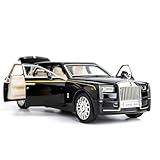
- Product size: 6.69*2.36*1.97 inches Weight: 0.7 pounds Outer packaging: exquisite color translucent packaging box
- Material: Die-cast car model, made of zinc alloy, with plastic parts, rubber tires, detailed interior and exterior decoration.
- Function: Press the two wheels of the front car to trigger the sound of the engine and the lights, with upright car logos,the angel logo is stored in the hood. The details of the body interior are realistic. Place the car on a flat ground, press the body and pull it back, the car will drive forward. (With pull back function)
- This Rolls-Royce Phantom 1/32 car model pull back car is very suitable for children to play with. The paint is exquisite and feels good, and it is heavy to hold. It is also very suitable for car model enthusiasts as a decoration.
- Accessories and collections: This product is very suitable for static accessories and can be used as an accessory next to a computer. For those who are passionate about collecting model car models, this is a great art collection.
19861⁄2 and 1987
The 19861⁄2 model introduced the standalone Supra. For 1987, Toyota added the Supra Turbo, which its historical material describes as producing 230 horsepower. Toyota also describes the Turbo as the first Toyota model available with both turbocharging and anti-lock brakes. A targa-type Sport Roof was available during the A70 generation.
1988 Toyota Supra
The 1988 model remained an A70 and continued the standalone-Supra formula. Equipment and exact engine availability can differ by market and emissions specification, so an imported 1988 car should not automatically be compared with a U.S.-market example.
1989 Toyota Supra
The 1989 model was another continuation year within the A70 generation. Buyers evaluating one today should prioritize the car’s original engine, transmission, roof configuration, emissions equipment, and restoration history over the model-year number alone.
1990 Toyota Supra
The 1990 model stayed within the A70 family. By this point the third-generation Supra was an established standalone grand tourer, available in naturally aspirated and Turbo forms depending on market and specification.
1991 Toyota Supra
The 1991 model continued the A70. Toyota GAZOO Racing’s heritage-parts material groups A70 restoration vehicles broadly as 1986–1993 models, while U.S. model-year references generally describe the generation as 19861⁄2–1992. That difference reflects production and regional conventions rather than a fifth U.S. model year.
1992 Toyota Supra
The 1992 model was the final regular U.S. model year for the A70. It completed the generation that transformed the Supra from a Celica derivative into a model with its own performance identity.
Fourth generation: A80 Supra, 1993–1998 in the U.S.
The A80 was the Supra’s most dramatic move toward outright performance. Toyota describes extensive weight-saving measures, Turbo and non-Turbo forms, and a 3.0-liter inline-six with twin sequential turbochargers in the U.S.-market Turbo. Toyota’s published figures for that Turbo were 320 horsepower, a sub-five-second 0–60-mph capability, and an electronically limited 155-mph top speed.
The A80 was still a grand tourer, but it was engineered and marketed as a serious sports GT capable of challenging substantially more expensive performance cars. Its later visibility in video games and the Fast & Furious film series helped preserve interest during the Supra’s U.S. absence.
1993 Toyota Supra
The 1993 model introduced the A80 in the U.S. with Turbo and non-Turbo versions. This is the generation most often associated with the fourth-generation or MkIV Supra, although the chassis code is the more precise identifier.
1994 Toyota Supra
The 1994 model continued the redesigned A80 without a substantive generational change. Turbo and non-Turbo configurations remained the central distinction.
1995 Toyota Supra
The 1995 model continued the A80 formula. When comparing a 1995 U.S. car with an imported example, verify the market and emissions specification before assuming that Turbo availability, transmission combinations, or equipment are identical.
1996 Toyota Supra
For 1996, Toyota recorded that the Turbo’s six-speed manual transmission was dropped because of emissions regulations. The four-speed electronically controlled automatic remained available and included a manual-shift mode. Toyota also made interior and equipment changes.
1997 Toyota Supra
The six-speed manual returned for 1997. Toyota also recorded revised head- and taillight surrounds, Turbo badging, additional frame strengthening, and more sound-deadening material. All 1997 U.S. Supras were identified by Toyota as Limited Edition 15th Anniversary models.
Rank #3

- 【4 Pcs Diecast Cars Set】Four different diecast car models have different types of bodies and colors, including sports cars/trucks/sedans/racing cars, all measuring 4.9 × 2 × 1.4 inches. The standard 1:36 ratio, open doors, and bright color combinations faithfully capture the eternal aesthetics while reflecting vibrant the vitality of racing sports!
- 【Race Real Experience】Our 1:36 alloy model car adopts a double door mode, allowing kids to better observe the internal structural details of the race car toys, and incorporates high-quality elastic tires,these diecast cars high-performance wheels provide enhanced traction, allowing smooth operation across multiple surfaces including hard floors and textured fabrics.
- 【Double Packaging Box Design】There are 4 independent mini boxes in the box for easy storage and sharing. All boxes are neatly placed in a decorative gift collection box, which is perfect for giving a complete set of gifts or dividing into smaller packages for multiple children.
- 【Pull Back Cars Toy】Push car without batteries!Our car models can withstand wear and tear during daily play, and the surface paint can last for a long time without fading or peeling off Featuring a classic sports car exterior design and die cast cars that have been tested for shock absorption and pressure resistance.It is very durable. Accompany kids for long time activities.
- 【Ideal Gift For Kids 3 4 5 6 7 Year】Our 4pack car toys perfectly combines the joyful interaction of multiplayer games with the immersive experience of single player games. Not only does it have a precise and beautiful gift box, but it is also a birthday gift and Christmas gifts for son and grandson.
1998 Toyota Supra
Emissions rules had a major effect on the final U.S. model year. Toyota states that in California-emissions states, turbocharged models were not available and only automatic non-Turbo cars were sold. Outside that specific restriction, the 1998 non-Turbo gained Variable Valve Timing with intelligence, raising output to 225 horsepower, and limited-slip differentials became standard.
1999 designation and the global end in 2002
Toyota’s U.S. chronology says production ceased for the 1999 model year because the high-performance vehicle segment had declined. Toyota’s later launch-history material summarizes the situation by saying that the A80 left the U.S. lineup after 1998 but continued to be produced globally until 2002. These statements describe different boundaries: U.S. sales and model-year availability ended earlier than worldwide production.
Outdated Drivers Are Slowing You Down
One free scan finds every outdated or missing driver and matches the right update for your exact hardware.Free scan · exact hardware matchWindows Errors? Fix Them Before They Spread
Repair common Windows errors and clear accumulated junk for a smoother, more stable PC - no reinstall needed.Free scan · no reinstallThat is why a 1999 U.S.-market Supra should not automatically be treated as a normal model year equivalent to a 1999 Japanese or other export-market car. For an imported A80, the country of origin, build date, registration history, and specification are essential.
The Supra hiatus and fifth-generation return
After the A80 left the U.S. lineup, Toyota had no regular Supra model-year offering until the GR Supra arrived as a 2020 model. Toyota revealed the fifth-generation car in 2019, but 2019 is a reveal year rather than a U.S. GR Supra model year.
Toyota describes the GR Supra as the first globally badged Toyota GAZOO Racing model. It was developed in collaboration with BMW and based on the BMW Z4 platform. Its design drew from both the A80 Supra and Toyota’s 1967 2000 GT, while the engineering direction returned the nameplate to a compact, rear-wheel-drive sports car.
Fifth generation: GR Supra MkV, 2020–2026
2020 Toyota GR Supra
The 2020 GR Supra was the fifth-generation launch model in the U.S. It used a turbocharged 3.0-liter inline-six making 335 horsepower and 365 lb.-ft. of torque, paired at launch with an eight-speed automatic transmission.
Free tools Windows power users keep installed
One-click scans. No signup required.
2021 Toyota GR Supra
The 2021 model brought the largest early MkV powertrain revision. The 3.0-liter engine rose to 382 horsepower and 368 lb.-ft. of torque. Toyota also introduced a turbocharged 2.0-liter four-cylinder model rated at 255 horsepower and 295 lb.-ft. of torque.
2022 Toyota GR Supra
Manual-transmission availability arrived for 3.0-liter GR Supra models during the 2022–2023 model-year period. The important qualification is that the manual was tied to the 3.0-liter version, not the 2.0-liter four-cylinder model.
2023 Toyota GR Supra
The 2023 lineup included the limited A91-MT edition. Toyota identified it as a 500-unit run with exclusive colors, wheels, interior treatment, and trim details. The A91-MT belongs to the fifth-generation GR Supra family rather than representing a new generation.
2024 Toyota GR Supra
The 2024 lineup included 2.0-liter and 3.0-liter models plus the 45th Anniversary Edition. Based on the 3.0 Premium, the anniversary car paid tribute to the MkIV with Mikan Blast or Absolute Zero exterior colors, 19-inch matte-black wheels, a black side decal, and a gloss-black rear spoiler.
Recommended Free Tools
2025 Toyota GR Supra
Toyota’s official 2025 newsroom archive confirms a 2025 GR Supra model-year entry. The fifth-generation structure continued with the 2.0-liter four-cylinder and 3.0-liter inline-six framework established in earlier years. A particular 2025 car should still be checked by trim and build documentation because equipment can vary within a model year.
2026 Toyota GR Supra
Toyota’s 2026 brochure and dealer materials list the GR Supra 3.0, 3.0 Premium, and MkV Final Edition. Toyota says the Final Edition receives performance-oriented changes including improved braking performance, updated suspension, increased body rigidity, revised tuning, and enhanced aerodynamic performance.
Toyota has announced that fifth-generation GR Supra production will end in spring 2026. Thus, 2026 is the latest verified model-year entry in this timeline and the final model year announced for the MkV generation, subject to the exact production and market availability of individual cars.
Rank #4
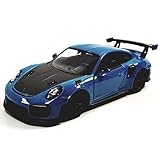
- Doors Open
- Pullback Action
- Die Cast Metal Body
- PULL BACK ACTION WITH FREE ROLLING WHEELS
Complete U.S. model-year timeline
- 1979: First-generation Celica Supra, 2.6-liter SOHC inline-six.
- 1980: First-generation update with a 2.8-liter engine and revised rear suspension.
- 1981: Final A40/A50-era U.S. model year, with the 2.8-liter SOHC six.
- 1982: A60 redesign with the 5M-GE 2.8-liter DOHC inline-six.
- 1983: A60 continuation year.
- 1984: A60 manual-transmission engine revisions, including higher compression and a larger intake.
- 1985: Final A60 year; Toyota cites 161 horsepower by this point.
- 19861⁄2: A70 standalone Supra introduced.
- 1987: Supra Turbo added; Turbo output cited by Toyota at 230 horsepower.
- 1988–1992: Continued A70 model years, with details varying by market and specification.
- 1993: A80 introduced in the U.S.
- 1994–1995: A80 continuation years with Turbo and non-Turbo forms.
- 1996: Turbo six-speed manual dropped in the U.S. because of emissions regulations.
- 1997: Six-speed manual returned; U.S. cars were Limited Edition 15th Anniversary models.
- 1998: Final regular U.S. A80 model year; California-emissions restrictions affected Turbo availability, while the non-Turbo gained VVT-i and standard limited-slip differentials.
- 1999: Toyota’s U.S. chronology references production cessation for the 1999 model year, while later Toyota history describes the U.S. lineup ending after 1998.
- 2000–2002: No regular U.S. Supra model-year offering; A80 production continued globally until 2002.
- 2019: Fifth-generation GR Supra revealed, but not a U.S. GR Supra model year.
- 2020: GR Supra returns to the U.S. with a 3.0-liter turbocharged inline-six and eight-speed automatic.
- 2021: 3.0-liter power increase and new 2.0-liter four-cylinder model.
- 2022: Manual transmission becomes available with 3.0-liter models.
- 2023: A91-MT 500-unit limited edition.
- 2024: 45th Anniversary Edition joins the 2.0 and 3.0 lineup.
- 2025: Fifth-generation GR Supra continues.
- 2026: 3.0, 3.0 Premium, and MkV Final Edition listed; production scheduled to end in spring 2026.
Which Supra generation is right for a buyer or restorer?
| Goal | Generation to investigate | Important qualification |
|---|---|---|
| Earliest Supra experience and classic Toyota character | A40/A50, 1979–1981 | These are older Celica-based cars, so originality, rust, trim, and parts condition can matter more than headline performance. |
| 1980s style with a stronger naturally aspirated six | A60, 1982–1985 | L-Type and Performance cars were mechanically identical; compare equipment and condition rather than assuming one is a different performance model. |
| Standalone Supra identity with an available Turbo | A70, 19861⁄2–1992 | Check market, emissions equipment, roof type, and whether the car is genuinely Turbo-spec. |
| Maximum classic Supra performance and collectability | A80, 1993–1998 U.S. model years | Turbo, manual, emissions state, and import status can change both specification and value substantially. |
| Modern performance, warranty-era documentation, and daily usability | GR Supra, 2020–2026 | Choose between the 2.0 four-cylinder and 3.0 inline-six, then verify transmission and trim; the 2026 Final Edition is the announced closing version. |
Restoration, service manuals, and parts availability
Classic Supra ownership requires generation-specific documentation. A Toyota Supra repair manual is a sensible starting point for readers working on early cars, but the verified Haynes title covers 1979–1992 Celica Supra vehicles. That makes it relevant to A40/A50, A60, and early A70 owners; it should not be presented as a complete service manual for the A80 or GR Supra.
Do these 3 things before closing this tab:
1Repair Windows errors before they cause bigger problems2Scan for outdated or missing drivers - takes under a minute3Clear out junk files and repair common Windows errorsToyota GAZOO Racing’s GR Heritage Parts program is the most authoritative restoration resource identified for A70 and A80 owners. Toyota has reproduced selected discontinued components, including examples such as propeller shafts, door handles, fuel sender gauges, weatherstrips, front emblems, headlamps, brake boosters, body moldings, name plates, and suspension bushings. Availability is not universal: the applicable release, country, dealer process, vehicle specification, and current inventory all need to be confirmed before ordering.
For a current car, use the official Toyota Supra owner’s manual and warranty documentation for the exact model year and production period. Toyota’s owner portal lists multiple 2026 Supra manuals associated with different production periods, so selecting documentation by VIN or build information is safer than downloading the first manual returned by a search.
How to identify a specific Supra correctly
- Start with the market. Determine whether the car is a U.S.-market vehicle, a Japanese-market import, or another export-market specification.
- Confirm the model year and build date separately. A production date does not automatically equal the next U.S. model year, and the A80’s U.S.-versus-global history demonstrates why the distinction matters.
- Verify the chassis code. Use A40/A50, A60, A70, A80, or the applicable fifth-generation designation as a cross-check, not as the sole proof of identity.
- Check the engine and transmission. Turbo badges, engine swaps, replacement transmissions, and imported specifications can make a car appear to be a different factory configuration.
- Check emissions equipment and state history. This is especially important for 1996–1998 A80 cars, because emissions rules affected manual and Turbo availability.
- Match the service documentation to the car. A manual for a 1979–1992 Celica Supra is not interchangeable with A80 or GR Supra documentation.
Frequently asked questions
What was the first Toyota Supra model year?
The first U.S. model year was 1979, sold as the Toyota Celica Supra. It used a 2.6-liter SOHC inline-six with electronic fuel injection.
Was there a 1986 Toyota Supra?
Yes, but the U.S. transition is conventionally identified as the 19861⁄2 model year. This was the third-generation A70, the point at which the Supra became a standalone model separate from the Celica.
Quick wins for a faster PC:
Repair Windows errors before they cause bigger problemsFix Now →Fix the driver behind crashes, sound loss and screen glitchesFind Drivers →Clear out junk files and repair common Windows errorsFree Scan →What year did the Supra Turbo begin?
Toyota added the Supra Turbo for the 1987 model year in the A70 generation. The A80 that followed also offered a Turbo model with a 3.0-liter twin-sequential-turbocharged inline-six.
Did the Supra end in 1998, 1999, or 2002?
All three dates can appear because they describe different things. Toyota’s later history says the A80 left the U.S. lineup after 1998 and continued to be produced globally until 2002. Toyota’s U.S. chronology references production cessation for the 1999 model year. For U.S. shopping, treat 1993–1998 as the normal A80 model-year range and verify any 1999 claim carefully.
Was the 2020 GR Supra available with a manual transmission?
No. The launch 2020 U.S. GR Supra used the 3.0-liter inline-six with an eight-speed automatic. Toyota introduced manual-transmission availability later for 3.0-liter models.
Is 2019 a GR Supra model year?
2019 was the public reveal year for the fifth-generation GR Supra. The U.S. model-year car was the 2020 GR Supra.
Do these 3 things before closing this tab:
1Repair Windows errors before they cause bigger problems2Scan for outdated or missing drivers - takes under a minute3Clear out junk files and repair common Windows errorsFrequently Asked Questions
What was the first Toyota Supra model year?
The first U.S. Supra model year was 1979. It was sold as the Toyota Celica Supra and used a 2.6-liter SOHC inline-six with electronic fuel injection.
Was there a 1986 Toyota Supra?
The U.S. transition is identified as the 19861⁄2 model year. It introduced the standalone A70 Supra, separate from the Celica.
What year did the Supra Turbo begin?
Toyota added the A70 Supra Turbo for 1987. The later A80 also offered a Turbo with a 3.0-liter twin-sequential-turbocharged inline-six.
Did the Supra end in 1998, 1999, or 2002?
For U.S. buyers, the normal A80 range is 1993–1998. Toyota describes the U.S. lineup as ending after 1998, while global A80 production continued until 2002; its U.S. chronology also references the 1999 model year.
Was the 2020 GR Supra available with a manual transmission?
No. The 2020 launch car used an eight-speed automatic. Toyota added a manual later for 3.0-liter GR Supra models.
The Bottom Line
The Supra’s five-generation story runs from the 1979 Celica Supra A40/A50 to the 2026 GR Supra MkV Final Edition. The key distinctions are the A70’s standalone break from the Celica, the A80’s U.S.-versus-global production split, and the 2019 reveal versus 2020 model-year return of the GR Supra.
Quick Recap
Product prices and availability are accurate as of the date/time indicated and are subject to change. Any price and availability information displayed on Amazon at the time of purchase will apply.




