Recommended Free Tools
Before buying a third-generation Toyota Prius (XW30), check the specific car—not just its model year. Get its VIN and repair records, confirm recall work, inspect fluids and brakes, test the car from a cold start, and arrange a pre-purchase inspection with a mechanic familiar with hybrids. Toyota’s own checklist is a useful guide to the vehicle-specific checks, but no single scan or clean recall lookup proves the car is trouble-free.
Before you view the Prius
Get the VIN and records
Ask the seller for the VIN, service records, ownership history and invoices for repairs to the braking, inverter or hybrid systems, and engine. Use the VIN to check for open recalls and ask Toyota to confirm whether applicable repairs were completed. A seller’s verbal assurance is not a substitute for records or confirmation.


In the United States, use NHTSA’s recall lookup. NHTSA says its tool can show unrepaired recalls and some completed recalls, but it may not display a newly announced recall until VINs have been identified. It does not include manufacturer customer-service campaigns or other non-safety campaigns, and it generally excludes recalls more than 15 years old unless the manufacturer offers additional coverage. A clear result is not a complete service-history report; NHTSA recommends checking recalls twice a year. Buyers elsewhere should use the relevant national authority and Toyota market.
Check warranty eligibility for this car
Warranty coverage depends on market, mileage, original in-service date, vehicle history and the applicable warranty guide. Toyota’s owner information for the 2015 Prius lists 8 years or 100,000 miles of coverage for the hybrid battery, battery control module, hybrid control module, and inverter with converter, subject to terms. It notes that the HV battery may have longer coverage under an emissions warranty. These are original warranty terms, not evidence that a used car remains covered today. Ask a Toyota dealer to check eligibility for the VIN and consult the applicable guide.
Crashes, No Sound, or Screen Glitches?
Random freezes, missing sound and display glitches usually trace back to one bad driver. Find and replace yours safely.Free scan · under a minutePC Slower Than It Used to Be?
A free scan shows the junk files, broken settings and background clutter dragging Windows down - then fixes them in one click.Free scan · Windows 10 & 11#1 Best Overall

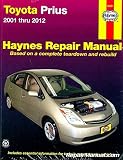
- Step-by-step procedures written from a complete teardown and rebuild, giving you the confidence to tackle repairs at any skill level.
- Over 700+ clear photos and diagrams that simplify complex systems, helping you complete jobs faster and with fewer mistakes.
- Comprehensive troubleshooting and fault-finding guides to quickly diagnose problems and reduce costly downtime.
Inspect the car in person
Toyota’s October 2013 pre-delivery checklist provides a useful XW30-specific baseline. It covers fluid levels and leaks, the HV battery, engine operation, hybrid transaxle, brakes, tires, lights, seat belts and cabin equipment. Use it as an inspection prompt, not as a substitute for a qualified assessment.
Fluids, leaks and service history
- Check the engine oil level and look for visible leaks. Ask how often the owner checks or tops up the oil and request oil-change records. A low level warrants investigation; on its own, it does not establish a particular defect.
- Look at the engine-coolant and inverter-coolant reservoirs and check the surrounding areas for signs of leaks. Ask a mechanic to investigate unexplained coolant loss.
- Check brake fluid and windshield-washer fluid. Toyota’s checklist includes all of these fluid-level checks and an inspection for leaks.
Cold start and operation
If possible, arrange to see the car before it has been driven that day. Start it and note warning lights or unusual operation. Observe how the engine behaves during warm-up and at normal operating temperature, and test the hybrid transaxle during a safe drive. Toyota’s checklist calls for checks of cold engine operation, warm-up, normal-temperature operation and transaxle operation. Have abnormal behavior assessed rather than assuming it is normal for a hybrid.
Brakes and tires
Test the brakes only in a safe setting. Pay attention to warning lights, unusual pedal travel or feel, and pump noises; have anything abnormal assessed promptly. Toyota has described a brake-pressure-accumulator fault in affected cars that could lengthen pedal travel and reduce braking force. Inspect the tires for damage and uneven wear, and ask a mechanic to assess any concerns.
Cabin equipment and safety items
Check that the lights, wipers, mirrors, windows, keys, seat belts, display, audio or navigation equipment, and other fitted controls work. Toyota’s checklist includes these kinds of lighting, visibility, restraint and cabin-equipment checks.
Have the hybrid system checked properly
A diagnostic-code scan can add useful information, but a basic OBD2 reader is only one part of an inspection. It may not expose all manufacturer-specific hybrid data, and a scan without stored faults does not prove the HV battery or whole hybrid system is healthy. A hybrid-aware mechanic can assess the battery, inverter, brakes and engine, and interpret any available system data. Do not buy a car with unresolved warning lights or unexplained symptoms on the strength of a generic scan alone.
Understand the recall history—and verify the individual VIN
Toyota’s UK recall announcements document two campaigns relevant to some third-generation Prius vehicles. They establish the scope of those UK campaigns, not whether a particular car in the UK or another market was included, or whether its repair was completed. Confirm applicability and remedy status by VIN with Toyota or the relevant authority.
| Campaign | Vehicles described in Toyota GB’s announcement | Reported issue and remedy |
|---|---|---|
| Brake pressure accumulator, announced 5 June 2013 | 4,947 UK-registered third-generation Prius vehicles built from March to October 2009 | A possible fatigue crack could allow nitrogen to leak into the brake fluid, increasing pedal travel and reducing braking force. Toyota said the accumulator would be replaced free of charge on affected vehicles. |
| Boost-converter software, announced 12 February 2014 | 30,790 UK-registered Prius vehicles manufactured from March 2009 through February 2014 | Toyota said the software could cause thermal stress in transistors in the inverter’s Intelligent Power Module. Warning lights and reduced power could result; in limited cases, the hybrid system could shut down. The stated remedy was a free software update. |
For campaign details, see Toyota GB’s announcements on the 2013 brake accumulator recall and the 2014 boost-converter software recall. The UK figures should not be treated as worldwide totals or as proof that a particular car was affected.
Independent reader supportYour contribution helps us test, update, and keep practical guides available for everyone.Compare candidate cars by evidence, not a model-year shortcut
The available campaign and inspection information does not establish an across-the-board best XW30 model year or a verified reliability ranking. When choosing between two cars, compare their individual documentation and condition:
What’s actually slowing this PC down?
Pick the symptom - the matching free tool is one click away.
Best Value
- Complete Repair Coverage: Step-by-step repair procedures specific to your vehicle — from routine maintenance like oil changes and air filter replacement to complex engine and transmission repairs
- 700+ Photos & Illustrations: Every procedure is visually supported with clear, close-up photography taken during an actual vehicle teardown and rebuild — no guesswork required
- Beginner to Advanced: Written in plain language so a DIY owner with basic tools can tackle most repairs confidently, while still serving as a valuable reference for experienced mechanics
- Full Troubleshooting Section: Quickly diagnose problems with dedicated troubleshooting guides for engine, electrical, brakes, and drivetrain systems
- Time-Saving Tips Throughout: Pro shortcuts and notes highlight common pitfalls, helping you avoid costly mistakes and get your vehicle back on the trail faster
- VIN-specific recall status and documented repair completion.
- Maintenance records, including evidence relevant to oil or coolant loss.
- Brake operation and the mechanic’s inspection findings.
- Hybrid-system scan results and specialist assessment.
- Mileage, overall condition and asking price.
- Any warranty or customer-support eligibility Toyota confirms for that VIN and market.
Do not infer battery life, repair cost, head-gasket risk or likely reliability from the recall announcements alone; they do not establish those figures for an individual vehicle.
Quick Recap
Product prices and availability are accurate as of the date/time indicated and are subject to change. Any price and availability information displayed on Amazon at the time of purchase will apply.




