What’s actually slowing this PC down?
Pick the symptom - the matching free tool is one click away.
The Toyota KAYOIBAKO is not a new Toyota camper you can order. It is a battery-electric concept first shown at the Japan Mobility Show 2023, where Toyota imagined a tiny, boxy vehicle that could become a camper, delivery van, mobile shop, shuttle, or accessible people-mover depending on the hardware and software installed inside.
That makes it more interesting than a conventional micro-camper. The KAYOIBAKO is Toyota’s vision of a configurable vehicle platform: a compact base unit that can change jobs instead of remaining permanently dedicated to one lifestyle. The van-life configuration is appealing, but it is only one interpretation of the larger idea.
As an Amazon Associate I earn from qualifying purchases.
A tiny electric box with more than one life
The KAYOIBAKO’s visual appeal comes from a contradiction. It is small enough to look at home on a crowded Japanese street, yet tall and square enough to suggest a surprisingly usable interior. Toyota presented it as an “ultra-expandable” battery-electric vehicle whose interior, equipment, and software could be adapted for different users.
One configuration could carry parcels on the last mile. Another could install shelves and counters for a mobile shop. Extra seating could turn it into a shuttle, while accessibility-focused layouts could make entry and use easier for wheelchair users. Toyota also showed the vehicle in a recreational configuration that naturally invites comparisons with a tiny camper van.
#1 Best Overall

- Mini Vintage Camper Van: Whether placed on a shelf, desk, kitchenette, cafes,canteen,home,office or bedside table,this camping car model complements various interior styles
- Inspires RV Wanderlust: Perfect for travel enthusiasts and adventure seekers, this model serves as a daily reminder to explore the great outdoors. It evokes a sense of nostalgia for road trips and camping adventures
- Detailed Interior and Exterior: Crafted from durable iron materials, our model captures the essence of real camper vans, showcasing realistic interiors and exteriors that delight collectors and enthusiasts alike
- Perfect Present for Adventurers: Ideal for camping lovers and model collectors, this camper van model serves as an excellent present, inspiring wanderlust and a passion for the great outdoors
- Size:Measuring 9.3L×7.5W×7.5H. Ensuring a fun and engaging building experience to Rv enthusiasts
So the best way to understand the KAYOIBAKO is not as a finished Toyota camper with an unusually cute design. It is a proposed electric mobility platform that can become a camper when configured for recreation.
What does “KAYOIBAKO” mean?
The name comes from reusable, configurable shipping containers used to move parts and products between Toyota facilities. These containers are designed around repeated use and efficient handling rather than a single permanent purpose.
Toyota borrowed that principle for the vehicle. Instead of treating the interior as a fixed collection of seats, cabinets, and trim, the KAYOIBAKO is imagined as a base unit that can accept different inserts and layouts. Its boxy proportions are therefore functional as well as stylistic: a rectangular cabin is easier to reconfigure than an interior shaped around one permanent arrangement.
That naming also explains why calling it simply a “camper van” misses the main point. A conventional camper is optimized for camping from the start. The KAYOIBAKO is intended to be adaptable enough to serve commercial, civic, and personal roles, with camping as one possible use.
Official dimensions: small, but not a kei van
Toyota’s published specifications for the original 2023 KAYOIBAKO list:
| Specification | Published figure | Approximate imperial conversion |
|---|---|---|
| Overall length | 3,990 mm | 13.1 feet |
| Overall width | 1,790 mm | 5.9 feet |
| Overall height | 1,855 mm | 6.1 feet |
| Wheelbase | 2,800 mm | 9.2 feet |
| Interior length | 3,127 mm | 10.3 feet |
| Interior width | 1,485 mm | 4.9 feet |
| Interior height | 1,437 mm | 4.7 feet |
| Driver-side interior-length figure | 2,141 mm | 7.0 feet |
At just under four meters long, the original concept is dramatically shorter than a full-size North American camper van. Its height and nearly vertical body sides make efficient use of that short footprint, but the published numbers do not make it a spacious motorhome. The interior-height figure is particularly important: Toyota has not claimed that the original concept provides standing room.
It also should not automatically be described as a Japanese kei vehicle. The dimensions Toyota published for the original KAYOIBAKO are wider and longer than the conventional kei-vehicle limits.
Quick wins for a faster PC:
Fix the driver behind crashes, sound loss and screen glitchesFind Drivers →Clear out junk files and repair common Windows errorsFree Scan →Scan for outdated or missing drivers - takes under a minuteDriver Scan →Why the concept looks so promising for tiny van life
The camping appeal is easy to understand. A vehicle measuring only about 13 feet long could potentially work as an everyday urban runabout, then change into a sleeping or gear-carrying space for a weekend away. That is a compelling alternative to owning a large camper that spends most of its time parked.
Toyota’s recreational imagery showed a more adventure-oriented version with features including a roof rack, ladder, exterior cargo provisions, and a camping-oriented interior arrangement. Secondary coverage also highlighted the concept’s glass roof and transparent front-panel treatment, details that contribute to its open, friendly character.
Rank #2

- COMPLETE SET: 20-piece miniature camping cookout set including wooden tripod stand, cooking pots, lantern, grill, decorative fish, and bundled firewood for authentic outdoor scenes Nature Diorama Summer Glamping
- PERFECT SCALE: Crafted in 1:12 dollhouse scale with meticulous attention to detail, ideal for creating realistic miniature wilderness cooking displays
- VERSATILE DISPLAY: Includes multiple arrangement options with hanging pot system, grilling platform, and ambient lighting features for dynamic scene creation
- AUTHENTIC DETAILS: Features realistic campfire effect, black cookware, wooden elements, and cooking implements that bring miniature outdoor scenes to life
- COMPACT SIZE: Perfectly sized components for dollhouse settings, with main tripod measuring approximately 2.36 x 1.77 x 0.79 inches
Those features support the idea of a charming micro-camper, but they should be read as design-study features rather than confirmed equipment for a production vehicle. Toyota has not published a production floor plan, bed dimensions, roof-load rating, or accessory catalog.
What a KAYOIBAKO-style camper could do well
- Use a small footprint: Its short length would suit dense cities, narrow roads, and ordinary parking spaces better than a full-size camper.
- Change roles: Removable or interchangeable modules could make the vehicle useful for commuting, hauling, and occasional camping.
- Prioritize efficient space: The tall, squared-off body provides more usable volume than a similarly short, heavily tapered vehicle.
- Support temporary escapes: The concept makes most sense for short trips, day adventures, and occasional overnight use rather than permanent living.
What remains unknown
Toyota has not published the information needed to judge it as a real camper. There is no official battery-capacity figure, range estimate, charging time, payload, curb weight, or performance specification for the original concept. Toyota has also not stated the sleeping capacity, bed size, kitchen equipment, bathroom provision, climate-control capability, or off-grid electrical capacity.
The Tool Desk
Outbyte PC Repair FREEClear out junk files and repair common Windows errorsFree Scan →Outbyte Driver Updater FREEFix the driver behind crashes, sound loss and screen glitchesFind Drivers →That means it would be inaccurate to promise a certain driving range, claim that two adults can sleep comfortably inside, or describe it as a complete live-aboard solution. The KAYOIBAKO is best understood as a highly space-efficient design study—not a confirmed tiny home on wheels.
Modularity is more important than the camper equipment
The most significant feature is not the roof rack or the camping imagery. It is the idea that the same vehicle can accept different functions over its lifetime.
For a private owner, that could mean using one compact EV as a weekday commuter, a cargo hauler for household projects, and a recreational vehicle on weekends. For a business, the same basic platform could support parcel delivery, mobile retail, or passenger transport. For a community organization, it could provide a shuttle or an adaptable service vehicle.
This is a different ownership proposition from buying a conventional camper. A dedicated camper uses its permanent interior for beds, storage, cooking, and living. That can make it immediately useful for travel, but it also means carrying camping equipment every day. KAYOIBAKO’s proposed advantage is that the owner could tailor the interior to the current task and avoid wasting space on features that are not being used.
The accessibility angle is equally important. Toyota included layouts intended to make vehicle access easier for wheelchair users, showing that modularity is not merely a way to add lifestyle accessories. In the broader concept, changing the interior can help the vehicle serve people with different mobility needs.
The 2025 KAYOIBAKO concepts broadened the idea
Toyota returned to the KAYOIBAKO theme at the Japan Mobility Show 2025 as part of its wider “TO YOU” mobility vision. Toyota’s booth material described KAYOIBAKO as mobility infrastructure capable of delivering services to customers and as a basic unit of free-use space for work and play.
Toyota’s 2025 press briefing also presented a broader development direction: Daihatsu would work on smaller “boxes,” while Toyota would develop larger ones. In that context, KAYOIBAKO appeared less like a single future consumer model and more like a scalable family of commercial and community-oriented vehicles.
Rank #3

- This product is created by a 3D printer, it is unpainted in its original color as pictured, some parts may require assembly by using glue.
- Printing patterns on the surface could be visible if you look at it carefully. For technical and safe transporting reason, some parts may come with a very thin sheet below it or a support structure which connects to it on some points (please check the last picture), You may have to remove the product with a cutter(just like you remove the parts from a sprue in a model kit).
- Materials: Resin, Scale: N Scale/1:160
- Dimensions: (Van) 34 mm x 16.50 mm x 19 mm(H), (RV) 45 mm x 16.50 mm x 20 mm(H)
- This item includes 2 RV and 2 Safari Vans
Daihatsu separately showed the KAYOIBAKO-K, a smaller concept. Its published dimensions were 3,395 mm long, 1,475 mm wide, 1,885 mm high, with a 2,550-mm wheelbase and seating for four. That is a different and smaller concept from the original Toyota vehicle, not proof that the 2023 camper-shaped KAYOIBAKO has entered production.
The KAYOIBAKO-K was presented for last-mile work and local-community support. Proposed functions included parcel delivery, flexible use connected to data-center systems, autonomous vehicle summoning and return, and community support such as monitoring elderly residents. It was classified as a concept car.
These 2025 developments strengthen the case that KAYOIBAKO remains an active design and mobility theme. They do not establish that Toyota will sell the original recreational configuration, or that the newer concepts are direct successors to it.
Can you buy the Toyota KAYOIBAKO?
No—not as a confirmed production vehicle. Toyota’s original announcement described the 2023 vehicle as an exhibit and concept model. Toyota’s German media information also stated that it was not yet homologated or orderable.
As of the authoritative research date of August 12, 2026, no official Toyota announcement had supplied a production launch date, retail price, ordering process, confirmed sales market, battery specification, or North American availability for the original KAYOIBAKO camper concept. No U.S. Toyota sales channel or Toyota USA product page was identified for it.
Windows Errors? Fix Them Before They Spread
Repair common Windows errors and clear accumulated junk for a smoother, more stable PC - no reinstall needed.Free scan · no reinstallOutdated Drivers Are Slowing You Down
One free scan finds every outdated or missing driver and matches the right update for your exact hardware.Free scan · exact hardware matchThat distinction matters for shoppers. There is no confirmed way to place a deposit, import a production example through an ordinary Toyota dealer, order KAYOIBAKO-specific camping equipment, or compare its range and charging performance with real electric vans.
Headlines suggesting that Toyota has “launched” the KAYOIBAKO or that it is definitely “coming to America” go beyond the available evidence. The accurate descriptions are concept, design study, preview, and future mobility idea.
Independent reader supportYour contribution helps us test, update, and keep practical guides available for everyone.What it could mean for North American van-life readers
The KAYOIBAKO’s dimensions fit a Japanese compact-vehicle context, and its original unveiling took place at the Japan Mobility Show in Tokyo from October 26 to November 5, 2023. Toyota did not announce a global sales strategy for the vehicle.
U.S. readers should therefore avoid assuming that the concept would meet American homologation, crash, lighting, charging, or other regulatory requirements. Even if Toyota eventually developed a production model, its final dimensions, safety equipment, battery system, and market availability could differ substantially from the show vehicle.
Do these 3 things before closing this tab:
1Fix the driver behind crashes, sound loss and screen glitches2Repair Windows errors before they cause bigger problems3Scan for outdated or missing drivers - takes under a minuteRank #4
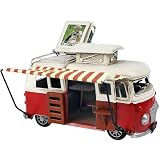
- Mini Vintage Camper Van:The mini vintage camper van model featuring a photo frame on top, crafted from durable metal. Its classical white design with a red symbol echoes the bygone era of road trips.
- Hand-Painted Realism: Adorned with hand-painted accents, this model exudes realism, capturing the spirit of adventure synonymous with camper vans. Every detail reflects the craftsmanship and dedication to replicating the essence of a beloved era.
- Miniature Road Trip Vibes: The carefully crafted design and miniature scale provide a visual feast, stirring feelings of wanderlust and adventure.Transport yourself to the open road with this model, invoking the excitement of a cross-country journey.
- Practical Photo Frame : This camper van model features a photo frame on top, serving as a unique display stand for cherished photographs. It seamlessly combines decorative appeal with functionality, making it a charming addition to any space.
- Vintage Gift : Sized at 7.7’’L x 7.5‘’W x 6’’H, this camper van model is a vintage gift perfect for friends and family. As collectibles, it transcends its decorative role, becoming a cherished piece celebrating the golden era of road trips.
The concept is still relevant to North American van life because it raises a useful question: does a camper need to be a permanently equipped large van? For many owners, a small vehicle that can switch between daily transport and occasional camping could be more practical than a dedicated recreational vehicle. The KAYOIBAKO illustrates that possibility, even though it does not currently offer a purchase path.
Why Toyota’s tiny camper idea is exciting—and why caution matters
The KAYOIBAKO is exciting because it treats a vehicle as an adaptable room rather than a fixed trim level. It combines a compact exterior with an interior designed around change. In the camper interpretation, that could make minimalist travel easier without requiring the owner to drive a large van every day.
But the same flexibility creates unanswered practical questions. How quickly would modules be changed? Where would unused parts be stored? How would the floor be secured? What would the payload be after adding camping equipment? Could the vehicle maintain cabin heating or cooling overnight? How much energy would be available away from a charger? None of those questions has a published production answer.
Until Toyota provides a retail specification sheet, the KAYOIBAKO should be judged as a design direction rather than a tested camper. Its promise is about efficient space, multiple uses, and adaptable ownership—not verified range, comfort, or off-grid capability.
The bottom line for tiny-van-life fans
The Toyota KAYOIBAKO is one of the more appealing recent visions of a micro-camper because camping is only one part of its purpose. Toyota imagined a compact electric box that could become a delivery vehicle, mobile shop, shuttle, accessible transport, or recreational space through configurable hardware and software.
Free tools Windows power users keep installed
One-click scans. No signup required.
Its original dimensions—3,990 mm long, 1,790 mm wide, and 1,855 mm high—suggest a genuinely small urban vehicle with a useful, squared-off cabin. The concept imagery makes a convincing case for minimalist adventures, but Toyota has not published the battery, range, bed, payload, charging, or livability data needed to treat it as a production camper.
For now, the KAYOIBAKO is best appreciated as a lovable glimpse at a more flexible future for tiny van life. It is not yet a Toyota camper you can buy.
Frequently Asked Questions
Is the Toyota KAYOIBAKO a real production camper van?
No. The original KAYOIBAKO is a battery-electric concept vehicle shown by Toyota at the Japan Mobility Show 2023. It was not homologated or orderable, and no production launch, price, or ordering process had been announced as of August 12, 2026.
How big is the Toyota KAYOIBAKO?
Toyota published an overall length of 3,990 mm, width of 1,790 mm, height of 1,855 mm, and wheelbase of 2,800 mm for the original concept. That is approximately 13.1 feet long and 5.9 feet wide.
Recommended Free Tools
What is the KAYOIBAKO-K?
The KAYOIBAKO-K is a separate, smaller Daihatsu concept shown in 2025. It measures 3,395 mm long, 1,475 mm wide, and 1,885 mm high, with a 2,550-mm wheelbase and four-person seating. It was presented as a concept for last-mile and community uses, not as a production camper.
What is the name KAYOIBAKO supposed to mean?
The name refers to configurable reusable shipping containers used to move parts and products between facilities. Toyota uses the idea to describe a vehicle whose interior can be adapted for different jobs and lifestyles.
How far can the electric KAYOIBAKO travel?
Toyota has not published an official battery capacity, EPA or WLTP range estimate, charging time, or production electrical specification for the original concept. Any precise range claim should therefore be treated as speculation.
Quick Recap
Product prices and availability are accurate as of the date/time indicated and are subject to change. Any price and availability information displayed on Amazon at the time of purchase will apply.




