The 13 cars below are a curated selection from MotorTrend’s April 24, 2020 retrospective, “The Ugliest Cars of the 1990s.” They reflect one publication’s critical judgment of styling, not a poll, a sales-weighted measure, or a scored ranking. Each entry lists the specific criticisms MotorTrend made, followed by a closer look at the cases where an unattractive shape still served a clear purpose.
How to read this list
- “Ugliest” is a judgment call. MotorTrend’s piece is an editorial retrospective, not a public survey, and it does not claim to measure opinion.
- Thirteen is the count used here, taken from the decade-wide pool MotorTrend covered. The original article contains other examples that are not reproduced.
- Model-year labels follow MotorTrend’s framing. Where the original identifies a car by generation rather than a single model year, this article does the same instead of guessing a year.
- Tastes differ. A car that reads as anonymous to one reviewer may look correct to another, and the entries below should be read as one publication’s position.
The 13 cars, with MotorTrend’s criticisms
1990 Chevrolet Lumina
MotorTrend calls the Lumina a “featureless blob.” The criticism is mainly about anonymity: the car is set against other General Motors cars built on the same GM-10 platform, and it comes across as the least distinct of the group.
1990 Chrysler Imperial
The Imperial is faulted for styling that already looked dated when it arrived. The complaints listed are hidden headlights, heavy chrome, and a rear-body extension seam that is easy to see, which together make the car look assembled rather than designed.
1991 Chevrolet Caprice
MotorTrend likens the inflated body to an air-filled version of the older Caprice. The criticism also covers the car’s mechanical character, which the magazine describes as dated for the period.
What’s actually slowing this PC down?
Pick the symptom - the matching free tool is one click away.
#1 Best Overall
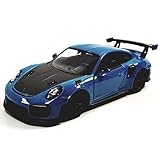
- Doors Open
- Pullback Action
- Die Cast Metal Body
- PULL BACK ACTION WITH FREE ROLLING WHEELS
1992 Renault Twingo
The Twingo’s front was meant to look like a smiling face. MotorTrend’s writer found the result startled rather than cheerful. The centralized instrument panel and interior choices also draw criticism, so the complaint covers the whole cabin as well as the face.
1992 Subaru SVX
The SVX is criticized for an unusual window treatment, visual creases, and detailing around the rear quarter and bumper. The objection is less about any single feature and more about how many unusual details are stacked on one body.
Fourth-generation Ford Mustang
MotorTrend’s complaint is that the soft, rounded curves clash with the Mustang nameplate, which has a history of sharper styling. The problem described is one of identity: the car looks like it belongs to another badge.
Second-generation Ford Scorpio
The Scorpio draws criticism for bulging headlamps, a full-width rear-light treatment, and abundant faux wood inside. The front and rear both carry the decade’s roundness, and the interior adds decoration that the magazine finds excessive.
Rank #2

- AUTHENTIC REPLICA: Highly detailed 1:40 scale model of the iconic 1957 Chevrolet Bel Air Coupe, measuring 5 inches in length with classic finish
- WORKING FEATURES: Functioning doors that open and close, plus pull-back motor action for interactive play value
- QUALITY CONSTRUCTION: Die-cast metal body construction provides durability and authentic feel, enhanced with detailed plastic components
- REALISTIC DETAILS: Features rubber tires for enhanced realism and smooth rolling action on various surfaces
- DISPLAY WORTHY: Perfect size for collectors and enthusiasts, combining playability with showcase appeal
1995 Buick Riviera
MotorTrend describes the front end as whale-like and the interior as inexpensive-looking. The magazine concedes that some of the rear-quarter lines work, which makes this one of the more mixed verdicts on the list.
1995 Chevrolet Monte Carlo
The Monte Carlo is described as bland and anonymous. The sharper contrast is with the model’s own earlier styling identity, which makes the later car look generic by comparison.
1995 Lancia Ypsilon
The Ypsilon is singled out for a pinched front, an unusual beltline, black trim, and wedge-shaped rear lights. The criticism focuses on how these details combine, not on any one of them alone.
1996 Ford Taurus
MotorTrend presents the rounded headlamps, grille, roof, and rear window as an overdone departure from the original Taurus design. The complaint is one of degree: the car keeps the original’s shape but pushes each curve further.
Recommended Free Tools
Rank #3

- AUTHENTIC REPLICA: Die-cast metal 1:43 scale model of the 1953 Cadillac Series 62, featuring detailed exterior finish and classic vintage styling
- FUNCTIONAL FEATURES : Working doors that open and close, plus pull-back action mechanism for interactive play
- QUALITY CONSTRUCTION : Built with die-cast metal body, rubber tires, and precise plastic components for durability and authentic look
- PERFECT SIZE : Measures 5 inches in length, making it ideal for display or play while maintaining impressive detail
- REALISTIC DETAILS: Features authentic chrome trim accents, detailed interior, and period-correct wheel designs true to the original 1953 Cadillac
1996 Saturn SW
The SW is criticized as a low-cost redesign that joins a wagon body to sedan doors in an awkward way. The objection is about the cost-driven construction showing in the proportions.
1996 Suzuki X-90
The two-seat X-90 is criticized for toy-like styling and limited utility. MotorTrend points to the absence of a back seat and little usable trunk space, so the complaint covers both appearance and function.
Five questions to test any “ugly” verdict
MotorTrend’s criticisms repeatedly fall into the same categories. These five questions help separate a styling complaint from a design failure:
- Front-end and lighting: do the headlamps and grille read as intentional, or as bulging, pinched, or mismatched?
- Proportions and silhouette: does the body shape fit the vehicle’s size and role?
- Nameplate fit: does the styling match what the badge was known for?
- Practical value: does a feature such as seating, cargo space, or equipment change the overall verdict?
- Source and context: is the criticism coming from a styling critic, a buyer, or a publication with a stated editorial angle?
When an unattractive shape was the point
Styling criticism and practical value are separate questions. Two cars from outside MotorTrend’s 1990s list show how the two can diverge.
Rank #4

- AUTHENTIC REPLICA: Die-cast metal 1:43 scale model of the 1953 Cadillac Series 62, featuring detailed exterior finish and classic vintage styling.
- FUNCTIONAL FEATURES : Working doors that open and close, plus pull-back action mechanism for interactive play.
- QUALITY CONSTRUCTION : Built with die-cast metal body, rubber tires, and precise plastic components for durability and authentic look.
- PERFECT SIZE : Measures 5 inches in length, making it ideal for display or play while maintaining impressive detail.
- REALISTIC DETAILS : Features authentic chrome trim accents, detailed interior, and period-correct wheel designs true to the original 1953 Cadillac.
1998 Fiat Multipla
The Multipla is a 1998 car, so it falls within the decade but was not on MotorTrend’s list. The Museum of Modern Art’s 1999 exhibition page, “Different Roads: Fiat Multipla,” describes it as a six-passenger family vehicle with a small exterior, a spacious cabin, and a flexible interior. The unusual silhouette was a packaging solution, not an accident of styling. Auto Express also notes its six-seat, three-abreast layout.
2001 Pontiac Aztek
The Aztek is a 2001 model, so it sits outside the 1990s. TIME’s “The 50 Worst Cars of All Time” entry recounts a hostile reaction at its Detroit auto-show unveiling. The same entry quotes automotive critic Dan Neil, who called it a “useful, competent crossover,” and says that designers later described the production version as compromised by repeated changes and cost reductions. Neil also wrote: “The Aztek violates one of the principal rules of car design: We like cars that look like us.” Auto Express lists its practical features: a removable cooler, a split tailgate, audio controls, and an optional tent.
| Vehicle | Styling criticism | Practical feature cited | Source |
|---|---|---|---|
| 1998 Fiat Multipla | Unusual silhouette | Six-passenger, three-abreast seating in a small exterior (MoMA’s 1999 exhibition page; Auto Express) | MoMA, “Different Roads: Fiat Multipla,” © 1999; Auto Express |
| 2001 Pontiac Aztek | Widely criticized at its unveiling; described by Dan Neil as having a design that does not look like “us” | Removable cooler, split tailgate, audio controls, optional tent (Auto Express); called a useful, competent crossover (Dan Neil, TIME) | TIME, “2001 Pontiac Aztek — The 50 Worst Cars of All Time,” associated with 2007; Auto Express, “Top 10 ugliest cars ever made” |
Neither car’s practical strengths erase the styling criticism, and the criticism is a legitimate part of how each is remembered. The point is that a verdict on appearance and a verdict on usefulness can both be true at once.
Quick Recap
Product prices and availability are accurate as of the date/time indicated and are subject to change. Any price and availability information displayed on Amazon at the time of purchase will apply.
Quick wins for a faster PC:
Repair Windows errors before they cause bigger problemsFix Now →Fix the driver behind crashes, sound loss and screen glitchesFind Drivers →



