There is no settled, objective ranking of the greatest woodies: the relevant Motoring Research feature offers a selection of twelve vehicles, not a scored top nine. This list makes its own editorial selection, spanning genuine timber construction, wood attached to steel bodies, and later woodgrain imitations—and identifies those differences so the shared look does not obscure what each vehicle was made of.
The selection considers use of real wood, rarity where a source documents it, design or engineering interest, utility, and the range of woodie interpretations. It is a historically informed selection, not a claim that these nine are the undisputed best.

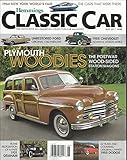

What counts as a woodie?
“Woodie” can describe cars with very different materials. Some used substantial timber framing; others attached genuine wood to a steel body; later wagons used simulated woodgrain. The cars below are labeled accordingly. The descriptions and figures are drawn from Motoring Research’s 2017 feature unless another source is named.
| Vehicle | Wood or wood-look construction | Why it merits inclusion |
|---|---|---|
| 1934 Plymouth Westchester Semi-Sedan Suburban | Finished woodie; the source describes leather upholstery and removable rear seats. | An early factory-offered example, with a reported production figure of 35. |
| 1937 Ford DeLuxe Station Wagon | Early Ford woodie wagon. | A representative of the widely produced Ford woodie line, with room for up to eight across three rows. |
| 1947 Ford Super Deluxe Woody Wagon | Hard Maple structural framing and Mahogany body panels, according to Aumann Auctions. | A well-documented postwar example of timber-intensive construction. |
| 1949 Willys Jeep Station Wagon | All-steel body styled to resemble timber-clad wagons. | Shows how the woodie look could be carried into an all-steel utility vehicle. |
| 1951 DKW Meisterklasse Universal Type F89 S | Wood used inside and outside on the rear bodywork, according to Motoring Research. | A European estate-car interpretation of the woodie. |
| Morris Minor Traveller | Structural ash frame with a varnished finish and side-hinged rear doors. | A distinct timber-framed British small estate. |
| 1951 Ford Country Squire | Early versions had genuine wood trim attached to steel; woodgrain replaced genuine wood from 1953, according to Motoring Research. | Captures the transition from real wood to the woodie appearance. |
| 1980 Honda Civic Country | Vinyl woodgrain trim. | A compact, front-wheel-drive interpretation of the woodie theme. |
| 1996 Buick Roadmaster Estate | Imitation woodgrain. | A late full-size American wagon that carried the wood-sided look into the 1990s. |
Nine notable woodies and woodie-inspired wagons
1. 1934 Plymouth Westchester Semi-Sedan Suburban
Plymouth offered the Westchester as a finished woodie. Motoring Research describes leather upholstery and removable rear seats, details that make it a useful early example of a wood-bodied car intended to combine passenger comfort and wagon utility. The same 2017 article reports that 35 were sold; that figure is secondary reporting, not a factory production record verified here.
Recommended Free Tools
#1 Best Overall
2. 1937 Ford DeLuxe Station Wagon
Ford’s DeLuxe wagon represents the scale and practicality associated with early American woodies. Motoring Research says early Ford woodie wagons built from 1932 through 1948 numbered more than 120,000, and describes the wagon as seating up to eight across three rows with a split tailgate. Those production and seating claims are reported by the 2017 article.
3. 1947 Ford Super Deluxe Woody Wagon
This postwar Ford provides a concrete example of timber-intensive construction. Aumann Auctions describes a 1947 Super Deluxe Woody Wagon with Hard Maple structural framing and Mahogany body panels. Its listing claims 16,104 were produced for the 1947 model year; treat that as an auction-listing figure, not independently verified factory data.
4. 1949 Willys Jeep Station Wagon
The Willys Jeep Station Wagon is an important contrast: it was all steel, styled to evoke timber-clad wagons rather than built as a true wood-bodied car. Motoring Research reports that four-wheel drive arrived in 1949 and that about 300,000 were sold before replacement in 1965. Those figures are attributed to the 2017 article.
5. 1951 DKW Meisterklasse Universal Type F89 S
The DKW Meisterklasse Universal brought the woodie idea to a European three-door estate. Motoring Research describes wood on both the inside and outside of its rear bodywork and says it was replaced by an all-steel version in 1953. It broadens a list otherwise centered on American wagons.
6. Morris Minor Traveller
The Morris Minor Traveller is distinguished by its timber-framed rear body. Motoring Research dates the Traveller to 1952 and describes an ash frame, varnish finish, and side-hinged rear doors. The source says the rear frame was added at the MG factory after part-production in Oxford.
7. 1951 Ford Country Squire
The early Country Squire helps explain how the woodie look outlasted timber construction. Motoring Research says the first versions used genuine wood trim attached to a steel body, while woodgrain replaced genuine wood from 1953 onward. The source describes an inline-six as standard and a Flathead V8 as optional.
Rank #3
8. 1980 Honda Civic Country
The Civic Country shows that woodie styling was not limited to large rear-wheel-drive American wagons. Motoring Research describes it as a compact, front-wheel-drive Civic variant with a 1.5-litre engine and vinyl woodgrain trim. It is a woodie in appearance, not a timber-bodied car.
9. 1996 Buick Roadmaster Estate
The Roadmaster Estate represents the full-size wagon’s late-century woodgrain era. Motoring Research describes a rear-wheel-drive estate with imitation woodgrain, an optional third row, and a 5.7-litre V8. The source calls it the last American wood-sided wagon, but that broad superlative is the source’s framing and is not independently established by the evidence used here.
Free tools Windows power users keep installed
One-click scans. No signup required.
Other candidates and the limits of a top-nine list
This selection is not definitive. The Packard Club’s “Station Sedans (Packard Woodies)” showroom records examples from 1934, 1937, 1939, 1940, 1941, and 1948, and identifies bodies from suppliers including Bridgeport, Cantrell, Hercules, Custom Body, Standard Coach, as well as a factory body. Those records show that Packard woodies and specialist coachbuilders are also historically defensible choices.
The nine entries above prioritize variety across materials, eras, and markets. A list focused only on structural timber, rarity, or luxury would make different choices. No source in the dossier establishes a consensus ranking.
Independent reader supportYour contribution helps us test, update, and keep practical guides available for everyone.FAQ
Were all woodies made with real wood?
No. Some had timber framing or bodywork, some used real wood attached to steel, and others used simulated woodgrain. For example, Motoring Research describes the Willys Jeep Station Wagon as all steel and the 1980 Honda Civic Country as vinyl woodgrain trimmed.
How many cars are on the Motoring Research list?
Its 2017 feature lists twelve examples, not nine. This article selects nine from the documented examples and states its own criteria rather than presenting that selection as a source-validated ranking.
What’s actually slowing this PC down?
Pick the symptom - the matching free tool is one click away.
Best Value

- Olds Rocket Finale
How many 1947 Ford Super Deluxe Woody Wagons were produced?
Aumann Auctions claims 16,104 for the 1947 model year. That number comes from an auction listing, publication date not stated, accessed in 2026; it is not independently verified factory data.
Were there Packard woodies?
Yes. The Packard Club’s station-sedan showroom lists examples from several model years, including 1934, 1937, 1939, 1940, 1941, and 1948. It also identifies multiple body sources.
Quick Recap
Product prices and availability are accurate as of the date/time indicated and are subject to change. Any price and availability information displayed on Amazon at the time of purchase will apply.




