What’s actually slowing this PC down?
Pick the symptom - the matching free tool is one click away.
The U.S. has finalized a reset of federal fuel economy standards for passenger cars and light trucks—not merely proposed one. Announced by the Department of Transportation (DOT) on September 28, 2026, the SAFE Vehicles Rule III covers model years 2022–2031. NHTSA projects a fleetwide average requirement of about 34.9 mpg for model year 2031. The effects on vehicle prices, safety and oil use cited by DOT are projections, not outcomes measured after implementation.
Did the U.S. weaken fuel economy standards?
Yes. On September 28, 2026, DOT announced that the administration had finalized the SAFE Vehicles Rule III reset of Corporate Average Fuel Economy (CAFE) standards. NHTSA’s current CAFE page identifies the final rule as covering passenger cars and light trucks for model years 2022–2031. It is no longer only a plan or proposal. NHTSA’s CAFE program page and DOT’s announcement provide the agencies’ descriptions.

CAFE standards regulate how far vehicles must travel on a gallon of fuel. NHTSA sets the standards for passenger cars and light trucks. It separately administers fuel-consumption standards for medium- and heavy-duty trucks and engines, so this light-duty reset should not be described as a change to every federal truck standard.
What does the fuel economy rollback mean for car buyers?
The rule changes the requirements manufacturers must meet across their fleets; it does not set a required mpg figure for every individual car or guarantee a particular vehicle price. DOT projects that the final rule will reduce average new-vehicle cost by $1,300 and produce $138 billion in savings over five years. Those are DOT’s projected effects, not measured savings already realized by buyers. The announcement does not establish how a particular model’s price or fuel economy will change.
#1 Best Overall
What changes under the final rule?
Projected fleetwide fuel economy
NHTSA projects that the amended standards will correspond to a fleetwide average requirement of about 34.9 mpg in model year 2031. DOT compares that figure with 30.1 mpg for model year 2024. These are agency figures about fleetwide standards, not a promise that each new vehicle will achieve 34.9 mpg in real-world driving. NHTSA’s CAFE page lists the final rule and its covered model years.
Credit trading changes in model year 2028
The rule eliminates trading of compliance credits between manufacturers starting in model year 2028. This changes a mechanism manufacturers could use to meet requirements; it is distinct from the rule’s change to how light-duty vehicles are classified.
Light-duty vehicle classification changes in model year 2030
Beginning in model year 2030, the rule changes light-duty fleet classification. DOT says the change shifts the fleet mix from approximately 70% light trucks and 30% passenger cars to around 70% passenger cars and 30% light trucks. That fleet-mix estimate is DOT’s characterization of the classification change, not a measured future sales result.
What effects does DOT project—and what is not yet established?
DOT’s September 2026 announcement attributes the following projected effects to the final rule:
Rank #3

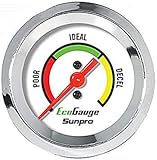
- Plug and Play: This automotive gauge is easy to install, requiring no complicated wiring or professional installation; it connects directly to the vehicle's system.
- Fuel Economy Monitoring: Designed to help track and optimize fuel consumption, allowing drivers to monitor vehicle efficiency and potentially reduce fuel costs.
- Portable Design: This compact and lightweight gauge can be easily moved between different vehicles or removed when not needed. This fuel economy monitor can easily fit into your armrest box.
- Universal Compatibility: Suitable for vehicles using gasoline, diesel, water, and lubricants, making it suitable for a wide range of automotive applications.
- A $1,300 reduction in average new-vehicle cost.
- $138 billion in savings over five years.
- More than 300,000 serious injuries prevented and 1,900 lives saved.
- A model year 2031 fleet average of 34.9 mpg, compared with 30.1 mpg for model year 2024.
- About 1.3 billion fewer barrels of annual oil consumption in 2050 than annual oil consumption in 2024.
These are government estimates or claims, not observed post-implementation results. The official announcement does not establish that the projected price savings, safety effects or oil-use changes have occurred. DOT Secretary Sean P. Duffy described the final rule as making vehicles more affordable and safer; NHTSA Administrator Jonathan Morrison said it balances affordability and energy conservation. Those are administration officials’ explanations of the policy, not independent verification of its effects. DOT’s announcement is the source for the projections and statements.
Independent reader supportYour contribution helps us test, update, and keep practical guides available for everyone.How did the rule move from proposal to final?
- June 6, 2025: NHTSA published an interpretive rule concerning its authority under CAFE law. The agency explicitly said that the interpretive rule did not itself change existing CAFE or medium- and heavy-duty standards, and said it would enforce existing standards while pursuing replacement-standard rulemaking. NHTSA’s CAFE materials describe the program.
- December 2, 2025: NHTSA signed the SAFE Vehicles Rule III proposal, accompanied by a draft supplemental environmental impact statement.
- January 7, 2026: NHTSA held a public hearing on the proposal. Its CAFE rulemaking information provides the agency context.
- September 28, 2026: DOT announced that the reset was finalized. DOT’s announcement describes the final rule.
The 2025 interpretive rule and the 2026 final standards are separate actions. An earlier NHTSA proposal, published in 2021 for model years 2024–2026, sought annual 8% improvements and estimated a 12 mpg fleet-average increase for model year 2026 relative to model year 2021. That earlier proposal is not the SAFE Vehicles Rule III final rule. NHTSA’s CAFE page covers the agency’s standards and rulemaking history.
Quick Recap
Rank #4

- Adjusts speed limiter
- Read and erase trouble codes
- See instant fuel economy
- Customize gauges and set safety warnings
Product prices and availability are accurate as of the date/time indicated and are subject to change. Any price and availability information displayed on Amazon at the time of purchase will apply.




