The Roots brothers patented an industrial air mover in 1860, before the American Civil War began in 1861. That device was an ancestor of the Roots-type blower—not an automobile supercharger. The engineering history cited by City, University of London places a later milestone in 1885, when Gottlieb Daimler patented supercharging an internal-combustion engine in Germany. The history of the supercharger therefore starts with two different inventions: moving air for industrial work, then forcing air into an engine.
When was the supercharger invented?
There is no single date unless “supercharger” is defined carefully. In its account of supercharging history, an engineering thesis hosted by City, University of London says Philander and Francis Marion Roots patented an industrial air mover in 1860. It credits Gottlieb Daimler with an 1885 German patent for supercharging an internal-combustion engine. The first date concerns the industrial ancestor of the Roots blower; the second concerns engine supercharging. Neither date marks the launch of a production supercharged car.
The thesis is a secondary historical source, not a primary patent record, so these dates are best described as the milestones it identifies rather than as an independently established claim of invention priority. City, University of London’s repository
Who invented the supercharger?
For the industrial air-moving device that gave rise to the Roots-type blower, the relevant inventors are Philander and Francis Marion Roots. For the engine-supercharging patent milestone, the engineering thesis credits Gottlieb Daimler. These are related steps in the technology’s history, but they are not the same invention: the Roots brothers’ 1860 device was for industrial applications, while Daimler’s cited 1885 patent concerned an internal-combustion engine.
#1 Best Overall

- Supercharger Cover And Intercooler Upgrade
- Camaro LSA Engines, 2009-14 CTS-V
What is a Roots blower?
A Roots blower is a positive-displacement air mover descended from the industrial device patented by the Roots brothers. In the automotive history here, the key development was adapting a Roots compressor to an engine. The 1860 patent should not be mistaken for an early automotive installation: the car application came much later.
Was the supercharger invented before the Civil War?
The industrial precursor was patented before the war: the thesis dates it to 1860, while the American Civil War began in 1861. But the cited engine-supercharging patent came in 1885, after the war, and production supercharged Mercedes passenger cars followed later still. So the title’s prewar hook is accurate for the Roots brothers’ industrial air mover, not for a supercharged automobile.
Rank #2
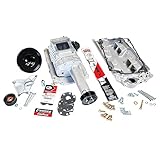
- Conventional Cylinder Head Compatibility
- Edelbrock 122 System Type
- Carbureted
- Eaton H122 Rotor Type
- 6-Rib 3. 75 in. Pulley
How did the Roots compressor reach Mercedes passenger cars?
The 1919 experiment met a technical obstacle
Paul Daimler experimented with a Roots supercharger on a Mercedes-Knight 10/40 hp engine in 1919. Mercedes-Benz Classic reports that the compressor could not be combined technically with the Knight engine’s slide-valve arrangement. Development therefore shifted to engines controlled by conventional valves. Mercedes-Benz Classic’s historical account
Presentation came before the market launch
Mercedes-Benz presented the production-ready 6/25 hp and 10/40 hp passenger cars at the German Motor Show in Berlin, held from 23 September to 2 October 1921. The company says they reached the market in 1923, more than a year after their presentation. The distinction matters: 1921 was the public presentation of production-ready models, not their market launch.
What’s actually slowing this PC down?
Pick the symptom - the matching free tool is one click away.
Rank #3

- 【Supercharger Kit】This is a universal supercharger, any model, 3.5 and below displacement, as long as there is space to install, Small size, it can be easily installed in various models
- 【Increased Power】engine power increased by more than 30%; 3-10% lower fuel consumption
- 【Reduce Pollutant Emissions】LCD, HC, NOXJ reduced by 30% or less
- 【Protect The Engine】reduce engine wear due to deposits
- 【Wide Application】For Cherokee TOYOTA Previa Buick GL8 HOVER So on. The Supercharger Can Be Mounted On Any Engine If There Is Enough Space.
Mercedes’ published figures show the compressor’s effect
Mercedes-Benz Classic’s 2021 historical release reports the following engine outputs with the switchable compressor off and on. These are manufacturer-published historical specifications, not independent measurements.
| Model | Engine displacement | Compressor off | Compressor on |
|---|---|---|---|
| Mercedes 6/25 hp | 1,568 cc | 15–18 kW (20–25 hp) | 28–29 kW (38–40 hp) |
| Mercedes 10/40 hp | 2,614 cc | 26–29 kW (35–40 hp) | 48 kW (65 hp) |
Mercedes-Benz Classic characterizes the average performance increase in these two examples as “a good 60 per cent.” In 1924, the model designations became Mercedes 6/25/38 hp and 10/40/65 hp; according to the same release, the final number indicated horsepower with the compressor switched on.
Rank #4

- VMP Gen 6 3.0L Supercharger Kit: Boost your Mustang's power
- Stage 1 Kit: Entry-level performance upgrade
- Gain Over 300 RWHP: Unleash your engine's potential
- Complete Kit: Includes all essential components
- Stock-Like Driving Experience: Enjoy enhanced power without compromises
What was the first production supercharged car?
The evidence here supports a careful answer rather than an absolute claim about every manufacturer: Mercedes-Benz describes the 6/25 hp and 10/40 hp as its first two production-ready passenger cars with switchable Roots compressors. They were presented in 1921 and reached the market in 1923. The historical account does not establish a broader worldwide “first production supercharged car” priority claim.
Independent reader supportYour contribution helps us test, update, and keep practical guides available for everyone.What the dates mean
- 1860: The Roots brothers’ patented industrial air mover, according to the City, University of London engineering thesis.
- 1885: The engine-supercharging patent milestone the thesis attributes to Gottlieb Daimler.
- 1919: Paul Daimler’s unsuccessful attempt to pair a Roots compressor with the Mercedes-Knight slide-valve engine, as reported by Mercedes-Benz Classic.
- 1921: Presentation of Mercedes’ production-ready 6/25 hp and 10/40 hp compressor cars.
- 1923: The reported market launch of those Mercedes models.
- 1924: Their revised designations reflected the output with the compressor engaged.
Daimler and Benz’s predecessor companies merged to form Daimler-Benz AG in 1926, according to Mercedes-Benz Group’s company history. Automotive pioneer Carl Benz is quoted on Mercedes-Benz USA’s history page as saying, “The love of inventing never dies.” Mercedes-Benz USA’s history of innovation
Quick wins for a faster PC:
Clear out junk files and repair common Windows errorsFree Scan →Fix the driver behind crashes, sound loss and screen glitchesFind Drivers →Quick Recap
Best Value
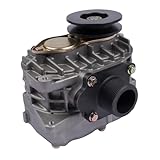
- 【Universal Fit】: The AMR500 turbocharger is designed for easy adaptation to a wide range of vehicle models. It can be installed on any engine with a displacement of 1.6-2.4L, provided sufficient installation space is available
- 【Wide Compatibility】: Experience more powerful acceleration and turbo boost across various driving conditions. Engine output increases by over 30% while fuel consumption decreases by 3-10%. Additionally, this technology helps reduce pollutant emissions
- 【Efficient Airflow Design】: Engineered for optimal airflow, this supercharger improves power output and engine responsiveness for a superior driving experience
- 【Durable & Reliable】: Built to last, this high-quality Supercharger ensures consistent performance, whether for racing, off-roading, or recreational use
- 【Easy Installation】: Designed for straightforward integration into various applications, helping you take your automotive projects to the next level with minimal hassle
Product prices and availability are accurate as of the date/time indicated and are subject to change. Any price and availability information displayed on Amazon at the time of purchase will apply.




