The 1971 De Tomaso Pantera was an Italian-designed, mid-engine sports coupe with a Ford 351 Cleveland V8—not a Ford-built car. Ford’s relationship with De Tomaso helped bring the Pantera to U.S. buyers through select Lincoln-Mercury dealers, while its design and production remained rooted in Italy.
That arrangement began before the Pantera reached American showrooms and ended after the 1974 model year. Here is how the partnership worked, what the Ford-powered name means, and why Ford’s U.S. import program stopped.
Why did the Pantera have a Ford engine?
The Pantera’s Ford 351 Cleveland V8 was part of a broader Ford–De Tomaso collaboration, not evidence that Ford built the whole car. The partnership connected Ford’s powertrain and U.S. retail reach with De Tomaso’s Italian operation and the design and construction work of Italian firms.
Ford and De Tomaso announced a technical-services relationship in 1969. The Henry Ford archival finding aid says Ford acquired an 80% interest in the Italian company in 1970. That history makes the arrangement more substantial than a simple engine-supply deal, but the Pantera remained a De Tomaso automobile with Italian design and production central to its identity.
#1 Best Overall

- Japan Import.
- Assembly, painting is required plastic model. Separately, necessary tools, paint and the like.
- Appeared in 1973, high-performance models of Pantera.
- Paint design is changed, stand out flashy impression than Panthera from the body of the West line under has become the paint of black, up to now.
- The nominal maximum speed 290km / h.
Italian design and construction, American distribution
Ford’s historical account describes the Pantera as designed by Ghia and built by Vignale. De Tomaso intended the model for the American market, and Ford arranged U.S. sales through select Lincoln-Mercury dealerships. The car combined an Italian-designed and built identity with Ford’s commercial presence in the United States.
Ford’s archivist says the 1969 collaboration involved Ghia Studios and De Tomaso Automobili in Italy, with Ford personnel expected to train at the facilities and follow projects from design through finished vehicles. The Henry Ford’s finding aid documents Ford’s relationship with De Tomaso and the Lincoln-Mercury distribution arrangement through 1974.
What did “Ford-powered” mean?
The Pantera used a Ford 351 Cleveland V8 mounted behind the occupants in a mid-engine layout. Pantera International describes the powertrain as paired with a five-speed ZF transaxle driving the rear wheels; the Ford engine and ZF gearbox had distinct roles.
| Component or role | What the sources establish |
|---|---|
| Manufacturer and model | De Tomaso Pantera, introduced in the United States in 1971 |
| Engine | Ford 351 Cleveland V8 |
| Layout | Two-seat, mid-engine sports coupe |
| Transmission and drive | Pantera International describes a five-speed ZF transaxle driving the rear wheels |
| U.S. sales channel | Select Lincoln-Mercury dealers |
| Design and construction credits | Ford’s historical account credits Ghia with design and Vignale with construction |
Specifications could vary across years and markets. The available sources do not establish a dependable 1971-specific horsepower rating, price, or acceleration time, so those figures should not be inferred from general Pantera specifications.
The Tool Desk
Outbyte PC Repair FREERepair Windows errors before they cause bigger problemsFix Now →Outbyte Driver Updater FREEScan for outdated or missing drivers - takes under a minuteDriver Scan →Early U.S. cars and the need for refinement
De Tomaso’s official history says the first U.S. cars made the need for further refinement apparent. Pantera International’s marque history reports that early testing identified poor HVAC performance and rear subframe weld cracking, followed by revisions and contractor rework. Those specific early-defect details come from that secondary club history.
Rank #2
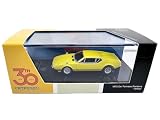
- Brand new box. Detailed exterior. Real rubber tires. True-to-scale detail. Officially licensed product. Does not have any openings. Comes in a plastic display showcase. Dimensions approximately L-2.5 inches long. Manufacturer's original unopened packaging. Made of diecast metal with some plastic parts.
- Scale name: 1:64 Scale
This early refinement is part of the Pantera’s story, but it should not be turned into a claim that every car had the same problems or that the dossier independently verified individual vehicles. The available material supports describing an early rollout that prompted changes, not sweeping conclusions about reliability or build quality.
Why did Ford stop importing the Pantera?
Ford ended its U.S. Pantera import program after the 1974 model year. The Henry Ford independently records the end of the agreement, while De Tomaso’s official history attributes Ford’s loss of interest to the oil and gas crisis and U.S. emissions requirements. The latter is the manufacturer’s account of the decision.
De Tomaso’s legacy page reports that Lincoln-Mercury said 6,091 Panteras had been brought into the United States by the end of the arrangement. Treat that as an attributed import count, not an independently confirmed tally. De Tomaso also lists 7,158 Panteras as total marque-wide output; that is not a 1971 production figure.
What the partnership left behind
The Pantera’s history is best understood as a collaboration rather than a simple national label: De Tomaso’s Italian automobile gained a Ford V8 and a route to American buyers through Lincoln-Mercury. The relationship was significant enough to include Ford’s investment in the Italian company, but it did not make the Pantera wholly a Ford product.
The U.S. import program ended after 1974, but De Tomaso’s account records later Pantera production. The car remains a clear example of how an automaker partnership can combine different companies’ engineering, design, production, and distribution roles without erasing the identity of the original manufacturer.
Rank #3

- The Cast Fast and Furious
- Scale 1:64 - Length approx. 7 cm
- Brand: Hot Wheels
- 100% original product
FAQ
Was the 1971 De Tomaso Pantera built by Ford?
No. It was a De Tomaso automobile with Italian design and production. Ford was a partner, supplied the 351 Cleveland V8, and arranged U.S. distribution through Lincoln-Mercury dealers.
What engine did the Pantera use?
The Pantera used a Ford 351 Cleveland V8. Pantera International describes it paired with a five-speed ZF transaxle that drove the rear wheels.
Free tools Windows power users keep installed
One-click scans. No signup required.
Was the Pantera sold through Ford dealerships?
In the United States, Ford arranged sales through select Lincoln-Mercury dealers.
When did Ford stop importing the Pantera?
Ford ended the U.S. import program after the 1974 model year. De Tomaso’s history attributes the decision to the oil and gas crisis and U.S. emissions requirements.
Quick Recap
Product prices and availability are accurate as of the date/time indicated and are subject to change. Any price and availability information displayed on Amazon at the time of purchase will apply.