Bōsōzoku grew from motorcycle and street-riding activity, but cars were also part of its history, including street-circuit gatherings in the 1960s and mixed two- and four-wheel groups in the 1970s. The term describes a changing youth motor culture, not every modified Japanese car or old-car club. Today, police still report some dangerous group riding and illegal vehicle activity, while a car’s appearance alone does not make it illegal.
What does bōsōzoku mean?
Bōsōzoku became a widely used label for groups associated with conspicuous, often disruptive motor activity. Its history was not a single, unchanged organization: media coverage, police classification, and legal changes helped define the phenomenon during the 1970s. Scholar Christopher Gerteis describes this process as category-making, while noting that institutional records do not replace participant accounts.
The National Police Agency’s historical account traces motorcycle-related reckless riding to around 1955. By 1959, the press and authorities were calling some riders “kaminari-zoku,” or “thunder tribe.” Accounts from that period describe loud riding, high speeds, weaving, and night racing. These earlier practices are precursors, not proof of one continuous organization.
Were bōsōzoku mainly motorcycles or cars?
Motorcycles were central to the history documented by police and scholarship, but cars were involved too. The National Police Agency records car-based street-circuit activity around Tokyo in the mid-1960s and says mixed two- and four-wheel groups became common as bōsōzoku organization expanded in the early 1970s.
#1 Best Overall
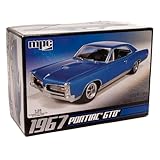
- V8 POWER: The model features a 400 cubic inch V8 engine, reflecting the muscle and power that defined the GTO's reputation.
- DETAILED SUSPENSION & EXHAUST: The kit incorporates separate rear suspension and exhaust detailing, adding to the realism of the model.
- BUCKET SEATS & CONSOLE: The model's interior features bucket seats and a floor shifter with a console, capturing the iconic look and feel of the GTO.
- OPTIONAL SUPERCHARGER: For those seeking more power, the kit offers an optional supercharger, allowing you to customize your model.
- CLEAR & COMPREHENSIVE INSTRUCTIONS: The included instructions are clear and user-friendly, making the kit accessible to modelers of different skill levels, from beginners to experienced hobbyists.
| Period | What the sources describe |
|---|---|
| Around 1955 onward | Motorcycle-related reckless riding; the press and authorities used the label “kaminari-zoku” by 1959. |
| Mid-1960s | Car-based street-circuit gatherings, including activity around Tokyo’s Harajuku and Omotesando and a gathering called the “Takaragaike circuit” in Kyoto. |
| Early 1970s | The term bōsōzoku entered media use after 1972 disturbances in Toyama; groups expanded and mixed two- and four-wheel groups became common. |
| Today | Police describe smaller or episodic groups and continue to report dangerous riding and other illegal road activity. |
These periods describe related but distinct activities. They do not justify treating every modified car, street racer, or old-car group as bōsōzoku.
How did car culture fit into the history?
The National Police Agency’s 1981 historical account records car street-racing gatherings in the mid-1960s, before the term bōsōzoku became widely established. It also describes the later growth of organized groups, their use of patches, stickers, and flags, and the spread of large group rides. This is evidence of a real car connection, but not of a car-only origin.
Rank #2

- A PERENNIAL CLASSIC FOR EXPERIENCED MODELERS: AMT’s 1/25 scale 1967 Shelby GT-350 is the perfect project for muscle car builders. Add it to your collection today!
- FEATURE PACKED: The 1967 Shelby GT-350 is a historical muscle car that stands alone! Fully paintable, it features authentically detailed water-slide decals. Build it up right with a Ford 289 V8 engine and all the Shelby touches—custom rear lower pan, chrome wheels, custom taillights and front grille, bucket seats, and more. Wrapped up nicely in retro-styled packaging!
- QUICK SPECS: 1/25 Scale, 123 Parts, 7 inches long once assembled. Parts molded in white, clear and transparent red, with black vinyl tires. Some parts are chrome plated. Plastic model kit paint and cement required (Testors or Tamiya brands recommended). Paint guide included in kit. Skill Level 2. For ages 10+
- THE PERFECT PRESENT: Don't know what to get dad for his birthday? Or maybe you have an avid hobbyist or collector in your life. This model kit makes an ideal gift for any occasion!
Gerteis’s 2026 study traces how newspapers standardized public recognition of bōsōzoku between 1972 and 1976, how police classifications made the activity countable, and how a 1978 legal revision enabled earlier intervention. He interprets group clothing and coordinated formations as public performances of solidarity and collective identity. His study relies chiefly on institutional archives, so it should not be read as a complete account of participants’ own views.
What makes a car bōsōzoku style?
There is no definitive styling checklist established by the sources used here. Exaggerated bodywork, loud exhausts, or lowered suspension may be associated with popular images of the culture, but those features alone do not establish that a car belongs to a bōsōzoku group. Nor should the label be applied to all kaidō racers, kyūshakai, or Japanese custom cars.
Rank #3

- 1:25 scale, skill level 2, paint & glue required
- 82 parts
- Molded in white, clear, transparent red, and some chrome-plated parts
- Black vinyl tires
- Metal axle
It is useful to distinguish visual customization from conduct. Dangerous group riding, illegal racing, excessive noise, and modifications that fail safety standards are separate issues. The Tokyo Metropolitan Police Department describes such conduct in its account of current enforcement; it does not make appearance alone a test of legality.
Is bōsōzoku still around in Japan?
Yes, but official counts describe activity known to authorities, not every enthusiast or custom-car owner. The Cabinet Office of Japan’s 2025 Traffic Safety White Paper reports that at the end of 2024 police counted 144 bōsōzoku groups and 5,880 people. Separately, it recorded 391 kyūshakai groups and 5,194 people identified as conducting illegal acts. The white paper describes bōsōzoku as declining while noting continuing nuisance in urban areas.
Rank #4

- Revell Model Kit #14533, Skill Level 4, Contains 104-Parts, Recommended for ages 12 and up
- Iconic Shelby 427 Cobra S/C body with an opening hood and separate chrome detail parts.
- Highly detailed 427-cubic-inch V-8 engine, separate tube frame, and side-mount exhausts Moteur V-8.
- All-new decal sheet with the 427 Cobra’s signature over-the-top twin stripes and optional race markings.
- Molded in white, transparent red, and clear with chrome plated parts and soft black tires. Paint and glue required(not included).
These figures are not a census of Japanese car customizers, former members, or all old-car clubs. The Tokyo Metropolitan Police Department’s page, updated July 1, 2026, describes some current groups as smaller or episodic and reports continued dangerous group riding, illegal racing, speeding, noise, and unlawful modifications. That is a Tokyo policing account, not a complete national ethnography.
Independent reader supportYour contribution helps us test, update, and keep practical guides available for everyone.Are bōsōzoku cars illegal?
No style or cultural label makes a vehicle illegal by itself. Japan’s Ministry of Land, Infrastructure, Transport and Tourism says modifications that cause a vehicle to fail safety standards are prohibited. Its guidance describes possible penalties and corrective or use-suspension orders for noncompliant vehicles; the relevant issue is the modification’s compliance, not whether a car resembles a particular style.
Quick wins for a faster PC:
Clear out junk files and repair common Windows errorsFree Scan →Scan for outdated or missing drivers - takes under a minuteDriver Scan →Repair Windows errors before they cause bigger problemsFix Now →Best Value

- 1: 24 scale
- Glue and Paint sold separately
- Plastic Model Kit-Assembly Required
- TAM24123
The ministry says people who perform modifications that cause a vehicle to fail safety standards may face up to six months’ imprisonment or a fine of up to ¥300,000. It also says an order to repair a noncompliant vehicle may be issued; failure to comply can lead to an order suspending use or a fine of up to ¥500,000. These are the ministry’s summaries of Japanese law, not a claim that all modifications or stylized vehicles are prohibited.
- Check whether a planned modification keeps the vehicle within applicable safety standards.
- Do not assume that a vehicle’s visual resemblance to a style determines its legal status.
- For road use, follow the ministry’s vehicle-modification guidance and applicable inspection requirements.
FAQ
Were bōsōzoku cars real?
Yes. The National Police Agency records car-based street-circuit gatherings in the mid-1960s and says mixed motorcycle and car groups became common in the early 1970s. Motorcycles nevertheless remain central to the historical account.
Is every modified Japanese car a bōsōzoku car?
No. The term refers to a changing youth motor culture and its associated groups, not every modified Japanese car, kaidō racer, or old-car club. The sources here do not establish a definitive visual checklist.
How many bōsōzoku were recorded recently?
The Cabinet Office of Japan’s 2025 Traffic Safety White Paper reports 144 groups and 5,880 people at year-end 2024. These are police-known figures, not a count of all enthusiasts.
Does a bōsōzoku-inspired modification make a car illegal?
Not on appearance alone. The Ministry of Land, Infrastructure, Transport and Tourism says modifications that cause a vehicle to fail safety standards are prohibited; road conduct and compliance are the key issues.
Quick Recap
Product prices and availability are accurate as of the date/time indicated and are subject to change. Any price and availability information displayed on Amazon at the time of purchase will apply.




