There is no evidence-based single winner for “best supercar ever made”: the answer depends on whether you value historical influence, engineering ambition, racing connection, design, or performance in its own era. A useful shortlist starts with the Lamborghini Miura, Ferrari F40, Porsche 959, and McLaren F1, each of which makes a distinct case.
The comparisons below use those criteria rather than treating top speed, rarity, or fame as a universal score. Specifications and historical claims are attributed to the manufacturers that published them.
| # | Preview | Product | Price | |
|---|---|---|---|---|
| 1 |

|
The Science of Supercars: The Technology that Powers the Greatest Cars in the World | $9.34 | Buy on Amazon |
| 2 |
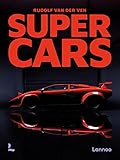
|
Supercars | $79.96 | Buy on Amazon |
| 3 |
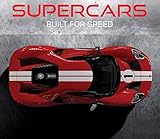
|
Supercars: Built for Speed | $11.23 | Buy on Amazon |
| 4 |

|
Top Gear Ultimate Supercars | $44.83 | Buy on Amazon |
| 5 |
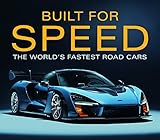
|
Built for Speed: The World's Fastest Road Cars | $12.00 | Buy on Amazon |
How to judge the best supercars
Compare a car with the technology and expectations of its own period. Consider its influence on later cars, engineering choices, racing connection, design, and performance relative to its era. These factors are different lenses, not a numerical ranking: the available research does not establish an objective all-time scoring method.
| Car | Strongest case | Useful comparison lens |
|---|---|---|
| Lamborghini Miura | Landmark in the emergence of the supercar | Historical influence and design |
| Ferrari F40 | Competition-inspired, focused road car | Racing connection and performance in its era |
| Porsche 959 | Technology-led engineering | Innovation and performance |
| McLaren F1 | Engineering ambition and limited production | Construction, exclusivity, and period performance |
Four strong candidates for the best supercar ever made
Lamborghini Miura: an origin-point candidate
The Miura has a strong claim as a landmark in the emergence of the supercar. Automobili Lamborghini says it debuted publicly in 1966 and that journalists applied the term “supercar” to it. That makes it an important historical candidate, though it does not by itself prove that the Miura is the single best car of all time.
Its case is strongest for historical influence and design. The research supports its role as an origin-point candidate, but not detailed technical comparisons beyond that broad account.
Ferrari F40: a focused, competition-inspired road car
Ferrari says the F40 was created to celebrate the company’s 40th anniversary and describes the car in terms of racing roots and aerodynamic ambition. That makes its case less about a cross-era specification contest and more about a focused road-car brief shaped by competition.
Rank #2
For readers weighing driver focus and racing connection, the F40 is a compelling candidate. The checked research does not support adding performance figures here, so its claims should not be inflated with unverified numbers.
Porsche 959: the technology-led choice
Porsche says the 959 launched in 1986, used a 450 PS flat-six, and had a stated top speed of 317 km/h. Porsche also describes it as the first production car with active suspension. These are manufacturer-published specifications and a historical superlative, not independent test findings.
The Tool Desk
Outbyte Driver Updater FREEFix the driver behind crashes, sound loss and screen glitchesFind Drivers →Outbyte PC Repair FREERepair Windows errors before they cause bigger problemsFix Now →Rank #3
The 959’s clearest case is engineering ambition: it offers a different idea of supercar greatness from the Miura’s historical role or the F40’s competition-inspired focus. Porsche’s account makes it a strong candidate for readers who prioritize innovation and technology.
McLaren F1: engineering ambition and rarity
McLaren says the F1 was conceived in 1988 and realised in 1992. Its account identifies a carbon-fibre monocoque and a production run of 106 cars. McLaren also describes it as the fastest production car at launch; that is a historical manufacturer claim, not a current record.
Rank #4
The F1’s case rests on engineering ambition, construction, exclusivity, and performance in its period. McLaren quotes Fleet Manager and Engineer Maurizio Zagarella: “Our goal was to deliver the best car in the world.”
Independent reader supportYour contribution helps us test, update, and keep practical guides available for everyone.Which one is the best?
There is no supported objective verdict that one of these cars wins on every measure. The Miura is a strong pick for historical influence, the F40 for its competition-inspired focus, the 959 for technology, and the F1 for engineering ambition and rarity. Choose according to the qualities you value most, rather than treating one manufacturer’s specification or superlative as a universal ranking.
Free tools Windows power users keep installed
One-click scans. No signup required.
Best Value
FAQ
What is the best supercar ever made?
There is no evidence-based single answer. The Miura, F40, 959, and F1 each make a different case when judged by historical influence, engineering, racing connection, or performance in their own era.
Was the Lamborghini Miura the first supercar?
Automobili Lamborghini says the Miura debuted publicly in 1966 and that journalists applied the term “supercar” to it. It is therefore a well-supported origin-point candidate, though “first” depends on how the category is defined.
What made the Porsche 959 unusual?
Porsche’s account highlights its active suspension and reports a 450 PS flat-six and a stated top speed of 317 km/h. Those details are Porsche’s published specifications and claims.
How many McLaren F1 cars were made?
McLaren reports a production run of 106 cars. McLaren also describes the F1 as the fastest production car at launch, a historical claim rather than a current record.
Quick Recap
Product prices and availability are accurate as of the date/time indicated and are subject to change. Any price and availability information displayed on Amazon at the time of purchase will apply.




