Ethanol fuel is neither automatically good nor bad. Its advantages and drawbacks depend on the blend, the vehicle or engine using it, the feedstock and energy used to produce it, and how long the fuel will be stored.
For most U.S. drivers, E10 is a practical gasoline blend with a relatively small fuel-economy penalty. E15 is available for many newer cars but is prohibited for numerous vehicles and small engines. E85 can reduce petroleum use and offer high-octane potential, but it contains substantially less energy per gallon and should be used only in a certified flex-fuel vehicle.
What the “E” number means
In U.S. gasoline labeling, the number after the letter E indicates the approximate percentage of ethanol in the fuel:
- E10: approximately 10% ethanol and 90% gasoline.
- E15: approximately 15% ethanol and 85% gasoline.
- E85: a high-level ethanol blend containing approximately 51% to 83% ethanol, depending on the season and location.
The actual ethanol percentage in E85 varies because the gasoline portion is adjusted to help the fuel meet seasonal starting and operating requirements. It is not always exactly 85% ethanol.
Quick wins for a faster PC:
Fix the driver behind crashes, sound loss and screen glitchesFind Drivers →Clear out junk files and repair common Windows errorsFree Scan →Scan for outdated or missing drivers - takes under a minuteDriver Scan →#1 Best Overall
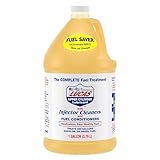
- The world’s #1 fuel additive for both gasoline and diesel engines
- A great tune-up in a bottle – treats gasoline, diesel fuel and increases MPG
- Cleans and lubricates the fuel system, including fuel injectors, carburetor and combustion chamber
- Improves fuel economy by burning excess exhaust emissions
- Increases power and acceleration by improving fuel flow and reducing deposit buildup
Ethanol is an alcohol fuel made from biomass. Conventional U.S. ethanol is generally produced from corn, while cellulosic ethanol can be made from materials such as agricultural residues, grasses, and other non-food plant matter.
Nearly all gasoline sold in the United States contains about 10% ethanol, although E0, E15, and E85 are also available in some markets. The blend on the pump matters because the same vehicle may be compatible with one ethanol blend but not another.
At a glance: the main trade-off
| Potential benefit | Potential drawback |
|---|---|
| Renewable and domestically produced fuel source | Less energy per gallon than gasoline |
| Can reduce life-cycle greenhouse-gas emissions | Climate benefits vary by feedstock and production method |
| High octane can support performance in suitable engines | Ordinary engines may not be calibrated to exploit that octane |
| Reduces the amount of petroleum in the fuel pool | Higher blends have stricter vehicle and equipment requirements |
| Can reduce some tailpipe pollutants and toxic compounds | Some emissions, including acetaldehyde, may increase |
| Can support a more diverse transportation-energy supply | Corn production can affect land, fertilizer use, water quality, and commodity markets |
The advantages of ethanol fuel
1. Ethanol is renewable and can reduce petroleum consumption
Petroleum comes from finite underground reserves, while ethanol is produced from recently grown biomass. Crops and plant residues can be replenished, making ethanol a renewable component of transportation fuel.
Using ethanol also displaces some gasoline that would otherwise be made entirely from petroleum. That does not eliminate petroleum use—E10 and E15 are still gasoline blends—but it diversifies the fuel supply and reduces the petroleum volume required for a given amount of blended gasoline.
Windows Errors? Fix Them Before They Spread
Repair common Windows errors and clear accumulated junk for a smoother, more stable PC - no reinstall needed.Free scan · no reinstallOutdated Drivers Are Slowing You Down
One free scan finds every outdated or missing driver and matches the right update for your exact hardware.Free scan · exact hardware matchThe United States produces substantial quantities of ethanol domestically. Domestic production can reduce reliance on imported petroleum and add another source of transportation energy, although the overall energy-security benefit depends on the full supply chain and the amount of petroleum still used to produce and transport the ethanol.
2. Ethanol can have lower life-cycle greenhouse-gas emissions
The climate impact of ethanol cannot be judged from the tailpipe alone. A fair comparison includes:
- Growing and harvesting the feedstock
- Fertilizer and pesticide production and use
- Fuel consumed by farm machinery
- Energy used to dry and process the feedstock
- Transportation of crops, ethanol, and finished fuel
- Land-use changes associated with expanding production
- Combustion in the vehicle
Department of Energy and Environmental Protection Agency analyses have found that some ethanol pathways can produce lower life-cycle greenhouse-gas emissions than petroleum gasoline. Cellulosic pathways can have substantially greater reduction potential than conventional corn ethanol because they can use residues or non-food plant material and may require less intensive agricultural production.
That conclusion needs an important qualification: ethanol is not automatically carbon-neutral, and it does not always provide the same climate benefit. Fertilizer production, process energy, farming practices, indirect land-use effects, and the carbon intensity of the ethanol plant can materially change the result. The accurate claim is that ethanol can reduce life-cycle emissions compared with gasoline under favorable production pathways.
The Tool Desk
Outbyte Driver Updater FREEScan for outdated or missing drivers - takes under a minuteDriver Scan →Outbyte PC Repair FREERepair Windows errors before they cause bigger problemsFix Now →3. Ethanol has high octane
Ethanol has a high octane rating. In an engine designed and calibrated to use that characteristic, high-octane ethanol blends can support higher compression ratios, more aggressive ignition timing, or greater turbocharger or supercharger boost without unwanted detonation.
This is one reason ethanol blends can be attractive in performance applications and in certain flex-fuel or specially calibrated engines. However, pouring a higher ethanol blend into an ordinary gasoline vehicle does not automatically create more horsepower. The engine must be able to take advantage of the octane, and the fuel system, software calibration, injectors, and emissions equipment must be designed for the blend.
In a standard vehicle operating under its normal calibration, the higher octane may provide little or no noticeable performance benefit. Compatibility and correct fuel selection come before any potential power advantage.
Rank #2
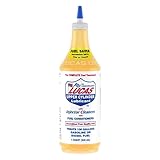
- The world’s #1 fuel additive for both gasoline and diesel engines
- A great tune-up in a bottle – treats gasoline, diesel fuel and increases MPG
- Cleans and lubricates the fuel system, including fuel injectors, carburetor and combustion chamber
- Improves fuel economy by burning excess exhaust emissions
- Increases power and acceleration by improving fuel flow and reducing deposit buildup
4. Ethanol can reduce some tailpipe pollutants
Ethanol blends can reduce certain pollutants, including carbon monoxide and some toxic compounds, depending on the vehicle, blend, fuel formulation, and emissions-control system. E85, in particular, can reduce carbon dioxide and several harmful toxics compared with petroleum gasoline in some life-cycle and vehicle comparisons.
Free tools Windows power users keep installed
One-click scans. No signup required.
The emissions picture is not uniformly favorable. Ethanol combustion can increase acetaldehyde emissions, and low-level ethanol blends may increase evaporative emissions unless the fuel’s vapor pressure is adjusted to comply with applicable standards. High-level E85 is generally less volatile than gasoline and some low-level blends, but that does not mean every ethanol blend has the same evaporative-emissions profile.
Modern emissions systems also matter. Results from an older engine, a modern fuel-injected car, and a flex-fuel vehicle should not be treated as interchangeable.
5. Ethanol supports energy diversification
Transportation systems that rely on one dominant fuel source are vulnerable to supply disruptions, price shocks, and regional production problems. Ethanol gives refiners and fuel suppliers another component to use in the gasoline pool.
U.S. renewable-fuel policy has encouraged the use of ethanol and other renewable fuels. The practical result is a gasoline supply that may include different proportions of E0, E10, E15, and E85, depending on the market and the vehicles able to use each blend.
The disadvantages and limitations of ethanol fuel
1. Ethanol contains less energy than gasoline
The most direct consumer drawback is energy density. A gallon of ethanol contains less usable energy than a gallon of gasoline, so a vehicle must burn more fuel to travel the same distance.
For E85, the difference is substantial. The Department of Energy’s Alternative Fuels Data Center reports that E85 containing 83% ethanol has approximately 27% less energy per gallon than gasoline. Depending on the exact blend, one gallon of E85 contains roughly 73% to 83% of the energy in a gasoline gallon equivalent.
As a result, a flex-fuel vehicle normally gets fewer miles per gallon and less range per tank when operating on E85. The exact penalty depends on the vehicle, driving conditions, and the ethanol concentration.
E10 and E15 have much smaller energy penalties because they contain far less ethanol. Most drivers will see a modest difference rather than the large reduction associated with E85. Even so, the effect matters when comparing fuel prices. A lower pump price does not necessarily mean lower cost per mile.
How to compare the price fairly
Do not compare E85 and gasoline only by the price displayed per gallon. Compare:
- The price per gallon
- Your vehicle’s actual miles per gallon on each fuel
- The resulting cost per mile
- Whether the lower-energy fuel requires more frequent fill-ups
A discount of less than the fuel-economy penalty may not save money. For example, if E85 costs 20% less per gallon but reduces fuel economy by approximately 25%, it may cost more per mile despite its lower pump price. Real-world results vary, so the best comparison is based on your vehicle and local prices.
Rank #3

- ENZYME TECHNOLOGY - Uses enzyme technology designed to help engines start more reliably and run cleaner, even after periods of inactivity
- SAY GOODBYE TO ETHANOL-RELATED PROBLEMS - Prevents and cures most ethanol-related issues, including poor performance, rough idling, and decreased fuel economy, giving you peace of mind on the road or on the water
- MAXIMIZE FUEL ECONOMY - By removing and preventing gum, carbon deposits, and varnish build-up, Star Tron keeps your fuel delivery system clean, resulting in improved fuel economy
- WORKS FOR ALL ENGINES AND FUEL TYPES - Whether you have a car, boat, RV, or lawn mower, Star Tron works in all engines and all fuels, making it the ideal fuel treatment and stabilizer for any vehicle
- PREVENT WATER BUILD-UP - Helps prevent phase separation by dispersing water throughout fuel as submicron-sized droplets that are safely eliminated while the engine operates, keeping your engine running smoothly in humid or wet conditions
2. E15 and E85 are not universal fuels
Fuel compatibility is not determined simply by a vehicle’s engine size, age, or whether it “runs fine” on a particular blend.
EPA authorizes E15 for model-year-2001-and-newer cars, light-duty trucks, and medium-duty passenger vehicles, subject to applicable labeling and regulatory requirements. E15 is excluded from use in:
- Motorcycles
- Boats
- Snowmobiles
- Lawn equipment
- Chainsaws
- Heavy-duty engines
- Model-year-2000-and-older vehicles
Always check the owner’s manual, fuel-door label, and manufacturer guidance. Some vehicles that fall within a broad model-year category may still have specific fuel requirements.
E85 is for flexible-fuel vehicles only. A vehicle certified as an FFV is designed to operate on gasoline and ethanol blends up to the permitted ethanol level. A conventional gasoline vehicle is not made flex-fuel merely because it starts and drives after being filled with E85.
Using an unauthorized blend can cause drivability problems, difficult starting, emissions-system faults, warranty disputes, or damage to fuel-system components. Do not rely on anecdotal reports from another vehicle, even if it has the same model name or engine displacement.
3. Higher ethanol blends require compatible fuel infrastructure
Compatibility applies to more than the vehicle. Fuel pumps, seals, hoses, tanks, dispensers, and underground storage systems must also be suitable for the blend being stored and dispensed.
EPA requires additional compatibility measures for underground storage systems containing E15 or E85 because higher ethanol concentrations can affect certain materials and equipment. This is one reason not every gas station offers every blend, and why a station’s equipment certification matters as much as the fuel label.
Limited availability is another practical disadvantage of E85. E10 is widely available in the United States, while E85 is concentrated in regions with more flex-fuel vehicles and ethanol production. An FFV owner who chooses E85 may need to plan around station availability, especially on long trips.
4. Ethanol-blended fuel can be troublesome during long storage
Ethanol is hygroscopic, meaning it readily associates with moisture. When ethanol-blended fuel is exposed to water or humid air over time, the fuel can absorb moisture. Under unfavorable conditions, the ethanol and water can separate from the gasoline in a process known as phase separation.
Phase-separated fuel can cause hard starting, rough running, stalling, corrosion, and poor engine performance. Long storage also allows gasoline to age and form gums or deposits. These risks are especially relevant to:
Do these 3 things before closing this tab:
1Repair Windows errors before they cause bigger problems2Fix the driver behind crashes, sound loss and screen glitches3Clear out junk files and repair common Windows errors- Boats and personal watercraft
- Portable generators
- Lawn mowers and other outdoor-power equipment
- Motorcycles
- Snowmobiles
- RVs and seasonal vehicles
- Backup engines that may sit unused for months
This does not mean that ethanol inevitably destroys engines. Modern fuel systems are designed for specified blends, and many storage problems result from stale fuel, moisture exposure, improper containers, or failure to follow the equipment manufacturer’s instructions.
Rank #4

- DEEP FUEL SYSTEM CLEANING Helps restore lost power, smooth out rough idle, recover lost MPG, and overcome other common engine problems by cleaning the entire fuel system. Cleans fuel injectors, carburetor restrictions, and chamber areas. Add Sea Foam to your fuel tank every 3,000 miles.
- FUEL ADDITIVE FOR GAS & DIESEL: Cleans fuel residue and varnish for smoother idling and cleaner combustion in gasoline and diesel engines. Use with diesel, diesel blends, gasoline, gas-ethanol blends, and conventional in & synthetic oil.
- OIL TREATMENT FOR ENGINE CLEANING: Cleans sludge and deposits in motor oil crankcases to support lubrication and longer engine life. Helps reduce engine wear, cleans away oil restrictions, clean critical engine areas, and clean oil buildup.
- FUEL STABILIZER: It helps fuel resist evaporation, preserves ignition vapors, adds protective lubricity, and prevents the formation of gum and varnish in fuel systems. Keeps gas or diesel fresh for up to 2 years. Works great as a fuel stabilizer and gas stabilizer for stored cars, motorcycles, and generators.
- FOR ALL ENGINES & FUELS: Compatible with all gasoline and diesel fuels and blends, including E10 and E85. Add to fuel and oil in in cars, trucks, RVs, lawnmowers, snowblowers, ATVs, motorcycles, boats, and jet skis.
For equipment that must be stored, use fresh fuel, keep approved containers properly sealed, minimize exposure to heat and moisture, rotate fuel rather than leaving it indefinitely, and follow the owner’s manual. An optional ethanol fuel treatment for seasonal storage may help with fuel management when its label and the engine manufacturer’s guidance support its use. It is a maintenance aid—not a cure for phase-separated fuel, mechanical damage, corrosion, or incorrect fuel selection—and no additive guarantees improved fuel economy.
5. Corn ethanol has agricultural and land-use consequences
Conventional ethanol production creates demand for corn, which affects how much land is planted, how it is farmed, and how agricultural inputs are used. USDA research has documented that expanded ethanol demand has influenced corn acreage and land-use decisions.
Potential consequences can include:
- Greater fertilizer and pesticide use
- Nutrient runoff into rivers, lakes, and coastal waters
- Soil erosion and sediment movement
- Changes in soil carbon
- Additional water use in some farming and processing regions
- Conversion of pasture, hay fields, or conservation land in some circumstances
These effects are not identical everywhere. Ethanol made from existing cropland under conservation-oriented farming practices has a different profile from ethanol associated with converting environmentally sensitive land. Improved yields, cover crops, reduced tillage, nutrient-management programs, and better process efficiency can change the outcome.
Recommended Free Tools
Cellulosic ethanol may reduce pressure on food-grade crops and use residues or dedicated non-food plants, but it is not impact-free. Removing agricultural residue can affect soil nutrients and erosion, and growing dedicated energy crops still requires land and management. The feedstock and production pathway must be considered rather than treating “cellulosic” as a guarantee of zero environmental impact.
6. Ethanol demand affects food, feed, and commodity markets
Corn is used for fuel, animal feed, food products, exports, and industrial purposes. Fuel ethanol accounts for nearly 45% of total U.S. corn use, according to USDA data cited in the research underlying this article.
The simple slogan “food versus fuel” leaves out an important detail: ethanol production also creates coproducts, especially distillers grains, that are used as animal feed. A bushel of corn processed for ethanol is not necessarily removed entirely from the feed system.
Nevertheless, ethanol demand still affects market allocation. It can influence corn prices, planting decisions, feed costs, export availability, and the amount of land devoted to corn. The effects depend on crop yields, global supply, weather, energy prices, government policy, and demand from other industries.
What’s actually slowing this PC down?
Pick the symptom - the matching free tool is one click away.
The fair conclusion is not that ethanol production directly converts all fuel corn into lost food. It is that a large fuel market for corn changes agricultural markets and can create both useful coproducts and competing demands.
7. Ethanol is not automatically carbon-neutral
Plants absorb carbon dioxide as they grow, and ethanol contains renewable carbon. That is the basis for describing ethanol as a renewable fuel. But the complete production chain also emits greenhouse gases.
Fossil energy may be used to manufacture fertilizer, operate farm equipment, dry corn, power an ethanol plant, transport feedstock, move fuel to a blending terminal, and distribute the finished product. Land-use changes can release stored carbon or reduce future carbon absorption. Those emissions can narrow or, under unfavorable assumptions, undermine the climate advantage.
Therefore, “ethanol is carbon-neutral” is too broad. Conventional corn ethanol, cellulosic ethanol, and ethanol made with low-carbon process energy should not be assigned the same emissions profile. A pathway-specific life-cycle analysis is the meaningful comparison.
Blend-by-blend guide for drivers and equipment owners
| Blend | Typical use | Energy and performance considerations | Compatibility caution |
|---|---|---|---|
| E10 | Standard U.S. gasoline for most modern gasoline vehicles | Small energy penalty compared with E0 gasoline; normally no special driving procedure | Follow the vehicle or equipment owner’s manual. Storage and moisture still matter. |
| E15 | Approved model-year-2001-and-newer cars, light-duty trucks, and medium-duty passenger vehicles | More ethanol and slightly less energy per gallon than E10 | Not for motorcycles, boats, snowmobiles, lawn equipment, chainsaws, heavy-duty engines, or model-year-2000-and-older vehicles. |
| E85 | Certified flexible-fuel vehicles | High octane and potentially useful for a properly calibrated FFV; substantially lower energy per gallon and lower MPG | Do not use in a conventional gasoline vehicle. Availability is more limited than E10. |
How to choose the right fuel
- Identify the vehicle or engine. Confirm whether it is a conventional gasoline vehicle, a certified FFV, or equipment with a separate fuel specification.
- Read the owner’s manual and fuel-door label. Use the highest ethanol blend specifically approved by the manufacturer—not the highest blend available at the station.
- Separate vehicle guidance from equipment guidance. A blend permitted in a late-model car may be prohibited in a boat, motorcycle, generator, mower, chainsaw, or snowmobile.
- Check the pump label. Make sure E10, E15, or E85 is clearly identified before fueling.
- Compare cost per mile. For E85, account for the likely reduction in miles per gallon rather than comparing only the price per gallon.
- Plan for storage. If the engine will sit for an extended period, use fresh fuel, follow the manufacturer’s storage procedure, and control moisture exposure.
- Do not treat additives as compatibility fixes. A fuel treatment cannot make an unauthorized blend safe for an engine or repair existing corrosion or fuel-system damage.
Common misconceptions about ethanol fuel
“All ethanol fuel damages engines.”
That is too broad. Fuel systems are designed for specific blends, and E10 is widely used in modern gasoline vehicles. Problems become more likely when the wrong blend is used, fuel is stored for too long, water contaminates the system, or equipment is not designed for the fuel.
Best Value

- EVERYDAY TREATMENT: Keep your diesel engine in top condition with our EDT that is designed to improve performance & maintain engine health. With regular use, you can ensure your engine runs smoothly & efficiently giving you peace of mind on the road.
- BOOST FUEL ECONOMY: Enhance your vehicle performance with our diesel additive that boosts cetane levels by up to 7 points resulting in better fuel economy & reduced maintenance costs. Say goodbye to poor acceleration & frequent trips to the mechanic.
- FUEL INJECTOR CLEANER: Cleans both internal & external injector deposits, enhances the lubricity of fuel to safeguard the fuel system components, such as the pump & injectors to increase engine longevity while also acting as a fuel system cleaner.
- PREVENTS RUST & CORROSION: While demulsifying moisture & adding stability to fuel by preventing oxidation & degradation, it also provides a reliable solution for protecting fuel systems from the damaging effects of rust & corrosion.
- EASY TO USE: Use at every fill-up, 1 oz. or 2oz. (for more cetane and lubricity boost) for every 25 gallons of diesel, this product is easy to use! Just pour it into your diesel fuel tank during your next fill up.
“E85 gives every engine more power.”
High octane creates performance potential, but the engine must be calibrated and equipped to use it. A conventional vehicle may gain no useful power and may suffer poor drivability or fuel-system problems if filled with E85.
“A lower E85 price always means lower fuel cost.”
E85 contains much less energy per gallon, so the vehicle typically consumes more of it. Compare cost per mile and actual fuel economy.
“Ethanol is carbon-neutral because corn absorbs carbon dioxide.”
The crop’s carbon uptake is only one part of the calculation. Farming, fertilizer, processing energy, transportation, and land-use changes also affect life-cycle emissions.
Recommended Free Tools
Bottom line for car owners
For the average U.S. driver, E10 is the straightforward mainstream choice when it is approved for the vehicle. Its energy penalty is relatively small, and it is widely available.
E15 can be useful but requires careful compliance. It is authorized for many model-year-2001-and-newer cars, light trucks, and medium-duty passenger vehicles, but it is not approved for many other vehicles and engines.
E85 is a specialized fuel. It can reduce petroleum use, provide high octane, and offer climate benefits depending on its production pathway. In exchange, it delivers fewer miles per gallon, reduces range, has limited availability, and is suitable only for certified flex-fuel vehicles.
The environmental case for ethanol is strongest when the fuel comes from an efficient, low-carbon pathway with responsible land and nutrient management. Its disadvantages are clearest when energy density, storage, compatibility, agricultural impacts, and life-cycle emissions are ignored.
The Tool Desk
Outbyte Driver Updater FREEScan for outdated or missing drivers - takes under a minuteDriver Scan →Outbyte PC Repair FREERepair Windows errors before they cause bigger problemsFix Now →Frequently Asked Questions
Is E10 safe for most cars?
E10 is the standard gasoline blend used by most modern gasoline vehicles in the United States, but you should still follow the owner’s manual and fuel-door labeling. Compatibility rules for older vehicles and specialized equipment can differ.
Can I use E15 in my motorcycle, boat, mower, or generator?
No. EPA excludes motorcycles, boats, snowmobiles, lawn equipment, chainsaws, heavy-duty engines, and model-year-2000-and-older vehicles from E15 use. Check the equipment manufacturer’s fuel requirements.
Can a regular gasoline car use E85?
No. E85 should be used only in a vehicle certified as a flexible-fuel vehicle. A conventional gasoline vehicle is not converted into an FFV simply because it can run temporarily on a higher ethanol blend.
Does E85 save money?
Not necessarily. E85 has substantially less energy per gallon, so an FFV generally gets lower fuel economy on it. Compare the blend’s price and your vehicle’s actual cost per mile rather than the pump price alone.
The Bottom Line
Ethanol fuel is a context-dependent compromise. E10 is generally practical for approved modern gasoline vehicles; E15 requires careful compatibility checks; and E85 is best reserved for certified flex-fuel vehicles that can accept its lower energy density. Ethanol can reduce petroleum use and life-cycle emissions, but those benefits depend on the production pathway and must be weighed against lower fuel economy, storage concerns, equipment compatibility, and agricultural impacts.
Quick Recap
Product prices and availability are accurate as of the date/time indicated and are subject to change. Any price and availability information displayed on Amazon at the time of purchase will apply.




