Do these 3 things before closing this tab:
1Repair Windows errors before they cause bigger problems2Scan for outdated or missing drivers - takes under a minute3Clear out junk files and repair common Windows errorsHonda and Nissan did not complete the proposed combination. They terminated the business-integration MOU on February 13, 2025, after failing to agree on governance and control. The reported $58 billion–$60 billion figure referred to the scale of the proposed deal, not a completed transaction. The companies instead retained a narrower strategic partnership focused on intelligent and electrified vehicles.
The Honda–Nissan merger is no longer merely “in deep trouble”
Honda and Nissan did not complete the proposed combination. They formally terminated the business-integration memorandum of understanding (MOU) on February 13, 2025, after failing to agree on the structure and control of the proposed company.
The deal was reported at roughly $58 billion to $60 billion, depending on the source and valuation method. That figure described the scale of the proposed combination—not the value of a completed transaction. No new Honda–Nissan automaker was created, Honda did not buy Nissan, and Mitsubishi did not become part of a completed three-way merger.
Instead, Honda and Nissan said they would continue a narrower strategic partnership focused on intelligent and electrified vehicles. Mitsubishi remains involved in the wider project-cooperation framework, but the surviving arrangement is a partnership, not a merger or holding company.
#1 Best Overall

- GENUINE OEM: Original Toyota/Lexus factory oil filter part number 90915-YZZN1, ensuring perfect fit and optimal performance for your vehicle
- COMPATIBILITY: Specifically engineered for Toyota and Lexus vehicles, maintaining manufacturer specifications and warranty requirements
- SUPERIOR FILTRATION: Advanced filter design captures harmful engine-damaging particles while maintaining proper oil flow
- QUALITY CONSTRUCTION: Heavy-duty housing and high-grade filter media provide reliable protection throughout the entire service interval
- EASY INSTALLATION: Direct replacement filter with standard threading for quick and simple oil change maintenance
What the proposed deal was supposed to be
Honda and Nissan began exploring a strategic partnership in 2024. In December 2024, they signed an MOU to study a broader business integration that could have brought their operations under a joint holding company.
The original concept was not necessarily an equal-control arrangement. Honda was expected to appoint a majority of the holding company’s directors and its chief executive. Even so, contemporaneous reporting indicated that Nissan expected treatment closer to that of an equal partner. That difference became critical when the proposed structure changed.
A full integration would have required decisions across vehicle platforms, batteries, software, manufacturing, purchasing, capital allocation, workforces, brands, and regional operations. The attraction was greater scale at a time when automakers were spending heavily on electric vehicles and vehicle software. The risk was that combining two large companies could make decision-making slower and more complicated before those benefits materialized.
Timeline of the Honda–Nissan talks
| Date | Development |
|---|---|
| 2024 | Honda and Nissan began exploring a strategic partnership in response to fast-moving changes in electrification, intelligent vehicles, and global competition. |
| December 2024 | The companies signed an MOU to consider a broader business integration, initially centered on a joint holding-company structure. |
| February 13, 2025 | Honda and Nissan jointly announced that they had agreed to terminate the business-integration MOU and end the merger discussions. |
| After the termination | The companies said they would continue a strategic partnership focused on intelligent and electrified vehicles. Honda, Nissan, and Mitsubishi continued reviewing possible project-level cooperation. |
| March 2026 onward | Honda disclosed a reassessment of its automobile electrification strategy and significant EV-related losses, underscoring the pressure that had helped motivate the original talks. |
Why did the Honda–Nissan merger collapse?
1. Governance and control became the decisive dispute
The central problem was not simply whether Honda and Nissan should cooperate. It was who would control the combined business.
Honda proposed replacing the joint holding-company concept with a share-exchange structure under which Honda would become the parent and Nissan would become a wholly owned subsidiary. Honda’s official announcement identified that structural change as part of the discussions that led to termination.
Reuters, citing people familiar with the negotiations, reported that Nissan resisted the revised unequal structure and had expected an arrangement closer to an equal partnership. Those anonymous-source details provide context, but they should be distinguished from the companies’ official joint explanation. The official announcement did not publicly assign blame to either company.
Once the proposed transaction looked more like Honda taking control of Nissan than two companies forming a jointly governed group, the commercial and political balance of the deal changed. Nissan would have surrendered substantially more independence, while Honda would have taken on responsibility for integrating a much larger and financially pressured partner.
Crashes, No Sound, or Screen Glitches?
Random freezes, missing sound and display glitches usually trace back to one bad driver. Find and replace yours safely.Free scan · under a minuteWindows Errors? Fix Them Before They Spread
Repair common Windows errors and clear accumulated junk for a smoother, more stable PC - no reinstall needed.Free scan · no reinstallRank #2

- SUPERIOR ENGINE PROTECTION: Designed for severe driving conditions including stop-and-go traffic, towing, and dusty environments
- 99% DIRT TRAPPING EFFICIENCY: Advanced blended media captures microscopic particles with 99% efficiency at 26 microns, helping extend engine life and maintain peak performance (Tested on WIX 51515)
- EXTENDED SERVICE LIFE: Meets or exceeds OE recommended change intervals, lasting up to 15,000 miles
- TOOL-FREE, EFFICIENT DESIGN: Top-mounted cartridge with precision-fit sealing components allows for easy, tool-free installation; Reduces impact by replacing only the filter element, not the entire housing
- COMPATIBILITY NOTE: Verify vehicle fitment by entering vehicle information in the part finder stripe to ensure this is the correct filter for your vehicle
2. The companies wanted speed, but integration could slow them down
Honda said the market was becoming increasingly volatile as electrification accelerated and that faster decision-making and execution were becoming more important. The companies concluded that stopping the integration would better support those objectives.
That reasoning is significant. A merger can produce purchasing power, shared research, and manufacturing efficiencies, but it also creates layers of governance and years of execution work. Honda and Nissan would have had to align product plans, technology road maps, factories, suppliers, employees, brands, and capital spending while the competitive landscape continued to change.
The implication is an editorial one rather than a separately announced company finding: management may have judged that a formal combination would consume too much time and attention relative to the immediate need to improve products, costs, and technology execution.
3. The industrial pressures behind the talks did not disappear
The proposed integration was driven by the growing cost and complexity of competing in electric vehicles, software-defined vehicles, connected services, and intelligent mobility. Chinese EV manufacturers were also increasing competitive pressure in several markets.
Free tools Windows power users keep installed
One-click scans. No signup required.
Those problems remained after the merger failed. Honda’s subsequent disclosures show that it too was under automobile-sector pressure, while Nissan continued to describe electrification as central to its long-term Ambition 2030 strategy. The end of the merger removed a possible scale solution; it did not remove the underlying strategic challenge.
What does the $58 billion figure actually mean?
The often-repeated $58 billion figure should be read as a contemporary estimate of the proposed combination’s scale. Some reports rounded the figure closer to $60 billion. Different numbers can result from the valuation date, the companies’ market capitalizations, exchange rates, and whether analysts included particular ownership or share-exchange assumptions.
It is therefore inaccurate to write that Honda and Nissan completed a $58 billion merger, that Honda paid $58 billion for Nissan, or that the failed transaction destroyed $58 billion in completed deal value. The companies terminated the integration discussions before a new combined corporation was formed.
What survived after the merger ended?
The end of the integration MOU did not end every form of cooperation. Honda investor materials said the strategic-partnership MOU remained in effect, with Honda, Nissan, and Mitsubishi reviewing opportunities on a project-by-project basis.
Rank #3

- Exclusive FILTECH media technology screens out and holds on to up to 14 grams of dirt and particles, preventing it from circulating throughout your engine and causing damaging wear that can lead to engine failure
- OE fit ensured through strong steel base plates and housings that prevent warpage, leaks and poor fit
- Silicone anti-drain back valve ensures engine receives a supply of clean oil when the vehicle is started
- High lubricity gasket design provides a tight, leak proof seal, yet allows for easy removal when it's time for an oil change; Metal spiral-wound center tube reinforces internal strength for durability
- Compatible with select vehicles including, but not limited to, the following (Note: vehicle trim level/engine may affect fitment - verify specific vehicle fitment details with fit checker above): AUDI: 16-18 A3 Sportback e-tron; CHRYSLER: 00-02 Neon
The areas identified in those materials included:
- next-generation software-defined-vehicle platforms;
- mutual battery supply;
- eAxles and related electric-drive technology;
- vehicle complementarity, meaning opportunities to use each company’s product and market strengths;
- domestic energy services; and
- resource recycling.
The companies were also scrutinizing whether the projects were effective and considering additional synergies. That wording matters. It supports describing the cooperation as an ongoing framework under review, not as a list of completed commercial programs.
There is no basis in the available record for promising that the partnership will produce shared vehicles, common batteries, software, charging products, or other consumer offerings. Each would require a later announcement confirming the specific program, timing, markets, and commercial terms.
Where Honda stood after the failed deal
Honda entered the talks from a relatively stronger market position than Nissan, which helps explain why a structure giving Honda control was commercially conceivable. But Honda’s later disclosures show that it was not insulated from the automobile industry’s problems.
In March 2026, Honda announced that it was reassessing its automobile electrification strategy and recording significant EV-related losses. The company said it would work to improve automobile profitability, including by emphasizing next-generation hybrid models. It also pointed to the earnings strength of its motorcycle and financial-services businesses as an important support for the wider group.
What’s actually slowing this PC down?
Pick the symptom - the matching free tool is one click away.
Honda’s financial materials showed a sharp reduction in its automobile-profit outlook compared with the prior-year result. The company attributed the difficult environment to factors including EV costs, incentives, tariffs, and regional competition. Its March 2026 production and sales release also reported year-over-year declines in several global production and Japanese-sales measures, including a second consecutive annual decline in worldwide production and a prolonged decline in Japanese sales.
These developments do not prove that a merger would have solved Honda’s problems. They do show why Honda was simultaneously seeking scale and insisting on a structure that could deliver decisions quickly under its control.
Where Nissan stood after the failed deal
Nissan’s Ambition 2030 strategy continues to place electrification at the center of its long-term plans, including electric and other electrified vehicles, technology development, and mobility services. The failed Honda integration left Nissan facing the same scale and technology questions that helped motivate the talks—but without the proposed corporate combination.
Nissan’s official annual securities-report material for the year ended March 31, 2026 is the appropriate post-talks baseline for detailed claims about its performance, liquidity, restructuring, and strategic alternatives. Those measures can change quickly, so any update focused on Nissan’s finances should use the latest official results or filing rather than older forecasts.
Recommended Free Tools
Rank #4

- The Genuine Subaru Engine Oil Filter removes millions of microscopic pollutants and dust particles. Remember to change your engine oil and filter every 6 months or every 7,500 miles depending on conditions where you are. Check your owner’s manual for the replacement schedule that’s right for your Subaru.
- Subaru Part Number: 15208AA21A (Filter), 803916010 (Crush Gasket)
- 2019-2026 Ascent
- 2013-2026 Crosstrek (All Engines)
- 2013-2026 Outback and Legacy (4-Cyl. Only)
The negotiation outcome also left Nissan with an important strategic choice: continue pursuing partnerships without giving up corporate independence, or seek another deeper alliance that could provide more scale. The available record does not establish that Nissan and Honda resumed formal merger negotiations after the February 2025 termination.
Why this matters to the auto industry
The failed transaction illustrates the difference between strategic necessity and organizational compatibility.
Honda and Nissan had logical reasons to cooperate. Both needed to spread the cost of electrification and software development across more vehicles. Shared batteries, electric-drive components, vehicle platforms, and purchasing could potentially reduce duplication. Mitsubishi could add further regional and product-market strengths to selected projects.
But scale alone does not guarantee better execution. A combination can fail when the companies disagree about control, when the stronger party’s proposed structure looks like an acquisition to the weaker party, or when integration work competes with urgent product and financial decisions. In this case, the companies concluded that a narrower partnership offered a better chance of preserving speed.
That approach has its own limitations. Project-level cooperation may be easier to negotiate, but it can produce fewer savings than a fully integrated group. It also leaves each company responsible for its own balance sheet, factories, brands, product decisions, and execution. The partnership will have to demonstrate real results rather than relying on the headline value of the abandoned deal.
Independent reader supportYour contribution helps us test, update, and keep practical guides available for everyone.What to watch next
Readers following the story should focus less on speculation about the old $58 billion valuation and more on evidence that the remaining partnership is producing useful results. The most meaningful developments would include:
- announced production or launch milestones for shared software-defined-vehicle platforms;
- confirmed battery-supply agreements with volumes, timing, and markets;
- specific eAxle or electric-drive programs entering production;
- measurable changes to Honda’s EV and hybrid plans;
- Nissan’s updated electrification, restructuring, and liquidity plans;
- new capital ties, leadership changes, or ownership arrangements; and
- any formal announcement of renewed integration discussions.
Until such evidence appears, the defensible description is a terminated merger proposal followed by narrower cooperation—not a merger that is still pending.
Bottom line
The proposed roughly $58 billion–$60 billion Honda–Nissan combination collapsed on February 13, 2025. The immediate sticking point was governance: Honda proposed a structure that would have made it the parent and Nissan its subsidiary, while Nissan reportedly wanted a relationship closer to equal partnership. Honda and Nissan chose to preserve a strategic partnership centered on electrification and intelligent vehicles, with Mitsubishi involved in broader project reviews.
Best Value
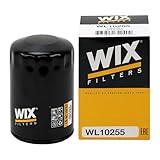
- IDEAL FOR SYNTHETIC AND HIGH-MILEAGE OILS: Designed to handle the demands of normal to extreme driving conditions like towing, stop-and-go traffic with long idle periods, and long highway runs
- 99% DIRT TRAPPING EFFICIENCY: Advanced blended media captures microscopic particles with 99% efficiency at 26 microns, helping extend engine life and maintain peak performance (Tested on WIX 51515)
- EXTENDED SERVICE LIFE: Meets or exceeds OE standards, lasting up to 15,000-miles
- NO DRY STARTS: Silicone anti-drainback valve ensures your engine does not experience dry start conditions
- COMPATIBILITY NOTE: Verify vehicle fitment by entering vehicle information in the part finder stripe to ensure this is the correct filter for your vehicle
That partnership may still create useful technology and purchasing opportunities, but it is not a completed corporate combination and does not guarantee shared products. The real test is whether Honda, Nissan, and Mitsubishi can deliver results through limited cooperation while each company addresses its own EV, profitability, and competitive pressures.
Reporting note: This article reflects the public corporate record through August 13, 2026. Honda and Nissan’s financial guidance, production figures, partnership projects, and strategic plans are time-sensitive and should be checked against the latest official releases before publication of a later update.
Frequently Asked Questions
Did Honda buy Nissan?
No. Honda and Nissan terminated the business-integration MOU on February 13, 2025, before creating a combined company. Honda did not buy Nissan, and no new Honda–Nissan automaker was formed.
Why did the Honda–Nissan merger fail?
The main disclosed issue was the governance structure. Honda proposed replacing the planned joint holding company with a share-exchange structure that would have made Honda the parent and Nissan a wholly owned subsidiary. Reuters, citing people familiar with the talks, reported that Nissan resisted the unequal arrangement.
The Tool Desk
Outbyte Driver Updater FREEScan for outdated or missing drivers - takes under a minuteDriver Scan →Outbyte PC Repair FREERepair Windows errors before they cause bigger problemsFix Now →Was the Honda–Nissan deal really worth $58 billion?
The $58 billion–$60 billion figure was a contemporary estimate of the proposed combination’s scale. It was not the value of a completed transaction, and it should not be described as money Honda paid for Nissan.
Did Mitsubishi join the Honda–Nissan merger?
Mitsubishi was involved in the broader strategic-cooperation framework and in reviewing possible projects, but it did not join a completed three-way merger. Any claim about a specific Mitsubishi program requires a later official announcement.
What cooperation survived after the merger was canceled?
Honda and Nissan said they would continue a strategic partnership focused on intelligent and electrified vehicles. Areas under review included software-defined-vehicle platforms, batteries, eAxles, vehicle complementarity, domestic energy services, and resource recycling. The materials describe these as project opportunities under review, not guaranteed completed products.
The Bottom Line
Bottom line: The Honda–Nissan merger did not merely run into trouble—it was terminated on February 13, 2025. The companies retained a narrower electrification and intelligent-vehicle partnership, but no merger, acquisition, or new three-way automaker was completed.
Quick wins for a faster PC:
Scan for outdated or missing drivers - takes under a minuteDriver Scan →Clear out junk files and repair common Windows errorsFree Scan →Fix the driver behind crashes, sound loss and screen glitchesFind Drivers →Quick Recap
Product prices and availability are accurate as of the date/time indicated and are subject to change. Any price and availability information displayed on Amazon at the time of purchase will apply.




