Do these 3 things before closing this tab:
1Clear out junk files and repair common Windows errors2Scan for outdated or missing drivers - takes under a minute3Repair Windows errors before they cause bigger problemsThe Porsche 962C was the Group C World Championship evolution of the 956: a ground-effect endurance racer developed from a successful platform, then adapted as regulations and competition needs changed. It won the 24 Hours of Le Mans in 1986 and 1987. Porsche also links the wider 962 lineage to the 1994 victory, but that win came in the distinct Dauer 962 Le Mans GT—not a standard Group C 962C.
What was the Porsche 962C?
The 962C was Porsche’s sports-car World Championship version of the 962, itself derived from the 956. The letter C identifies its Group C context; it does not mean every car bearing the 962 name shared one fixed specification. The family developed across different championships, rules and years, so “Porsche 962” can refer to related but non-identical racing versions. Porsche’s 962 C fact sheet and its history of the sports-car version describe that evolution.
How the 956 laid the groundwork
A car for the new Group C era
Porsche designed the 956 for the 1982 Le Mans 24 Hours and the new World Championship for sports cars under Group C regulations. Its debut at Le Mans brought a triple victory, immediately establishing the car as a formidable endurance-racing design. Porsche’s account of the 956 describes the car’s arrival and result.
Ground effect and the monocoque
The 956 paired a monocoque chassis with a shaped floor and diffusers. By accelerating airflow beneath the car, the underfloor design created a low-pressure effect that helped draw the car toward the track. That aerodynamic load increased cornering potential without relying only on large, drag-producing wings. Porsche identifies the 956 as its first race car with both a monocoque chassis and ground effect, and as the basis for the 962. Porsche heritage material traces those features into the later family.
Quick wins for a faster PC:
Fix the driver behind crashes, sound loss and screen glitchesFind Drivers →Clear out junk files and repair common Windows errorsFree Scan →#1 Best Overall

- SOLIDO BRAND QUALITY: Solido is known for producing high-quality diecast model cars with exceptional detail, durable construction, and accurate representations of real vehicles. Each model is crafted with precision and built to last.
- PORSCHE OFFICIALLY LICENSED MODEL: Solido 1:18 scale reproduction of the 1993 Porsche 911 (964) Turbo 3.6 in Black, presenting the wide-body coupe configuration of this celebrated 911 generation car.
- FEATURES & DETAILS: Features opening front doors and directional wheels, along with the black exterior, fixed rear wing, round headlights and broad rear bodywork associated with the 964 Turbo 3.6 car.
- TOP QUALITY MATERIALS: Reproduces the two-door coupe body, black exterior finish, cabin layout, wheels, exterior trim and rear-mounted spoiler of the 1993 Porsche 911 (964) Turbo 3.6 scale model.
- COLLECTIBLE DISPLAY ITEM: Designed for collectors ages 14 and up. Suitable for Porsche enthusiasts, classic sports car fans and scale model collectors as a display piece or thoughtful collector gift.
From 956 to 962 and 962C
The 962 carried the 956’s central ideas forward, but the family was shaped by different racing environments. The IMSA-oriented 962 and the Group C 962C should not be treated as interchangeable labels for one exact car. Porsche describes the 962C as the version for the sports-car World Championship, with specifications that changed over its competition life. The continuity was the underlying 956-derived concept; the details, including engine and cooling arrangements, varied. Porsche’s broader 962 history discusses those sports-car configurations.
Engine and cooling: specifications changed over time
Porsche’s 962C fact sheet lists a 2.65-litre twin-turbo engine and notes that the car was first powered by a fully water-cooled engine. Porsche’s broader history also describes sports-car 962s with both 2.65-litre and 3.0-litre twin-turbo configurations. These figures refer to different specifications and periods, not a single engine fitted to every 962C chassis. The fact sheet and the historical overview provide the respective descriptions.
Rank #2

- SOLIDO BRAND QUALITY: Solido is known for producing high-quality diecast model cars with exceptional detail, durable construction, and accurate representations of real vehicles. Each model is crafted with precision and built to last.
- PORSCHE OFFICIALLY LICENSED MODEL: This Porsche 911 (993) Carrera RS replica is produced as an officially licensed Porsche model, allowing Solido to reproduce the distinctive design and trademarks of the high-performance variant of the 993 generation. The Carrera RS version is associated with lightweight performance and motorsport-inspired engineering. Licensing ensures the recognizable Porsche identity and styling are faithfully represented.
- FEATURES & DETAILS: This 1:18 scale Porsche 911 (993) Carrera RS model measures approximately 9 inches in length and recreates the proportions of the performance-focused sports car introduced in the 1990s. The model features opening front doors that allow a view of interior elements including seating and dashboard details. It is finished in Indischrot red, representing the Porsche Carrera RS styling. The model is designed for display.
- TOP QUALITY MATERIALS: The model is produced using a diecast metal body combined with precisely molded plastic components for interior parts, wheels, and exterior details. The Indischrot paint finish highlights the smooth body lines and performance styling of the Porsche 911 (993) Carrera RS. Exterior contours, wheel design, and interior elements are reproduced to reflect the design characteristics of the original vehicle.
- COLLECTIBLE DISPLAY ITEM: Designed for collectors aged 14 and above, this Porsche 911 (993) Carrera RS model is intended as a collectible display item rather than a toy. Its recognizable performance-focused design and detailed craftsmanship make it a notable addition to automotive collections. This 1:18 scale replica also makes a thoughtful gift for Porsche enthusiasts and collectors of classic performance vehicles.
Le Mans victories and the 1994 distinction
The 962C wins in 1986 and 1987
The 962C won Le Mans in 1986 and 1987, extending Porsche’s success with the 956-derived design. The official race retrospective confirms both results, as does Porsche’s fact sheet. The 24 Hours of Le Mans retrospective records the race outcomes.
Why 1994 is not an ordinary 962C win
Porsche’s fact sheet lists 1994 among the 962C lineage’s Le Mans victories, but the car that won was the Dauer 962 Le Mans GT. It was a distinct derivative associated with that result, rather than a standard Group C 962C entry. The distinction matters: the 962 name describes a lineage, while the 1994 winning car competed in a different context. Porsche’s fact sheet and the Le Mans retrospective identify the result and its car.
What’s actually slowing this PC down?
Pick the symptom - the matching free tool is one click away.
Rank #3
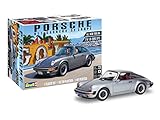
- Revell Plastic Model Car Kit #85-4521 is skill level 4 and contains 109 parts. Recommended for ages 12 and up.
- Assembled Dimensions: 7.00"x3.13"x2.19"
- 3.2-liter flat six engine. Positional front wheels & movable engine cover. Fuchs style wheels & optional front chin spoiler.
- Choice of left or right-hand drive version and either US or Euro spec front turn indicators and rear bumper guards.
- Molded in white and clear with soft black tires. Paint and glue not included.
More than one championship story
The 956/962 story extended beyond the World Championship and Le Mans. Porsche’s 2022 Group C reunion account attributes 43 individual World Endurance Championship race victories to the 956/962 family. That is a combined family statistic, not a tally for the 962C alone. Porsche’s wider Group C history also describes factory and customer-team achievements across championships, so totals should be read within the series and period Porsche assigns to them. Porsche’s Group C reunion article gives the family-level context.
PDK development in Group C
Porsche’s Group C milestones history records development and reliability work on its dual-clutch transmission, or PDK, followed by installation in Group C cars in 1986 and 1987. This was a program milestone, not evidence that every 962C carried PDK; individual cars and configurations differed. Porsche’s Group C milestones account places the transmission work in that development timeline.
Why the 962C still matters
The 962C’s significance lies in the way it extended the 956’s combination of ground-effect aerodynamics and endurance-racing capability into a changing competitive landscape. Its name covers an evolving family rather than a frozen specification: the championship role, engine configuration, cooling and technology could vary. The 1986 and 1987 Le Mans wins are the clearest 962C milestones, while the Dauer derivative’s 1994 victory belongs in the broader lineage—with its own identity kept intact.
Quick Recap
Product prices and availability are accurate as of the date/time indicated and are subject to change. Any price and availability information displayed on Amazon at the time of purchase will apply.




