Recommended Free Tools
The muscle car hidden behind Buick’s quiet, upscale image is the 1970 Buick GSX Stage 1. It combined a factory-rated 360 horsepower with an extraordinary 510 lb-ft of torque, period quarter-mile times in the 13-second range, and extremely limited production. Only 678 GSX models were built for 1970, including just 400 with the Stage 1 engine.
The muscle car hidden behind Buick’s quiet, upscale image is the 1970 Buick GSX Stage 1. It was not the most famous supercar of the muscle-car era, but it combined a factory-rated 360 horsepower with an extraordinary 510 lb-ft of torque, period quarter-mile times in the 13-second range, and extremely limited production. Only 678 GSX models were built for 1970, including just 400 with the Stage 1 engine.
As an Amazon Associate I earn from qualifying purchases.
That combination explains why the GSX Stage 1 has moved from overlooked performance Buick to serious collector car. The important qualification is that the market is not treating every Buick GS, GS 455, or GSX as equally valuable. The strongest demand centers on correctly documented, well-preserved or properly restored examples—especially cars with their original drivetrain and verifiable factory specifications.
Quick wins for a faster PC:
Scan for outdated or missing drivers - takes under a minuteDriver Scan →Clear out junk files and repair common Windows errorsFree Scan →Which Buick is this?
The title’s “once underrated muscle car” is best understood as the 1970 Buick GS family, with particular emphasis on the GSX Stage 1. Those names describe related but different cars:
#1 Best Overall

- AUTHENTIC REPLICA: Die-cast metal 1:43 scale model of the 1953 Cadillac Series 62, featuring detailed exterior finish and classic vintage styling.
- FUNCTIONAL FEATURES : Working doors that open and close , plus pull-back action mechanism for interactive play.
- QUALITY CONSTRUCTION : Built with die-cast metal body , rubber tires, and precise plastic components for durability and authentic look.
- PERFECT SIZE : Measures 5 inches in length , making it ideal for display or play while maintaining impressive detail.
- REALISTIC DETAILS : Features authentic chrome trim accents, detailed interior, and period-correct wheel designs true to the original 1953 Cadillac.
| Model | What it means | Why it matters to collectors |
|---|---|---|
| GS 455 | The regular Buick Gran Sport equipped with the 455-cubic-inch V8, officially rated at 350 horsepower. | Powerful and desirable, but generally less scarce than a GSX Stage 1. |
| GS Stage 1 | The higher-performance 455 option, officially rated at 360 horsepower and 510 lb-ft of torque. | A rare and very fast Buick even without the GSX appearance package. |
| GSX | A performance and appearance package that could be ordered with either the standard 455 or Stage 1. | Its distinctive styling and low production make it especially recognizable and collectible. |
| GSX Stage 1 | The GSX package combined with the Stage 1 engine. | The rarest and most sought-after version of the 1970 lineup. |
This distinction is essential when comparing advertisements, auction results, and claimed production numbers. A GSX is not automatically a Stage 1, and a GS 455 is not automatically a GSX.
Why the 1970 GS had so much torque
General Motors’ 1970 model-year rules opened the door for Buick to install a 455-cubic-inch V8 in its intermediate GS. The regular GS 455 received a factory rating of 350 horsepower. The Stage 1 version was officially rated at 360 horsepower, but its headline specification was the 510 lb-ft of torque at 2,800 rpm.
That torque figure gave the Buick a character different from the high-revving image associated with some other muscle cars. The GS Stage 1 could deliver a huge shove at relatively low engine speed, making it formidable in traffic, from a standing start, and in rolling acceleration. Buick’s comfortable, relatively restrained personality also made the car something of a sleeper: the mechanical capability was much more extreme than the brand’s conservative reputation suggested.
It is appropriate to call the Stage 1’s horsepower rating conservative, because period and retrospective coverage has often described the car as underrated. It is not appropriate to replace Buick’s official 360-horsepower figure with an unverified “true” horsepower number. The defensible statement is that the car was officially rated at 360 horsepower and widely regarded as underrated.
The GSX package made the Buick impossible to ignore
The standard GS could blend into traffic more easily than a brightly painted, heavily striped competitor. The GSX changed that. For 1970, the package added a visual identity and chassis equipment that made the car immediately recognizable:
- Saturn Yellow or Apollo White exterior paint
- Contrasting black graphics
- A hood-mounted tachometer
- Front and rear spoilers
- Sport mirrors
- Special wheels and tires
- A positive-traction rear axle
- Heavy-duty suspension equipment
The two available GSX colors are also part of the model’s rarity story. Hagerty’s production breakdown identifies 491 yellow cars and 187 white cars. The color split makes Apollo White examples particularly scarce, although rarity alone does not make a car authentic or automatically more valuable.
Its performance was not just advertising
Period testing supports the GS Stage 1’s reputation. A Motor Trend test cited by Hagerty recorded a 1970 GS Stage 1 covering the quarter mile in 13.79 seconds at 104.5 mph. Hemmings cites another Stage 1 automatic test at 13.38 seconds at 105.5 mph, with a 0-to-60-mph time of 5.5 seconds.
Free tools Windows power users keep installed
One-click scans. No signup required.
Those figures should be presented as period-test results, not as a promise that every surviving GSX will reproduce them today. Tire technology, track conditions, launch technique, vehicle preparation, transmission, gearing, and engine condition all affect performance. A modified or partially restored car may be quicker, while an original survivor may be slower but historically more important.
The broader point remains: the Buick was capable of genuine 13-second performance at a time when that placed a street car in serious company. Its understated image did not reflect a lack of speed.
Why only 678 cars changed the collector equation
Buick built only 678 GSXs for 1970. Of those, research cited by Hemmings identifies approximately 400 Stage 1-equipped GSX cars. The wider Stage 1 population was larger: Hemmings reports 2,465 Stage 1-equipped GS cars, in addition to the Stage 1 GSXs.
That is why production figures must be used precisely. Saying that only 400 Stage 1 Buicks existed would be wrong if the claim refers to all GS Stage 1 cars. Saying that all 678 GSXs were Stage 1 would also be wrong. The collector distinction is between:
What’s actually slowing this PC down?
Pick the symptom - the matching free tool is one click away.
- The wider population of Stage 1 GS cars;
- The 678 total 1970 GSXs; and
- The much smaller group of GSXs equipped with the Stage 1 engine.
Low production does not guarantee a high price. It does, however, create a limited supply of cars whose appearance, specifications, and history can be checked against a relatively narrow factory recipe. That scarcity becomes more meaningful when paired with original components and reliable documentation.
Rank #2
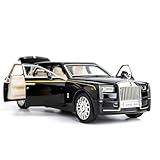
- Product size: 6.69*2.36*1.97 inches Weight: 0.7 pounds Outer packaging: exquisite color translucent packaging box
- Material: Die-cast car model, made of zinc alloy, with plastic parts, rubber tires, detailed interior and exterior decoration.
- Function: Press the two wheels of the front car to trigger the sound of the engine and the lights, with upright car logos,the angel logo is stored in the hood. The details of the body interior are realistic. Place the car on a flat ground, press the body and pull it back, the car will drive forward. (With pull back function)
- This Rolls-Royce Phantom 1/32 car model pull back car is very suitable for children to play with. The paint is exquisite and feels good, and it is heavy to hold. It is also very suitable for car model enthusiasts as a decoration.
- Accessories and collections: This product is very suitable for static accessories and can be used as an accessory next to a computer. For those who are passionate about collecting model car models, this is a great art collection.
Are 1970 Buick GSX Stage 1 cars actually valuable?
Selected examples have brought substantial money. Hagerty’s accessed valuation page displayed a $119,000 #3 “Good” value for the 1970 Buick GSX Stage I. Hagerty also recorded a $132,000 Barrett-Jackson sale in Scottsdale on January 27, 2023, for an unrestored, documented survivor, and a $143,000 Mecum sale on January 15, 2016, for a restored four-speed car with extensive equipment.
These transactions demonstrate collector interest; they do not establish a guaranteed price for every GSX. Auction results can reflect condition, originality, provenance, presentation, location, buyer enthusiasm, and the exact specification of one individual car. They should be treated as reference points rather than an investment forecast.
The two sales also show why “restored” is not automatically better than “original.” The 2023 survivor benefited from preservation and documentation. The 2016 restored car was highly desirable, but commentary raised questions about an engine described as built to Stage 1 specifications rather than clearly documented as the original engine. A replacement or rebuilt engine may perform extremely well and still affect authenticity, value, and how the car should be advertised.
What makes one GSX worth more than another?
Collectors generally evaluate the entire car, not just its paint color or engine claim. The most important factors include:
- Identity: Is it a genuine 1970 GSX, or a regular GS modified to resemble one?
- Engine: Is the 455 a documented Stage 1 unit, a replacement, or an engine built with Stage 1-style parts?
- Drivetrain: Do the transmission, rear axle, and other major components match the car’s documented factory specification?
- Originality: Are the colors, graphics, tachometer, spoilers, wheels, tires, and trim factory-correct?
- Condition: Is the car an untouched survivor, a sympathetic preservation, a high-quality restoration, or a driver-grade project?
- Documentation: Do the VIN, body tags, broadcast sheet, window sticker, invoices, ownership history, and photographs agree?
- Quality of work: If restored, are the body, paint, chassis, interior, wiring, and mechanical systems correct and well executed?
A car with reproduction graphics and a replacement engine can still be an enjoyable and valuable Buick. The problem is misrepresentation. “Built to Stage 1 specifications,” “Stage 1 tribute,” “GSX clone,” and “numbers-matching GSX Stage 1” describe materially different cars.
1970 Buick GSX authenticity checklist
Before buying or dismantling a car, assemble its evidence. A practical inspection should include the following steps:
- Record the VIN and body-tag information. Photograph every tag in place before cleaning, painting, or removing parts.
- Check the factory paperwork. Look for a broadcast sheet, window sticker, sales invoice, warranty documents, dealer records, and early ownership history.
- Confirm the GSX equipment. Inspect the hood tachometer, spoilers, sport mirrors, graphics, wheels, tires, positive-traction axle, and heavy-duty suspension components.
- Inspect the engine carefully. Record casting numbers, date codes, stampings, intake and exhaust components, carburetor details, distributor, and other Stage 1-specific features. Do not assume that a correct-looking component proves original installation.
- Verify the drivetrain. Document the transmission, rear axle, ratios where possible, and any date-code relationship to the car’s build date.
- Look beneath the restoration. Check floor pans, trunk metal, inner fenders, frame areas, welds, repairs, undercoating, and signs that an old identity was altered or transferred.
- Preserve removed parts. Keep original trim, hardware, tags, wiring, brackets, wheels, and mechanical components even if they are replaced. They may provide evidence later.
- Use a marque specialist. A Buick GS expert or experienced classic-car inspector can identify details that a general inspection may miss.
A Buick GSX restoration guide or factory shop manual can help organize measurements, terminology, and repair work, but a book cannot replace an in-person inspection or establish provenance by itself. The exact edition and current availability of suitable manuals should be checked before purchase.
Do these 3 things before closing this tab:
1Scan for outdated or missing drivers - takes under a minute2Clear out junk files and repair common Windows errors3Fix the driver behind crashes, sound loss and screen glitchesRestoring one can be harder than finding one
The GSX’s rarity creates a restoration dilemma. Scarcity supports collector interest, but it can also make correct parts difficult to find. Hemmings notes that some Stage 1-specific components are rarely reproduced. That means a restorer may face a choice between preserving an imperfect original part, locating an expensive used component, or installing a reproduction that looks correct but may not have the same historical value.
Document the car before disassembly. Photograph factory markings, fasteners, hose routing, wiring, decal placement, underbody finishes, and the condition of hidden areas. Label every removed part and retain damaged originals. This evidence can protect the car’s history and prevent a restoration from accidentally erasing clues about how it was built.
It is also wise to decide on the project’s goal before spending money. A concours restoration prioritizes correctness and evidence. A preservation project prioritizes original material and patina. A driver-focused rebuild may prioritize reliability and safety. None is automatically the “right” approach, but mixing them without a plan can produce an expensive car that is neither historically convincing nor enjoyable to drive.
Independent reader supportYour contribution helps us test, update, and keep practical guides available for everyone.Owning and storing a vintage GSX
Even a highly valuable GSX is still an old car. Long storage, infrequent use, electrical loads, and battery drain can create avoidable problems. Owners who keep the car between shows or drives may reasonably consider a classic-car battery maintainer and a breathable classic-car cover. These are general preservation accessories, not GSX-specific equipment, and the maintainer must be compatible with the battery type and installed according to its instructions.
Storage products will not compensate for poor climate control, moisture, fuel-system neglect, or a car that is never inspected. Start with a dry, secure storage space; monitor battery condition; maintain correct tire pressure; protect the interior from heat and moisture; and periodically inspect fluids, brakes, belts, hoses, and fuel lines before driving.
Rank #3

- AUTHENTIC REPLICA: Die-cast metal 1:43 scale model of the 1953 Cadillac Series 62, featuring detailed exterior finish and classic vintage styling.
- FUNCTIONAL FEATURES : Working doors that open and close, plus pull-back action mechanism for interactive play.
- QUALITY CONSTRUCTION : Built with die-cast metal body, rubber tires, and precise plastic components for durability and authentic look.
- PERFECT SIZE : Measures 5 inches in length, making it ideal for display or play while maintaining impressive detail.
- REALISTIC DETAILS : Features authentic chrome trim accents, detailed interior, and period-correct wheel designs true to the original 1953 Cadillac.
Why the GSX was overlooked for so long
Buick’s image worked against it during the muscle-car boom. The brand was associated with comfort, equipment, and a somewhat older, more affluent buyer rather than the youthful street-racing culture surrounding better-known Chevrolet, Pontiac, Oldsmobile, Ford, and Mopar products. The GSX was fast enough to challenge famous names, but it did not receive the same cultural attention.
That under-recognition is now part of the appeal. Collectors can see the car as both a legitimate high-performance machine and a distinctive alternative to the usual blue-chip muscle cars. The contrast between Buick’s restrained reputation and the Stage 1’s torque makes the story easy to remember—and the limited production makes authentic examples difficult to replace.
Should you buy a 1970 Buick GSX Stage 1?
Buy one because you want the car, its history, and its driving character—not because an auction result appears to promise automatic appreciation. A documented GSX Stage 1 can be a compelling collector purchase, but the premium depends heavily on authenticity, condition, originality, and paperwork.
For a prospective buyer, the safest order of operations is:
- Identify the exact model and engine combination.
- Obtain all available records before making an offer.
- Have the car inspected by a Buick or muscle-car specialist.
- Compare casting numbers, date codes, tags, equipment, and paperwork.
- Price the car according to what is documented, not what the seller believes it was.
- Budget for scarce parts, deferred maintenance, and specialist restoration work.
Independent collector-car valuation, insurance, auction, and specialist inspection services can be useful when evaluating a purchase, but their reports should be treated as supporting evidence rather than a substitute for verifying the car’s identity. Program availability and suitability vary by provider.
The verdict
The 1970 Buick GSX Stage 1 deserves its growing collector status because the evidence is unusually strong: authentic low production, exceptional factory torque, period-tested 13-second performance, distinctive equipment, and documented high-value sales for selected examples.
But the phrase “collector’s dream” belongs most securely to a genuine, well-documented car—not to every GS wearing yellow paint, black stripes, and a hood tachometer. The best examples combine Buick’s understated comfort with serious performance and a traceable history. That is what turns an overlooked muscle car into a collector-grade one.
Frequently Asked Questions
What is the difference between a Buick GSX and a GSX Stage 1?
The 1970 Buick GSX Stage 1 is the rarest and most desirable version. It combines the GSX appearance and chassis package with Buick’s higher-output Stage 1 455, officially rated at 360 horsepower and 510 lb-ft of torque. A GSX ordered with the standard 455 is a different car.
How many 1970 Buick GSX Stage 1 cars were made?
Buick built 678 GSXs for 1970: 491 in Saturn Yellow and 187 in Apollo White. Research cited by Hemmings identifies 400 Stage 1-equipped GSXs. The larger total Stage 1 GS population also included regular GS models, so the figures should not be combined or substituted for one another.
How much is a 1970 Buick GSX Stage 1 worth?
A documented survivor or properly restored numbers-matching example can command a substantial premium, but there is no single price for all GSXs. Hagerty’s accessed page displayed $119,000 for a #3 “Good” 1970 GSX Stage I, while individual auction sales reached $132,000 and $143,000. Those are specific market references, not guaranteed values.
How do you authenticate a 1970 Buick GSX Stage 1?
Check the VIN and body tags, factory paperwork, engine and transmission stampings, casting and date codes, rear axle, GSX colors and graphics, hood tachometer, spoilers, wheels, tires, and ownership history. A specialist inspection is strongly recommended because a convincing clone can use reproduction parts.
Crashes, No Sound, or Screen Glitches?
Random freezes, missing sound and display glitches usually trace back to one bad driver. Find and replace yours safely.Free scan · under a minuteWindows Errors? Fix Them Before They Spread
Repair common Windows errors and clear accumulated junk for a smoother, more stable PC - no reinstall needed.Free scan · no reinstallThe Bottom Line
Bottom line: The 1970 Buick GSX Stage 1 is becoming a serious collector car because only 678 GSXs were built, roughly 400 received the Stage 1 engine, and period tests confirmed genuine 13-second performance. Verify the VIN, tags, drivetrain, GSX equipment, and provenance carefully: auction records apply to specific documented cars, not every Buick GS or GSX.
Quick Recap
Product prices and availability are accurate as of the date/time indicated and are subject to change. Any price and availability information displayed on Amazon at the time of purchase will apply.




